How Can Bahrain Employers Track Attendance Across Multiple Branches?
How Can Bahrain Employers Track Attendance Across Multiple Branches?
Introduction
Businesses in Bahrain that operate multiple branches often face challenges in managing employee attendance consistently. Retail chains, restaurants, healthcare providers, logistics companies, banks, and service businesses may have employees working at different locations, on rotating shifts, or under separate branch managers.
When each branch uses a different attendance register or reporting process, HR teams can struggle to identify late arrivals, missing clock-ins, unapproved absences, shift changes, and overtime. These inconsistencies can lead to payroll errors, inaccurate working-hour reports, and difficulties verifying employee attendance.
Bahrain employers can address these challenges by implementing a centralised attendance management system that connects branch-level check-ins, employee schedules, supervisor approvals, and payroll records.
The system should provide a consistent attendance policy while allowing each branch to manage its own operational requirements. Employers must also consider the applicable provisions of Bahrain's Labour Law for the Private Sector, Law No. 36 of 2012, as amended, alongside relevant personal data protection requirements.
This article explains how Bahrain employers can track attendance across multiple branches, improve attendance accuracy, maintain reliable records, and prepare payroll more efficiently.
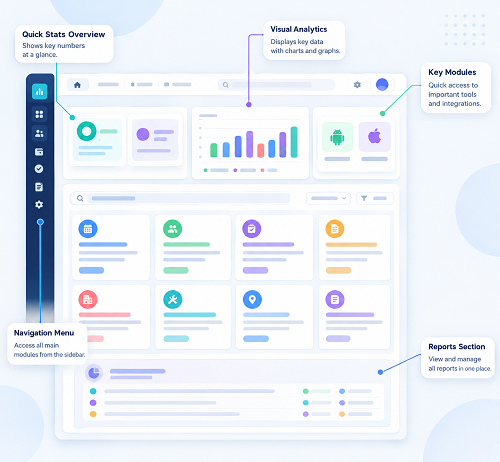
1. Establish a Centralised Attendance Management System
The first step is to create one attendance framework for all branches.
When branches maintain separate spreadsheets, paper registers, or disconnected biometric devices, head-office HR teams may receive inconsistent information. One branch might record late arrivals manually, while another may automatically calculate attendance exceptions.
A centralised system provides a common structure for recording and reviewing attendance across the organisation.
What should a centralised system include?
- A unique employee ID for each worker.
- Branch and department assignments.
- Published work schedules and shift timings.
- Clock-in and clock-out records.
- Approved leave and absence information.
- Late arrivals and early departures.
- Overtime and shift-change approvals.
- Attendance corrections and their reasons.
- Branch-level and organisation-wide reports.
- Payroll export and audit history.
For example, a business operating branches in Manama, Muharraq, Riffa, and other parts of Bahrain can use a central dashboard to review attendance across all locations without requiring each branch to submit a separate spreadsheet.
The objective is to standardise how attendance is recorded, not necessarily to force every branch to follow the same shift pattern.
2. Create a Master Employee and Branch Register
Accurate attendance tracking depends on maintaining reliable employee and location records.
HR should ensure that every employee is assigned to the correct branch, department, supervisor, and shift arrangement. If an employee transfers between branches but the system still shows the previous assignment, their attendance may be incorrectly flagged.
Recommended employee register
| Data field | Purpose |
|---|---|
| Employee ID | Provides a unique employee reference |
| Employee name | Identifies the employee |
| Department | Groups employees by function |
| Home branch | Identifies the employee's primary location |
| Assigned supervisor | Defines who reviews attendance |
| Employment status | Distinguishes active and inactive employees |
| Work schedule | Establishes expected attendance |
| Shift pattern | Identifies the assigned shift |
| Branch transfer dates | Records changes in work location |
| Attendance method | Identifies the approved check-in method |
The register should be updated whenever employees join, leave, transfer branches, change departments, or receive new work schedules.
Access to employee information should be restricted to authorised personnel. Branch managers should see the records needed for their responsibilities, while central HR may require organisation-wide visibility.
3. Select an Attendance Method for Each Branch
Different branches may need different attendance methods depending on their facilities, workforce, connectivity, and operating model.
A head office may use a fixed attendance terminal, while a retail outlet may use a tablet-based kiosk. Employees who travel between customer locations may require an approved mobile attendance method.
The key is to ensure that all methods feed into the same central attendance system.
Suitable for fixed workplaces where the employer has assessed the legal, privacy, security, and operational requirements. Employers should provide an alternative procedure for failed recognition or device problems.
Useful for retail stores, clinics, restaurants, and smaller branches where employees can clock in through a shared, controlled device.
Can support employees who work across sites or have approved flexible arrangements. Location features should be proportionate to the operational need and handled transparently.
Provide a straightforward option for fixed branches. Employers should include controls to reduce buddy punching and unauthorised use of another employee's credentials.
Before choosing a method, employers should consider branch size, device reliability, internet connectivity, workforce accessibility, privacy obligations, and the ability to export dependable records.
4. Configure Branch-Specific Work Schedules
A central attendance system should support different schedules for different branches.
For example, a retail branch may operate extended evening hours, while a corporate office follows standard daytime hours. A restaurant may use split shifts, and a healthcare facility may operate overnight rotations.
Using a single schedule for all branches can cause employees to be incorrectly marked late or absent.
Recommended scheduling controls
- Define standard working hours for each branch.
- Assign employees to their correct shifts.
- Record weekly rest days and scheduled non-working days.
- Maintain branch-specific holiday and closure calendars where applicable.
- Document shift swaps and temporary schedule changes.
- Notify employees when their schedules change.
- Ensure approved changes reach the attendance and payroll systems.
The system should compare actual attendance with the employee's approved schedule rather than relying on a generic company-wide timetable.
Employers should also review working-hour and rest-period requirements under the applicable Bahrain labour rules when configuring shifts.
5. Track Employees Who Work Across Multiple Branches
Some employees regularly move between locations. Area managers, maintenance technicians, delivery teams, stock controllers, and relief staff may work at more than one branch during a single week.
If the attendance system allows check-ins only at the employee's home branch, legitimate work at another location may be flagged as an exception.
How to manage cross-branch attendance
- Maintain an approved list of branches where each employee may work.
- Record temporary assignments and transfer dates.
- Allow authorised check-ins at the assigned location.
- Capture the branch associated with each attendance event.
- Require approval for unplanned transfers where appropriate.
- Prevent duplicate or overlapping attendance entries.
- Route attendance exceptions to the responsible supervisor.
For example, if an employee from a Manama branch covers a shift at a Riffa branch, the system should record the actual location and approved shift. The attendance record should remain associated with the correct employee and be available to the relevant managers.
Cross-branch attendance is particularly useful for organisations that share employees during staff shortages, seasonal peaks, and unexpected absences.
6. Use GPS and Geofencing Carefully for Mobile Employees
GPS and geofencing can help verify attendance for employees who work away from a fixed office. A geofence defines an approved geographical area around a workplace or worksite.
When an employee checks in through an authorised mobile application, the system can compare the recorded location with the permitted work area.
Useful applications
- Field service technicians visiting customer locations.
- Employees temporarily assigned to another branch.
- Delivery and distribution teams.
- Maintenance workers covering multiple properties.
- Supervisors conducting branch inspections.
Controls to implement
- Define approved locations and permitted check-in rules.
- Inform employees how location information is used.
- Collect location data only when necessary for the stated purpose.
- Avoid unnecessary continuous location tracking.
- Provide a procedure for GPS errors, weak signals, or device failures.
- Restrict access to location records.
- Allow employees to raise legitimate attendance disputes.
GPS information should support attendance verification rather than serve as the sole evidence of whether work was performed. A location mismatch may result from technical problems or a legitimate assignment change.
7. Standardise Attendance Rules Across All Branches
Centralised software is most effective when every branch follows clearly documented attendance procedures.
Without consistent rules, one manager may approve a late arrival informally while another records the same situation as an unauthorized exception. This can create confusion for employees and payroll teams.
Recommended attendance policy
The policy should explain:
- How employees must clock in and clock out.
- When employees should arrive for their shifts.
- How late arrivals and early departures are handled.
- How missing punches are reported and corrected.
- Who can approve schedule changes.
- How employees request leave.
- How overtime is requested and verified.
- What happens when attendance devices fail.
- How employees can dispute incorrect records.
- Who has authority to approve payroll-related adjustments.
The policy should be communicated to employees and managers in a language and format they can understand.
Branch managers should receive training so that they apply the rules consistently, including when reviewing attendance exceptions.
8. Monitor Late Arrivals, Absences, and Missing Punches
A central dashboard enables HR teams to identify attendance exceptions across all branches.
However, an exception should trigger verification rather than an automatic conclusion that the employee has violated the attendance policy.
For example, a missing clock-in may indicate that an employee forgot to use the terminal, the device malfunctioned, or the employee was working at an approved alternative location.
Recommended exception categories
| Exception | Review action |
|---|---|
| Late arrival | Compare actual check-in with the approved shift |
| Early departure | Verify the scheduled end time and any authorised departure |
| Missing clock-in | Check supervisor confirmation and other reliable records |
| Missing clock-out | Verify actual departure and correct the record |
| Full-day absence | Review the roster, leave approvals, and employee explanation |
| Unapproved shift change | Confirm whether the change was authorised |
| Duplicate punch | Identify the correct attendance event |
| Wrong branch recorded | Verify the employee's assignment and location |
| Device or network failure | Use the approved manual fallback process |
HR should record the resolution, the reason for any correction, and the person who approved it.
This creates a consistent audit trail and helps prevent incorrect attendance records from flowing into payroll.
9. Connect Attendance Tracking With Payroll
Attendance information often determines the working hours, overtime, leave balances, and other payroll inputs that require review.
If branch attendance is maintained separately from payroll, HR may need to combine multiple reports manually. This increases the risk of duplicate entries, missing hours, and inconsistent adjustments.
An integrated attendance and payroll system can transfer verified records to payroll using a standard process.
Recommended payroll workflow
- Collect attendance data from all branches.
- Compare actual hours with approved schedules.
- Match absences against approved leave records.
- Review missing punches and shift changes.
- Verify additional hours and applicable overtime treatment.
- Confirm any proposed attendance-related pay adjustments.
- Obtain the required approvals.
- Export the verified data to payroll.
- Reconcile payroll totals against the attendance report.
- Retain the final reports and approval history.
Employers should ensure that any deduction or other pay adjustment is legally permissible and supported by verified records. A raw attendance alert should not automatically trigger a salary deduction.
10. Protect Attendance Data and Employee Privacy
Centralised attendance systems may contain employee identifiers, work schedules, location data, attendance history, and, depending on the method used, biometric information.
Employers should adopt appropriate controls to protect this information and limit access to legitimate business purposes.
Bahrain's Personal Data Protection Law, Law No. 30 of 2018, provides a legal framework for processing personal data. The employer should assess the law's applicability to the attendance system, the data collected, the processing purpose, and any relevant transfer or service-provider arrangements.
Recommended privacy controls
- Explain the purpose of attendance monitoring to employees.
- Collect only the information needed for attendance management.
- Restrict access by role and branch.
- Secure records during storage and transmission.
- Establish retention and deletion rules.
- Review third-party vendor access and security practices.
- Assess cross-border data transfers where applicable.
- Provide a process for correcting inaccurate records.
- Review the necessity and proportionality of biometric or location-based monitoring.
Employers should not assume that a general attendance policy automatically satisfies every privacy requirement. The specific processing method and circumstances matter.
11. Establish Branch-Level Responsibilities and Central Oversight
A multi-branch attendance process needs clear ownership. If every manager assumes that someone else will review missing punches or schedule changes, exceptions may remain unresolved until payroll closes.
A practical model combines local verification with central HR oversight.
Suggested responsibilities
Branch manager
- Confirms daily attendance exceptions.
- Verifies shift changes and employee assignments.
- Reviews missing punches.
- Submits authorised corrections.
HR team
- Maintains employee and branch records.
- Oversees attendance policies.
- Reviews leave and recurring exceptions.
- Monitors compliance with internal procedures.
Payroll team
- Receives verified attendance data.
- Checks overtime and attendance-related adjustments.
- Reconciles payroll inputs.
- Retains settlement and processing records.
IT or system administrator
- Maintains devices, integrations, and user access.
- Investigates technical failures.
- Supports data security and system availability.
Senior management
- Reviews organisation-wide attendance trends.
- Addresses recurring staffing issues.
- Ensures branches have appropriate resources and controls.
The organisation should define escalation routes and cut-off dates so that unresolved cases reach the appropriate person before payroll is processed.
12. Maintain Reliable Attendance Records
Employers should retain sufficient records to explain how attendance was recorded, corrected, reviewed, and used in payroll.
A well-maintained record supports internal audits, employee queries, and responses to lawful requests from relevant authorities.
Recommended records
- Employee and branch assignment register.
- Published shift schedules.
- Daily clock-in and clock-out logs.
- Approved shift swaps and temporary transfers.
- Leave and absence approvals.
- Attendance corrections and supporting explanations.
- Overtime requests and approvals.
- Payroll reconciliation reports.
- System access and correction audit logs.
- Records of employee attendance disputes and their resolution.
Bahrain's Labour Law for the Private Sector and related implementing decisions address employer obligations and employment records. The exact records and retention periods applicable to an employer should be confirmed against the current rules and the establishment's circumstances.
13. Measure Attendance Performance Across Branches
Attendance metrics help employers identify recurring problems and determine where additional training, staffing, or system improvements are needed.
The goal should be to improve the accuracy and consistency of attendance management rather than simply ranking branches by the number of recorded exceptions.
| KPI | What it measures | How it helps |
|---|---|---|
| Attendance record completeness | Percentage of shifts with complete attendance entries | Identifies missing data |
| Missing-punch rate | Frequency of incomplete clock-in or clock-out records | Highlights device or process issues |
| Exception resolution time | Average time to close attendance discrepancies | Measures review efficiency |
| Late-arrival frequency | Recorded late arrivals relative to scheduled shifts | Helps identify scheduling issues |
| Branch transfer accuracy | Correct recording of approved cross-branch assignments | Reduces false exceptions |
| Payroll correction rate | Attendance-related changes after payroll submission | Identifies process weaknesses |
| Overtime variance | Difference between approved and recorded additional hours | Strengthens time and payroll controls |
| Device uptime | Availability of attendance terminals or applications | Identifies technical problems |
Review the results by branch, department, shift, and exception type. A high missing-punch rate at one branch may indicate an unreliable terminal rather than an employee attendance problem.
14. Implement a Multi-Branch Attendance Rollout Plan
Employers should introduce centralised attendance tracking in stages to reduce disruption.
Phase 1: Assess current processes
Document how each branch records attendance, approves shifts, manages leave, and sends payroll inputs.
Phase 2: Standardise policies
Define common attendance rules, exception categories, correction procedures, and approval responsibilities.
Phase 3: Configure the system
Set up employee records, branch locations, schedules, user permissions, attendance methods, and payroll integrations.
Phase 4: Pilot selected branches
Test the process in a small group of branches with different operating patterns. Check device reliability, data accuracy, and manager workflows.
Phase 5: Train employees and supervisors
Explain check-in procedures, schedule changes, missing-punch reporting, and attendance dispute resolution.
Phase 6: Roll out across the organisation
Introduce the system branch by branch, monitor exceptions, and provide support during the transition.
Phase 7: Review and improve
Analyse attendance metrics, employee feedback, and payroll corrections. Update procedures when recurring problems emerge.
A phased rollout gives HR teams an opportunity to identify operational issues before the system becomes the primary source of attendance information across the organisation.
15. Multi-Branch Attendance Tracking Checklist
Before implementing or reviewing a centralised attendance system, Bahrain employers should confirm that:
- Every employee has a unique employee ID.
- Each employee is assigned to the correct branch and supervisor.
- Branch-specific work schedules are configured correctly.
- Attendance devices and mobile methods feed into a central system.
- Approved cross-branch assignments can be recorded.
- Missing punches and attendance discrepancies have a review process.
- Shift changes and corrections require appropriate authorisation.
- Attendance data is reconciled with approved leave.
- Verified attendance records are connected to payroll.
- Employee information is protected through appropriate access controls.
- Applicable labour and personal data protection requirements have been reviewed.
- Branch managers and employees have been trained.
- Attendance records and approvals can be retrieved for audit purposes.
- Performance metrics are reviewed regularly.
Frequently Asked Questions
1. How can Bahrain employers track attendance across several branches?
Employers can use a centralized attendance management system that consolidates check-ins, schedules, leave records, and attendance exceptions from every branch. Local managers verify the records, while central HR monitors consistency across the organisation.
2. Which attendance method is best for multi-branch businesses?
The appropriate method depends on the workplace. Fixed branches may use access cards, kiosks, or attendance terminals, while employees who work across locations may need an approved mobile check-in method. All methods should feed into a consistent central record.
3. Can employees clock in at a branch other than their home branch?
Yes, where the employer's procedures permit it. The system should record the actual branch and approved assignment, prevent duplicate attendance entries, and route exceptions to the appropriate supervisor.
4. Can GPS be used to verify attendance in Bahrain?
GPS or geofencing can support attendance verification for employees working at approved locations. Employers should assess the necessity of the tracking, explain its use, limit collection to an appropriate purpose, and comply with applicable personal data protection requirements.
5. How can centralised attendance tracking reduce payroll errors?
It helps HR reconcile actual working hours with approved schedules, leave, overtime, and shift changes before payroll is processed. This reduces duplicate entries, missing hours, and unsupported adjustments.
6. What should employers do when an attendance device fails?
Employers should use a documented fallback procedure, such as a supervisor-verified manual record. Once the system is restored, the correction should be entered with the supporting explanation and required approval.
Conclusion
Bahrain employers can track attendance across multiple branches more effectively by centralising employee records, standardising attendance rules, configuring branch-specific schedules, and connecting attendance systems with payroll.
A strong process should accommodate employees who work at different locations while ensuring that all branches use consistent check-in, correction, and approval procedures. Automated dashboards can identify exceptions quickly, but supervisors and HR teams must verify discrepancies before making payroll decisions.
By combining reliable technology, clear responsibilities, employee privacy safeguards, and regular performance reviews, organisations can improve attendance accuracy, reduce administrative work, and establish a more consistent workforce management process across Bahrain.
Managing several branches is easier with one view of who checked in where. InnBuilt Attendance Software can bring Bahrain branch attendance into a shared dashboard for HR and local managers.