How Can Bahrain Maintenance Firms Coordinate Emergency Call-Out Teams?
How Can Bahrain Maintenance Firms Coordinate Emergency Call-Out Teams?
Introduction
Emergency maintenance calls can occur at any time, from equipment breakdowns at commercial buildings to air-conditioning failures, electrical faults, plumbing leaks, generator problems, and urgent repairs at industrial facilities. For maintenance firms in Bahrain, responding quickly requires more than sending the nearest available technician. Businesses must assess the urgency of each request, identify the right skills and equipment, coordinate dispatch, communicate with customers, and monitor the job until the issue is resolved.
Without a structured process, emergency calls may be assigned to technicians who lack the necessary expertise, spare parts may be unavailable, and supervisors may struggle to track arrival times or obtain completion reports. These problems can increase downtime, operating costs, and customer dissatisfaction.
A digital field service management system can help maintenance companies coordinate emergency call-out teams by centralising requests, prioritising incidents, checking technician availability, dispatching suitable staff, tracking job progress, and recording service outcomes.
For Bahrain maintenance firms, the objective is to establish a reliable response process that balances speed, safety, service quality, workforce availability, and accurate operational records.
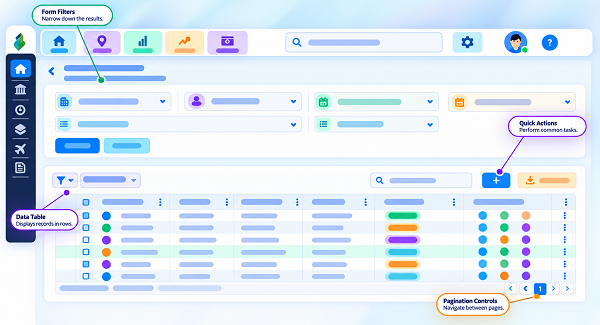
1. Establish a Centralised Emergency Call-Handling Process
The first step is to create a single process for receiving and managing emergency maintenance requests. Calls should not depend entirely on individual technicians, informal messaging groups, or disconnected spreadsheets.
A centralised process allows dispatchers or an on-call coordinator to receive requests, assess the problem, assign a priority, and monitor the response.
Emergency requests may come through several channels:
- A dedicated emergency telephone number.
- Customer service representatives.
- Email or an online service portal.
- A customer mobile application.
- Building or facility management teams.
- Automated equipment alerts.
- Contractual maintenance contacts.
Regardless of the channel, each request should be recorded in a central system.
The emergency record should include the customer, site address, equipment affected, reported fault, time received, contact details, operational impact, access instructions, and any known safety risks.
For example, if a facilities management customer in Manama reports a major water leak, the coordinator should record the affected area, whether the leak presents an electrical or structural risk, whether the water supply can be isolated, and who can provide site access.
Best practice: Every emergency request should receive a unique reference number so that dispatch, communication, approvals, and service reports remain connected.
2. Classify Emergency Calls by Severity
Not every urgent maintenance request requires the same response. A failed air-conditioning unit in a low-occupancy office may have a different priority from a failure affecting critical equipment, a medical facility, or a building's essential services.
Maintenance firms should define a clear incident classification system based on risk, business impact, customer commitments, and contractual response requirements.
| Priority | Example situation | Typical response approach |
|---|---|---|
| Critical | Immediate threat to people, major asset damage, or failure of a critical system | Activate the relevant emergency procedure and qualified response resources |
| High | Significant service disruption affecting an important customer operation | Dispatch the appropriate available team promptly |
| Medium | Equipment failure affecting operations but with a safe temporary workaround | Schedule the earliest suitable response within the agreed service window |
| Low | Minor defect or non-urgent maintenance issue | Add to the planned maintenance queue |
These categories are illustrative. Each company should define its own criteria according to the services it provides, contractual obligations, equipment risks, and applicable safety requirements.
Dispatchers should use a structured set of questions to assess the incident:
- What equipment or system has failed?
- Is anyone in immediate danger?
- Is there a risk of fire, electric shock, flooding, or further damage?
- Has the incident affected essential operations?
- Can the customer safely isolate the affected equipment?
- Is a specialist technician or additional team required?
- What response time is required under the service agreement?
Where there is an immediate threat to life or public safety, the coordinator should activate the relevant emergency procedures and contact the appropriate emergency services rather than treating the incident as an ordinary maintenance job.
3. Create a Live View of Technician Availability
Emergency dispatchers need to know which technicians are available, what work they are performing, and whether they have the skills and equipment required for the next assignment.
A shared availability dashboard can bring together information such as:
- Technician duty status.
- Current job and estimated completion time.
- Assigned work orders.
- Technical qualifications and certifications.
- Relevant equipment experience.
- Location or service area, where appropriately collected.
- Vehicle and tool availability.
- On-call rota and escalation contact.
- Planned leave, rest periods, or other availability restrictions.
For example, a company responding to a generator breakdown should not assign the first available maintenance employee if the job requires specialist generator expertise. The dispatch system should identify qualified technicians and help the coordinator select an appropriate team.
Availability must also reflect actual workload. A technician marked as available may still need time to complete a current repair, travel to the new site, obtain parts, or prepare for a hazardous task.
The dispatcher should therefore evaluate skill, readiness, workload, travel time, and safety together rather than relying on a simple online or offline status.
4. Match the Right Skills to the Emergency
Selecting a technician based only on proximity can lead to delays if the employee cannot diagnose or safely repair the affected equipment.
Maintenance firms should maintain a searchable skills matrix covering their technicians' technical capabilities and authorisations.
Relevant skill categories may include:
- Electrical troubleshooting.
- Air-conditioning and refrigeration systems.
- Plumbing and water systems.
- Pumps and motors.
- Generators and backup power.
- Fire and life-safety equipment.
- Building management systems.
- Industrial machinery.
- Mechanical repairs.
- Specialist equipment supplied by particular manufacturers.
The skills matrix should identify any required qualifications, site-specific inductions, permit requirements, and limitations on the work an individual may perform.
Some incidents may require a two-person team, a specialist subcontractor, a supervisor, or a qualified person to inspect the work before the system can be returned to service.
A digital dispatch system can help filter available staff by capability, but the coordinator remains responsible for checking whether the proposed assignment is appropriate for the actual risk and task.
5. Use Location and Travel Information to Improve Dispatch
For maintenance companies serving multiple customer sites across Bahrain, location information can help dispatchers estimate travel time and select a suitable response team.
A location-enabled field service system may show the assigned technician's service area, current assignment, reported location, and route information where the necessary permissions and data are available.
This can help coordinators compare potential assignments and avoid sending a technician across the island when another qualified team can reach the site sooner.
A practical dispatch process should:
- Confirm the customer's exact site address and access point.
- Identify technicians with the necessary skills.
- Check their current assignments and readiness.
- Estimate travel time using available route information.
- Consider site access, parking, security clearance, and equipment transport.
- Select the most suitable team.
- Send the job details and confirm acceptance.
- Update the customer with a realistic arrival estimate.
Location data should be treated as operational support rather than definitive proof of readiness or job completion. GPS accuracy may vary, and travel estimates can change because of traffic, road conditions, or access restrictions.
Employers should also establish appropriate safeguards for employee location data and ensure that tracking practices are consistent with applicable privacy requirements.
6. Maintain a Formal On-Call Rota
Emergency maintenance services often require coverage outside standard business hours, including nights, weekends, and public holidays.
A formal on-call rota makes responsibility clear and reduces the risk of unanswered calls or conflicting assignments.
The rota should identify:
- Primary on-call technician.
- Backup technician.
- Duty supervisor or escalation manager.
- Specialist support contacts.
- Coverage start and end times.
- Handover arrangements.
- Contact methods and acknowledgement expectations.
- Approved arrangements for absences or unavailable staff.
The company should also establish what happens if the primary technician does not acknowledge an emergency request within the defined period. For example, the system may notify the duty supervisor and escalate the assignment to the backup team.
On-call arrangements should be reviewed regularly to account for leave, training, staff turnover, and changes in service demand.
Maintenance firms should clearly communicate the rota to dispatchers and relevant customer-facing teams. An out-of-date contact list can undermine even the best emergency response system.
7. Automate Emergency Dispatch Notifications
Once an emergency request has been classified and assigned, the technician should receive the information needed to respond without unnecessary phone calls or repeated clarification.
A dispatch notification can include:
- Emergency reference number.
- Priority level.
- Customer and site details.
- Reported fault and symptoms.
- Required technical skills.
- Equipment identification.
- Site access instructions.
- Safety warnings.
- Customer contact person.
- Requested response time.
- Required tools, parts, or documents.
- Instructions for reporting arrival and progress.
Technicians should be able to acknowledge the assignment, accept it, or report that they cannot attend.
If the technician declines or fails to respond, the coordinator should receive a notification and activate the backup process.
Automated notifications can be delivered through a mobile application, SMS, or other approved communication channel. Critical alerts should have a fallback method because mobile applications and internet connections may not always be available.
Automation should support the dispatch process without removing human judgement from high-risk incidents or unusual situations.
8. Prepare Emergency Tools, Spare Parts, and Vehicles
A technician may arrive at the customer site quickly but still be unable to complete the repair because the required parts or tools are missing.
Maintenance firms should identify common emergency failure types and prepare appropriate response kits for each service category.
A response kit may contain:
- Frequently used replacement components.
- Diagnostic equipment.
- Required hand tools.
- Personal protective equipment.
- Test instruments.
- Manufacturer documentation.
- Site-specific safety equipment.
- Communication devices.
- Consumables used for common repairs.
The inventory system should track stock availability, equipment condition, expiry dates where applicable, and the location of specialised tools.
For frequently used parts, firms can establish minimum stock levels or pre-packed emergency kits. The technician should also be able to request additional parts before leaving for the site when the reported fault suggests a likely requirement.
For example, an emergency air-conditioning team may need to confirm the equipment model and likely fault before dispatch so that the technician can carry compatible components and diagnostic tools.
A well-prepared response reduces repeat visits and helps the company restore service more efficiently.
9. Track the Emergency Job from Dispatch to Closure
Once the team is assigned, the coordinator needs visibility into the job's progress. A digital work order should record each major event and identify who is responsible for the next action.
| Job stage | Information to record |
|---|---|
| Request received | Time, customer, reported fault, and reference number |
| Priority assigned | Severity and reason for classification |
| Team dispatched | Technician, dispatch time, and assignment details |
| Assignment acknowledged | Acceptance or escalation status |
| Technician en route | Departure status and estimated arrival |
| Site arrival | Arrival timestamp and verification details where appropriate |
| Diagnosis started | Fault findings and initial assessment |
| Work in progress | Actions taken, parts used, and delays |
| Temporary restoration | Any temporary measure and remaining risk |
| Repair completed | Work performed and test results |
| Customer update | Service outcome and any outstanding issue |
| Supervisor review | Required approvals and unresolved exceptions |
| Work order closed | Final status and closure time |
The system should distinguish between the time a job is assigned, the time the technician acknowledges it, the time of arrival, and the time the repair is completed.
This makes it easier to identify whether delays occurred during call handling, dispatch, travel, diagnosis, parts procurement, or repair.
If the system supports live status updates, dispatchers can communicate meaningful progress to customers without repeatedly calling technicians.
10. Establish a Clear Escalation Process
Some emergencies cannot be resolved by the first technician assigned. A fault may be more serious than initially reported, a specialist may be required, or replacement parts may be unavailable.
An escalation procedure should define when the team must request additional assistance.
Escalation triggers may include:
- No technician accepts the assignment.
- The estimated arrival time exceeds the contractual response window.
- The initial diagnosis indicates a more serious fault.
- The technician identifies an immediate safety concern.
- The required spare part is unavailable.
- The repair cannot be completed within the available shift.
- The affected equipment requires specialist intervention.
- The customer reports a worsening situation.
- The system cannot be safely restored to service.
The technician should be able to update the work order and request support directly from the mobile application or the established dispatch channel.
The supervisor can then decide whether to send a second technician, contact a specialist, arrange replacement equipment, obtain parts, or refer the incident to another service provider.
For critical incidents, the escalation path should identify who has authority to stop work, isolate equipment, notify the customer, and activate the relevant safety or emergency procedures.
11. Communicate Clearly with Customers
Customers need reliable updates during an emergency, especially when the failure affects business operations, building access, comfort, or essential equipment.
Maintenance firms should provide updates at meaningful points rather than sending only an initial dispatch notification.
Useful communication milestones include:
- Confirmation that the emergency request has been received.
- The assigned response team's details, where appropriate.
- The estimated arrival time.
- Notification of significant delays.
- An explanation of the initial diagnosis.
- Information about temporary restoration or safety restrictions.
- Confirmation of repair completion or the need for further work.
- The next expected update if the fault remains unresolved.
Customer-facing teams should avoid promising a resolution time before the technical team understands the fault and the availability of parts.
Where the repair cannot be completed immediately, the company should explain the current status, any temporary measures, the remaining risks, and the planned follow-up.
A consistent communication process can reduce repeat calls, improve trust, and help customers make operational decisions while the repair is in progress.
12. Integrate Emergency Call-Outs with Maintenance Contracts and SLAs
Many maintenance firms operate under service contracts that define response commitments, covered assets, operating hours, escalation requirements, or reporting obligations.
Emergency requests should be linked to the relevant customer contract so dispatchers can verify the correct service rules.
Contract information may include:
- Covered sites and equipment.
- Emergency contact details.
- Agreed priority definitions.
- Response and restoration targets.
- Service hours.
- Approval requirements for additional work.
- Parts and labour coverage.
- Exclusions and chargeable services.
- Reporting and customer sign-off requirements.
A response-time target and a resolution-time target should not be treated as identical. A contract may require a technician to attend within a defined period even when the repair requires specialist parts or a follow-up visit.
The system should measure each contractual milestone separately and alert supervisors when a deadline is at risk.
Any SLA calculation should follow the actual contract terms, including the defined start time, applicable service window, pause rules, and exclusions. Businesses should avoid relying on generic targets that do not reflect their agreements with customers.
13. Record Emergency Hours and Review Payroll Correctly
Emergency call-outs can occur outside a technician's normal shift or on a scheduled rest day. Maintenance firms should maintain accurate records of attendance, assignments, additional working time, and approvals.
Useful records include:
- Normal shift and scheduled rest day.
- Time the emergency assignment was issued.
- Time the technician accepted the assignment.
- Relevant travel and work periods under the company's recording policy.
- Site arrival and departure.
- Work performed and any breaks.
- Supervisor-approved additional hours.
- Any subsequent rest or schedule adjustment.
For Bahrain's private sector, Law No. 36 of 2012 promulgating the Labour Law for the Private Sector, as amended, contains provisions on working hours, rest periods, and additional work. Article 54 addresses additional-hours pay, while Article 57 addresses work on weekly rest days. The applicable treatment should be assessed against the current law, relevant exceptions, and the employee's actual arrangement.
An emergency assignment should not automatically be assumed to be exempt from ordinary working-time requirements. HR and payroll teams should review the relevant records and approvals before calculating payable hours or making schedule adjustments.
The field service system should therefore integrate with attendance or payroll processes without treating every work-order timestamp as a complete record of payable working time.
14. Protect Employee and Customer Information
Emergency dispatch systems may process employee contact details, location records, customer names, access instructions, photographs, equipment records, and site information.
Maintenance firms should establish controls to protect these records and ensure that information is used for appropriate purposes.
Recommended measures include:
- Limit system access according to job responsibilities.
- Collect only the location and operational data required for the defined purpose.
- Inform employees about relevant tracking and recording practices.
- Protect customer access codes and sensitive site instructions.
- Secure mobile devices and restrict unauthorized downloads.
- Set retention periods for work orders, photographs, and location records.
- Maintain logs of access and changes to important records.
- Review the security and data-handling practices of software providers.
- Assess applicable requirements for processing or transferring personal data.
Bahrain's Personal Data Protection Law, Law No. 30 of 2018, establishes a legal framework for personal data processing. Firms should assess the law's requirements for their particular systems and activities rather than assuming that all operational tracking is automatically permitted.
15. Measure Emergency Response Performance
Once emergency jobs are recorded consistently, maintenance firms can use operational data to identify delays, improve staffing, and reduce repeat failures.
| KPI | What it measures | Operational benefit |
|---|---|---|
| Call acknowledgement time | Time between receiving the request and acknowledging it | Highlights delays in call handling |
| Dispatch time | Time between request receipt and team assignment | Measures dispatch efficiency |
| Response time | Time between the contractually defined start event and the required response milestone | Helps monitor service commitments |
| Arrival compliance | Percentage of applicable jobs meeting the agreed arrival target | Measures response reliability |
| First-time fix rate | Percentage of eligible jobs resolved without a repeat visit for the same fault | Helps assess diagnosis and preparation |
| Mean time to repair | Average time to restore the affected equipment or service, using a consistent definition | Helps identify repair bottlenecks |
| Escalation rate | Percentage of emergency jobs requiring additional support | Highlights skill, parts, or process gaps |
| Repeat incident rate | Frequency of recurring faults within a defined period | Supports root-cause analysis |
| SLA compliance | Percentage of jobs meeting the applicable contractual requirements | Measures service delivery |
| Record completeness | Percentage of work orders containing required timestamps and reports | Improves auditability and reporting |
Each KPI should have a consistent definition. For instance, response time may measure time to acknowledge a request, dispatch a team, or arrive on site, depending on the contract. These events should not be combined into one metric without explanation.
Managers should review trends by service type, customer, site, time of day, and equipment category. This can reveal recurring issues such as insufficient night coverage, frequent parts shortages, or delays caused by restricted site access.
Frequently Asked Questions
1. How can Bahrain maintenance firms respond to emergency calls faster?
They can use a centralised emergency queue, predefined priority levels, an up-to-date on-call rota, skills-based technician assignment, and automated dispatch notifications. Keeping common spare parts and tools ready can also reduce delays.
2. How should maintenance companies prioritise emergency requests?
Prioritisation should consider immediate safety risks, potential damage, operational disruption, affected equipment, contractual obligations, and the availability of safe temporary measures. Incidents presenting immediate danger should trigger the appropriate emergency procedures.
3. What information should an emergency work order contain?
It should include the request reference, customer and site details, fault description, priority, time received, assigned technician, access instructions, safety information, response target, progress updates, repair findings, and final outcome.
4. Can a digital system automatically dispatch technicians?
Yes. A suitable field service system can recommend or assign technicians using configured rules for skills, availability, service areas, workload, and priority. High-risk or unusual incidents may still require a dispatcher or supervisor to make the final decision.
5. How can maintenance firms manage after-hours call-outs?
They should maintain a published on-call rota, identify primary and backup technicians, define acknowledgement expectations, establish escalation contacts, and record the hours worked. Arrangements should be reviewed against applicable employment requirements and contractual commitments.
6. Which KPIs should maintenance firms monitor?
Useful KPIs include acknowledgement time, dispatch time, arrival compliance, first-time fix rate, mean time to repair, escalation rate, repeat incident rate, SLA compliance, and work-order record completeness.
Conclusion
Bahrain maintenance firms can coordinate emergency call-out teams more effectively by combining centralised request handling, severity-based prioritisation, live technician availability, skills-based dispatch, on-call rotas, spare-parts readiness, and clear escalation procedures.
Digital field service tools help coordinators track the response from initial request through arrival, diagnosis, repair, and closure. They also improve customer communication, support accurate working-time records, and provide useful data for monitoring service commitments.
The most effective approach combines technology with trained coordinators, qualified technicians, practical safety procedures, and reliable backup coverage. By reviewing performance regularly and addressing recurring delays, maintenance companies can improve emergency response consistency and strengthen customer confidence.
Emergency maintenance requires quick assignments and a clear record of response. InnBuilt Field Management can help Bahrain firms coordinate call-outs, technician arrival and completed work.