How Can Indian Logistics Firms Track Delivery Crew Attendance Across Distribution Hubs?
How Can Indian Logistics Firms Track Delivery Crew Attendance Across Distribution Hubs?
Introduction
Indian logistics firms operate through extensive networks of distribution hubs, warehouses, sorting centres, and last-mile delivery locations. Managing delivery crew attendance across these facilities can be challenging, particularly when employees work rotating shifts, report to different hubs, cover additional routes, or operate under third-party logistics arrangements.
Accurate attendance tracking is essential for ensuring that delivery routes are adequately staffed, dispatch schedules remain on time, overtime is calculated correctly, and payroll records reflect actual working hours. Without a centralised system, logistics companies may encounter duplicate attendance entries, missed clock-ins, unauthorised shift changes, and difficulties verifying the attendance of delivery executives working outside their assigned hubs.
A structured attendance management process can help logistics firms connect employee records, hub assignments, shift schedules, biometric attendance, mobile check-ins, and route allocation data. By integrating these systems, companies can improve workforce visibility, reduce manual errors, and coordinate delivery operations more effectively across multiple distribution hubs in India.
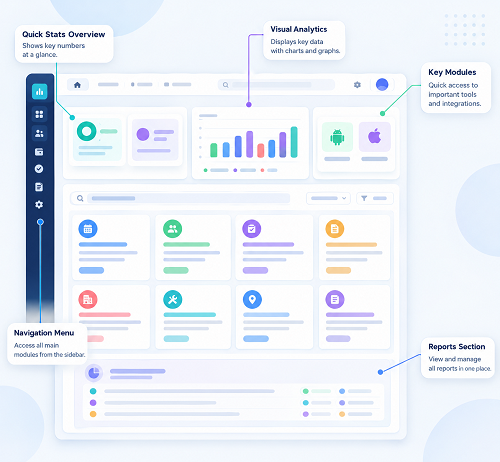
1. Establish a Centralised Attendance Management System
The first step is to create a centralised attendance system that consolidates employee attendance records from every distribution hub.
When each hub maintains separate registers or spreadsheets, head office may struggle to obtain an accurate view of workforce availability. A centralised system allows authorised managers to monitor attendance across locations while maintaining hub-specific access and approval controls.
The system should maintain the following information:
- Employee ID and employment category.
- Assigned distribution hub and department.
- Scheduled shift and working hours.
- Actual check-in and check-out timestamps.
- Attendance status, including present, absent, late, or on approved leave.
- Route assignment and delivery duty status.
- Overtime and shift-change approvals.
- Attendance correction requests and approval history.
For example, a logistics company operating hubs in Chennai, Bengaluru, Hyderabad, and Mumbai should be able to view attendance for all four locations from a central dashboard while allowing each hub manager to manage local attendance exceptions.
The centralised system should distinguish between permanent hub assignments and temporary transfers so that employees working at another facility are not incorrectly marked absent at their home hub.
2. Assign Unique Employee IDs and Hub Codes
Accurate attendance tracking depends on consistent employee identification across all locations.
Logistics firms should assign each delivery crew member a unique employee or contractor ID and associate that ID with the relevant hub, department, and employment arrangement.
A standardised structure may include:
| Data field | Purpose |
|---|---|
| Employee ID | Identifies the individual consistently across systems |
| Hub code | Identifies the assigned distribution facility |
| Department code | Distinguishes delivery, sorting, loading, and dispatch teams |
| Shift code | Identifies the scheduled working period |
| Route ID | Links the crew member to the planned delivery route |
| Attendance device ID | Identifies the device or method used to record attendance |
| Employment category | Distinguishes employees, contractors, and outsourced personnel where relevant |
For example, if an employee assigned to Hub CHN-01 reports to Hub CHN-03 for a temporary assignment, the system should record the actual reporting location and approved transfer.
This approach prevents duplicate employee records and makes it easier to reconcile attendance across hubs, departments, and payroll periods.
3. Use Biometric Devices and RFID Cards at Distribution Hubs
Biometric attendance devices and RFID access cards can help logistics companies record when employees enter and leave distribution facilities.
These systems are particularly useful at large hubs where delivery crews report before early-morning dispatches or return after evening delivery rounds.
A typical process includes:
- The employee presents an authorised RFID card or uses an approved biometric device.
- The system records the employee ID, hub, device, and timestamp.
- The attendance record is matched against the scheduled shift.
- Late arrivals, missing punches, and unusual attendance events are flagged.
- The hub supervisor reviews exceptions before attendance is finalised.
Biometric attendance can reduce proxy punching, while RFID cards can speed up check-ins during high-volume reporting periods.
However, attendance devices should not be treated as the only source of attendance evidence. Device failures, power interruptions, missed punches, and approved off-site duties require alternative verification procedures.
Companies using biometric information should also apply appropriate privacy, security, retention, and access controls.
4. Track Delivery Crew Attendance Through Mobile Applications
Unlike warehouse staff, delivery executives may begin their working day at a distribution hub and then spend most of their shift on the road.
A mobile attendance application can help record attendance when employees report for duty, begin an assigned route, or complete approved off-site work.
Depending on operational requirements, the application may support:
- Employee login and identity verification.
- Mobile check-in and check-out.
- Assigned hub and shift confirmation.
- Route start and route completion events.
- Supervisor-approved attendance corrections.
- Offline attendance capture with later synchronisation.
- Notifications for missed check-ins and delayed reporting.
For example, a delivery executive scheduled to report at 7:00 AM may check in at the assigned hub before collecting parcels. The application can record the attendance event separately from the time the vehicle leaves the facility.
This distinction is important because attendance, parcel collection, and route departure are different operational events.
Mobile attendance should use appropriate security controls to prevent shared accounts and unauthorised check-ins. Location verification, where used, should be proportionate to the operational purpose and governed by a clear employee privacy policy.
5. Connect Attendance With Shift Scheduling and Route Allocation
Attendance tracking becomes more useful when it is integrated with workforce scheduling and route planning.
Logistics firms often assign delivery crews according to shipment volume, delivery zones, vehicle availability, and customer delivery commitments. If attendance records are maintained separately from route assignments, dispatch teams may not know whether enough crew members are available before the scheduled departure time.
An integrated system should compare the planned roster with actual attendance and route allocation.
For example, a hub may schedule 40 delivery executives for the morning shift but receive attendance confirmations from only 34 employees. The system can alert the dispatch manager before routes are finalised.
The manager can then reallocate available staff, arrange approved replacements, or revise route assignments.
Useful system features include:
- Shift roster management.
- Route-wise crew allocation.
- Real-time attendance summaries.
- Replacement employee assignment.
- Shift-change approval workflows.
- Alerts for understaffed delivery routes.
- Attendance reconciliation at shift closure.
This integration helps reduce last-minute staffing gaps and improves coordination between HR, hub managers, and dispatch teams.
6. Monitor Attendance Across Multiple Distribution Hubs
Logistics companies operating several hubs need a consistent process for handling inter-hub transfers, temporary assignments, and relief staffing.
An employee may be assigned to one hub but temporarily work at another facility because of increased parcel volumes, staff shortages, or operational disruptions.
The attendance system should record:
- The employee's home hub.
- The hub where the employee actually reports.
- The approved temporary assignment.
- The shift worked at the receiving hub.
- The manager responsible for verifying attendance.
- The cost centre to which working hours should be allocated.
For example, if a delivery executive from Bengaluru Hub B01 is temporarily assigned to Hub B03, the receiving hub should be able to record the employee's attendance without creating a second employee profile.
The system should also ensure that the same working period is not recorded twice across the two hubs.
Centralised reporting allows management to compare staffing levels, attendance trends, and labour requirements across the entire distribution network.
7. Reconcile Hub Attendance With Route Activity
Delivery route records can provide useful supporting information when investigating attendance discrepancies.
However, GPS tracking and route activity should not be treated as substitutes for attendance records because a vehicle's movement does not independently establish which employee was working or how many hours that employee worked.
Logistics firms should reconcile attendance with relevant operational events, such as:
- Reporting at the assigned hub.
- Parcel collection and dispatch confirmation.
- Route commencement.
- Approved breaks or operational stops where relevant.
- Return to the hub.
- Route closure and shift completion.
For example, an employee may check in at 7:00 AM, leave the hub at 7:30 AM, and return at 5:00 PM. The system should preserve these separate timestamps rather than assuming that route departure represents the start of attendance.
If the employee's mobile application fails to record check-out, the supervisor can review supporting route records and other evidence before approving a correction.
This reconciliation process improves attendance accuracy while preserving the distinction between employee working hours and vehicle operating time.
8. Manage Night Shifts, Split Shifts, and Overtime
Some logistics hubs operate overnight sorting operations, early-morning deliveries, and extended dispatch schedules. These arrangements can create attendance discrepancies when shifts cross midnight or employees work beyond their scheduled hours.
For example, a sorting employee may report at 10:00 PM on 16 October and finish at 6:00 AM on 17 October. The attendance system should recognise this as one scheduled overnight shift, while retaining the actual dates and timestamps.
Logistics firms should configure their systems to:
- Associate overnight attendance with the correct scheduled shift.
- Handle clock-ins and clock-outs across calendar dates.
- Record split shifts and approved shift changes.
- Identify late arrivals and early departures.
- Compare actual working hours with approved overtime.
- Flag potential violations of applicable working-hour and rest-period requirements.
If an employee remains on duty beyond the scheduled shift, the system should compare attendance records with the approved overtime request.
The company should verify actual working time and apply the relevant legal and contractual requirements before finalising payroll. Unapproved extra hours should be investigated rather than automatically ignored.
9. Automate Attendance Exception Alerts
Manual attendance verification across multiple hubs can consume considerable administrative time. Automated alerts help supervisors identify discrepancies before they affect dispatch planning or payroll.
Common exceptions include:
- Employees missing their scheduled check-in.
- Attendance recorded at an unassigned hub.
- Duplicate check-ins for the same shift.
- Missing clock-out records.
- Route assignments without confirmed crew attendance.
- Unapproved shift changes.
- Attendance records that conflict with the roster.
- Excessive working hours or insufficient rest periods.
- Mobile attendance records awaiting synchronisation.
Each alert should be assigned to the relevant hub manager, HR administrator, or dispatch supervisor.
For example, if a route requires three delivery executives but only two are recorded as present, the system can notify the dispatch team before vehicle loading is completed.
An exception management process should allow authorised users to investigate the issue, record supporting evidence, approve corrections where justified, and preserve the original record for audit purposes.
10. Use a Central Dashboard for Workforce Visibility
A central attendance dashboard enables regional and head-office managers to review staffing availability across distribution hubs.
The dashboard should provide both a network-wide overview and the ability to examine individual facilities.
Useful indicators include:
| KPI | Purpose |
|---|---|
| Attendance rate | Measures the proportion of scheduled crew members recorded as present |
| Absenteeism rate | Tracks employee absences during scheduled working periods |
| Late reporting rate | Measures attendance after the scheduled start time |
| Route staffing coverage | Shows whether planned routes have sufficient assigned crew |
| Attendance exception rate | Tracks records requiring manual review |
| Inter-hub transfer rate | Measures temporary staffing movement between hubs |
| Overtime hours | Shows additional hours recorded across teams and locations |
| Attendance closure time | Measures how long it takes to finalise attendance records |
Managers should be able to filter these indicators by hub, department, shift, route, employee category, and date.
For instance, if a particular hub experiences frequent morning-shift absenteeism, management can investigate transport availability, shift scheduling, workload distribution, or other operational causes.
Dashboards should support workforce planning rather than simply ranking employees or hubs without considering their operating conditions.
11. Integrate Attendance With HRMS and Payroll Systems
Maintaining separate attendance, HR, route planning, and payroll databases can create inconsistencies.
An integrated human resource management system (HRMS) can consolidate employee details, attendance records, shift schedules, leave balances, overtime approvals, and payroll inputs.
A suitable integration should support:
- Automatic transfer of attendance records.
- Employee and hub master-data synchronisation.
- Shift and leave reconciliation.
- Overtime verification.
- Cost-centre allocation.
- Payroll cut-off and attendance closure.
- Correction approvals and audit logs.
- Reports for regional and head-office management.
For example, attendance recorded at a temporary hub should flow into the central HRMS and be allocated to the appropriate cost centre without creating duplicate employee records.
Before payroll is processed, HR and payroll teams should review missing punches, approved leave, inter-hub transfers, overtime, and unresolved attendance disputes.
The system should maintain a record of changes so that payroll adjustments can be traced to the authorised correction.
12. Define Clear Responsibilities for Hub Managers, HR, and Dispatch Teams
Technology is effective only when employees and managers follow consistent attendance procedures.
Hub managers should verify local attendance, manage exceptions, and confirm temporary employee transfers.
Dispatch supervisors should ensure that delivery routes are assigned to available crew members and report staffing gaps.
HR teams should maintain employee records, shift policies, leave rules, and attendance correction procedures.
Payroll teams should reconcile verified working hours, overtime, leave, and other relevant payroll inputs.
Regional managers should monitor attendance patterns and coordinate staffing between hubs.
IT administrators should maintain system integrations, access permissions, device reliability, and audit trails.
A written attendance policy should define check-in procedures, missed-punch reporting, shift changes, off-site duties, correction deadlines, and approval responsibilities.
Employees should also have a clear method for reviewing their attendance records and raising discrepancies.
13. Maintain Attendance Records for Compliance and Audits
Indian logistics firms should maintain reliable records of working hours, attendance, overtime, leave, and related wage calculations in accordance with the legal requirements applicable to their establishment and workforce.
Requirements may vary depending on the employment arrangement, state, establishment type, and applicable labour legislation and rules in force.
Companies should retain relevant records such as:
- Employee attendance registers or digital equivalents.
- Shift schedules and roster changes.
- Hub assignment and transfer records.
- Overtime approvals and verified hours.
- Leave and absence records.
- Attendance correction history.
- Supporting evidence for disputed entries.
- Payroll reconciliation reports.
For contract and outsourced delivery crews, logistics firms should clearly define responsibilities with their staffing providers and maintain appropriate records of attendance verification and service delivery.
Companies should also protect employee information through role-based access, secure storage, appropriate retention periods, and documented procedures for correcting inaccurate records.
Conclusion
Indian logistics firms can track delivery crew attendance across distribution hubs more effectively by combining centralised attendance management, biometric or mobile check-ins, shift scheduling, route allocation, and automated exception reporting.
Unique employee IDs and hub codes help maintain consistent records, while integration with route planning and payroll systems improves staffing visibility and payroll accuracy. Central dashboards allow management to identify attendance gaps, monitor overtime, and coordinate workforce allocation across multiple facilities
Distributed hubs make manual driver registers unreliable. InnBuilt Attendance Software can help Indian logistics operators review delivery-crew check-ins by hub and shift.