How Can Malaysia Managers Plan Coverage for Hari Raya Aidilfitri?
Hari Raya Aidilfitri is an important festive period in Malaysia when many employees take time off to celebrate with their families, travel to their hometowns and participate in community activities. For employers, this period requires careful workforce planning to ensure that essential business operations continue while employees receive their applicable public holiday and leave entitlements.
Businesses in industries such as retail, manufacturing, healthcare, logistics, hospitality, security and customer service may need to maintain operations during the festive period. Managers must therefore plan employee schedules, approve annual leave, arrange shift replacements and communicate holiday working arrangements well in advance.
Without proper planning, organisations may experience staff shortages, delayed customer services, unplanned overtime and payroll discrepancies.
This article explains how Malaysia managers can plan workforce coverage for Hari Raya Aidilfitri while maintaining operational continuity and complying with employment requirements.
1. Identify Business Operations That Must Continue During Hari Raya
The first step is to identify which business activities need to continue during the Hari Raya period.
Not every department requires the same staffing level. Some offices may close for several days, while other departments must maintain normal or reduced operations.
Managers should review:
- Customer support requirements.
- Production schedules.
- Delivery and logistics commitments.
- Security and facility operations.
- Healthcare and emergency services.
- Retail store opening arrangements.
- IT system monitoring.
- Critical client projects.
- Supplier and distribution schedules.
For example, a manufacturing company may temporarily reduce production during Hari Raya but continue operating its security, maintenance and essential production-support teams.
A logistics company may need additional delivery coordination before the holiday and a smaller team during the festive period.
Managers should classify business activities into three categories:
| Operational category | Coverage approach |
|---|---|
| Essential operations | Maintain sufficient staffing throughout the period |
| Reduced operations | Operate with a smaller approved team |
| Non-essential operations | Close or suspend activities temporarily |
This classification helps managers allocate employees according to actual business requirements instead of maintaining unnecessary staffing levels.
2. Review the Official Hari Raya Public Holiday Calendar
Managers should confirm the official Hari Raya Aidilfitri dates and any additional public holidays announced by the government.
Hari Raya dates are determined according to the Islamic calendar and the official announcement. Businesses should avoid finalising holiday schedules based solely on provisional calendars.
For example, the official 2026 calendar and subsequent government announcements included Hari Raya public holidays and an additional holiday arrangement. The Ministry of Human Resources also issued guidance encouraging employers to provide flexibility concerning the additional holiday.
HR teams should check:
- First day of Hari Raya Aidilfitri.
- Second day of Hari Raya Aidilfitri.
- Any officially declared additional public holiday.
- State-specific holidays.
- Weekly rest days.
- Replacement public holidays.
- Company-declared festive closures.
Managers with employees across different Malaysian states should verify the relevant holiday calendar for each work location.
3. Forecast Employee Leave Requests Early
Many employees may request annual leave before or after Hari Raya to extend their festive break and travel to their hometowns.
Managers should collect leave requests early so they can estimate how many employees will be available during the holiday period.
A leave forecast should include:
- Employees requesting leave before Hari Raya.
- Employees requesting leave during the festive period.
- Employees requesting leave immediately after Hari Raya.
- Employees with previously approved annual leave.
- Employees who have not submitted their leave requests.
- Employees assigned to essential operations.
For example, a customer service department with 30 employees may receive requests from 18 employees to take leave around Hari Raya. Managers should review whether the remaining employees can maintain the required service levels.
A leave forecast also helps identify departments where additional temporary staff or alternative shift arrangements may be necessary.
4. Establish Minimum Staffing Requirements for Each Department
Managers should determine the minimum number of employees required to operate each department during the festive period.
The staffing requirement should depend on business activity, customer demand and operational risk.
For example:
| Department | Example minimum coverage |
|---|---|
| Customer support | Employees available for essential customer enquiries |
| IT support | On-call technical support personnel |
| Security | Continuous shift coverage |
| Manufacturing | Required production and maintenance personnel |
| Logistics | Dispatch and delivery coordination team |
| Finance | Essential payment and transaction support |
| Human resources | Contact person for urgent employee matters |
These are illustrative arrangements. Actual staffing levels should be determined by each organisation's operational requirements.
Managers should also identify employees with specialised skills. If only one employee can operate a particular machine or handle a critical customer account, the organisation should arrange backup coverage before approving overlapping leave.
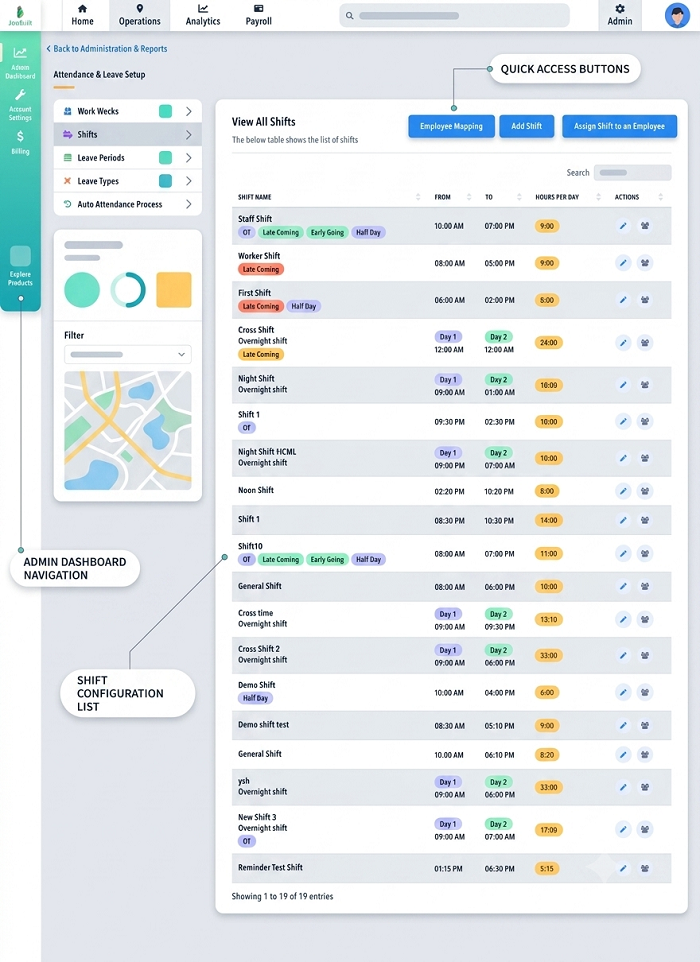
5. Prepare a Hari Raya Employee Shift Roster
A shift roster helps managers organise employee availability before, during and after Hari Raya.
Businesses operating throughout the festive period can divide employees into teams and assign different working schedules.
For example:
| Team | Coverage arrangement | Responsibility |
|---|---|---|
| Team A | Pre-Hari Raya | Complete urgent work before the holiday |
| Team B | Hari Raya period | Maintain essential operations |
| Team C | Post-Hari Raya | Handle increased workload after reopening |
| Backup team | As required | Cover approved replacements and emergencies |
Managers should consider:
- Employee availability.
- Approved annual leave.
- Weekly rest days.
- Shift rotation.
- Public holiday arrangements.
- Overtime requirements.
- Required employee skills.
- Maximum working-hour limits.
A well-designed roster should be communicated early so employees have sufficient time to plan their personal and family arrangements.
6. Create a Fair Annual Leave Approval Process
Annual leave requests often increase before Hari Raya. Managers should establish clear approval criteria to avoid confusion and employee dissatisfaction.
A fair approval process may consider:
- The date on which the request was submitted.
- Available staffing levels.
- Critical operational responsibilities.
- Previously approved leave.
- Employee leave entitlement.
- Opportunities for alternative leave dates.
- Consistency with company policy.
Managers should avoid approving all requests on a first-come, first-served basis without considering essential staffing needs. At the same time, they should not reject requests arbitrarily.
For example, if several employees in the same production team request leave for the same dates, the manager can discuss alternative arrangements with the employees and consider a rotation system.
Approved leave should be updated in the HR system so supervisors can view accurate employee availability.
7. Arrange Backup Employees and Cross-Training
Businesses should identify backup employees who can cover essential responsibilities when regular employees take Hari Raya leave.
Cross-training helps prevent operational disruption when key employees are unavailable.
Managers can prepare backup arrangements by:
- Identifying critical job responsibilities.
- Listing employees with relevant skills.
- Training employees to perform alternative tasks.
- Assigning backup supervisors.
- Preparing handover documents.
- Updating emergency contact lists.
- Confirming access to necessary systems and equipment.
For example, if a finance employee responsible for supplier payments will be on annual leave during Hari Raya, another authorised employee should be trained to handle urgent payment processing.
Businesses should also avoid assigning duties to employees who do not have the required training or authorisation.
8. Communicate Holiday Working Arrangements Clearly
Managers should communicate Hari Raya schedules early to avoid misunderstandings.
Employees should know which dates are normal working days, which are public holidays and which dates are company-declared closures or replacement holidays.
A holiday communication should explain:
- Official public holiday dates.
- Company closure dates.
- Working arrangements during the festive period.
- Approved shift schedules.
- Annual leave approval deadlines.
- Replacement holiday arrangements.
- Overtime approval procedures.
- Emergency contact details.
- Expected reopening date.
For businesses with multiple branches, HR should distribute the same approved information to all relevant locations.
Managers can use email, employee self-service portals, internal messaging applications and noticeboards to communicate the arrangements.
9. Review Public Holiday and Replacement Holiday Requirements
Managers must distinguish between annual leave, weekly rest days and paid public holidays.
Under Section 60D of the Employment Act 1955, employees covered by the provision are generally entitled to 11 paid public holidays in each calendar year, including five specified compulsory holidays and six other gazetted public holidays selected by the employer, subject to the statutory provisions.
The section also addresses replacement holidays where a qualifying public holiday falls on a rest day or another public holiday.
Employers should review:
- Whether Hari Raya dates are included in the applicable public holiday arrangements.
- Whether any additional public holiday has been officially declared.
- Whether a replacement holiday is required.
- Whether the employer has validly substituted a public holiday.
- Whether the arrangement has been communicated to employees.
The treatment of additional holidays and substitutions should be checked against the relevant legislation and official announcements.
For example, KESUMA's March 2026 announcement explained that the additional Hari Raya holiday was a public holiday applicable to private-sector employees subject to Section 60D of the Employment Act 1955, and employers should inform employees whether the declared date would be observed or replaced.
Managers should not automatically classify an additional government-declared public holiday as annual leave.
10. Calculate Public Holiday Pay and Overtime Correctly
Some businesses must continue operating during Hari Raya. Employees may therefore be scheduled to work on public holidays.
Managers should coordinate with HR and payroll teams before assigning employees to work on these dates.
For employees covered by the relevant provisions of the Employment Act 1955, Section 60D contains specific requirements concerning work on paid public holidays.
Under the statutory framework, employees entitled to paid public holidays who are required to work on those days may qualify for additional payment at the applicable public holiday rates. Overtime performed beyond normal working hours on a paid public holiday is subject to a separate statutory rate.
Payroll teams should check:
- The employee's applicable public holiday entitlement.
- Whether the date is a designated paid public holiday.
- Whether the employee was required to work.
- The employee's ordinary rate of pay.
- Hours worked during normal working hours.
- Any overtime performed beyond normal working hours.
- Whether the employee falls within the relevant statutory coverage.
Employers should also verify the rules applicable to employees in Sabah and Sarawak under their respective Labour Ordinances.
Managers should obtain the required approvals before assigning public holiday work and ensure that payroll receives accurate attendance information.
11. Monitor Employee Working Hours and Rest Days
Festive-period coverage should not result in excessive working hours or inadequate rest periods.
When managers prepare Hari Raya rosters, they should review applicable working-hour and rest-day requirements.
For employees covered by the Employment Act 1955, relevant provisions include:
- Section 59: Weekly rest day requirements.
- Section 60A: Hours of work and rest intervals.
- Section 60C: Shift work requirements.
- Section 60D: Paid public holidays.
Managers should check:
- Weekly working hours.
- Daily working schedules.
- Rest-day allocation.
- Break arrangements.
- Overtime hours.
- Shift rotation.
- Consecutive working days.
- Approved exceptions, where applicable.
For example, a security company maintaining 24-hour coverage during Hari Raya should prepare shifts that provide continuous site coverage while respecting the applicable working-hour and rest-day requirements.
12. Use HR Software to Manage Hari Raya Coverage
Managing annual leave, shift schedules and employee availability manually can be difficult during festive periods.
HR software can help managers coordinate workforce coverage through a centralised platform.
Useful features include:
- Employee leave calendars.
- Annual leave balance tracking.
- Public holiday calendars.
- Shift scheduling.
- Employee availability dashboards.
- Leave approval workflows.
- Replacement employee assignments.
- Overtime approval.
- Attendance monitoring.
- Payroll integration.
- Automated employee notifications.
For example, a manager can view the Hari Raya leave calendar and identify departments with insufficient coverage. The manager can then review alternative shifts or arrange trained backup employees before confirming the final roster.
Businesses should ensure that their software uses the correct holiday calendar for each employee's work location.
13. Prepare a Handover Plan Before the Festive Break
Employees taking extended leave should complete an appropriate handover before leaving.
A structured handover reduces the risk of missed deadlines, customer complaints and operational delays.
Managers should ask employees to document:
- Pending tasks.
- Outstanding customer requests.
- Project progress.
- Important deadlines.
- Supplier commitments.
- Access to relevant documents.
- Contact details for key stakeholders.
- Issues requiring urgent attention.
For example, a sales manager going on leave before Hari Raya may transfer urgent customer enquiries to another authorised team member and provide details of outstanding quotations.
Managers should also confirm that backup employees understand their responsibilities before the original employee begins leave.
14. Plan Customer and Supplier Communication
Hari Raya may affect supplier deliveries, customer appointments, bank processing and logistics schedules.
Businesses should communicate changes in advance to reduce operational confusion.
Managers should review:
- Customer service operating hours.
- Supplier delivery arrangements.
- Warehouse opening schedules.
- Shipping and dispatch deadlines.
- Payment processing timelines.
- Emergency support availability.
- Expected service resumption dates.
For example, a distribution business may notify customers that orders received before a particular date will be processed before the festive break, while later orders will be handled after operations resume.
This helps customers plan their requirements and reduces last-minute pressure on employees.
15. Review Payroll and Attendance Before and After Hari Raya
HR and payroll teams should review festive-period attendance information carefully.
Before payroll processing, businesses should confirm:
- Approved annual leave.
- Public holiday attendance.
- Replacement holiday records.
- Rest-day work.
- Overtime approvals.
- Shift allowances.
- Unpaid leave, where applicable.
- Attendance corrections.
After Hari Raya, HR should also check whether employees returned according to their approved schedules and whether any absence requires clarification.
Approved annual leave and public holidays should not be incorrectly recorded as unauthorised absence.
Businesses should maintain an audit trail for schedule changes, attendance corrections and public holiday payments.
16. Support Employee Wellbeing During Hari Raya
Workforce planning should balance business continuity with employee wellbeing.
Employees may need time to travel, spend time with family and observe festive traditions.
Managers can support employees by:
- Communicating leave arrangements early.
- Allowing reasonable flexibility where operationally possible.
- Rotating public holiday assignments fairly.
- Avoiding unnecessary last-minute schedule changes.
- Providing adequate rest between shifts.
- Recognising employees who support essential operations.
- Maintaining clear communication during the festive period.
Businesses may also consider voluntary shift swaps, flexible scheduling or alternative leave arrangements where these can be implemented lawfully and without compromising essential coverage.
Conclusion
Malaysia managers can plan workforce coverage for Hari Raya Aidilfitri by forecasting employee leave requests, identifying essential operations, preparing shift rosters and arranging backup employees. Early communication and coordinated planning between HR, department managers and payroll teams can help businesses maintain operations without creating unnecessary pressure on employees.
Employers should also review public holiday entitlements, replacement holiday arrangements, overtime payments and working-hour requirements under the applicable employment legislation.
By combining workforce planning with HR software and fair leave policies, businesses can manage festive-period staffing more effectively while allowing employees to celebrate Hari Raya with their families.
Hari Raya Aidilfitri often concentrates time-off requests across teams. InnBuilt Shift Management can help Malaysia managers compare approved leave with essential coverage and assign replacements early.