How Can Malaysia Businesses Resolve Missed Punches and Late Check-Ins?
How Can Malaysia Businesses Resolve Missed Punches and Late Check-Ins?
Accurate attendance records are essential for Malaysian businesses to manage working hours, calculate salaries, monitor punctuality and maintain employment compliance. However, missed clock-in or clock-out punches and late check-ins are common challenges, particularly in organisations with multiple branches, rotating shifts, mobile employees and large workforces.
A missed punch can result in incomplete working-hour records, incorrect overtime calculations or payroll discrepancies. Similarly, an unexplained late check-in may affect attendance reports, leave balances and disciplinary procedures. Businesses therefore need a consistent process to identify attendance exceptions, verify the facts, correct records and communicate decisions to employees.
This article explains how Malaysian businesses can resolve missed punches and late check-ins through clear policies, reliable attendance systems and structured HR procedures.
1. Understand Why Missed Punches and Late Check-Ins Occur
Before correcting an attendance record, employers should understand why the exception occurred. Not every missed punch or late arrival indicates employee misconduct.
Common causes include:
- Employees forgetting to clock in or out.
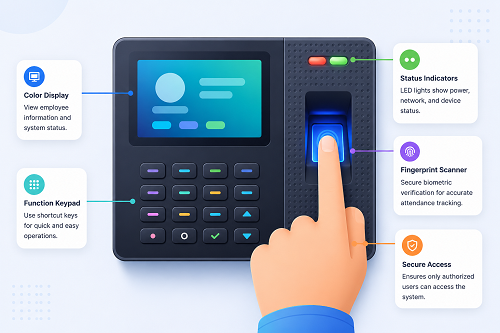
- Biometric scanners failing to recognise fingerprints.
- Attendance terminals losing network connectivity.
- Employees using the wrong attendance device.
- Mobile applications experiencing technical problems.
- Employees arriving late because of transport disruptions.
- Shift changes not being updated in the attendance system.
- Employees forgetting to record breaks or shift-end times.
- Supervisors failing to approve roster changes.
- Employees working at a different branch or location.
Identifying the reason helps HR teams distinguish between employee-related issues and technical or administrative problems.
For example, if several employees at the same factory cannot register their attendance because a biometric device is offline, the issue should be treated as a system failure rather than individual absenteeism.
2. Establish a Clear Missed-Punch Reporting Policy
Businesses should introduce a written attendance policy explaining how employees must report missed punches.
The policy should specify:
- How employees report missing clock-in or clock-out records.
- The deadline for submitting correction requests.
- What supporting information is required.
- Who approves attendance corrections.
- How HR verifies the employee's actual working hours.
- How employees can challenge an incorrect attendance record.
- What happens when employees repeatedly fail to follow the procedure.
A practical policy may require employees to report a missed punch as soon as they notice it or before the end of their shift.
For example, an employee who forgets to clock out at 6:00 p.m. should submit a correction request stating the actual departure time and the reason for the missing record.
The policy should also explain that submitting a correction request does not automatically guarantee approval. HR or the authorised supervisor must verify the information before updating the attendance record.
3. Allow Employees to Submit Attendance Correction Requests
An employee self-service facility can make missed-punch management faster and more transparent.
Instead of relying on informal messages or verbal explanations, employees should be able to submit correction requests through an attendance application, HR portal or standard form.
A correction request should capture:
| Required information | Purpose |
|---|---|
| Employee name and ID | Identifies the employee |
| Department and branch | Identifies the work location |
| Date of attendance | Identifies the affected day |
| Missing punch type | Identifies clock-in or clock-out |
| Actual punch time | Records the employee's claimed time |
| Reason for missing punch | Explains the exception |
| Supporting evidence | Helps verify the request |
| Supervisor approval | Confirms the review decision |
Supporting evidence may include approved duty schedules, supervisor confirmation, access-control records or relevant work logs.
Businesses should avoid requiring excessive personal information. The evidence requested should be proportionate to the attendance issue.
4. Verify Missed Punches Before Updating Records
HR teams should not automatically accept every attendance correction request. They should verify the claimed working time using reliable records.
Useful verification methods include:
Biometric attendance records: Check whether the employee attempted to use the fingerprint, facial recognition or other biometric device.
Access-control records: Review authorised building entry and exit records where these are available and appropriate for attendance verification.
Duty rosters: Compare the employee's scheduled shift with the reported attendance time.
Supervisor confirmation: Ask the reporting manager to confirm whether the employee was present and working.
Work assignment records: Review relevant job sheets, service logs or operational records where appropriate.
System audit logs: Check whether the attendance terminal or application experienced an outage.
For example, if an employee reports that they arrived at 8:55 a.m. but forgot to clock in, HR can compare the duty roster, supervisor confirmation and available access records before approving the correction.
The organisation should retain the original attendance entry and document the reason for any amendment. This creates an audit trail and helps prevent unauthorised changes.
5. Create a Standard Process for Handling Late Check-Ins
Late check-ins should be managed through a consistent procedure rather than informal decisions made by individual supervisors.
A recommended process includes:
- Identify the employee's scheduled starting time.
- Compare the scheduled time with the recorded clock-in.
- Calculate the actual delay.
- Check whether the employee has an approved schedule adjustment or flexible working arrangement.
- Ask the employee for an explanation when necessary.
- Review the explanation and supporting information.
- Record the decision in the attendance system.
- Apply the company's attendance policy consistently.
For example, an employee scheduled to start at 9:00 a.m. who clocks in at 9:18 a.m. has a recorded delay of 18 minutes. However, HR should first confirm whether the employee had an approved change to the shift or another authorised arrangement.
Businesses should distinguish between occasional delays, recurring lateness and situations caused by operational or system problems.
6. Differentiate Between Genuine Delays and Unauthorised Lateness
Not every late check-in should result in disciplinary action. Employers should consider the circumstances before deciding how to handle an attendance exception.
| Situation | Recommended HR action |
|---|---|
| Employee forgets to punch in but arrives on time | Verify and correct the missed punch |
| Attendance device is not working | Record the system issue and verify attendance through alternative evidence |
| Employee arrives late due to an approved schedule change | Update or confirm the authorised schedule |
| Employee experiences an occasional transport delay | Review the explanation under company policy |
| Employee repeatedly arrives late without approval | Conduct an attendance review and follow fair procedures |
| Employee works at another authorised location | Verify the assignment and update the attendance record |
A consistent approach helps businesses avoid treating genuine attendance-recording problems as misconduct.
Employers should also provide employees with an opportunity to explain disputed attendance entries before making decisions that could affect their employment records or pay.
7. Configure Attendance Software to Flag Exceptions Automatically
Manual attendance monitoring can become difficult when businesses manage hundreds of employees across multiple departments or locations.
Attendance software can automatically identify missing punches, late arrivals and unusual attendance patterns.
Useful system features include:
- Automatic missed-punch alerts.
- Late check-in notifications.
- Employee correction requests.
- Supervisor approval workflows.
- Shift-based attendance calculations.
- Attendance exception reports.
- Overtime and break-time monitoring.
- Audit trails for attendance changes.
- Integration with payroll software.
- Employee self-service access.
For example, if an employee clocks in but does not record a clock-out, the system can flag the attendance entry as incomplete. The employee can then submit a correction request, and the supervisor can review it before HR finalises the record.
Businesses should configure the system according to actual shift schedules, approved grace periods and applicable employment requirements.
8. Introduce a Fair Late-Arrival and Grace-Period Policy
Some Malaysian businesses introduce a grace period to manage minor differences between scheduled starting times and actual clock-ins.
For example, an employer may establish a five-minute grace period for operational convenience. However, a grace period is an internal policy choice, not a general statutory entitlement under Malaysian employment law.
A clear policy should explain:
- Whether a grace period applies.
- Whether it applies to all employees or specific shifts.
- How late arrivals are recorded.
- Whether repeated lateness triggers a review.
- How approved flexible schedules are treated.
- Whether the policy differs for shift-based operations.
Employers should not use a grace period to avoid maintaining accurate working-hour records.
They should also avoid automatically deducting wages or imposing penalties for late arrivals without checking the applicable employment legislation, contractual terms and wage-payment requirements.
9. Establish Supervisor Approval Workflows
Supervisors play an important role in resolving attendance exceptions because they often know whether employees reported for duty and completed their assigned work.
A structured approval workflow can prevent unauthorised attendance changes.
A typical workflow is:
Step 1: Employee submits request
Reports a missed punch or disputed late check-in
Step 2: Supervisor reviews
Checks shift schedule, work activity and available evidence
Step 3: HR verifies
Checks policy, attendance rules and supporting records
Step 4: Attendance record is updated
Approved corrections are recorded with an audit trail
For larger organisations, businesses can introduce different approval levels depending on the type of exception. A simple missed punch may require supervisor approval, while repeated discrepancies or disputed working hours may need additional HR review.
10. Monitor Attendance Corrections Through Regular Reports
Attendance reports help HR identify recurring problems and improve workforce management.
Businesses should regularly review the following reports:
| Report | What it helps identify |
|---|---|
| Missed-punch report | Employees with incomplete attendance entries |
| Late-arrival report | Frequency and duration of late check-ins |
| Attendance correction report | Number of manual attendance amendments |
| Pending approval report | Requests awaiting supervisor or HR action |
| Branch-wise exception report | Locations with recurring attendance problems |
| Device failure report | Attendance terminals with technical issues |
| Overtime discrepancy report | Differences between attendance and approved overtime |
| Employee attendance history | Individual attendance patterns over time |
For example, if a particular branch records frequent missed punches, HR can investigate whether the attendance terminal is poorly positioned, the network connection is unreliable or employees need additional training.
Reports should support investigation and improvement rather than automatically treating every exception as an employee violation.
11. Ensure Attendance Corrections Are Reflected Correctly in Payroll
Missed punches and late check-ins can affect payroll when attendance data is used to calculate payable hours, overtime, shift allowances or other wage components.
Before payroll processing, HR and payroll teams should reconcile attendance records with approved schedules and payroll inputs.
They should check:
- Whether all missed-punch requests have been reviewed.
- Whether approved corrections are reflected in the final attendance report.
- Whether actual working hours are calculated correctly.
- Whether overtime has been separately authorised and recorded.
- Whether approved leave or schedule adjustments are considered.
- Whether any attendance-related wage adjustment is lawful and properly supported.
- Whether payroll calculations follow the employee's applicable employment terms.
For example, if an employee's clock-out record is missing, the payroll team should not automatically treat the employee as having worked fewer hours. HR should first investigate the missing entry and establish the actual working time.
Attendance records should be finalised before payroll cut-off wherever practicable. Any unresolved exception should be escalated rather than silently converted into an assumed absence or deduction.
12. Follow Malaysian Employment and Data Protection Requirements
Businesses must manage attendance records in accordance with the employment legislation applicable to their employees.
Employment Act 1955
The Employment Act 1955 applies to employees within its territorial and statutory scope in Peninsular Malaysia and Labuan. Relevant provisions include:
- Section 60A: Regulates hours of work, rest intervals and overtime for covered employees.
- Section 60C: Provides rules for shift work, including the applicable averaging requirements.
- Section 61: Requires employers to maintain prescribed employee registers and retain the relevant particulars for the required period.
The general normal working-hour limit under Section 60A is 45 hours per week, subject to the Act's provisions and applicable exceptions. Shift workers are subject to the specific requirements under Section 60C.
Sabah and Sarawak
Employers operating in Sabah and Sarawak should not assume that the Employment Act 1955 applies in the same way throughout Malaysia.
The Sabah Labour Ordinance and Sarawak Labour Ordinance govern employment matters in their respective jurisdictions. Both ordinances were amended in 2025, with the amendments taking effect on 1 May 2025.
Businesses should check the relevant ordinance, subsidiary regulations and current Labour Department guidance before establishing attendance and working-hour procedures for employees in these states.
Personal Data Protection Act 2010
Attendance systems may collect personal information through employee IDs, photographs, facial recognition, fingerprints, location data and mobile applications.
Where the Personal Data Protection Act 2010 applies, employers should consider the following:
- Explain why attendance information is collected.
- Restrict access to authorised personnel.
- Use appropriate security controls.
- Avoid collecting unnecessary personal information.
- Establish suitable retention and deletion procedures.
- Provide relevant privacy information to employees.
- Assess the additional privacy implications of biometric and location-based attendance monitoring.
Employers should ensure that attendance data is used for legitimate workforce-management purposes and handled in accordance with applicable privacy requirements.
13. Train Employees and Supervisors on Attendance Procedures
Even a reliable attendance system can produce inaccurate records if employees do not understand how to use it.
Businesses should conduct regular training covering:
- Correct clock-in and clock-out procedures.
- How to use biometric terminals and mobile attendance applications.
- How to report missed punches.
- How to submit attendance correction requests.
- How to check personal attendance records.
- How to report technical problems.
- How shift changes affect attendance recording.
- How supervisors approve attendance exceptions.
Training should be provided to new employees and repeated when businesses introduce new attendance software or change their attendance policies.
Supervisors should also understand how to distinguish genuine system problems from repeated attendance-policy violations.
14. Common Mistakes Malaysia Businesses Should Avoid
Employers should avoid practices that can create inaccurate attendance records or unfair employee treatment.
Common mistakes include:
- Automatically rejecting missed-punch requests without investigating the circumstances.
- Treating every late check-in as misconduct.
- Allowing supervisors to change attendance records without an audit trail.
- Ignoring attendance-device failures.
- Applying different correction procedures across branches.
- Making unsupported salary deductions for missing punches.
- Failing to reconcile attendance data before payroll processing.
- Keeping biometric or location information without appropriate safeguards.
- Ignoring approved flexible schedules and shift changes.
- Applying Peninsular Malaysia employment rules without checking the separate requirements for Sabah and Sarawak.
A consistent, documented approach helps employers maintain reliable records while giving employees a fair opportunity to explain attendance discrepancies.
Conclusion
Malaysian businesses can resolve missed punches and late check-ins by combining clear attendance policies, employee correction requests, supervisor verification and reliable attendance software. Every attendance exception should be investigated before records are changed or payroll adjustments are considered.
Employers should maintain an audit trail for manual corrections, monitor recurring attendance issues and reconcile approved changes with payroll data. They should also ensure that attendance procedures reflect the applicable employment legislation in Peninsular Malaysia, Labuan, Sabah and Sarawak.
By adopting a transparent and consistent attendance-management process, businesses can reduce payroll errors, improve workforce accountability and maintain more accurate employee records.
A missed punch should not be confused with a late arrival. InnBuilt Attendance Software can help Malaysia supervisors flag each exception, capture explanations and record approved corrections.