How Can Malaysia HR Teams Handle Overlapping Leave Requests During Peak Periods?
How Can Malaysia HR Teams Handle Overlapping Leave Requests During Peak Periods?
Managing overlapping leave requests can be challenging for Malaysian HR teams, particularly during school holidays, festive seasons, year-end breaks and major public holiday periods. When several employees request leave for the same dates, businesses may struggle to maintain adequate staffing while ensuring that employees receive fair consideration.
If leave requests are handled inconsistently, organisations may experience understaffing, delayed customer service, employee dissatisfaction and payroll errors. HR teams therefore need a transparent leave approval process that balances operational requirements with employees' statutory entitlements and workplace policies.
A structured approach helps managers evaluate competing requests, maintain minimum staffing levels and communicate decisions fairly. This article explains how Malaysia HR teams can manage overlapping leave requests during peak periods.
1. Identify Peak Leave Periods in Advance
The first step is to identify periods when employees are more likely to request leave simultaneously.
Common peak leave periods in Malaysia include:
- Hari Raya Aidilfitri and Hari Raya Aidiladha.
- Chinese New Year.
- Deepavali.
- Christmas and year-end holidays.
- School holiday periods.
- Long weekends involving federal or state public holidays.
- Company shutdown periods.
- Major family or cultural celebration periods.
HR teams should review previous leave records to identify recurring patterns. For example, a manufacturing company may experience increased annual leave requests before Hari Raya, while a retail business may need more employees available during festive shopping periods.
Preparing a peak-period leave calendar helps managers anticipate staffing shortages and communicate deadlines early.
2. Establish a Clear Annual Leave Approval Policy
A written annual leave policy gives employees and managers a consistent framework for submitting and evaluating requests.
The policy should explain:
- How employees submit leave applications.
- How much advance notice is expected.
- Who approves leave requests.
- How overlapping requests are evaluated.
- Whether priority rules apply during peak periods.
- How cancellations and changes are handled.
- How employees are notified of approval or rejection.
- How urgent or exceptional leave requests are treated.
The policy should also distinguish between annual leave and other types of statutory or approved leave.
For employees covered by the Employment Act 1955, Section 60E provides minimum annual leave entitlements based on length of service:
| Length of service | Minimum annual leave entitlement |
|---|---|
| Less than 2 years | 8 days per year |
| 2 years to less than 5 years | 12 days per year |
| 5 years or more | 16 days per year |
These are statutory minimums for employees covered by the provision. Employment contracts, collective agreements or company policies may provide more favourable benefits.
HR should ensure that peak-period scheduling does not result in employees being unfairly deprived of their statutory annual leave entitlements.
3. Introduce Advance Leave Application Deadlines
When employees submit leave requests at the last minute, managers may have limited time to arrange replacement staff.
HR can introduce advance application deadlines for predictable peak periods.
For example:
| Leave period | Suggested application deadline |
|---|---|
| Hari Raya period | 6–8 weeks before the expected leave period |
| Chinese New Year | 6–8 weeks before the holiday |
| Deepavali period | 4–6 weeks before the holiday |
| Christmas and year-end | 6–8 weeks before the holiday |
| School holidays | 4–6 weeks before the holiday |
These are suggested administrative timelines, not statutory deadlines. Employers should communicate them clearly and allow reasonable consideration of exceptional circumstances.
An early application process gives managers enough time to compare requests, forecast staffing requirements and arrange temporary coverage.
4. Set Minimum Staffing Requirements for Each Department
Not every employee can be away from work at the same time. Businesses should identify the minimum number of employees required to maintain normal operations.
Managers should review staffing requirements based on:
- Department workload.
- Customer demand.
- Production targets.
- Employee skills and qualifications.
- Critical operational responsibilities.
- Required safety and supervision coverage.
- Available backup employees.
For example, a customer support department may need at least eight employees during a peak period. If six employees request annual leave for the same dates, the manager may need to approve fewer overlapping requests or arrange additional coverage.
A staffing matrix can help HR understand how many employees can be absent without affecting business operations.
| Department | Total employees | Minimum staff required | Maximum employees available for leave |
|---|---|---|---|
| Customer support | 15 | 8 | 7 |
| Finance | 10 | 6 | 4 |
| Warehouse | 20 | 14 | 6 |
| Administration | 8 | 4 | 4 |
The figures should be adjusted according to actual workload, shift arrangements and employee capabilities.
5. Use Fair and Transparent Priority Rules
When several employees request the same leave dates, managers need a consistent method for evaluating applications.
A first-come, first-served approach may be simple, but it may not always be appropriate. Employees with different responsibilities, family circumstances and previous leave opportunities may be affected differently.
HR can establish a balanced priority framework using factors such as:
- Whether the employee has already received priority during previous peak periods.
- Whether the employee has a time-sensitive personal commitment.
- Whether the employee has alternative dates available.
- Whether the employee's absence would create a critical skills shortage.
- Whether the employee has made the request within the announced deadline.
- Whether the employee has already been scheduled to work during earlier festive periods.
Priority criteria should be objective, documented and applied consistently.
Managers should avoid decisions based on personal relationships, favouritism, discrimination or assumptions about employees' family responsibilities.
Practical tip: Keep records of previous peak-period approvals. This helps managers distribute popular leave dates more fairly over time.
6. Introduce a Rotation System for Popular Leave Dates
A rotation system can help employees take turns receiving preferred leave dates during major festive periods.
For example, if a department has limited staffing during Hari Raya, managers can maintain a record of which employees received priority in previous years.
| Employee group | Previous year | Current year |
|---|---|---|
| Group A | Priority for festive leave | Secondary priority |
| Group B | Secondary priority | Priority for festive leave |
| Group C | Worked during the festive period | Priority consideration |
This approach can reduce repeated conflicts and improve employee confidence in the approval process.
However, rotation should not override statutory leave rights or prevent employees from requesting leave for exceptional circumstances. HR should retain flexibility to consider individual situations.
7. Encourage Employees to Coordinate Leave Requests
Employees within the same department may sometimes coordinate their leave dates voluntarily.
For example, two employees who perform similar administrative duties may agree to take leave during different weeks so that the department always has sufficient coverage.
Managers can encourage employees to:
- Discuss preferred dates with teammates.
- Suggest alternative leave periods.
- Avoid submitting duplicate requests without checking team coverage.
- Share information about critical work responsibilities.
- Arrange handovers before approved leave begins.
Such coordination should remain voluntary. Employees should not be pressured to surrender statutory leave entitlements or disclose unnecessary personal information to colleagues.
8. Offer Alternative Leave Dates When Requests Overlap
When a preferred date cannot be approved because of operational requirements, managers should consider offering alternative dates.
For example, if several employees request the same five working days during a festive period, HR may propose staggered leave arrangements.
| Employee | Original request | Suggested alternative |
|---|---|---|
| Employee A | 1–5 February | 1–5 February |
| Employee B | 1–5 February | 8–12 February |
| Employee C | 1–5 February | 15–19 February |
| Employee D | 1–5 February | 8–12 February |
The final arrangement should depend on employee agreement, staffing requirements and applicable leave rules.
Managers should explain why a request cannot be accommodated and provide reasonable alternatives wherever possible.
Importantly, an employer's operational needs should not be used as a reason to indefinitely prevent employees from taking their statutory annual leave.
9. Distinguish Annual Leave from Public Holidays and Other Leave Types
One common source of leave management errors is treating every employee absence as annual leave.
HR should maintain separate records for:
- Annual leave.
- Paid sick leave.
- Hospitalisation leave.
- Maternity leave.
- Paternity leave.
- Rest days.
- Paid public holidays.
- Unpaid leave.
- Other contractual or company-approved leave.
Under Section 60D of the Employment Act 1955, eligible employees are entitled to paid public holidays. Section 60E contains annual leave requirements, while Section 60F covers paid sick leave.
For example, if a public holiday falls during an employee's approved annual leave, HR should check the applicable statutory rules before deducting any annual leave balance. Section 60D(1B) provides for a substitute paid holiday in specified circumstances when a qualifying public holiday or its substituted day falls during annual leave or sick leave.
Similarly, statutory sick leave should not be rejected simply because several employees have already booked annual leave for the same period. HR must assess each leave category under the relevant legal provisions.
10. Use HR Software to Manage Overlapping Leave Requests
Manual spreadsheets and email approvals can make it difficult to identify overlapping leave applications, particularly when a business operates across several departments or locations.
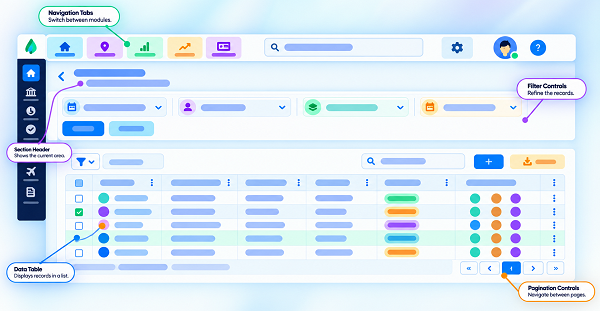
HR software can centralise leave requests and provide managers with a clear view of employee availability.
Useful features include:
| Software feature | How it helps HR |
|---|---|
| Shared leave calendar | Displays overlapping leave requests |
| Automated approval workflow | Sends requests to the correct manager |
| Leave balance tracking | Shows available annual leave |
| Department-level availability | Helps managers maintain minimum staffing |
| Conflict notifications | Highlights excessive overlapping requests |
| Approval history | Records who approved or rejected each request |
| Leave reports | Identifies peak-period leave patterns |
| Payroll integration | Transfers approved leave information for payroll processing |
For example, if five employees from the same department request leave for the same week, the system can alert the manager before approval.
However, software should support managerial decisions rather than automatically reject requests without considering statutory entitlements, company policies and exceptional circumstances.
11. Communicate Leave Approval Decisions Clearly
Employees should receive timely updates about their leave applications.
A good communication process should explain:
- Whether the request is approved, rejected or pending.
- The dates covered by the decision.
- The reason for any rejection or proposed change.
- Alternative dates, where available.
- The employee's remaining leave balance.
- Any handover or work-planning requirements.
Managers should avoid leaving requests unanswered until the peak period approaches.
For example, if an employee requests annual leave during Chinese New Year, the manager should review the request within the company's stated approval timeframe and explain any operational constraints.
Clear communication helps prevent misunderstandings and allows employees to make personal arrangements with sufficient notice.
12. Arrange Temporary Coverage and Cross-Training
Sometimes several employees need leave during the same period, but the business cannot reduce its operations.
In these situations, HR and department managers can arrange alternative coverage.
Possible arrangements include:
- Cross-training employees to perform essential tasks.
- Reassigning available employees temporarily.
- Engaging temporary staff where appropriate.
- Adjusting non-critical project deadlines.
- Arranging supervisor coverage.
- Introducing staggered working schedules where lawful.
- Prioritising essential customer and operational activities.
For example, a finance department may have several employees requesting leave during the year-end period. Cross-training employees in invoice processing and payment verification can help maintain essential services.
Any changes to working hours, shifts or duties should comply with applicable employment requirements and contractual arrangements.
13. Monitor Leave Balances and Prevent Excessive Accumulation
When leave requests are repeatedly deferred during peak periods, employees may accumulate unused annual leave.
HR should monitor leave balances throughout the year rather than waiting until the final month.
For employees covered by the Employment Act 1955, Section 60E contains rules concerning the timing of annual leave and payment in lieu in specified circumstances. Employers should review these statutory requirements before applying company carry-forward or expiry policies.
Useful monitoring activities include:
- Monthly leave balance reports.
- Alerts for employees with high unused balances.
- Identification of repeatedly deferred leave requests.
- Advance communication about leave planning.
- Monitoring of statutory deadlines.
- Review of termination-related leave payments.
A proactive approach allows managers to spread leave more evenly throughout the year and reduces the likelihood of a large number of employees requesting leave simultaneously.
14. Maintain Accurate Leave Approval and Rejection Records
Documentation is important when employees question why their leave applications were treated differently.
HR should maintain records of:
- Original leave applications.
- Application and approval dates.
- Manager decisions.
- Reasons for rejection or modification.
- Alternative dates offered.
- Employee responses.
- Leave balance adjustments.
- Attendance and payroll records.
Records should be accessible only to authorised personnel and handled in accordance with applicable personal data protection requirements, including the Personal Data Protection Act 2010 where relevant.
Maintaining an audit trail helps HR review whether managers have followed the company's leave policy consistently.
Practical Checklist for Managing Overlapping Leave Requests
| Activity | Recommended HR action |
|---|---|
| Peak-period planning | Identify festive seasons and high-demand leave periods |
| Leave policy | Publish clear approval rules |
| Application deadlines | Communicate suggested advance-notice periods |
| Staffing review | Establish minimum department coverage |
| Priority framework | Apply objective and consistent criteria |
| Rotation system | Track previous peak-period approvals |
| Alternative dates | Offer reasonable alternatives where possible |
| Leave classification | Separate annual, sick and public holiday records |
| HR software | Track overlapping requests and leave balances |
| Temporary coverage | Cross-train staff and arrange backups |
| Communication | Notify employees promptly |
| Recordkeeping | Maintain approval and rejection histories |
Conclusion
Handling overlapping leave requests during peak periods requires careful planning, transparent approval rules and effective communication. Malaysia HR teams should identify busy leave periods early, establish minimum staffing requirements and apply fair priority criteria when several employees request the same dates.
A rotation system, alternative leave arrangements, cross-training and centralised HR software can help businesses manage employee availability without disrupting operations. At the same time, employers must respect statutory annual leave and other applicable leave entitlements.
By combining workforce planning with consistent leave management practices, Malaysian businesses can reduce scheduling conflicts, improve employee satisfaction and maintain business continuity throughout the year.
Overlapping leave requests can leave a busy team short-staffed. InnBuilt leave management can help Malaysia HR compare dates, approvals and team coverage before confirming time off.