How Can Malaysia Warehouses Manage Shift Handoffs and Seasonal Workers?
Introduction
Warehouses in Malaysia often experience changing workforce requirements due to customer demand, delivery schedules, inventory movements, promotional campaigns, and seasonal business peaks. During busy periods, businesses may need additional temporary employees to support picking, packing, sorting, loading, unloading, and stock replenishment. At the same time, warehouses operating across multiple shifts must ensure that important operational information is transferred accurately between outgoing and incoming teams.
Poor shift handoffs can lead to misplaced inventory, unfinished orders, delayed dispatches, equipment issues, and confusion about employee responsibilities. Seasonal workers can create additional challenges when they join with limited experience, work on short-term contracts, or move between different warehouse activities.
Malaysia warehouse operators can address these challenges through structured shift handoff procedures, flexible workforce scheduling, digital attendance systems, employee training, and clear supervisor responsibilities. Combining these practices helps businesses maintain operational continuity while managing a workforce that changes throughout the year.
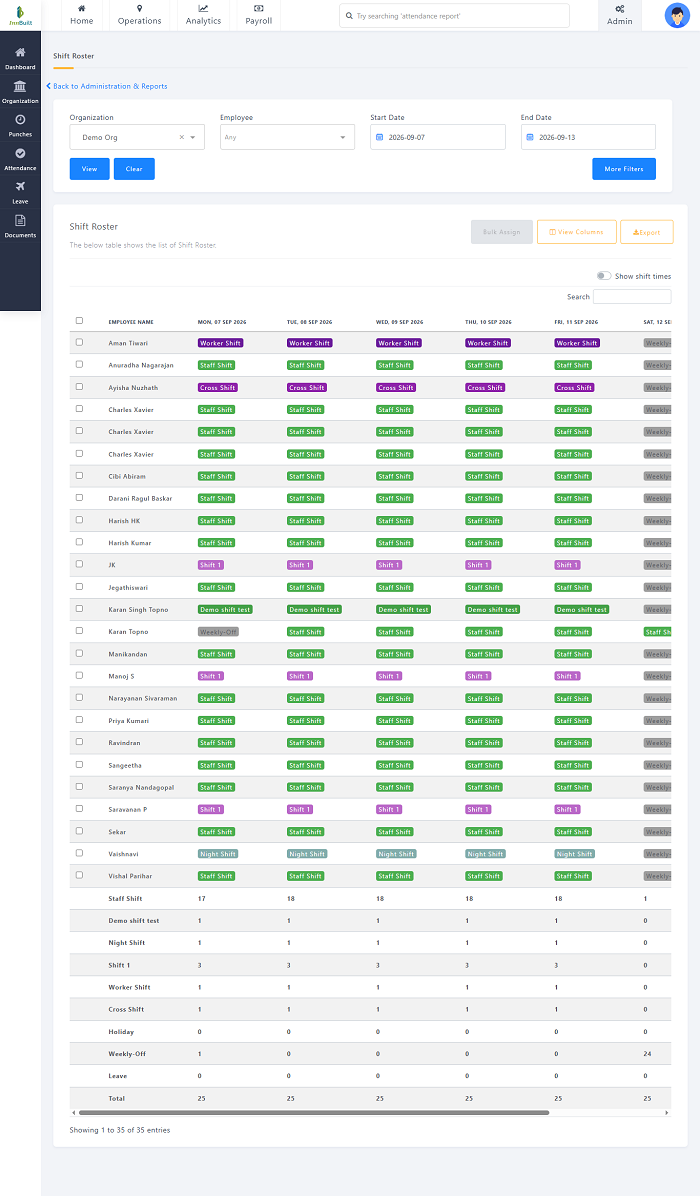
1. Prepare a Clear Shift Handoff Checklist
A structured handoff checklist helps outgoing employees communicate important information to the incoming shift. Instead of relying on informal conversations, warehouses should establish a standard process for recording unfinished tasks, inventory exceptions, equipment conditions, and pending dispatch activities.
A typical handoff checklist may include:
- Orders picked but not yet packed.
- Orders packed but awaiting dispatch.
- Pending receiving and put-away activities.
- Inventory discrepancies and damaged stock.
- Items awaiting quality inspection.
- Equipment faults or maintenance requests.
- Outstanding loading and unloading activities.
- Safety incidents or operational concerns.
- Temporary staffing shortages.
- Tasks requiring supervisor approval.
For example, if the morning shift completes most of a large customer order but leaves several cartons pending, the outgoing supervisor should record the remaining quantity and identify the location where the work is continuing.
This allows the evening team to resume the task without repeating completed work or overlooking outstanding items.
2. Assign Handoff Responsibilities to Warehouse Supervisors
Warehouse shift handoffs should have clear ownership. When everyone assumes that another employee has communicated important information, operational details can be missed.
Warehouse managers should assign specific responsibilities to outgoing and incoming supervisors.
| Responsibility | Outgoing supervisor | Incoming supervisor |
|---|---|---|
| Review completed tasks | Confirm completed work | Check reported status |
| Pending orders | Record outstanding orders | Assign follow-up work |
| Inventory exceptions | Report discrepancies | Verify and investigate |
| Equipment condition | Report faults | Confirm equipment status |
| Staff attendance | Report shortages and changes | Confirm available workforce |
| Safety concerns | Communicate incidents | Brief the incoming team |
| Handoff approval | Submit handoff record | Acknowledge receipt |
Both supervisors should confirm that essential information has been communicated. Digital acknowledgement can create a record showing when the handoff was completed and who accepted responsibility.
3. Use Digital Attendance Systems to Monitor Shift Changes
Accurate attendance records help warehouse managers understand whether the incoming team is available when the previous shift finishes.
Digital attendance systems can record employee check-ins, check-outs, scheduled working hours, late arrivals, and approved overtime. These records are particularly useful when warehouses operate morning, evening, and overnight shifts.
A warehouse attendance system should support:
- Multiple shift schedules.
- Overnight shifts that cross midnight.
- Employee-specific shift assignments.
- Temporary and permanent employee records.
- Approved shift changes.
- Late-arrival and absence alerts.
- Overtime approvals.
- Attendance reports by department or work area.
For example, a warehouse may schedule one team from 7:00 AM to 3:00 PM and another from 3:00 PM to 11:00 PM. The system should identify the correct shift even when an employee checks out after midnight due to approved additional work.
Attendance data should also be reviewed alongside shift schedules. A missing check-in may reflect a device issue, an approved schedule change, or an employee reporting to a different entrance rather than an actual absence.
4. Build Flexible Schedules for Seasonal Workforce Demand
Warehouses may experience significant increases in workload during festive periods, major online shopping campaigns, year-end sales, and other peak-demand periods.
In Malaysia, workforce requirements may increase around Hari Raya, Chinese New Year, Deepavali, school holidays, and major e-commerce promotions, depending on the business and customer base.
Managers should forecast staffing requirements using historical order volumes, expected deliveries, inventory levels, and customer commitments.
A seasonal staffing plan can include:
| Period | Expected workload | Workforce planning approach |
|---|---|---|
| Normal operations | Stable daily orders | Maintain regular staffing |
| Festive preparation | Increasing stock movements | Add temporary picking and packing staff |
| Promotional campaigns | High order volumes | Introduce additional shifts where appropriate |
| Peak dispatch period | Heavy loading and delivery activity | Increase dispatch and loading support |
| Post-peak period | Reduced order volumes | Adjust temporary staffing based on demand |
Forecasting helps businesses avoid recruiting too many temporary workers or operating with insufficient manpower during busy periods.
5. Maintain Separate Records for Permanent and Seasonal Workers
Seasonal workers may join a warehouse for a limited period, while permanent employees continue working throughout the year. Both groups need accurate employee records and attendance monitoring.
Warehouse HR teams should maintain clear records for every worker, including:
- Employee identification details.
- Employment or engagement category.
- Start date and expected end date.
- Assigned department or work area.
- Supervisor details.
- Scheduled working hours.
- Attendance history.
- Training and safety induction status.
- Approved leave and absence records.
Temporary workers should not be treated as informal additions to the workforce. Their employment arrangements, working hours, payment terms, and applicable statutory obligations should be documented and reviewed.
Where workers are supplied through an agency, the warehouse should clarify which organisation is responsible for recruitment, employment administration, attendance verification, payroll processing, and other contractual obligations.
6. Provide Quick but Effective Training for Seasonal Employees
Temporary workers may have limited experience with warehouse processes. Without proper induction, they may make picking errors, mishandle goods, use equipment incorrectly, or overlook safety procedures.
A structured onboarding programme should introduce seasonal employees to the tasks they are authorised to perform.
Training should cover:
- Warehouse layout and designated work areas.
- Attendance and shift reporting procedures.
- Product identification and barcode scanning.
- Picking, packing, and labelling processes.
- Inventory handling and stock movement.
- Manual handling and workplace safety.
- Emergency procedures and reporting channels.
- Supervisor contacts and escalation procedures.
Employees assigned to specialised equipment or higher-risk activities should receive the necessary training and authorisation before performing those tasks.
Short training videos, illustrated work instructions, checklists, and supervised practice can help seasonal workers become familiar with warehouse processes more quickly.
7. Organise Work Areas to Support Seasonal Staff
During peak periods, seasonal employees may be assigned to different warehouse activities based on workload. Managers should make sure that temporary assignments are clearly communicated and recorded.
For example, a seasonal employee may begin in the packing area and later move to order picking because dispatch volumes have increased.
The assignment process should identify:
- Employee name or ID.
- Original department.
- New work area.
- Assigned task.
- Effective date and time.
- Responsible supervisor.
- Required training or authorisation.
This helps managers understand where workers are deployed and prevents confusion when attendance records, task allocation, and payroll information are reviewed.
8. Use Digital Handoff Logs to Record Pending Work
Paper-based handoff notes can be difficult to maintain when several shifts operate across different warehouse zones. Digital handoff logs allow supervisors to record and review operational updates in a shared system.
A useful handoff log may contain:
| Handoff information | Example |
|---|---|
| Shift | Morning shift |
| Work area | Packing zone |
| Pending activity | 120 cartons awaiting final packing |
| Inventory issue | 15 units require verification |
| Equipment issue | Conveyor inspection required |
| Staffing update | Two temporary workers absent |
| Priority for next shift | Complete urgent customer orders |
| Supervisor acknowledgement | Incoming supervisor confirmation |
Digital records help incoming teams understand the status of operations without relying entirely on verbal communication.
Managers should also define who can create, edit, approve, and close handoff records. Changes should be traceable to support accountability.
9. Monitor Seasonal Worker Attendance and Absence Patterns
Seasonal staffing can be less predictable than permanent workforce scheduling. Some temporary employees may be unfamiliar with the warehouse, while others may have short-term availability or changing shift commitments.
Warehouse managers should monitor attendance patterns to identify staffing gaps early.
Useful attendance indicators include:
- Scheduled versus actual headcount.
- Late arrivals.
- Unplanned absences.
- Early departures.
- Missed check-outs.
- Shift-change requests.
- Approved overtime.
- Attendance by department or work area.
For example, if the packing department expects 20 seasonal workers but only 16 report for a scheduled shift, the supervisor can review priorities and reallocate available employees where they are trained to work.
Attendance reports should be used to support staffing decisions, not to make automatic assumptions about an employee's conduct. Employees should be able to explain disputed or incomplete attendance records.
10. Plan Breaks and Rest Days Across Multiple Shifts
Warehouse operations may need to continue during busy periods, but managers should not schedule employees without considering applicable working-hour, break, rest-day, and overtime requirements.
A shift plan should identify:
- Scheduled start and end times.
- Meal and rest breaks.
- Weekly rest days.
- Approved shift rotations.
- Overtime requirements.
- Public holiday arrangements.
- Minimum staffing requirements for critical warehouse areas.
For example, if the loading team has to operate continuously during a peak dispatch period, managers can arrange staggered breaks so that essential activities remain covered.
Employers should review the applicable employment requirements under the relevant Malaysian labour legislation. The Employment Act 1955 generally applies in Peninsular Malaysia and Labuan, while separate labour ordinances apply in Sabah and Sarawak. Requirements should be checked for the relevant location and worker category.
11. Coordinate Shift Handoffs With Inventory Management
A shift handoff should include inventory information because stock movements can continue across multiple shifts.
If the outgoing team records an incomplete receiving activity but the incoming team assumes the stock has already been entered into the inventory system, discrepancies may occur.
Warehouse teams should communicate:
- Goods received but not yet inspected.
- Stock awaiting put-away.
- Picking shortages.
- Damaged or returned goods.
- Inventory adjustments awaiting approval.
- Items placed in temporary storage.
- Orders awaiting final verification.
Barcode scanning and warehouse management systems can improve the accuracy of stock movement records. However, physical stock discrepancies should still be investigated and resolved through the appropriate inventory-control process.
12. Use Workforce Management Software for Seasonal Scheduling
Managing permanent and temporary employees through separate spreadsheets can create administrative difficulties. Workforce management software can provide a central view of employee assignments, attendance, shift schedules, and approvals.
A suitable system may support:
| Feature | Operational benefit |
|---|---|
| Flexible shift scheduling | Helps manage changing seasonal demand |
| Employee categorisation | Separates permanent and temporary workforce records |
| Digital attendance | Records actual check-in and check-out events |
| Shift handoff logs | Communicates unfinished work |
| Supervisor approvals | Controls schedule changes and overtime |
| Attendance alerts | Highlights staffing shortages |
| Payroll integration | Supports verified working-hour calculations |
| Reporting dashboards | Shows workforce availability by department |
Before selecting software, warehouse operators should check whether the platform supports temporary employee onboarding, multiple shifts, overnight schedules, agency worker arrangements, and integration with existing warehouse or payroll systems.
13. Maintain Clear Communication Between Incoming and Outgoing Teams
Technology cannot replace effective communication. Warehouse employees should understand how to report incomplete work, equipment problems, safety risks, and unexpected changes in staffing.
A short shift handoff meeting can help supervisors review urgent matters before the incoming team begins its duties.
The discussion should focus on:
- Current warehouse priorities.
- Pending customer orders.
- Inventory and dispatch exceptions.
- Equipment and maintenance issues.
- Staffing shortages.
- Temporary worker assignments.
- Safety reminders.
- Tasks requiring immediate attention.
For larger facilities, managers can use a combination of digital handoff records and short team briefings. This approach ensures that critical information is available in writing and understood by the people responsible for the next shift.
14. Protect Employee Data When Managing Seasonal Workers
Warehouse attendance systems may collect employee names, identification details, work schedules, attendance timestamps, and, where used, biometric information.
Malaysia employers should assess their obligations under the Personal Data Protection Act 2010 and its 2024 amendments when collecting and processing employee information in commercial activities.
Good data protection practices include:
- Explain why employee attendance and work assignment information is collected.
- Limit collection to information required for legitimate operational purposes.
- Restrict access according to job responsibilities.
- Use appropriate security measures for digital attendance records.
- Establish retention and deletion procedures.
- Review data-handling arrangements with recruitment agencies and software providers.
- Assess cross-border data transfers where information is stored or processed overseas.
- Provide employees with a channel to raise questions or correct inaccurate records.
Seasonal employees should receive the same clear information about relevant attendance and data-handling procedures as permanent employees.
15. Review Warehouse Performance After Each Seasonal Peak
Once a busy period ends, managers should review how effectively the warehouse handled shift changes and temporary staffing.
A post-season review can identify problems that may otherwise repeat during the next peak period.
Useful performance indicators include:
- Shift handoff completion rate.
- Number of incomplete handoff records.
- Attendance gaps by shift.
- Seasonal worker absenteeism.
- Time required to onboard temporary employees.
- Picking and packing error rates.
- Inventory discrepancies.
- Dispatch delays.
- Overtime hours.
- Safety incidents and reported hazards.
For example, if the night shift repeatedly receives incomplete inventory information from the evening team, warehouse managers can improve the handoff checklist or assign a specific employee to verify inventory updates before shift closure.
These reviews help businesses improve staffing forecasts, training programmes, warehouse procedures, and technology usage.
Best Practices for Malaysia Warehouses
To manage shift handoffs and seasonal workers effectively, warehouse operators should follow these practical steps:
- Standardise handoff procedures: Use a checklist for unfinished orders, stock issues, equipment faults, and safety concerns.
- Assign clear ownership: Make outgoing and incoming supervisors responsible for confirming handoff information.
- Plan seasonal recruitment early: Use historical order volumes and expected demand to estimate staffing requirements.
- Maintain accurate worker records: Record employment details, assignments, schedules, and training status.
- Train temporary employees: Provide suitable induction before assigning operational duties.
- Monitor attendance by shift: Compare scheduled and actual staffing levels.
- Record temporary assignments: Track changes between picking, packing, loading, and other work areas.
- Coordinate breaks and rest days: Maintain adequate coverage while following applicable employment requirements.
- Integrate workforce and warehouse systems: Connect verified attendance and work assignments with operational planning.
- Review performance regularly: Use attendance, handoff, inventory, and dispatch data to improve future planning.
Conclusion
Malaysia warehouses can manage shift handoffs and seasonal workers more effectively by combining structured communication, flexible workforce scheduling, digital attendance tracking, and clear employee assignment procedures. A standard handoff process helps outgoing and incoming teams share information about unfinished orders, inventory exceptions, equipment problems, and staffing changes.
At the same time, proper seasonal workforce management ensures that temporary employees are registered, trained, assigned appropriate duties, and included in attendance and payroll processes. Digital workforce management systems can simplify these activities by providing a central view of shifts, attendance, employee assignments, and supervisor approvals.
Successful warehouse operations depend on more than filling vacant shifts. Businesses need to make sure that every team understands its responsibilities and has the information required to continue work safely and efficiently. By reviewing handoff records and seasonal staffing performance, warehouse managers can reduce operational disruption and prepare more effectively for future demand peaks.
Seasonal hires and staggered handovers can complicate warehouse coverage. InnBuilt Shift Management can help Malaysia teams review who is finishing, starting and filling temporary roster gaps.