How Can Qatar Event Organisers Track Temporary Staff Across Venues?
How Can Qatar Event Organisers Track Temporary Staff Across Venues?
Introduction
Event organisers in Qatar often manage temporary staff across exhibition halls, hotel conference centres, stadiums, outdoor festivals, corporate events, and other venues. Employees may work as registration assistants, ushers, catering staff, security personnel, technicians, cleaners, brand promoters, and event coordinators. When several events take place simultaneously, managing attendance, shift coverage, staff movement, and workforce costs can become complicated.
Manual attendance sheets, messaging groups, and spreadsheets may not provide sufficient real-time visibility for multi-venue events. To prevent coverage gaps, attendance disputes, and delays, organisers need a systematic approach to staff tracking.
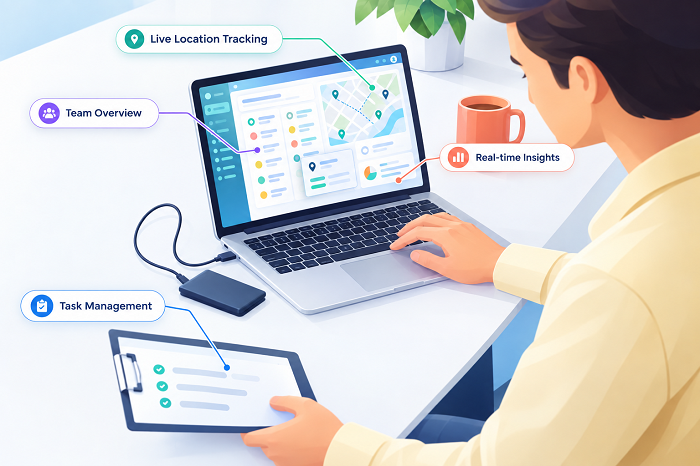
Below are 12 practical strategies Qatar event organisers can use to track temporary staff effectively across multiple venues.
1. Create a Centralised Temporary Staff Database
Before any event starts, compile a single master database containing every temporary worker’s profile. This central record ensures everyone is properly accounted for before assignment.
- Include full names, contact details, identification numbers (Qatar ID or passport number), and emergency contact information.
- Categorize workers by role, skill set, spoken languages, and security clearance level.
- Store details of staffing agencies or third-party vendors supplying the workforce.
- Keep digital copies of signed agreements, safety briefing confirmations, and work permits where required.
2. Assign Staff to Specific Events, Venues, and Zones
Tracking is much easier when every temporary worker knows exactly where they belong during each shift. Avoid vague assignments like "DECC Exhibition Hall"—break down locations into specific sub-zones.
- Assign staff to defined venues (e.g., DECC, Qatar National Convention Centre, Katara Cultural Village, or Lusail Stadium).
- Specify exact zones within the venue, such as Hall 1 Registration, Gate 3 VIP Entrance, Green Room, or Media Centre.
- Specify exact shift start times, end times, and reporting locations.
- Designate specific team leaders or zone supervisors for each group of workers.
3. Use Mobile Check-In and Check-Out
Paper sign-in sheets are prone to errors, lost pages, and buddy punching. Replacing them with a mobile check-in process gives managers real-time visibility over staff arrival times.
- Equip supervisors with a smartphone or tablet app to scan staff badges upon arrival.
- Allow temporary workers to check in using their own smartphones via a dedicated web link or mobile app.
- Capture precise timestamps for shift start, shift end, and break times.
- Flag late arrivals or missing staff automatically so supervisors can take prompt corrective action.
4. Use Venue-Specific QR Codes or Geofencing
To ensure staff are physically present at the assigned venue when checking in, leverage location validation technology.
QR-code attendance
Display unique, dynamic QR codes at supervisor stations or venue entrances. Workers scan the code using their mobile devices to record attendance upon arrival.
Geofenced attendance
Set up a virtual geographical boundary (geofence) around the event venue using GPS coordinates. The system only permits check-in when the worker's device is within the designated perimeter.
Choosing the appropriate method
QR codes work exceptionally well for indoor exhibition halls and convention centres where GPS signals may drift or weaken. Geofencing suits large outdoor festivals, stadium perimeters, and open-air venues.
5. Give Supervisors a Real-Time Attendance Dashboard
Operations managers need a single, real-time dashboard to monitor workforce status across all active event venues simultaneously.
- View total staff present, absent, late, or currently on break across all venues.
- Monitor coverage ratios per venue and zone (e.g., 8 out of 10 registration staff checked in at DECC).
- Receive immediate automated alerts for unstaffed critical positions or sudden drop-offs in attendance.
- Filter data easily by venue, department, shift, or supplying agency.
6. Track Staff Transfers Between Venues
During large multi-venue events, staff often need to be redeployed mid-shift based on crowd flow or unexpected demands.
- Require staff to check out of their current venue zone before transferring to a new location.
- Log transfer request reasons and approval times to maintain clear operational accountability.
- Notify the receiving venue supervisor when staff are in transit and when they safely arrive.
- Maintain full visibility over travel times between venues to accurately log working hours.
7. Monitor Shift Changes, Breaks, and Overtime
Extended event days can lead to worker fatigue and compliance issues if rest breaks and shift handovers are not tracked properly.
- Log scheduled break times (lunch, dinner, prayer breaks) to ensure adequate zone coverage is maintained.
- Track actual hours worked versus scheduled shift lengths to prevent unapproved overtime expenses.
- Establish clear digital handovers between outgoing and incoming shifts so critical event information is passed along smoothly.
- Ensure compliance with local Qatari labor rules regarding maximum continuous working hours and mandatory rest periods.
8. Reconcile Attendance With Payroll and Staffing Agency Records
Temporary staffing costs can escalate quickly if attendance records do not match agency invoices. Digital tracking simplifies reconciliation.
- Generate automated digital timesheets directly from verified check-in and check-out timestamps.
- Cross-reference daily attendance data against invoices submitted by manpower agencies or recruitment vendors.
- Identify discrepancies in billable hours, late arrivals, or unworked shifts prior to approving final payments.
- Maintain transparent, audit-ready attendance logs for event sponsors, clients, and internal finance departments.
9. Prepare for Last-Minute Absences and Event Emergencies
No-shows and sudden absences are common when managing temporary event staff. Having real-time visibility enables swift adjustments.
- Maintain a standby list of vetted temporary workers who can be deployed on short notice.
- Set up automated alerts for no-shows within 15–30 minutes of shift commencement.
- Establish emergency communication protocols to broadcast urgent updates or safety messages to all active venue staff simultaneously.
- Keep contingency uniform items and ID credentials available at main venue control points for rapid onboarding.
10. Protect Worker Information and Location Data
Tracking workforce movement requires collecting personal details and location data, which must be handled securely and responsibly.
- Collect only necessary personal information required for identification and event operational security.
- Restrict location tracking strictly to working hours and active venue perimeters.
- Store worker profiles, IDs, and attendance records in encrypted, secure database systems.
- Ensure full compliance with relevant Qatari data privacy and protection regulations.
11. Establish a Standard Operating Procedure for Every Event
To ensure consistent workforce management across various event sizes, document standard procedures and train all supervisors prior to execution.
- Conduct pre-event briefing sessions for venue supervisors on attendance tools, mobile check-in protocols, and troubleshooting.
- Provide temporary workers with simple, clear instructions on how to check in, request breaks, and contact their team leads.
- Designate onsite IT or operations support staff to assist with mobile device issues or login problems during peak hours.
- Document clear escalation steps for handling unauthorized absences, behavioral issues, or security concerns.
12. Measure the Effectiveness of Staff Tracking
After each event concludes, review staff performance and tracking data to refine future event operations.
- Analyze overall attendance rates, punctuality percentages, and drop-out rates across different venues and agencies.
- Evaluate agency vendor performance based on accuracy of provided staff count, punctuality, and compliance.
- Identify peak demand hours and venue bottlenecks to optimize future staffing allocations.
- Gather feedback from onsite supervisors and temporary staff to streamline the check-in process for upcoming events.
Frequently Asked Questions
1. How can Qatar event organisers track temporary staff at multiple venues?
Organisers can track staff effectively by implementing a centralized digital database, assigning workers to specific venue zones, and using mobile check-in tools equipped with QR codes or geofencing technology for location verification.
2. Is GPS tracking necessary for temporary event staff?
Continuous GPS tracking is generally unnecessary and can raise privacy concerns. Geofenced check-ins or QR code scanning at specific venue access points are typically sufficient to verify worker presence during shift start and end times.
3. How can organisers prevent proxy attendance?
Proxy attendance ("buddy punching") can be prevented by combining mobile QR code scans or geofencing with supervisor-led visual verification, photo check-in, or scanning unique worker ID badges at designated entry checkpoints.
4. How should organisers track workers transferred between venues?
Organisers should require workers to check out of their current venue location and check in upon arrival at the new venue using mobile devices. This ensures clear visibility during transit and maintains accurate records of hours worked per venue.
5. Can digital attendance records help reduce payroll errors?
Yes. Digital check-in and check-out logs automatically calculate accurate working hours, eliminating manual entry errors and making it easy to reconcile agency invoices against verified attendance data before issuing payment.
Conclusion
Tracking temporary staff across multiple venues in Qatar requires a combination of structured planning, clear zone assignments, and efficient digital attendance technology. By replacing manual sign-in processes with venue-specific check-ins, real-time dashboards, and clear transfer workflows, event organisers can maintain full operational visibility, reduce administrative overhead, ensure accurate payroll reconciliation, and deliver seamless multi-venue event experiences.
Temporary event crews change from venue to venue. InnBuilt Attendance Software can help Qatar organisers assign staff by event, review mobile check-ins and confirm worked hours.