How Can Qatar Logistics Operators Track Driver Check-Ins and Delivery Routes?
How Can Qatar Logistics Operators Track Driver Check-Ins and Delivery Routes?
Logistics operators in Qatar manage complex transportation activities involving delivery drivers, fleet vehicles, warehouses, distribution centres, customer locations, and multiple delivery routes. Maintaining visibility across these operations is essential for meeting delivery commitments, controlling fuel and labour costs, and ensuring accurate attendance and payroll records.
However, tracking drivers can become challenging when vehicles operate across different locations, delivery schedules change throughout the day, and dispatchers rely on phone calls, paper logs, or spreadsheets to monitor progress. Missing check-in records, unplanned route changes, delayed deliveries, and inaccurate working-hour information can affect customer satisfaction and operational efficiency.
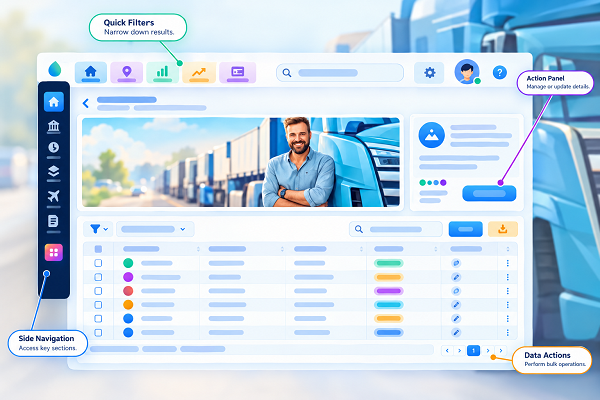
A digital driver attendance and route-tracking system helps logistics companies connect driver check-ins, vehicle assignments, GPS location data, delivery milestones, and timesheets in one workflow. Managers can monitor vehicle movements, identify delays, verify delivery attempts, and review attendance exceptions from a central dashboard.
This article explains how Qatar logistics operators can track driver check-ins and delivery routes, improve fleet visibility, and connect transport records with workforce management and payroll processes.
1. Create a Centralised Driver and Vehicle Database
The first step is to maintain accurate records of drivers, vehicles, routes, and delivery assignments.
Logistics businesses may employ delivery drivers, heavy-vehicle operators, van drivers, fleet supervisors, warehouse staff, and transport coordinators. Each driver should have a unique identifier linked to the appropriate employment record, vehicle assignment, and work schedule.
A centralised database should contain relevant information such as:
- Driver ID and employee details.
- Assigned vehicle and registration reference.
- Driving licence and relevant authorisation details.
- Employment or contractor status.
- Assigned shift and reporting location.
- Delivery route or trip number.
- Dispatch supervisor.
- Vehicle inspection status, where applicable.
- Current assignment and availability.
Companies should establish procedures for updating vehicle assignments, driver substitutions, and changes in work locations.
For example, if a driver is reassigned from a delivery van to a different vehicle, the system should record the new assignment and its effective time. This helps managers identify who was responsible for a particular trip and reduces confusion when reviewing delivery or attendance records.
Personal information should be collected only for legitimate operational purposes and protected through appropriate access controls.
2. Record Driver Check-Ins at the Start of Each Shift
Driver attendance tracking should begin before the vehicle leaves the depot, warehouse, or designated reporting location.
A structured check-in process helps confirm that the assigned driver has reported for work and is ready to begin the scheduled trip.
Depending on operational requirements, check-in methods may include:
- Mobile attendance applications: Drivers use an approved application to record their attendance and confirm their assigned shift.
- Biometric devices: Drivers check in using an authorised fingerprint or facial-recognition device at a depot or warehouse.
- RFID or employee ID cards: Drivers tap a registered card at a designated attendance terminal.
- Supervisor-assisted check-in: A fleet supervisor records or verifies attendance when digital devices are unavailable.
A shift check-in should be linked to the driver’s identity, scheduled working time, reporting location, and assigned trip or vehicle where relevant.
The system should also distinguish between reporting for work, completing a vehicle inspection, leaving the depot, and arriving at the first delivery location. These are different operational events and should not be treated as interchangeable.
Why driver check-ins matter
Accurate check-in records help logistics operators:
- Identify absent or late-reporting drivers.
- Arrange replacement drivers before dispatch.
- Confirm workforce availability.
- Link drivers to vehicle and trip assignments.
- Maintain more reliable timesheets.
- Investigate discrepancies between scheduled and actual working hours.
3. Use GPS Tracking to Monitor Delivery Routes
GPS tracking helps dispatchers understand where vehicles are travelling and whether trips are progressing as planned.
A fleet tracking system can receive location data from an installed vehicle-tracking device or an authorised mobile application. The information can be displayed on a map alongside vehicle assignments, delivery stops, and planned routes.
For logistics operators serving customers across Doha, Lusail, Al Rayyan, Al Wakrah, and other areas of Qatar, this visibility can help dispatchers coordinate deliveries and respond to changing conditions.
Useful GPS tracking features include:
- Live or periodically refreshed vehicle locations.
- Planned and actual route comparisons.
- Vehicle departure and arrival timestamps.
- Stop and dwell-time records.
- Route deviation alerts.
- Geofence notifications.
- Trip history and journey reports.
- Exception reporting for unexpected delays.
GPS data should be interpreted carefully. Location updates may be delayed by connectivity problems, device limitations, or poor satellite reception. A location record can support route monitoring, but it does not automatically establish whether a delivery was completed or whether a driver was working continuously.
Companies should define when tracking operates, who can view location information, and how the records are retained.
4. Plan Delivery Routes Before Dispatch
Route tracking is most useful when dispatchers have a planned route against which to compare actual vehicle movements.
Before dispatch, logistics teams should group delivery stops according to location, vehicle capacity, customer appointment windows, delivery priorities, and driver availability.
A route plan should identify:
- Starting depot or warehouse.
- Assigned driver and vehicle.
- Planned delivery stops.
- Expected arrival windows.
- Delivery priorities.
- Special handling or access instructions.
- Planned return or final destination.
- Contingency arrangements for delays.
Route-planning software can help reduce unnecessary travel by grouping nearby delivery locations and arranging stops in a practical sequence.
However, the shortest route is not always the most suitable. Dispatchers should also consider vehicle restrictions, road conditions, customer opening hours, delivery deadlines, loading requirements, and operational safety.
A well-prepared route gives drivers clear instructions and helps managers identify when a delay requires intervention.
5. Verify Delivery Milestones at Each Customer Location
GPS tracking can show that a vehicle reached a location, but logistics operators often need additional evidence to confirm that a delivery was attempted or completed.
A delivery management system can connect each stop to a specific delivery order and record the relevant milestones.
For example, a driver may record:
- Arrival at the customer location.
- Start of unloading or delivery activity.
- Delivery completion or failed delivery.
- Customer acknowledgement, where required.
- Departure from the location.
Depending on the delivery type, supporting evidence may include an electronic proof of delivery, a recipient's signature, a delivery reference, a scan of the relevant package barcode, or an authorised photograph.
Companies should define which evidence is appropriate for each type of delivery. Photographs and customer details should be collected only when necessary and in accordance with company policy and applicable data-protection requirements.
Handle unsuccessful delivery attempts
If the recipient is unavailable, the address is incorrect, or access is restricted, the driver should record the reason rather than marking the delivery as complete.
The system can then notify dispatchers and support decisions about rescheduling, customer contact, or return-to-depot arrangements.
This reduces disputes and helps companies distinguish between late deliveries, completed deliveries, and unsuccessful attempts.
6. Use Geofencing for Depot and Delivery-Site Events
Geofencing uses a virtual boundary around a defined location. When a tracked device enters or leaves that boundary, the system can generate an event or notification.
Logistics operators can use geofencing around:
- Warehouses and distribution centres.
- Vehicle parking areas.
- Loading and unloading zones.
- Customer delivery locations.
- Designated collection points.
- Vehicle maintenance facilities.
For example, when a vehicle enters a warehouse geofence, the system may record an arrival event. When it exits, the system may record the departure time.
These events can help compare planned dispatch times with actual movements and identify delays at loading bays or customer locations.
Geofencing should not be treated as conclusive proof of a delivery. GPS accuracy may vary, particularly around large buildings or dense urban areas. Companies should combine geofence events with delivery scans, work orders, customer acknowledgements, or other relevant evidence.
7. Monitor Route Deviations and Unexpected Stops
A route-tracking system can compare the vehicle's actual movement with its assigned route and flag deviations that require attention.
Potential exceptions include:
- A vehicle travelling outside the planned route.
- An unexpected stop.
- A missed delivery location.
- A delayed arrival.
- A vehicle returning to the depot earlier than expected.
- A delivery completed outside the scheduled window.
- A location record that does not match the assigned trip.
Not every deviation indicates a problem. Drivers may need to take an alternative road because of traffic, road closures, customer instructions, vehicle issues, or safety concerns.
Dispatchers should review the circumstances before taking action. A practical exception workflow allows the driver to submit a reason, the dispatcher to assess the impact, and the system to retain the relevant notes and approval history.
The objective is to improve delivery reliability and safety, not to treat every route variation as misconduct.
8. Connect Driver Attendance With Trip and Vehicle Assignments
Driver check-ins become more useful when they are connected to the actual trip.
For example, a driver may report for work at 7:00 a.m., complete a vehicle inspection, leave the depot at 7:30 a.m., reach the first customer at 8:15 a.m., and finish the final delivery in the afternoon.
The system should record these events separately so that managers can distinguish attendance from driving and delivery activity.
A combined workflow can connect:
- Employee check-in.
- Vehicle assignment.
- Pre-trip inspection.
- Dispatch approval.
- Depot departure.
- Delivery milestones.
- Breaks and other work activities.
- Return-to-depot or shift-end events.
- Employee check-out.
This makes it easier to investigate discrepancies and understand how time was spent during the shift.
It also helps managers identify whether delays originate from late reporting, vehicle preparation, loading, route conditions, customer access, or delivery processing.
9. Manage Driver Working Hours and Fatigue
Driver scheduling must account for the nature of the vehicle, the work performed, applicable employment rules, and road-safety requirements.
Logistics operators should not rely solely on vehicle movement to calculate an employee's working hours. A driver may perform loading, paperwork, vehicle inspections, customer service, or other duties while the vehicle is stationary.
A robust system should distinguish between:
- Scheduled shift duration.
- Actual attendance.
- Driving activity.
- Loading and unloading.
- Approved breaks.
- Waiting time, where relevant to the applicable policy.
- Other assigned duties.
- Overtime and rest periods.
Employers should establish clear procedures for reporting fatigue, arranging relief drivers, and managing extended trips. Dispatchers should avoid unrealistic delivery schedules that encourage unsafe driving or prevent drivers from taking required breaks.
Qatar's employment requirements and any applicable transport, road-safety, or sector-specific rules should be checked before configuring work-hour and rest-period alerts. Requirements may differ depending on the worker category and type of transport operation.
10. Coordinate Drivers, Dispatchers, and Warehouse Teams
Driver tracking works best when dispatchers, warehouse personnel, and drivers share accurate information.
For example, a driver may arrive at the depot on time but leave late because goods are not ready. Without connected operational records, the delay may be incorrectly attributed to the driver.
A centralised logistics platform can help teams coordinate:
- Warehouse teams: Update picking, packing, loading, and dispatch readiness.
- Dispatchers: Assign routes, monitor progress, and communicate schedule changes.
- Drivers: Receive delivery instructions, report exceptions, and submit delivery evidence.
- Customer service teams: Provide customers with status updates and manage complaints.
- Fleet managers: Review vehicle availability, maintenance requirements, and route performance.
A shared dashboard reduces the need for repeated phone calls and helps managers understand where a delivery delay originated.
11. Integrate Route Tracking With Payroll and Timesheets
Driver attendance and route data may support payroll processing, but companies should define how each data source is used.
Attendance records can establish when an employee reported for work. Vehicle tracking can show trip activity. Delivery records can confirm operational milestones. Timesheets bring together the working-time information required for review.
These records serve different purposes and should not be treated as interchangeable.
A recommended reconciliation process is:
- Compare the driver's scheduled shift with the recorded attendance.
- Review trip departure and return events.
- Identify missing check-ins or check-outs.
- Review breaks and other work activities under company policy.
- Investigate unusual working-hour patterns.
- Verify overtime and obtain required approvals.
- Transfer verified time records to payroll.
- Retain supporting records and correction histories.
For employees covered by Qatar's Labour Law, ordinary working hours and overtime are subject to specific statutory provisions and exceptions. Employers should confirm the applicable rules and compensation requirements before calculating payable hours.
For contractor drivers, companies should also distinguish employee payroll from contractual service charges and invoice verification.
12. Protect Driver Location and Personal Data
GPS tracking can provide valuable operational information, but it also creates responsibilities for protecting driver privacy and customer information.
Logistics operators should establish a clear policy describing the purpose and scope of location monitoring.
Recommended safeguards include:
- Informing drivers about the relevant tracking practices.
- Restricting access to authorised personnel.
- Using secure authentication and protected data transfers.
- Defining appropriate retention periods.
- Recording changes to attendance and route records.
- Limiting tracking to legitimate operational needs.
- Reviewing third-party fleet software providers' data-handling practices.
- Establishing a process for correcting inaccurate records.
Companies should review Qatar's applicable personal-data protection requirements, including Law No. 13 of 2016 on Protecting Personal Data Privacy, when implementing GPS or mobile tracking.
Location information should not be collected or retained without a clear business purpose. Access to route histories should be controlled, and managers should consider legitimate explanations before drawing conclusions from a location alert.
13. Choose Logistics Software With Driver Tracking Features
A fleet management or logistics platform can combine attendance, route monitoring, delivery tracking, and reporting.
When evaluating software, Qatar logistics operators should consider the following features:
| Feature | Business Benefit |
|---|---|
| Driver attendance management | Records employee check-in and check-out |
| GPS fleet tracking | Shows vehicle locations and trip histories |
| Route planning | Helps organise delivery stops |
| Geofencing | Generates arrival and departure events at defined locations |
| Electronic proof of delivery | Records delivery outcomes and acknowledgements |
| Driver mobile application | Provides job details and exception reporting |
| Vehicle assignment management | Links drivers to vehicles and trips |
| Dispatch dashboard | Gives managers a central view of delivery activity |
| Offline support | Helps preserve records when connectivity is unreliable |
| Timesheet and payroll integration | Reduces duplicate data entry |
| Alerts and exception reports | Highlights delays, missing records, and unusual activity |
| Audit trail and access controls | Supports accountability and data protection |
Before choosing a platform, businesses should test whether it works with their vehicles, mobile devices, existing systems, and operating conditions.
A pilot involving a limited number of drivers and delivery routes can help validate location accuracy, reporting, offline synchronisation, and payroll integration before a full rollout.
14. Measure Driver Attendance and Delivery Performance
Key performance indicators help managers identify problems and improve logistics operations.
| KPI | What It Measures |
|---|---|
| Driver attendance rate | The proportion of scheduled drivers who report for work |
| On-time departure rate | The proportion of trips leaving within the planned window |
| On-time delivery rate | The proportion of deliveries completed within the agreed time |
| Route deviation rate | The frequency of trips requiring route-exception review |
| Failed delivery rate | The proportion of delivery attempts that are unsuccessful |
| Missing attendance record rate | The frequency of incomplete check-in or check-out data |
| Vehicle utilisation | How effectively available vehicles are deployed |
| Overtime hours | Additional hours requiring review and approval |
| Delivery exception resolution time | How quickly operational issues are resolved |
| Payroll adjustment rate | The frequency of time-record issues requiring payroll corrections |
Managers should interpret these indicators alongside traffic conditions, delivery complexity, vehicle availability, customer access, and other operational factors.
For example, a low on-time delivery rate may be caused by inaccurate route planning or warehouse loading delays rather than driver performance alone.
15. Implement Driver Tracking in Phases
A phased implementation can help logistics operators introduce driver tracking without disrupting daily deliveries.
Phase 1: Assess existing operations
Review attendance registers, dispatch procedures, route-planning methods, delivery documentation, and payroll workflows.
Phase 2: Standardise driver and vehicle records
Create consistent driver IDs, vehicle references, depot assignments, and trip identifiers.
Phase 3: Introduce digital check-ins
Pilot mobile or depot-based attendance and establish procedures for missing records and shift changes.
Phase 4: Configure route monitoring
Set up vehicle tracking, planned routes, delivery milestones, and appropriate geofences.
Phase 5: Connect delivery and attendance records
Link driver attendance with trip assignments, proof of delivery, and timesheet reporting.
Phase 6: Train employees and supervisors
Explain how to check in, report delays, record unsuccessful deliveries, and correct inaccurate information.
Phase 7: Review performance and expand
Monitor operational KPIs, gather driver feedback, resolve technical problems, and extend the system to additional vehicles and routes.
Frequently Asked Questions (FAQs)
1. How can logistics companies in Qatar track driver attendance?
Companies can use mobile attendance applications, biometric devices, employee ID cards, or supervisor-assisted check-ins. Linking attendance records to driver IDs, shifts, depots, and trip assignments improves accuracy.
2. Can GPS tracking confirm that a delivery was completed?
No. GPS can help show that a vehicle reached a location, but it does not prove that the goods were delivered successfully. Companies should combine location information with delivery scans, electronic proof of delivery, customer acknowledgement, or other appropriate evidence.
3. How can Qatar logistics operators monitor delivery routes?
They can use fleet tracking software to compare planned routes with actual vehicle movements, monitor arrival times, identify route deviations, and review unexpected stops. Dispatchers should investigate alerts before deciding whether corrective action is needed.
4. Can driver tracking software help reduce payroll errors?
Yes. Linking attendance, trip records, timesheets, and approved overtime can reduce manual data entry and help identify missing or inconsistent records. Companies must still apply the relevant employment rules and distinguish driving activity from the employee's total working time.
5. How can companies manage missed deliveries?
Drivers should record the outcome and reason for each unsuccessful attempt. Dispatchers can then contact the customer, arrange a new delivery window, update the route, and retain the relevant exception history.
Conclusion
Tracking driver check-ins and delivery routes is essential for Qatar logistics operators seeking better fleet visibility, reliable attendance records, and more consistent delivery performance.
A structured approach combines centralised driver records, digital attendance, GPS route monitoring, delivery verification, exception management, and clear procedures for working-hour records. Integrating these processes helps dispatchers respond to delays, supports accurate timesheets, and improves coordination between drivers, warehouses, and customer service teams.
For businesses managing multiple vehicles and delivery locations, logistics and fleet management software can provide a centralised view of workforce and transport activity. By combining appropriate technology with driver training, data protection, and regular performance reviews, logistics operators can improve operational efficiency while maintaining accountability across their delivery networks.
InnBuilt Employee Tracking App can connect Qatar driver check-ins with assigned delivery routes, giving dispatchers a clearer view of starts, stops and missed handoffs.