What Working-Hour and Rest-Break Rules Should Qatar Employers Consider When Scheduling Shifts?
What Working-Hour and Rest-Break Rules Should Qatar Employers Consider When Scheduling Shifts?
Qatar employers need to consider statutory working-hour limits, meal and prayer breaks, overtime, night work, weekly rest, and Ramadan schedules when preparing employee rosters. These requirements are particularly important for businesses operating in construction, facilities management, hospitality, healthcare, manufacturing, logistics, and security services.
For employers covered by Qatar's Labour Law No. 14 of 2004, Articles 73–77 establish important rules for ordinary working hours, rest intervals, overtime, weekly rest, and workplace notices. However, certain employee categories and sectors may be subject to different provisions, so employers should confirm which rules apply to their workforce.
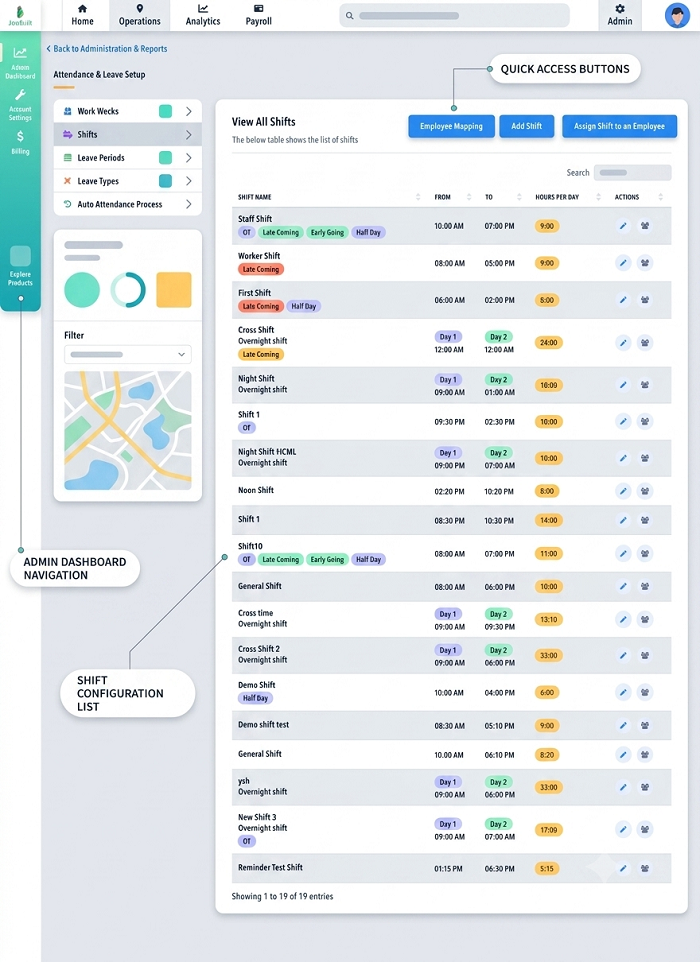
1. Understand the Ordinary Working-Hour Limits
Under Article 73 of Qatar's Labour Law, the maximum ordinary working hours for covered employees are:
| Period | Maximum ordinary hours per day | Maximum ordinary hours per week |
|---|---|---|
| Most months | 8 hours | 48 hours |
| Ramadan | 6 hours | 36 hours |
These limits refer to ordinary working hours. Employers must separately account for permitted overtime and applicable exceptions. The statutory figures should not be treated as a universal schedule for every worker or employment category.
When preparing rosters, employers should:
- Define each employee's normal shift and scheduled working hours.
- Calculate weekly totals across all shifts and work locations.
- Check whether breaks are excluded from working-hour totals.
- Avoid relying on overtime to compensate for routinely inadequate staffing.
- Review the requirements applicable to employees with special working arrangements.
For example, a company scheduling employees for six ordinary eight-hour shifts in a week would need to review the roster carefully because it could exceed the general 48-hour weekly limit.
2. Schedule Mandatory Rest and Meal Breaks
Article 73 requires one or more intervals for prayer, rest, and meals, totalling at least one hour and no more than three hours under the general rule. These intervals are excluded from the calculation of working hours. Employees must not work for more than five consecutive hours without a break, subject to legally authorized exceptions for certain types of work.
Employers should build breaks directly into the shift roster rather than expecting employees to arrange them informally.
For example, a roster might schedule a shift from 7:00 a.m. to 4:00 p.m., with a one-hour break. This gives eight hours of working time, assuming the employee works the full scheduled period and the break is genuinely non-working time.
Employers should ensure that:
- Breaks are scheduled before an employee reaches five consecutive working hours.
- Employees can take the required breaks in practice, not just on paper.
- Shift coverage is maintained without cancelling or repeatedly delaying breaks.
- Break records accurately reflect the actual arrangement.
- Any proposed exception is checked against the applicable legal authorization.
Important: A break should not be automatically deducted from attendance records if employees are required to continue performing their duties during that period. Employers should confirm the correct treatment based on the actual working arrangement and applicable law.
3. Account for Overtime and Daily Working-Hour Limits
Article 74 permits additional working hours, but generally limits actual working time to 10 hours per day, except where additional work is necessary to prevent serious loss or a dangerous accident or to mitigate the consequences. The law also establishes minimum overtime payment requirements.
Employers should establish an approval process before extending a shift.
A practical overtime workflow should include:
- The supervisor records the operational reason for the additional hours.
- The employee's scheduled and actual working hours are checked.
- The manager verifies the applicable daily and weekly limits.
- Approved overtime is recorded separately from ordinary hours.
- Payroll applies the correct overtime rate and maintains supporting records.
Under Article 74, overtime pay is generally calculated at no less than the basic wage for the relevant hours plus an increment of at least 25%. The law also provides for an additional increment of at least 50% for qualifying work between 9:00 p.m. and 6:00 a.m., with an exception for shift workers. Employers should verify the rules applicable to the employee's category and shift arrangement before calculating payments.
4. Prepare Separate Shift Rules for Ramadan
During Ramadan, the general maximum ordinary working hours under Article 73 fall to six hours per day and 36 hours per week for covered employees. Employers should prepare Ramadan rosters in advance rather than simply shortening individual shifts informally.
HR and operations teams should:
- Update the approved shift templates before Ramadan begins.
- Communicate revised start times, finish times, and break arrangements.
- Recalculate scheduled weekly hours.
- Review overtime and payroll configurations.
- Coordinate handovers between day and night teams.
- Ensure site supervisors use the correct Ramadan roster.
Employers should not assume that all employee categories follow the same rules. Any exception or special arrangement should be checked against the applicable legislation and employment category.
5. Provide a Paid Weekly Rest Period
Article 75 requires a paid weekly rest period of at least 24 consecutive hours under the general rule. Friday is the usual weekly rest day, except for shift workers. Where work circumstances require an employee to work on the weekly rest day, the law provides for compensatory rest and the applicable payment arrangements. It also restricts employing covered non-shift workers on two consecutive Fridays.
When preparing rosters, employers should:
- Allocate a continuous weekly rest period to each employee.
- Identify employees who are scheduled to work on the usual rest day.
- Record compensatory rest and the relevant payment treatment.
- Avoid repeated schedule changes that remove an employee's planned rest.
- Review consecutive-week schedules, not just individual shifts.
For businesses operating around the clock, such as hotels, hospitals, facilities management companies, and security services, a rotating rest-day plan can help maintain coverage while preserving the required rest period.
6. Consider Night Shifts and Shift Handover Times
Night work requires careful scheduling because it can affect fatigue, safety, overtime calculations, and payroll.
Employers should identify which employees qualify as shift workers under the applicable rules rather than assuming that anyone scheduled at night automatically falls into the legal shift-worker category.
Useful controls include:
- Publishing a clear shift roster.
- Recording the actual start and end times.
- Checking whether overtime or night-work increments apply.
- Providing adequate staffing for shift handovers.
- Reviewing consecutive shifts and fatigue risks.
- Maintaining an accurate record of changes and substitutions.
For example, if a maintenance technician finishes a late shift and is scheduled to return early the next morning, the employer should review the full sequence of working hours and rest periods instead of assessing each shift independently.
7. Review Qatar's Summer Outdoor-Work Restrictions
Employers scheduling outdoor work must consider Qatar's separate heat-stress protection requirements in addition to ordinary working-hour rules.
For 2026, Qatar's Ministry of Labour campaign confirmed that Ministerial Decision No. 17 of 2021 prohibits work in open outdoor areas, and shaded areas without adequate ventilation, from 10:00 a.m. to 3:30 p.m. between 1 June and 15 September. The rules also require appropriate heat-stress prevention measures.
This is particularly relevant to construction, roadworks, landscaping, delivery support, and outdoor maintenance.
Employers should:
- Design summer shifts around the restricted period.
- Display the approved working schedule at the worksite.
- Provide suitable shaded and cooled rest areas.
- Ensure access to drinking water and appropriate protective equipment.
- Monitor heat conditions and follow applicable work-stoppage and safety procedures.
- Keep evidence of schedules and safety measures.
A schedule that meets ordinary hour limits may still be unsuitable if it breaches summer outdoor-work restrictions or fails to protect employees from heat stress.
8. Publish Working Hours and Rest Intervals
Article 77 requires employers to display a schedule showing working hours, rest intervals, and the weekly closure or rest day at the relevant workplace locations, and to provide a copy to the competent department.
Employers should make sure that the displayed information matches the actual roster. Where different departments or employee categories follow different schedules, the applicable arrangements should be clearly identified.
A published schedule should specify:
- Normal start and finish times.
- Rest and meal intervals.
- Weekly rest day.
- Shift arrangements.
- The procedure for reporting schedule changes.
- The person responsible for approving exceptions.
9. Use Attendance Software to Validate Shift Compliance
Attendance and workforce-management software can help employers apply these rules consistently across departments and worksites.
A well-configured system can flag:
- Employees approaching daily or weekly hour limits.
- Shifts with missing or incorrectly scheduled breaks.
- Employees working more than five consecutive hours.
- Unapproved overtime.
- Weekly rest periods that are missing or too short.
- Ramadan rosters that have not been updated.
- Outdoor work scheduled during restricted summer hours.
- Missing clock-in or clock-out records.
These alerts should prompt a review rather than automatically determine a legal violation. Supervisors need to verify the actual circumstances, the employee's category, and any relevant legal exceptions.
10. Maintain Accurate Records and Review Exceptions
Employers should maintain reliable records of planned shifts, actual attendance, breaks, overtime approvals, weekly rest, and schedule changes. These records help HR teams investigate discrepancies and support payroll calculations.
A monthly compliance review can include:
| Review area | What to check |
|---|---|
| Ordinary working hours | Daily and weekly totals |
| Rest breaks | Timing, duration, and missed breaks |
| Overtime | Authorization, hours, and payment treatment |
| Weekly rest | Consecutive rest hours and compensatory arrangements |
| Ramadan schedules | Correct roster and hours configuration |
| Summer work | Compliance with outdoor restrictions and safety measures |
| Payroll | Reconciliation of approved attendance and overtime |
| Recordkeeping | Complete, accurate, and accessible shift records |
Employers should correct errors promptly and retain an audit trail showing who changed a record, why the change was made, and who approved it.
Conclusion
When scheduling shifts in Qatar, employers should consider ordinary daily and weekly working-hour limits, mandatory rest and meal intervals, overtime, night work, weekly rest, Ramadan schedules, and summer outdoor-work restrictions. These requirements should be incorporated into workforce planning before shifts are published.
A combination of clear shift policies, accurate attendance records, automated alerts, supervisor accountability, and regular compliance reviews can help employers reduce scheduling errors and support reliable payroll processing.
Because Qatar's Labour Law contains exceptions for certain categories and arrangements, employers should confirm the rules applicable to their workforce and seek qualified local advice when necessary.
Shift plans need clear hour and break records. InnBuilt Shift Management can help Qatar employers compare scheduled work with actual attendance and review exceptions against their applicable policies.