How to Use Face Attendance Software in Compliance with Saudi Arabia’s PDPL
How to Use Face Attendance Software in Compliance with Saudi Arabia’s PDPL
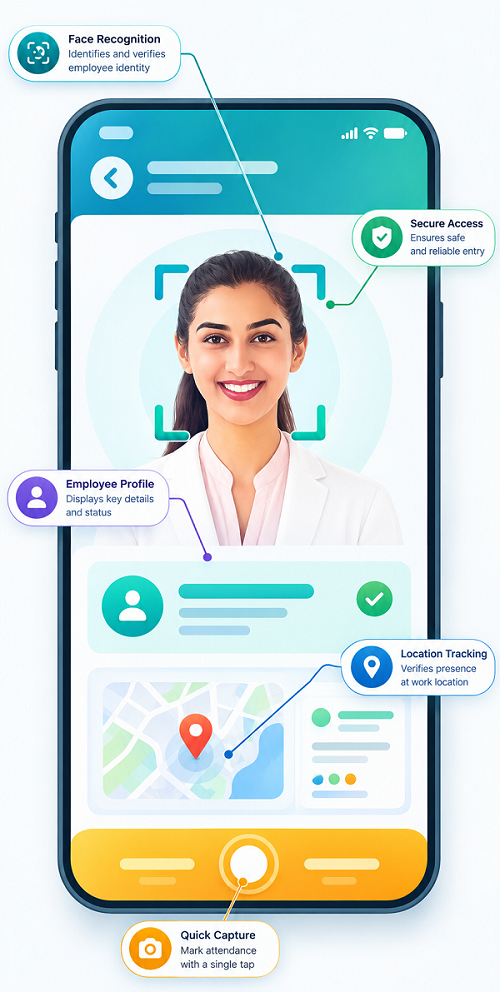
Face recognition attendance can help Saudi Arabia businesses automate employee check-in and check-out, prevent certain forms of proxy attendance, and manage employees across multiple locations. However, facial recognition used to identify employees involves biometric data, which Saudi Arabia's Personal Data Protection Law (PDPL) treats as sensitive personal data.
Therefore, companies using face attendance software should consider privacy, lawful processing, transparency, security, retention, employee rights, and vendor management as part of the implementation.
The following approach provides a practical framework for businesses operating face attendance systems in Saudi Arabia.
What Does the PDPL Mean for Face Attendance?
The Saudi Arabia PDPL applies to the processing of personal data related to individuals in Saudi Arabia. The law covers processing carried out in the Kingdom and certain processing of data concerning individuals residing in the Kingdom by entities outside Saudi Arabia.
SDAIA's guidance identifies biometric data used for identification purposes as sensitive personal data. This means an organization using facial recognition to identify employees should apply the additional safeguards applicable to sensitive data.
For an attendance system, the relevant processing may include:
- Employee identification
- Facial images or facial templates
- Check-in and check-out times
- Employee ID
- Attendance location
- Device information
- Shift information
- Attendance history
The exact data processed depends on how the particular software is designed.
1. Define a Clear Purpose for Facial Recognition
Before implementing face attendance, the employer should document why the system is being introduced.
A typical purpose might be:
"To verify employee identity when recording attendance and maintain accurate working-time records."
The organization should avoid collecting or using facial data for unrelated purposes simply because the technology makes it possible.
SDAIA's implementing regulations require processing purposes to be clear and specific when consent is requested, and consent should be separately obtained for each processing purpose.
2. Identify the Appropriate Legal Basis
Businesses should determine the lawful basis for processing before collecting employee facial data.
The PDPL provides several circumstances in which personal data may be processed without consent, including certain situations involving another law or agreement and specified legitimate interests. However, the PDPL states that legitimate interest cannot be used as a legal basis when processing sensitive data.
Because facial biometric data used for identification is sensitive data, businesses should not simply assume that "legitimate interest" is sufficient.
Where consent is the applicable basis for processing sensitive data, SDAIA's implementing regulation requires explicit consent.
Companies should therefore assess their particular circumstances and obtain appropriate Saudi Arabia legal or privacy advice before deployment.
3. Provide Employees With Clear Information
Employees should be told what happens to their facial information.
A privacy notice should explain, as appropriate:
- What information is collected
- Why facial recognition is being used
- How attendance data is processed
- Who may access the information
- How long information is retained
- Whether a third-party provider processes the data
- Whether data is transferred outside Saudi Arabia
- How employees can exercise applicable data-subject rights
- How employees can contact the organization about privacy matters
Transparency is an important part of the Saudi Arabia personal-data protection framework. SDAIA's guidance identifies transparency and informing individuals about how their personal data is processed as core compliance principles.
4. Obtain and Document Explicit Consent Where Required
If the organization relies on consent to process biometric data, the consent process should meet the applicable PDPL requirements.
The implementing regulation states that consent must be freely given, the purpose must be clear and specific, consent must be documented so it can be verified later, and separate consent should be obtained for each processing purpose. For sensitive data, consent must be explicit.
A company should therefore maintain appropriate records showing:
- Who provided consent
- When consent was provided
- How it was provided
- What processing purpose was explained
- What version of the relevant privacy information applied
Consent should not simply be treated as a checkbox with no supporting record.
5. Minimize the Data Collected
A face attendance system should collect only the information necessary for its defined attendance purpose.
For example, if the software can verify an employee using a facial template rather than retaining unnecessary full-resolution photographs, the organization should evaluate whether the more limited approach can achieve the same purpose.
SDAIA publishes guidance on minimum personal data determination, as well as guidance concerning destruction, anonymization, and pseudonymization.
Data minimization should be considered during system selection and configuration rather than after deployment.
6. Protect Biometric Information
Facial biometric information requires strong security controls.
Businesses should consider measures such as:
- Encryption
- Secure authentication
- Role-based access
- Restricted administrator permissions
- Audit logs
- Secure API connections
- Device security
- Regular security assessments
- Controlled data exports
- Backup protection
Access to biometric information should be limited to personnel who genuinely require it for their responsibilities.
7. Control Access to Attendance Data
Not every manager needs access to every employee's biometric or attendance information.
A practical access structure could be:
HR Administrator: Broad employee and attendance administration
Branch Manager: Attendance information for assigned employees
Payroll Team: Approved attendance information required for payroll
IT Administrator: Technical administration without unnecessary access to employee data
This principle of controlled access can reduce unnecessary exposure of personal information.
8. Establish a Data Retention Policy
Organizations should determine how long facial and attendance information needs to be retained.
For example, a company may need attendance records for legitimate HR, payroll, contractual, or regulatory purposes, while the underlying biometric information may have a different retention requirement.
Businesses should document:
- What data is retained
- Why it is retained
- Retention periods
- Who can approve retention
- When information is deleted or otherwise disposed of
- How backups are handled
When the defined purpose no longer requires personal data, the organization should follow its applicable deletion, destruction, anonymization, or pseudonymization procedures.
9. Evaluate the Face Attendance Vendor
If a third-party software provider operates the attendance platform, the employer should carefully evaluate the provider's privacy and security practices.
Questions to ask include:
- Where is the data stored?
- Who processes the biometric information?
- Is the vendor acting as a processor?
- Are subcontractors involved?
- What security controls are implemented?
- How is biometric data protected?
- How are deletion requests handled?
- What happens when the contract ends?
- Is data transferred outside Saudi Arabia?
Under the PDPL, controllers must select processors that provide the necessary guarantees for compliance and must monitor processor compliance.
10. Check Cross-Border Data Transfers
Cloud-based attendance software may store or process data outside Saudi Arabia.
This is particularly important when the face attendance provider uses international cloud infrastructure.
Saudi Arabia has a specific Regulation on Personal Data Transfer Outside the Kingdom, and SDAIA lists this regulation as part of the PDPL framework.
Before choosing a cloud attendance provider, companies should determine:
- Where employee data is hosted
- Where support personnel can access it
- Whether subcontractors process it
- Whether data leaves Saudi Arabia
- What transfer safeguards and requirements apply
11. Provide a Process for Employee Data Rights
Employees should have appropriate channels for exercising applicable rights under the PDPL.
The implementing regulation requires controllers to provide suitable means for responding to data-subject requests. These may include email, text messaging, applications, or other appropriate communication channels.
The organization should establish an internal process for handling requests concerning employee personal data.
12. Conduct a Privacy and Security Assessment Before Deployment
Before rolling out face attendance across the workforce, businesses should assess the risks associated with the proposed processing.
The assessment can consider:
- Nature of biometric data
- Number of employees affected
- Number of locations
- Attendance devices
- Cloud infrastructure
- Third-party vendors
- Data retention
- Access permissions
- Cybersecurity risks
- International data transfers
- Employee transparency
- Alternative attendance methods
This is particularly important for organizations deploying facial recognition across thousands of employees or multiple branches.
Example of a PDPL-Conscious Face Attendance Workflow
A Saudi Arabia company could structure its implementation as follows:
- Define purpose: Use facial recognition specifically for employee attendance verification.
- Determine the lawful basis: Assess the applicable PDPL basis, particularly because identification biometrics constitute sensitive data.
- Inform employees: Provide clear privacy information before processing begins.
- Obtain explicit consent where required: Document consent appropriately when consent is the applicable legal basis.
- Register employees securely: Collect only the biometric information necessary for the system.
- Record attendance: Use facial verification to record check-in and check-out.
- Restrict access: Allow only authorized HR, management, or technical personnel to access relevant information.
- Monitor vendors: Review processor security, contracts, storage arrangements, and subcontractors.
- Review retention: Delete or otherwise dispose of information when retention is no longer justified.
- Maintain compliance records: Keep documentation covering processing purposes, consent where applicable, security controls, vendor arrangements, and relevant privacy processes.
Face Attendance Compliance Checklist
| Area | What Businesses Should Review |
|---|---|
| Purpose | Is facial recognition being used for a clearly defined purpose? |
| Data classification | Is biometric identification data treated as sensitive data? |
| Legal basis | Has the appropriate PDPL basis been assessed? |
| Consent | Is explicit consent obtained where consent is the applicable basis? |
| Transparency | Have employees been properly informed? |
| Data minimization | Is only necessary information collected? |
| Security | Are biometric records appropriately protected? |
| Access | Are permissions restricted to authorized personnel? |
| Retention | Are retention and deletion rules documented? |
| Vendors | Has the attendance provider been properly assessed? |
| Transfers | Have international data transfers been assessed? |
| Employee rights | Is there a process for handling applicable data-subject requests? |
| Documentation | Are compliance activities properly recorded? |
Conclusion
Face attendance software can be used in Saudi Arabia, but biometric attendance should be implemented as a personal-data processing activity rather than simply an HR technology project. Facial biometric data used for identification is treated as sensitive data under the Saudi Arabia PDPL framework, bringing additional compliance considerations.
Businesses should define a specific purpose, establish the appropriate legal basis, provide transparent privacy information, obtain explicit consent where required, minimize data collection, secure biometric information, control access, establish retention procedures, assess vendors, and review any transfers outside Saudi Arabia.
The PDPL framework and implementing regulations can change or be supplemented by additional guidance. Organizations deploying biometric attendance at scale should therefore review the current SDAIA requirements and obtain qualified Saudi Arabia legal/privacy advice for their specific circumstances.
Face attendance can be operated with privacy controls through InnBuilt Face Attendance Software, including role-based access, defined purposes, controlled retention, and transparent employee processes. These settings help organisations align attendance practices with Saudi Arabia’s PDPL responsibilities.