Attendance Management for Hospitals, Security Agencies, and 24/7 Operations in Saudi Arabia
Attendance Management for Hospitals, Security Agencies, and 24/7 Operations in Saudi Arabia
Hospitals, security agencies, emergency services, logistics companies, industrial facilities, and other 24/7 businesses in Saudi Arabia need reliable attendance management because their operations continue beyond standard working hours. Employees may work day shifts, night shifts, rotating schedules, weekend shifts, or extended shifts.
Managing attendance manually in these environments can lead to missing records, scheduling conflicts, overtime errors, and difficulty monitoring employees across multiple locations. Attendance management software for 24/7 operations in Saudi Arabia helps businesses automate attendance tracking, shift management, working-hour records, leave, overtime, and reporting.
Why Attendance Management Is Important for 24/7 Businesses
A 24/7 organization needs employees available at the right location and at the scheduled time. An unexpected absence or late arrival can affect service continuity.
Common challenges include:
- Day and night shifts
- Rotating schedules
- Multiple employee teams
- Overnight work
- Weekend and holiday staffing
- Shift replacements
- Employees working at different locations
- Overtime
- Missed check-ins and check-outs
- Manual attendance registers
- Payroll-related attendance calculations
A digital attendance system can centralize these records and make them easier for HR and operations teams to manage.
Attendance Management for Hospitals in Saudi Arabia
Hospitals operate continuously and typically have employees across several departments and schedules.
Employees may include:
- Doctors
- Nurses
- Technicians
- Pharmacists
- Administrative employees
- Laboratory staff
- Housekeeping teams
- Security personnel
- Maintenance workers
Different departments may have different shift structures.
Attendance software can help hospitals create department-specific schedules and monitor actual attendance against planned shifts.
Hospital Shift Management
A hospital may configure:
- Morning shifts
- Evening shifts
- Night shifts
- Rotational shifts
- On-call schedules
- Weekend schedules
Managers can review whether employees checked in according to their assigned schedules and identify attendance exceptions.
Attendance Management for Security Agencies
Security companies often manage employees deployed at different client locations.
A security guard may be assigned to:
- Office buildings
- Shopping centers
- Hotels
- Residential communities
- Construction sites
- Industrial facilities
- Warehouses
- Events
This makes attendance tracking more complex than attendance at a single office.
Location-Based Attendance
GPS, geofencing, mobile attendance, or other approved verification methods can help security companies associate attendance with designated work locations.
For example, a security agency can assign guards to specific client sites and configure authorized attendance locations.
Managers can then review attendance by employee, site, shift, or assignment.
Attendance for 24/7 Operations
Businesses such as logistics centers, manufacturing facilities, data centers, utilities, and certain service organizations may operate continuously.
Attendance software can support different employee schedules without requiring separate systems for each shift.
The system can record:
- Scheduled start time
- Actual check-in
- Scheduled end time
- Actual check-out
- Breaks
- Overtime
- Absence
- Late arrival
- Early departure
- Shift assignment
This provides a structured attendance history for each employee.
Managing Night Shifts
Night-shift attendance requires appropriate configuration because a shift can begin on one calendar day and end on another.
For example:
Shift starts: 10:00 PM
Shift ends: 6:00 AM
The attendance system should correctly associate the check-in and check-out with the employee's assigned shift rather than treating the overnight period as two unrelated attendance events.
HR teams should configure overnight shifts according to their organization's working-time and payroll policies.
Managing Rotational Shifts
Hospitals and security agencies frequently use rotating employee schedules.
For example:
Week 1: Morning shift
Week 2: Evening shift
Week 3: Night shift
Attendance software can maintain the planned roster and compare actual attendance with scheduled shifts.
This helps managers identify employees who are absent or checking in at unexpected times.
Mobile Attendance for Field Employees
Security guards, technicians, healthcare support workers, and other employees may work away from a central office.
Mobile attendance can allow employees to check in using an approved smartphone application.
Depending on the organization's requirements, the system may use:
- GPS
- Geofencing
- Face recognition
- Mobile verification
- QR codes
The appropriate method depends on the nature of the workplace and the company's policies.
Geofencing for Multiple Work Locations
A company managing employees across multiple sites can create separate geographical attendance zones.
For example:
Hospital A → Hospital location
Security Site B → Client premises
Warehouse C → Warehouse location
When configured appropriately, geofencing can help ensure that mobile attendance is associated with an authorized workplace.
Organizations should consider applicable privacy and data-protection requirements when using location-based attendance.
Real-Time Attendance Monitoring
Managers may need to know whether employees have reported for scheduled shifts.
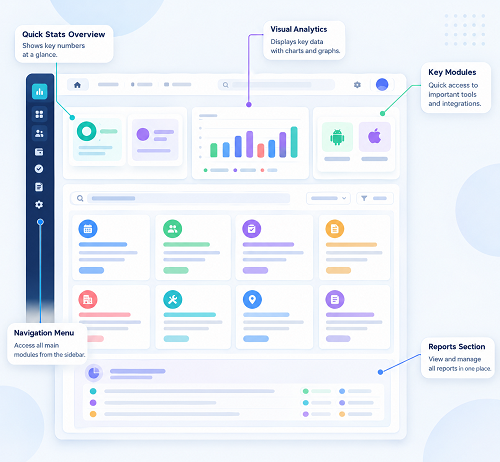
A centralized dashboard can show information such as:
- Employees present
- Employees absent
- Late arrivals
- Missing check-outs
- Employees currently on shift
- Overtime
- Attendance exceptions
For a security agency, for example, an operations manager can use the dashboard to identify a scheduled guard who has not checked in and arrange appropriate coverage.
Managing Shift Replacements
24/7 operations need processes for handling employee replacements.
If an employee cannot attend a scheduled shift, a manager can assign another employee according to company procedures.
The attendance system can maintain the updated schedule and record the actual employee who worked the shift.
This creates a clearer record of planned versus actual staffing.
Overtime Tracking
Healthcare, security, and other 24/7 operations may require employees to work beyond scheduled hours.
Attendance software can calculate or report additional working hours based on configured rules.
HR teams can review overtime records before payroll processing and ensure that the organization's calculations align with applicable Saudi Arabia employment requirements and internal policies.
Leave and Absence Management
Leave management is particularly important for organizations that need continuous staffing.
Employees can submit leave requests through an employee portal or mobile application. Managers can review requests while considering existing shift coverage.
Approved leave can then be reflected in attendance records.
This can help distinguish between:
- Approved leave
- Unplanned absence
- Missing attendance
- Scheduled rest days
- Shift changes
Payroll Integration
Attendance data can be integrated with payroll systems to reduce manual data entry.
Relevant information may include:
- Attendance days
- Working hours
- Overtime
- Absence
- Approved leave
- Shift information
- Attendance corrections
Payroll teams can review and approve attendance information before using it for salary calculations.
For Saudi Arabia businesses, payroll configurations should be maintained according to applicable regulations, employment contracts, and company policies.
Benefits of Attendance Software for 24/7 Operations
Better Workforce Visibility
HR and operations teams can monitor attendance across multiple locations and shifts.
Reduced Manual Administration
Digital attendance reduces dependence on paper registers and spreadsheets.
Improved Shift Control
Managers can compare scheduled shifts with actual attendance.
Faster Exception Management
Late arrivals, absences, and missing attendance records can be identified more quickly.
Easier Multi-Site Management
Organizations can manage employees working across hospitals, client sites, branches, or facilities from a centralized platform.
More Structured Payroll Data
Attendance and overtime information can be made available to payroll teams in a consistent format.
Best Practices for Saudi Arabia 24/7 Organizations
Businesses should consider the following practices:
- Create clear shift schedules.
- Maintain accurate employee and location assignments.
- Configure overnight shifts correctly.
- Use appropriate attendance verification methods.
- Monitor attendance exceptions regularly.
- Maintain clear overtime and leave approval processes.
- Provide managers with role-based system access.
- Integrate attendance with payroll where appropriate.
- Maintain audit records for attendance corrections.
- Review attendance configurations against current Saudi Arabia employment requirements and company policies.
Conclusion
Attendance management for hospitals, security agencies, and 24/7 operations in Saudi Arabia requires more than simply recording whether an employee is present. Organizations need to manage shifts, overnight schedules, multiple locations, field employees, overtime, leave, and staffing changes.
Attendance management software can bring these processes together through features such as mobile attendance, biometrics, GPS, geofencing, shift scheduling, real-time monitoring, automated reports, and payroll integration.
With properly configured attendance rules and appropriate access controls, Saudi Arabia organizations can create a more organized process for managing employees across continuous operations while maintaining attendance information needed for HR and payroll administration.
Hospitals, security agencies, and other 24/7 operations can use InnBuilt Shift and Attendance Software to manage overnight duties, rotating schedules, replacements, and overtime. Real-time coverage visibility helps managers maintain continuous staffing.