What Attendance Records Help Singapore Employers Review Work Hours?
What Attendance Records Help Singapore Employers Review Work Hours?
Accurate attendance records help Singapore employers understand how long employees work, identify overtime, monitor rest days, investigate attendance discrepancies, and prepare reliable payroll. They also help HR teams maintain employment records and review whether working arrangements comply with applicable employment requirements.
An attendance system should do more than record when an employee enters or leaves the workplace. It should capture the information needed to reconstruct working time, explain exceptions, and support payroll calculations. This is particularly important for businesses with shift workers, flexible schedules, multiple work locations, and employees who work beyond standard office hours.
1. Daily Clock-In and Clock-Out Records
The starting point for reviewing work hours is a reliable record of when each employee begins and finishes work.
Employers should maintain:
- Employee name or identification number.
- Date of attendance.
- Clock-in time.
- Clock-out time.
- Work location or assigned site, where relevant.
- Attendance method, such as biometric device, access card, mobile app, or web portal.
- Any corrected or manually entered punch, with its approval history.
These records help HR teams calculate the time between the start and end of a work period. They can also reveal late arrivals, early departures, missing punches, and unusual attendance patterns.
For example, if an employee is scheduled from 9:00 a.m. to 6:00 p.m. but clocks in at 9:20 a.m., the system should flag the difference for review. It should not automatically treat every late punch as a confirmed deduction without checking the organisation's policy and the circumstances.
2. Break and Meal Period Records
Employers should record break periods where these are needed to calculate actual working time accurately.
Useful information includes:
- Break start and end times.
- Total break duration.
- Whether the break was paid or unpaid.
- Missed, shortened, or interrupted breaks.
- Any manager-approved adjustment.
For example, an employee may clock in at 8:30 a.m. and clock out at 5:30 p.m. If the employee took a one-hour unpaid meal break, the recorded working time would generally be eight hours.
Employers should configure the system to reflect the actual break arrangement. Automatically deducting a standard break when an employee did not take it may produce inaccurate records.
3. Daily and Weekly Working-Hour Summaries
Daily attendance data should be consolidated into summaries that show the employee's working time.
A useful report should include:
- Total time between clock-in and clock-out.
- Recorded break duration.
- Net working hours.
- Scheduled hours.
- Difference between scheduled and actual hours.
- Daily overtime or additional hours, where applicable.
Weekly summaries help employers identify employees who regularly work beyond their normal schedules. They also help HR teams review working patterns across departments, locations, and shifts.
For employees covered by Part 4 of Singapore's Employment Act, statutory working-hour and overtime provisions are particularly relevant. Employers should not assume that the same statutory limits apply to every employee: Part 4 coverage depends on the employee's category and eligibility.
4. Overtime Records
Overtime records help employers identify additional hours and check whether eligible employees receive the correct payment.
Employers should retain:
- Date overtime was worked.
- Overtime start and end times.
- Total overtime hours.
- Reason for the additional work, where recorded.
- Employee or supervisor request.
- Approval status and approving manager.
- Applicable overtime rate and calculated amount.
- Payroll period in which payment was processed.
A good attendance system should distinguish ordinary working hours from overtime and allow HR to review the underlying punches before payroll is finalised.
For employees covered by Part 4, employers should pay overtime in accordance with the applicable statutory requirements. Internal approval procedures should not be used as a reason to disregard overtime that was in fact worked and is legally payable.
5. Rest-Day and Weekly-Rest Records
Rest-day records help employers check whether employees receive their scheduled rest and identify work performed on those days.
Relevant information includes:
- Assigned rest day.
- Actual rest day taken.
- Changes to the rest-day schedule.
- Work performed on a scheduled rest day.
- Start and end times of rest-day work.
- Relevant approvals and payment records.
These details are important for businesses operating retail outlets, factories, hotels, healthcare facilities, and other shift-based workplaces.
Where statutory rest-day rules apply, employers should review the employee's applicable work arrangement rather than relying only on a generic weekly calendar.
6. Shift Rosters and Schedule Changes
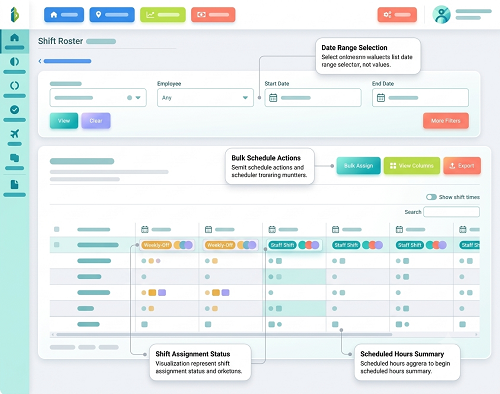
A clock-in record shows when an employee attended, but it does not always explain whether those hours matched the employee's assigned shift. Employers should therefore retain both planned schedules and actual attendance.
Useful roster information includes:
- Employee's assigned shift.
- Scheduled start and finish times.
- Shift type and work location.
- Weekly rest-day allocation.
- Shift swaps and replacements.
- Approved schedule changes.
- Manager responsible for the change.
Comparing the roster with actual attendance helps HR identify late starts, early finishes, unplanned extensions, and staffing gaps.
It is especially useful for overnight shifts, rotating schedules, and employees who move between different shifts during a payroll period.
7. Overnight and Cross-Midnight Attendance
Overnight shifts can create errors if attendance software treats midnight as the end of a workday rather than part of a continuous shift.
For example, an employee may begin work at 10:00 p.m. on Monday and finish at 6:00 a.m. on Tuesday. The system should link both punches to the correct shift and calculate the working period consistently.
Employers should retain:
- Shift date and scheduled duration.
- Actual clock-in and clock-out timestamps.
- Break periods.
- Date on which the shift ends.
- Overtime hours, where applicable.
- Any public-holiday or rest-day overlap requiring review.
The system should also identify missing punches and prevent a single overnight shift from being incorrectly split into unrelated attendance records.
8. Leave, Absence, and Public-Holiday Records
Attendance records should be reviewed alongside leave and absence information. Otherwise, approved time away from work may appear as unexplained absence.
Employers should maintain:
- Annual leave dates and approval status.
- Sick leave and other applicable leave records.
- Unpaid leave.
- Public holidays and applicable work arrangements.
- Unauthorised absence.
- Late arrival or early departure.
- Leave cancellation or amendment history.
These records help HR distinguish approved absence from attendance exceptions and reconcile the employee's actual working time with payroll.
Employers should ensure that access to sensitive supporting documents is restricted to authorised personnel.
9. Missed Punches and Attendance Corrections
A missed clock-in or clock-out can make a working-hour report incomplete. Employers should maintain a clear record of every correction rather than silently replacing the original attendance entry.
A correction record should include:
- Original attendance entry, if available.
- Corrected time.
- Reason for the correction.
- Employee's explanation or request.
- Supporting evidence, where appropriate.
- Manager or HR approval.
- Date and time the correction was made.
An audit trail allows employers to understand why the record changed and who authorised the change. It is also useful when an employee disputes a working-hour calculation.
10. Work Location and Remote-Work Attendance
For employees working across offices, customer sites, project locations, or from home, employers may need additional information to understand where attendance was recorded.
Depending on the organisation's requirements, records may include:
- Assigned work location.
- Location selected at clock-in.
- Mobile or web attendance timestamp.
- Approved remote-work schedule.
- Site or project assignment.
- Manager verification of attendance.
GPS or geofencing may help verify attendance for field employees, but employers should use location information proportionately and explain the purpose of collection. Where personal data is involved, organisations should consider their obligations under Singapore's Personal Data Protection Act (PDPA), including appropriate protection and retention practices.
11. Payroll-Relevant Work-Hour and Payment Records
Attendance information should be reconciled with payroll records before salary processing.
Employers should be able to review:
- Ordinary working hours.
- Overtime hours and payments, where applicable.
- Rest-day work and related payments, where applicable.
- Public-holiday work and related payments, where applicable.
- Unpaid absence or approved unpaid leave.
- Attendance adjustments affecting salary.
- Payroll approval and processing status.
This reconciliation helps identify differences between attendance data and payroll calculations before payslips are issued.
Employers should also retain the employment records required by the Ministry of Manpower (MOM). Attendance reports alone may not satisfy every recordkeeping requirement; the employer should ensure that the required employment particulars, salary information, and working-time details are maintained.
12. Attendance Exceptions and Audit Trails
An exception report helps HR focus on records that need investigation instead of manually checking every employee's attendance.
Common exceptions include:
- Missing clock-in or clock-out.
- Duplicate punches.
- Late arrival or early departure.
- Unusually long working periods.
- Unapproved overtime.
- Attendance outside an assigned shift.
- Work recorded on a rest day.
- Conflicting records from different devices.
- Changes made after payroll cut-off.
The system should preserve an audit trail showing the original record, subsequent changes, user actions, timestamps, and approval status. This supports internal reviews and helps resolve disputes about working hours.
13. Reports Singapore Employers Should Review Regularly
Employers can use a combination of daily, weekly, and monthly reports to monitor work hours.
| Attendance report | What it helps employers review |
|---|---|
| Daily attendance report | Clock-in, clock-out, breaks, and daily working time |
| Weekly working-hour report | Working patterns and hours accumulated during the week |
| Overtime report | Additional hours, approvals, and payment status |
| Rest-day report | Scheduled rest days and work performed on those days |
| Shift variance report | Differences between planned rosters and actual attendance |
| Absence and leave report | Approved leave, unauthorised absence, and attendance gaps |
| Missed-punch report | Incomplete attendance records and pending corrections |
| Exception report | Unusual working patterns and records requiring investigation |
| Payroll reconciliation report | Differences between approved attendance and payroll data |
| Audit-trail report | Changes to attendance records and approval history |
HR teams should establish a regular review schedule. Daily checks can identify missing punches, weekly reviews can highlight working-hour patterns, and pre-payroll checks can help prevent incorrect salary calculations.
14. How Attendance Software Helps Employers Review Work Hours
Attendance software can bring clock-in records, shift schedules, break information, overtime, leave, and approvals into one system.
When evaluating a solution, Singapore employers should check whether it can:
- Capture reliable clock-in and clock-out timestamps.
- Record breaks and calculate net working time.
- Compare actual attendance with scheduled shifts.
- Generate daily and weekly working-hour summaries.
- Identify overtime and maintain supporting records.
- Track rest days and shift changes.
- Handle overnight and cross-midnight shifts.
- Manage missed punches and correction approvals.
- Generate exception reports and audit trails.
- Export accurate attendance information to payroll.
- Restrict access to employee records by role.
- Support appropriate data protection and retention controls.
Employers should test the software using realistic scenarios, including overnight shifts, missed punches, overtime, rest-day work, and changes made after payroll cut-off.
15. Common Mistakes Employers Should Avoid
Even when an organisation uses attendance software, poor recordkeeping practices can make work-hour reviews unreliable.
Common mistakes include:
- Keeping only monthly attendance totals: Employers may need the underlying daily records to verify how totals were calculated.
- Ignoring break information: Incorrect break deductions can distort working-hour calculations.
- Overwriting missed punches: Corrections should preserve the original entry and approval history.
- Confusing scheduled hours with actual hours: Rosters and clock records serve different purposes and should be compared.
- Failing to track overnight shifts correctly: Cross-midnight errors can affect daily totals and payroll.
- Reviewing overtime only at month-end: Regular checks make unusual working patterns easier to investigate.
- Applying one set of statutory rules to every employee: Employers should verify which Employment Act provisions apply to each employee.
- Keeping attendance data without appropriate access controls: Employee information should be protected against unauthorised access or disclosure.
Conclusion
Singapore employers should maintain more than basic clock-in and clock-out records when reviewing working hours. Daily attendance, breaks, weekly totals, overtime, rest days, shift rosters, leave, corrections, and audit trails all contribute to a reliable picture of employee working time.
A well-configured attendance system makes these records easier to collect, compare, investigate, and reconcile with payroll. Employers should also ensure that their recordkeeping practices reflect the requirements applicable to their employees and protect personal data appropriately.
The objective is not simply to track employee presence. It is to maintain accurate, explainable, and accessible records that support fair payroll processing, effective workforce management, and employment compliance.
Identify the time, shift and approval records HR needs for internal reviews. Check InnBuilt exports against your Singapore recordkeeping process.