10 Things to Look for When Buying Live Tracking Software in the UAE
Introduction
Businesses across the UAE increasingly depend on live tracking software to monitor employees, vehicles, field teams, deliveries, and other operational activities in real time. Industries such as logistics, transportation, construction, facility management, retail, and field services use tracking solutions to improve workforce visibility, coordinate daily operations, and manage resources more efficiently.
Managing employees and mobile assets across different locations can be challenging without a centralised tracking system. Businesses may experience delays in identifying employee locations, monitoring vehicle movements, verifying field visits, and responding to unexpected operational issues.
Live tracking software helps address these challenges by providing real-time location information, movement histories, activity updates, and automated notifications. However, not every tracking solution offers the same capabilities.
Before purchasing live tracking software, UAE businesses should evaluate factors such as GPS accuracy, mobile compatibility, geofencing, reporting, data security, integration capabilities, and local support.
The following are 10 important things businesses should look for when buying live tracking software in the UAE.
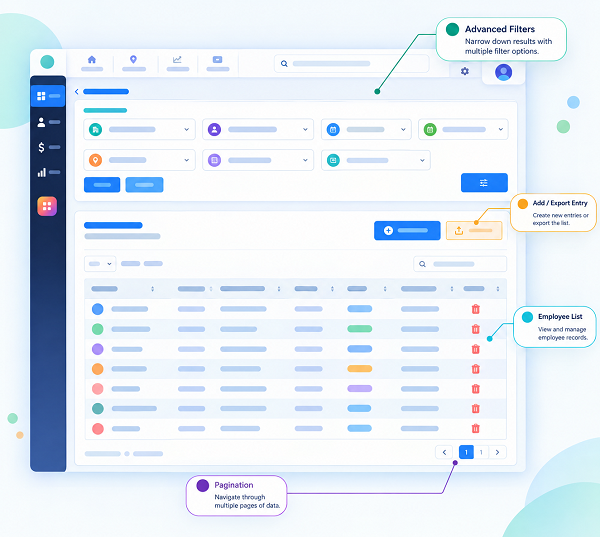
1. Real-Time GPS Tracking Accuracy
Real-time GPS tracking is one of the most important features to evaluate when selecting tracking software.
Businesses need accurate location information to monitor employees, vehicles, delivery teams, and field operations. Inaccurate location updates can create confusion, affect scheduling, and make it difficult for managers to coordinate operational activities.
UAE buyers should examine how frequently the software updates location information and how accurately it displays the position of tracked devices.
Important features to evaluate include:
- Live GPS location updates.
- Accurate latitude and longitude information.
- Location update frequency.
- Movement and route visibility.
- Location history.
- Speed and direction information, where applicable.
- Support for multiple tracking devices.
- Location accuracy under different operating conditions.
For example, a logistics company operating delivery vehicles between Dubai, Sharjah, and Abu Dhabi needs reliable location updates to monitor vehicle movements and coordinate deliveries.
Businesses should request a practical demonstration to understand how the software performs under real operating conditions.
They should also check whether tracking accuracy depends on mobile network coverage, GPS hardware, device settings, or environmental conditions.
2. Mobile Application Compatibility
Many UAE businesses manage employees and operational teams through smartphones.
Field technicians, delivery personnel, sales representatives, construction supervisors, and maintenance employees may need to share their locations while performing assigned activities.
Therefore, live tracking software should offer reliable mobile application support.
Before purchasing, businesses should check whether the software supports:
- Android smartphones.
- Apple iOS devices.
- Background location tracking, where permitted.
- Mobile GPS permissions.
- Battery-efficient tracking.
- Automatic location synchronisation.
- Mobile notifications.
- Employee login and authentication.
- Device management options.
The mobile application should also be simple to use.
Employees should be able to access required functions without navigating complicated menus or repeatedly changing device settings.
UAE businesses should test the application on different smartphone models and operating system versions before implementation.
They should also confirm whether continuous tracking requires the application to remain open and how location updates behave when mobile internet connectivity is interrupted.
3. Geofencing and Location-Based Alerts
Geofencing allows businesses to create virtual geographical boundaries around specific locations.
When a tracked employee or vehicle enters or exits a defined area, the software can generate an automated notification.
This feature is useful for organisations managing multiple offices, warehouses, construction sites, customer locations, and delivery zones.
Important geofencing capabilities include:
- Creating virtual boundaries around work locations.
- Defining multiple geographical zones.
- Entry and exit notifications.
- Customisable location-based alerts.
- Monitoring authorised work areas.
- Tracking movement between locations.
- Generating geofence activity reports.
For example, a construction company may create geofences around its project sites to monitor whether assigned employees or vehicles have reached the designated locations.
A delivery business may use geofencing to receive notifications when a vehicle enters a customer delivery area.
UAE buyers should check whether the software supports different geofence sizes and whether location alerts can be configured for individual employees, vehicles, or teams.
4. Live Tracking Dashboard and User Interface
A live tracking dashboard should provide managers with a clear view of ongoing operations.
If the interface is complicated, supervisors may struggle to identify employee locations, monitor vehicle movements, or respond to operational exceptions.
Businesses should look for a dashboard that presents important tracking information in an organised and understandable format.
Useful dashboard features include:
- Live location maps.
- Employee and vehicle lists.
- Location status indicators.
- Movement histories.
- Route information.
- Location-based alerts.
- Search and filtering options.
- Department-wise tracking.
- Branch-level monitoring.
- Customisable dashboard views.
For example, a facility management company with employees working across multiple UAE locations should be able to view field personnel on a single dashboard and identify their current assignments.
The software should also allow authorised managers to filter information by employee, department, vehicle, location, or operational status.
A simple interface reduces training requirements and helps management teams make quicker operational decisions.
5. Historical Location Tracking and Route Reports
Live tracking provides current location information, but businesses also need historical records to review completed activities.
Historical tracking allows managers to examine where employees or vehicles travelled during a specific period.
This can help organisations verify field visits, investigate delays, review delivery routes, and improve operational planning.
UAE businesses should check whether the software provides:
- Historical location records.
- Route playback.
- Date-wise tracking reports.
- Employee movement history.
- Vehicle travel history.
- Stop duration reports.
- Distance travelled.
- Location entry and exit records.
- Exportable tracking reports.
For example, a delivery company may need to investigate why a vehicle took longer than expected to complete a particular route.
Historical route information can help managers review the vehicle's movements and identify possible operational issues.
Businesses should also check how long historical location records are retained and whether the retention period can be configured according to their operational and legal requirements.
6. Employee and Vehicle Monitoring Capabilities
Different businesses have different tracking requirements.
A logistics company may primarily need vehicle tracking, while a field service organisation may need to monitor employee locations and customer visits.
Some organisations require both employee and vehicle tracking through a single platform.
Before purchasing, UAE buyers should confirm whether the software supports their specific tracking requirements.
| Business Requirement | Tracking Capabilities to Evaluate |
|---|---|
| Employee tracking | Live employee locations and field activity |
| Vehicle tracking | Vehicle movement, speed, and route history |
| Delivery management | Delivery location and route monitoring |
| Construction operations | Project-site location visibility |
| Field services | Employee movement and customer visit tracking |
| Fleet management | Vehicle utilisation and movement reports |
| Facility management | Field team location and assignment monitoring |
Businesses should also verify whether the software allows employee and vehicle records to be linked.
For example, a field technician may be assigned a company vehicle. Linking both records can help managers understand which employee is operating a particular vehicle.
It is equally important to establish transparent employee monitoring policies and ensure that tracking is limited to legitimate business purposes.
7. Data Security, Privacy, and UAE Compliance
Live tracking software processes location information that may be associated with identifiable employees, vehicles, and business operations.
Businesses must therefore evaluate the security and privacy controls provided by the software vendor.
In the UAE, organisations should consider applicable data protection requirements, including the UAE Federal Decree-Law No. 45 of 2021 on the Protection of Personal Data, where applicable.
Businesses operating in specific free zones or regulated sectors may also need to consider additional requirements.
Important security and privacy features include:
- Secure data transmission.
- Encryption of stored information.
- Role-based access permissions.
- User authentication.
- Access logs.
- Data retention controls.
- Secure cloud hosting.
- Backup and recovery procedures.
- Security incident reporting.
- Controlled access to location history.
UAE buyers should also ask where location data is stored and whether information is transferred outside the country.
Employee tracking policies should clearly explain what information is collected, why tracking is necessary, when tracking operates, and who can access the information.
For example, businesses should distinguish between tracking employees during authorised working activities and monitoring their private movements outside working hours.
Privacy controls and transparent policies help organisations use tracking technology responsibly.
8. Integration With Existing Business Software
Live tracking software becomes more useful when it can exchange information with other business applications.
Many UAE organisations already use HR management software, attendance systems, payroll platforms, fleet management applications, CRM solutions, and ERP systems.
Integrating tracking software with these platforms can reduce duplicate data entry and improve operational coordination.
Businesses should evaluate integration options such as:
- HR management system integration.
- Attendance software integration.
- Payroll system integration.
- Fleet management integration.
- Delivery management integration.
- Customer relationship management integration.
- ERP integration.
- API connectivity.
For example, a field service company may integrate employee tracking with its attendance system to help authorised managers compare assigned work locations with attendance records.
A logistics business may connect vehicle tracking with its delivery management system to improve route visibility and delivery coordination.
Before purchasing, buyers should confirm whether integrations are included in the subscription or require additional development and licensing fees.
They should also check whether the vendor provides documented APIs and technical implementation support.
9. Alerts, Notifications, and Automated Reporting
Live tracking software should help managers identify important events without requiring them to monitor the dashboard continuously.
Automated alerts and notifications can improve operational responsiveness by highlighting unusual movements, location changes, and missed activities.
Businesses should examine the types of alerts supported by the platform.
Common examples include:
- Entry into a designated location.
- Exit from an authorised geographical area.
- Vehicle movement outside assigned zones.
- Unusual or unauthorised movement.
- Long stops or unexpected delays.
- Tracking device disconnection.
- Low battery notifications, where supported.
- Missed location updates.
- Route deviations.
- Scheduled tracking reports.
The software should allow administrators to configure alerts based on operational requirements.
For example, a delivery company may want to receive a notification when a vehicle leaves its assigned delivery zone, while a construction business may require alerts when equipment or vehicles move outside a designated project area.
Businesses should also check whether alerts can be delivered through mobile applications, email, or other supported communication channels.
Automated reporting should allow managers to receive daily, weekly, or monthly summaries without manually generating every report.
10. Pricing, Scalability, and Technical Support
The final consideration is whether the tracking software offers a sustainable pricing structure and can support the organisation as it grows.
Some vendors charge per employee, while others charge per vehicle, device, location, or subscription account.
Businesses should understand the complete pricing model before signing a contract.
Important cost components include:
- Initial implementation fees.
- Monthly or annual subscription charges.
- Per-user or per-device charges.
- GPS hardware costs.
- SIM card and connectivity expenses.
- Integration charges.
- Additional storage costs.
- Premium reporting fees.
- Training expenses.
- Technical support charges.
UAE buyers should also evaluate whether the software can accommodate future workforce expansion and additional operating locations.
For example, a logistics company may initially monitor 20 vehicles but later expand its fleet to 100 vehicles. The software should support this expansion without requiring a complete system replacement.
Technical support is equally important.
Businesses should check whether the vendor provides:
- UAE business-hours support.
- 24/7 assistance for critical issues.
- Arabic and English support.
- Implementation assistance.
- User training.
- Software updates.
- Device troubleshooting.
- Documented service-level commitments.
A clear Service-Level Agreement (SLA) should define system availability, incident response times, maintenance procedures, and support responsibilities.
Additional Considerations Before Purchasing Live Tracking Software in the UAE
Beyond the 10 primary evaluation criteria, businesses should also consider several practical factors before finalising their purchase.
A. Network Coverage and Offline Functionality
Live tracking depends on GPS and communication connectivity.
Businesses operating across remote construction sites, industrial areas, and long-distance transport routes should understand how the software behaves when mobile network connectivity becomes weak or unavailable.
Check whether the application can temporarily store location information and synchronise it when connectivity returns.
B. UAE Map and Location Accuracy
The software should provide reliable geographical coverage for the locations where the business operates.
Businesses should test location visibility across relevant UAE cities and operational areas, including Dubai, Abu Dhabi, Sharjah, Ajman, Ras Al Khaimah, Fujairah, and Umm Al Quwain, where applicable.
They should also check map updates, address search, route visualisation, and location identification.
C. Employee Acceptance and Ease of Use
Employees may be concerned about how their location information is collected and used.
Businesses should explain tracking policies before implementation and provide appropriate training.
A system that is easy to understand and has transparent privacy controls is more likely to achieve employee acceptance.
D. Vendor Reliability and SLA Commitments
The software provider should demonstrate its ability to maintain reliable tracking services.
Buyers should review customer references, support arrangements, service availability, incident management, and data backup policies before making a decision.
Conclusion
Buying live tracking software is an important decision for UAE businesses that manage mobile employees, vehicles, delivery operations, and field activities.
The right solution can improve location visibility, simplify operational coordination, reduce unnecessary delays, and provide valuable information for workforce and fleet management.
However, businesses should look beyond basic GPS tracking when evaluating different software providers. Location accuracy, mobile compatibility, geofencing, historical reporting, employee monitoring controls, data security, system integrations, automated alerts, pricing, and technical support all contribute to the overall value of a tracking solution.
Before making a purchasing decision, UAE buyers should request a practical demonstration, test the software under actual operating conditions, review the vendor's SLA, and assess its ability to support future business expansion.
A carefully selected live tracking solution can help UAE organisations improve operational efficiency, manage distributed teams, and maintain better visibility across their business activities.
Evaluate live tracking tools on location accuracy, privacy controls, offline behavior, alerts, reports and full cost. Use this UAE checklist to compare InnBuilt Field Management with alternatives.