How Can UAE Insurance Firms Track Field Surveyor Visits and Claim Inspections?
How Can UAE Insurance Firms Track Field Surveyor Visits and Claim Inspections?
Insurance companies in the UAE often rely on field surveyors, loss adjusters, and technical inspectors to assess vehicle accidents, property damage, equipment failures, and other insurance claims. These professionals travel between customer locations, workshops, commercial properties, construction sites, and other inspection venues to gather evidence and prepare reports.
Managing these mobile teams can be challenging when multiple inspections are scheduled across Dubai, Abu Dhabi, Sharjah, and other emirates. Insurance operations teams need to confirm that surveyors reach the assigned location, complete the inspection, capture the required evidence, and submit their findings on time.
Manual attendance registers, phone calls, and spreadsheets may not provide a consistent record of each visit. A digital field workforce management system can help insurance firms verify site attendance, coordinate inspection schedules, track claim-related activities, and maintain accurate timesheets.
Why Is Field Visit Tracking Important for UAE Insurance Firms?
Claim inspections often depend on appointments, customer availability, access to damaged property, and the availability of repair facilities or technical specialists. A delayed or missed visit can slow the assessment process and affect the customer's experience.
Without a structured tracking process, insurance firms may encounter:
- Unverified inspections: Managers may struggle to confirm whether a surveyor visited the assigned location.
- Missed appointments: Scheduling gaps can lead to customer complaints and repeat visits.
- Delayed claim assessments: Inspection reports may remain incomplete after the site visit.
- Poor workload visibility: Managers may not know which surveyors are available for new assignments.
- Travel inefficiencies: Surveyors may spend unnecessary time moving between distant locations.
- Incomplete evidence: Inspection records may lack photographs, timestamps, or required documentation.
- Timesheet discrepancies: Recorded working hours may not match assigned visits and approved work.
A digital workflow connects the claim assignment, scheduled inspection, attendance record, and report submission in one traceable process.
1. Assign Each Inspection to a Specific Claim
The first step is to link every field visit to a unique claim or inspection reference. The assignment should include the claim number, inspection address, appointment window, assigned surveyor, inspection type, and any special access instructions.
For example, a motor insurance claim may require an inspection at a repair workshop in Dubai, while a property claim may involve a visit to a commercial building in Abu Dhabi. Each assignment should have its own record so that the surveyor's attendance and findings can be associated with the correct claim.
A central scheduling system helps managers:
- Assign inspections according to surveyor availability and expertise.
- Identify overlapping appointments.
- Prioritise urgent or time-sensitive inspections.
- Track appointments that require customer confirmation.
- Reassign jobs when an employee is unavailable.
- Maintain a history of changes to the inspection schedule.
Where regulated surveying or loss-adjustment activities are involved, firms should also verify the relevant registration and qualification requirements for the individuals carrying out the work.
2. Verify Site Arrival Using GPS-Enabled Check-Ins
GPS-enabled mobile attendance allows surveyors to record their arrival at the assigned inspection location using a mobile application.
Depending on the system configuration, a check-in can capture the employee's identity, date and time, assigned claim reference, and location-verification status. This creates a more consistent record than relying only on a telephone call or a manually entered arrival time.
A typical process is:
- The surveyor opens the assigned claim or work order.
- The surveyor arrives at the designated inspection location.
- The surveyor records the check-in through the approved application.
- The system associates the attendance event with the assignment.
- Any location discrepancy is flagged for review.
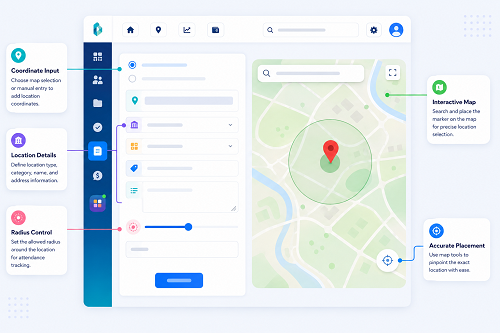
GPS accuracy may vary around large buildings, underground parking areas, workshops, and industrial sites. Insurance firms should therefore allow a reasonable site radius and provide a process for resolving legitimate location exceptions.
GPS check-ins support verification of a recorded visit, but they do not independently prove that an inspection was completed or that the findings are accurate.
3. Use Geofencing to Validate Inspection Locations
Geofencing allows a company to define a virtual boundary around an inspection location. When a surveyor checks in, the system compares the reported location with the configured boundary.
If the check-in occurs outside the expected area, the system can flag the event for review.
This can help insurance operations teams identify:
- Check-ins recorded away from the assigned location.
- Visits linked to the wrong claim.
- Repeated location-verification exceptions.
- Incorrect property coordinates.
- Inspections requiring additional confirmation.
Geofencing is particularly useful when surveyors handle several claims in a day. However, the system should not automatically classify every location mismatch as misconduct. A large industrial site, restricted entrance, poor GPS reception, or incorrect map pin may explain the discrepancy.
Supervisors should be able to review the circumstances and document approved corrections.
4. Track the Entire Inspection Workflow
Recording arrival is only one part of the inspection process. Insurance firms should also track whether the inspection started, whether the required evidence was collected, and whether the report was submitted.
A digital workflow can use statuses such as:
| Status | Meaning |
|---|---|
| Assigned | The claim has been allocated to a surveyor. |
| Scheduled | The appointment time and location have been confirmed. |
| En route | The surveyor has reported travelling to the site. |
| Arrived | The site check-in has been recorded. |
| In progress | The inspection activity has started. |
| Inspection completed | The field assessment has been recorded as complete. |
| Report pending | The visit is complete, but the report still requires submission. |
| Submitted | The inspection report has been submitted for review. |
| Exception | The visit requires follow-up or clarification. |
These statuses help managers distinguish between a completed site visit and a completed claim assessment. The two are not necessarily the same: a surveyor may finish the physical inspection but still need to review documents, obtain technical input, or prepare the final report.
5. Capture Digital Inspection Evidence
Digital inspection records help ensure that surveyors collect the information required for each type of claim.
Depending on the claim and applicable procedures, a report may include:
- Claim reference and policy details needed for the assessment.
- Date, time, and location of the inspection.
- Surveyor identification.
- Description of the reported damage.
- Photographs and relevant supporting documents.
- Observations about the circumstances of the incident.
- Measurements or technical findings where required.
- Outstanding information or follow-up actions.
- Report submission and review timestamps.
For example, a motor claim inspection may include photographs of vehicle damage and relevant workshop details. A property inspection may document visible damage, affected areas, and supporting evidence.
The system should link this information to the correct claim and maintain a record of changes. Attendance tracking must not replace the surveyor's professional judgement, technical assessment, or required claims documentation.
6. Optimise Inspection Routes Across Multiple Locations
Surveyors may handle several assignments in different parts of the UAE on the same day. Poorly planned routes can increase travel time, delay appointments, and reduce the number of inspections a team can complete.
Route planning tools can help managers group nearby appointments and allocate visits based on location, urgency, appointment windows, and surveyor expertise.
When planning routes, consider:
- Distance between inspection locations.
- Customer and workshop availability.
- Expected inspection duration.
- Traffic and parking conditions.
- Urgent or priority claims.
- Specialist qualifications required.
- Time needed to complete reports and upload evidence.
For example, a surveyor assigned to multiple vehicle inspections in one district may be scheduled to complete those visits together before travelling to a more distant property inspection.
Route optimisation should remain flexible enough to accommodate emergency assignments and changes in customer availability.
7. Manage Missed Visits, Delays, and Reassignments
Not every scheduled inspection can proceed as planned. A customer may be unavailable, a workshop may not have released the vehicle, or a property may be inaccessible when the surveyor arrives.
Insurance firms should use a formal process to record these exceptions.
A useful workflow includes:
- Identifying the affected appointment.
- Recording the reason the visit could not proceed.
- Notifying the relevant operations manager.
- Contacting the customer or site representative where necessary.
- Rescheduling or reassigning the inspection.
- Updating the claim record and notifying affected parties.
This creates a traceable history of missed visits and prevents incomplete appointments from being mistaken for completed inspections.
Operations teams can also analyse recurring delays to determine whether they are caused by scheduling assumptions, customer availability, travel time, or documentation requirements.
8. Connect Field Visits With Timesheets and Payroll
Field surveyors may work across multiple sites, complete reports from the office, and respond to urgent assignments outside their normal schedule. Tracking only their site check-ins may not capture their full working day.
An integrated system can connect attendance records with scheduled inspections, report preparation, approved additional hours, and timesheets.
For example, if a surveyor completes two inspections and spends additional time preparing reports, the firm can record the site visits separately from the wider working-time record. Managers can review the entries before approving the timesheet.
Insurance firms should apply their employment contracts, internal policies, and applicable UAE labour requirements when calculating working hours and overtime. A site arrival or departure timestamp alone should not automatically determine whether time is payable or unpaid.
The UAE Government's official guidance on private-sector working hours and overtime provides a starting point for reviewing the relevant requirements.
9. Use Reports to Monitor Inspection Performance
Field visit data can help insurance managers identify scheduling bottlenecks, improve workload allocation, and monitor the completion of inspection assignments.
Useful reports include:
- Scheduled versus completed inspections.
- Late arrivals and missed appointments.
- Average time between assignment and site visit.
- Inspections completed by surveyor or region.
- Reports awaiting submission.
- Repeated location-verification exceptions.
- Rescheduled claims and their recorded reasons.
- Working hours and approved overtime.
- Outstanding inspections by claim priority.
These indicators should be interpreted carefully. A high number of completed visits does not necessarily mean that the inspections were accurate or that the claims were assessed efficiently.
Managers should review visit records alongside report quality, claim complexity, customer communication, and the time required to complete the assessment.
10. Protect Customer and Claim Information
Insurance inspections may involve personal information, vehicle details, property addresses, photographs, and documents containing confidential claim information. Digital workforce systems must protect these records from unnecessary access.
Good practices include:
- Restricting claim access according to employee responsibilities.
- Separating attendance permissions from access to detailed claim files.
- Securing photographs and supporting documents.
- Maintaining audit trails for edits and approvals.
- Defining appropriate retention and deletion procedures.
- Explaining the purpose of employee location tracking.
- Limiting location collection to legitimate operational needs.
The UAE's Personal Data Protection Law provides a framework for personal data processing, subject to its scope and applicable exceptions. Insurance firms should assess their specific legal obligations and any additional sector-specific or contractual requirements when choosing and configuring field tracking software.
11. Choose Field Workforce Software for Insurance Inspections
A basic attendance application may not be sufficient for insurance firms managing hundreds of inspections across multiple locations. The selected system should connect field attendance with inspection assignments and reporting workflows.
Important capabilities include:
- Mobile check-in and check-out.
- GPS and configurable geofencing.
- Claim-linked inspection assignments.
- Surveyor scheduling and workload allocation.
- Digital inspection checklists.
- Supporting document and photograph capture.
- Missed-visit alerts and rescheduling.
- Report submission tracking.
- Timesheet and payroll integration.
- Role-based permissions and audit trails.
Where regulated surveying or loss adjustment is involved, the system should support the firm's documentation and recordkeeping procedures. The Central Bank of the UAE's Rulebook includes regulations concerning surveyors and loss adjusters, including requirements relating to registration, professional duties, and records.
Frequently Asked Questions
1. How can UAE insurance firms verify field surveyor visits?
They can use claim-linked digital assignments, GPS-enabled check-ins, site-specific geofencing, and inspection completion records. These provide supporting evidence of when and where a visit was recorded.
2. Is GPS tracking enough to confirm that a claim inspection was completed?
No. GPS helps verify location information, but it does not prove that the inspection was performed or that the assessment is accurate. A completed inspection checklist, supporting evidence, and a submitted report provide additional verification.
3. Can insurance firms track surveyors across multiple emirates?
Yes. Field workforce systems can manage assignments, schedules, attendance, and inspection statuses across multiple locations. Managers can use centralised reports to identify delays and allocate available surveyors.
4. How can insurance companies reduce missed inspection appointments?
They can confirm appointments in advance, optimise routes, issue reminders, monitor arrival status, and record reasons for failed visits. A structured rescheduling process helps ensure that outstanding inspections remain visible.
5. Can field visit tracking improve payroll accuracy?
Yes. Connecting attendance records with inspection assignments and approved timesheets helps payroll teams reconcile working hours and investigate discrepancies. Payroll calculations must still follow applicable employment rules and company policies.
6. Are there UAE regulatory requirements for insurance surveyors and loss adjusters?
Yes. The Central Bank of the UAE's Rulebook contains regulations covering surveyors and loss adjusters, including registration and professional responsibilities. Firms should verify the requirements applicable to their particular activities and personnel.
Conclusion
UAE insurance firms can improve field inspection management by combining digital scheduling, GPS-enabled check-ins, geofencing, claim-linked work orders, and structured inspection reports. These tools help operations teams verify recorded visits, coordinate surveyors across multiple locations, manage appointment exceptions, and maintain more reliable attendance and timesheet records.
An integrated field workforce management system also helps managers monitor inspection progress and identify delays before they affect the wider claims process. By combining attendance verification with appropriate professional oversight, secure claim documentation, and clear approval workflows, insurance firms can improve operational visibility while maintaining accountability and customer trust.
Insurance surveyors spend much of their day in the field. InnBuilt Field Management can help UAE teams link assigned claim inspections to visit check-ins and completion records.