How Can UAE Security Patrol Teams Verify Site Visits and Shift Coverage?
How Can UAE Security Patrol Teams Verify Site Visits and Shift Coverage?
Security companies in the UAE often manage guards and patrol teams across offices, residential communities, warehouses, construction sites, retail properties, and other customer locations. When teams operate across multiple sites and shifts, manually checking attendance and patrol records can make it difficult for supervisors to confirm whether guards reached assigned locations and completed their scheduled duties.
A digital security workforce management system can help companies verify site visits and shift coverage using mobile attendance, location verification, patrol checkpoints, digital reports, and supervisor dashboards. The objective is to create reliable operational records without relying entirely on paper registers or phone calls.
1. Create Digital Shift Schedules
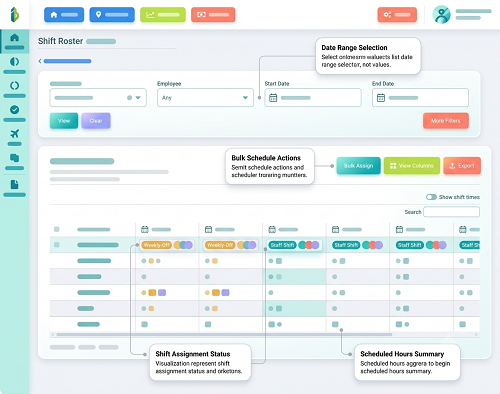
The first step is to maintain a centralized schedule for every security site.
A shift record can include:
- Site name and location
- Guard assigned
- Shift start and end time
- Supervisor
- Required staffing level
- Patrol frequency
- Checkpoint requirements
- Special site instructions
- Emergency contact details
This gives supervisors a clear view of who should be present at each site and when.
2. Record Guard Attendance Through Mobile Check-In
Security guards working at customer sites may not have access to a traditional office attendance machine. A mobile attendance application can allow guards to record their shift start and end digitally.
A typical workflow is:
Scheduled Shift → Guard Arrives → Mobile Check-In → Location Verification → Shift Begins → Mobile Check-Out
The system can capture the attendance timestamp and, where appropriate, the location associated with the check-in.
This gives supervisors a more reliable attendance record than manually maintained registers.
3. Verify the Guard Is at the Assigned Site
Attendance alone does not always prove that a guard reached the correct customer location.
Companies can use GPS or geo-fenced attendance to verify that a guard's check-in occurred within an approved area.
For example, a security company may configure a geo-fence around a warehouse. When the assigned guard checks in, the system can compare the recorded location with the approved site boundary.
However, GPS accuracy can be affected by buildings, device settings, network conditions, and environmental factors. A legitimate exception process should therefore be available when a guard cannot obtain an accurate location reading.
4. Use Digital Patrol Checkpoints
Security patrols often require guards to visit specific areas during a shift.
Digital checkpoints can be placed at locations such as:
- Main entrances
- Parking areas
- Building floors
- Equipment rooms
- Perimeter gates
- Storage areas
- Restricted access points
Depending on the system, guards may verify a checkpoint using a QR code, NFC tag, mobile action, or another approved method.
A patrol sequence can then be recorded as:
Checkpoint A → Checkpoint B → Checkpoint C → Checkpoint D
This provides evidence that the scheduled patrol activity was performed.
5. Track Planned Versus Actual Patrols
Supervisors should be able to compare the patrol plan with actual activity.
| Patrol Requirement | Planned | Actual |
|---|---|---|
| Patrol rounds | 6 | 6 |
| Checkpoints | 24 | 23 |
| Missed checkpoints | 0 | 1 |
| Late rounds | 0 | 2 |
| Site visits | 1 | 1 |
This makes it easier to identify missed or delayed patrol activity.
A missed checkpoint should not automatically be treated as misconduct. The guard may have been responding to an incident, dealing with an access problem, or following an emergency instruction. The system should allow supervisors to record the reason.
6. Monitor Shift Coverage
Security companies need to know whether every required position is covered.
A dashboard can show:
- Shift covered
- Guard checked in
- Guard not checked in
- Late arrival
- Early departure
- Replacement required
- Patrol pending
- Patrol completed
- Shift completed
For example, if a guard has not checked in within an agreed period after the scheduled start time, the supervisor can receive an exception alert and arrange replacement coverage.
7. Manage Guard Replacements
Unexpected absences are common in field security operations. A digital system can help supervisors find available replacement guards.
When a replacement is assigned, the system can record:
- Original guard
- Replacement guard
- Reason for replacement
- Assignment time
- Replacement check-in
- Supervisor approval
This creates an audit trail showing how the shift was covered.
8. Record Incidents During Patrols
Patrol verification should not be limited to location and attendance.
Guards may also need to record incidents such as:
- Unauthorized access
- Damaged property
- Safety hazards
- Suspicious activity
- Equipment problems
- Open doors or gates
- Vehicle incidents
- Emergency situations
The mobile application can allow guards to submit incident reports, notes, photographs where appropriate, and escalation details.
This connects patrol activity with actual security operations.
9. Use Mobile Supervisor Inspections
Security supervisors may visit multiple customer sites during a day.
Their mobile workflow can include:
Supervisor Assignment → Site Arrival → Inspection → Guard Verification → Checklist → Incident Review → Supervisor Sign-Off
This provides management with a separate record of supervisory visits rather than relying only on guard-submitted information.
10. Track Shift Handover
A proper handover is important when one guard's shift ends and another begins.
The system can record:
- Outgoing guard
- Incoming guard
- Handover time
- Pending incidents
- Site instructions
- Equipment status
- Outstanding tasks
- Supervisor confirmation
Digital handover records can reduce the risk of important information being lost between shifts.
11. Handle Offline Patrol Activity
Security guards may work in basements, remote facilities, large compounds, or areas with unreliable mobile connectivity.
If the software supports offline attendance or patrol recording, the guard can record the required event and synchronize it when connectivity returns.
A robust offline workflow should aim to:
- Preserve the original event time where supported
- Prevent duplicate records
- Identify unsynchronized activity
- Synchronize automatically when connectivity returns
- Alert supervisors when important data remains pending
Exact offline functionality depends on the software platform.
12. Connect Attendance With Payroll
Security companies can connect approved attendance records with payroll processing.
A typical workflow is:
Shift Schedule → Guard Check-In → Patrol Activity → Guard Check-Out → Attendance Approval → Payroll
This can help HR teams calculate working hours and review attendance exceptions.
However, patrol activity should not automatically replace attendance records, and operational data should be reviewed according to company policies before it is used for payroll adjustments or overtime calculations.
13. Generate Site Coverage Reports
Management needs regular reports to understand whether customer sites are being adequately covered.
Useful reports include:
- Daily guard attendance
- Shift coverage
- Missed check-ins
- Late arrivals
- Early departures
- Patrol completion
- Missed checkpoints
- Supervisor inspections
- Guard replacement records
- Incident reports
- Attendance corrections
- Location exceptions
- Shift handover records
These reports can help security companies identify recurring operational gaps.
14. Measure Security Workforce KPIs
Security companies can track several KPIs to improve operations.
Important metrics include:
- Shift coverage rate
- On-time check-in rate
- Patrol completion rate
- Missed checkpoint rate
- Guard replacement frequency
- Incident response time
- Supervisor inspection completion
- Attendance correction rate
- Site visit compliance
- Repeat site exceptions
- Overtime hours
- Customer service-level compliance
Managers should use these metrics together rather than judging guard performance based on a single location or attendance metric.
15. Protect Location and Employee Data
Security workforce systems may contain employee attendance, location, customer-site information, and incident records. Companies should therefore establish appropriate controls for collecting and using this information.
Important practices include:
- Define the purpose of location collection
- Limit access according to job responsibilities
- Use secure transmission and storage
- Establish appropriate retention periods
- Maintain access and audit logs
- Review third-party software and cloud data handling
- Inform employees about relevant monitoring practices
- Apply appropriate privacy and security controls
For UAE businesses, organizations should consider applicable UAE privacy and data-protection requirements when implementing employee location and monitoring systems.
Best Practices for UAE Security Patrol Teams
Security companies can improve site-visit and shift verification by following these practices:
- Create digital schedules for every security site.
- Record guard attendance through mobile check-in and check-out.
- Use geo-fenced verification where site presence needs to be confirmed.
- Use digital checkpoints for scheduled patrol rounds.
- Compare planned patrols with actual activity.
- Create automatic alerts for missed shifts and patrols.
- Maintain a formal guard-replacement workflow.
- Record incidents directly from the field.
- Use mobile supervisor inspections.
- Maintain digital shift-handover records.
- Support offline workflows for locations with poor connectivity.
- Connect approved attendance information with payroll.
- Review exceptions instead of automatically treating them as misconduct.
- Protect employee, customer, location, and incident data.
- Use operational KPIs to identify recurring site coverage problems.
Conclusion
UAE security patrol teams can improve site verification and shift coverage by combining digital attendance, geo-fenced check-ins, patrol checkpoints, supervisor inspections, incident reporting, and shift scheduling.
A connected workflow can provide visibility from shift assignment → guard check-in → site verification → patrol checkpoints → incident reporting → shift handover → guard check-out → attendance and payroll.
The most effective approach is not simply to monitor guards continuously. Instead, security companies should capture meaningful attendance and patrol events, maintain clear exception procedures, protect location data, and use operational reports to ensure that every customer site receives the required level of security coverage.
Security coverage depends on both rostered hours and site presence. InnBuilt Field Management can help UAE patrol supervisors log visits, check assigned checkpoints and review missed rounds.