10 Benefits of Payroll Automation for Businesses
10 Benefits of Payroll Automation for Businesses
Payroll is a critical business process that requires accurate employee information, attendance data, salary calculations, deductions, leave records, and timely processing. When payroll is managed manually, HR and finance teams may spend significant time working with spreadsheets, checking calculations, and transferring information between different systems.
Payroll automation uses software to automate repetitive payroll activities and connect important employee information in one centralized system.
From reducing manual work to improving payroll visibility, automation can help businesses create a more efficient payroll process.
Here are 10 benefits of payroll automation for businesses.
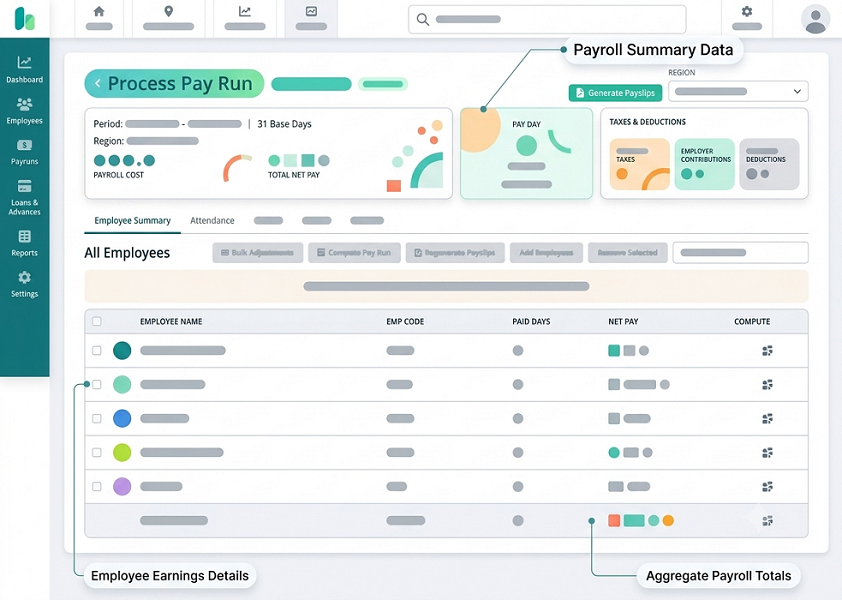
1. Saves HR and Payroll Time
One of the biggest benefits of payroll automation is the reduction in repetitive administrative work.
Instead of manually calculating salaries, checking attendance, updating spreadsheets, and preparing payslips, payroll software can automate many of these activities.
HR and payroll teams can spend less time on routine calculations and more time reviewing exceptions and handling important employee-related activities.
2. Reduces Manual Payroll Errors
Manual payroll processing can involve repeated calculations and data entry. Even a small mistake in employee information, attendance, leave, or salary calculations can affect payroll.
Automated payroll software uses configured rules to perform calculations consistently.
While automation does not eliminate the need for review, it can reduce errors caused by repetitive manual processing.
3. Faster Payroll Processing
Manual payroll can take considerable time, particularly when a business has a large workforce.
Payroll automation can bring employee information, attendance, leave, overtime, and salary components together, allowing payroll teams to process information more efficiently.
A faster workflow can help businesses complete payroll activities within their planned payroll schedule.
4. Integrates Attendance and Payroll
Attendance and payroll are closely connected.
Employee attendance can affect working days, absences, overtime, and other payroll inputs according to company policies.
By integrating attendance management software with payroll, businesses can reduce the need to manually transfer attendance information between systems.
This creates a workflow such as:
Attendance → Leave → Working Hours → Overtime → Payroll
The exact calculations depend on the organization's configured rules.
5. Simplifies Leave and Overtime Processing
Leave and overtime information often needs to be reviewed before payroll is finalized.
Automated systems can connect approved leave and recorded working hours with payroll processing.
This can make it easier for HR teams to identify:
- Unpaid leave
- Approved leave
- Overtime
- Attendance exceptions
- Missing attendance records
- Other configured payroll adjustments
6. Automates Payslip Generation
Preparing payslips manually for every employee can be time-consuming.
Payroll automation software can generate digital payslips after payroll has been processed and approved.
Depending on the system, employees may be able to access their payslips through an employee portal or mobile application.
This reduces administrative work and provides employees with easier access to their payroll information.
7. Improves Payroll Data Management
Payroll involves a significant amount of employee information.
A centralized payroll system can help businesses maintain information such as:
- Employee details
- Salary structures
- Allowances
- Deductions
- Attendance information
- Leave records
- Overtime
- Payroll history
Maintaining information in a centralized system can make it easier for authorized HR and finance users to access and manage payroll data.
8. Supports Payroll Reporting
Payroll automation can simplify the creation of payroll reports.
Businesses may generate reports based on:
- Employees
- Departments
- Locations
- Salary components
- Attendance
- Leave
- Overtime
- Payroll periods
These reports can help HR and finance teams review payroll information and identify exceptions.
Automated reporting can also reduce the need to create repetitive spreadsheets manually.
9. Helps Manage Payroll as the Business Grows
Manual payroll may be manageable for a small workforce but can become increasingly difficult as employee numbers increase.
Businesses may add:
- New employees
- Departments
- Branches
- Locations
- Shifts
- Salary structures
Payroll automation provides a more scalable way to manage growing payroll operations.
A suitable system can help businesses manage a larger workforce without increasing manual payroll work at the same rate.
10. Improves Payroll Security and Access Control
Payroll contains confidential employee and financial information. Payroll automation software can provide security and access-management features that are difficult to maintain consistently with spreadsheets and paper records.
Depending on the solution, businesses may have access to:
- Role-based permissions
- User authentication
- Access controls
- Audit logs
- Data backups
- Data encryption
- Controlled employee access
Businesses should review the security capabilities of a payroll provider before implementation and ensure access is granted only to appropriate users.
Additional Benefits of Payroll Automation
Beyond these 10 key benefits, automation can also help businesses create a more connected HR workflow.
Payroll can be integrated with:
- Employee management
- Attendance
- Leave management
- Shift management
- Overtime
- Approval workflows
- Employee self-service
- Reports
This reduces the need to maintain separate manual processes for each HR activity.
Payroll Automation for Small Businesses
Small businesses often have limited HR resources. Payroll automation can reduce the administrative burden on business owners and HR teams.
Instead of spending hours every month maintaining spreadsheets and calculating salaries, teams can use software to automate recurring payroll activities.
This allows small businesses to establish a more structured payroll process as they grow.
Payroll Automation for Large Businesses
Large organizations may manage employees across multiple departments, locations, and shifts.
Automation can help centralize payroll information and support workflows involving:
- Multiple locations
- Different salary structures
- Shift employees
- Overtime
- Leave
- Variable pay
- Payroll approvals
- Department-level reporting
A scalable payroll solution can make centralized payroll management easier for larger workforces.
Payroll Automation and Compliance
For businesses in India, payroll may involve applicable statutory requirements depending on the organization, employees, locations, and circumstances.
Payroll software can automate configured statutory calculations and reports, but businesses should not assume that software alone guarantees compliance.
Payroll teams should regularly review applicable requirements and ensure that payroll configurations are accurate and updated when rules change.
How to Get the Most from Payroll Automation
Businesses can improve the results of payroll automation by following a few practices:
Maintain Accurate Employee Data
Payroll calculations depend on accurate employee information. Regularly review employee records and salary details.
Integrate Attendance and Leave
Connecting attendance and leave with payroll can reduce repetitive data entry.
Create an Approval Workflow
Payroll should be reviewed by authorized users before final processing.
Review Exceptions
Automation should be combined with exception checking. Missing attendance, unusual overtime, incorrect employee information, and other exceptions should be reviewed before payroll is finalized.
Protect Payroll Information
Use appropriate access controls and security measures to protect employee payroll information.
Conclusion
The benefits of payroll automation for businesses go beyond simply calculating employee salaries. Automation can save HR time, reduce repetitive manual work, improve payroll data management, simplify payslip generation, support reporting, and connect payroll with attendance and leave processes.
The 10 major benefits include:
- Saves HR and payroll time
- Reduces manual payroll errors
- Enables faster payroll processing
- Integrates attendance and payroll
- Simplifies leave and overtime processing
- Automates payslip generation
- Improves payroll data management
- Supports payroll reporting
- Helps businesses scale payroll operations
- Improves payroll security and access control
For businesses looking to modernize their HR processes, payroll automation software can provide a centralized and scalable way to manage payroll while reducing repetitive administrative work.
Modern organizations rely on automated payroll systems to keep up with scaling workforce demands efficiently. InnBuilt Payroll improves calculation accuracy, ensures timely salary disbursements, and automatically handles complex tax deductions. By adopting this software, businesses enhance regulatory compliance while boosting overall HR productivity.