10 Benefits of Using Employee Attendance Management Software
Employee Attendance Management Software
Managing employee attendance manually can become challenging as a business grows. Paper registers, spreadsheets, punch cards, and manual attendance sheets require significant administrative effort and can lead to errors in working-hour calculations, leave records, overtime, and payroll.
Employee Attendance Management Software provides a centralized and automated platform to record, monitor, and manage employee attendance. It helps businesses track working hours, shifts, leave, overtime, late arrivals, early departures, and absences while providing payroll systems with accurate attendance information for payroll processing.
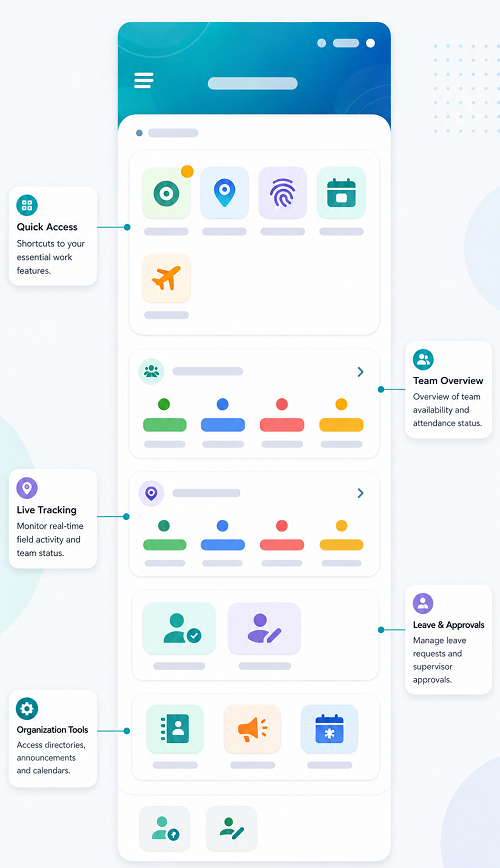
What Is Employee Attendance Management Software?
Employee Attendance Management Software is a digital system used by organizations to track and manage employee time, attendance, and work schedules. It automates time-tracking through methods such as biometric devices, mobile apps, web check-ins, or RFID cards.
Why Do Businesses Need Attendance Management Software?
As companies scale, tracking employee attendance manually becomes inefficient and prone to errors. Attendance software helps organizations automate repetitive HR tasks, reduce compliance risks, eliminate payroll discrepancies, and gain real-time visibility into workforce availability.
For example, an HR team may need to collect attendance data from different branches, verify missing punches, calculate working hours, update leave records, and prepare a monthly attendance sheet for payroll.
An automated attendance system simplifies these activities by bringing attendance information into one centralized platform. It can help businesses reduce manual work, improve attendance accuracy, and provide faster access to workforce information.
Who Can Use It?
- Small and Medium Enterprises (SMEs)
- Large Enterprises
- Remote and Hybrid Teams
- Field Workers and On-site Teams
For a payroll-focused business, the biggest advantage is attendance-to-payroll integration. Attendance information such as working days, leave, overtime, and unpaid absence can be processed before payroll, reducing the need for manual Excel-based calculations.
Managing employee attendance is an important responsibility for every organization. Attendance data affects working hours, leave, overtime, payroll, workforce planning, and employee productivity. However, traditional attendance methods such as paper registers, spreadsheets, and manual timesheets can become difficult to manage as a business grows.
Employee Attendance Management Software provides businesses with a digital way to record, monitor, and manage employee attendance. It can automate attendance tracking, manage shifts and leave, generate reports, and integrate attendance information with payroll.
From small businesses to large enterprises, automated attendance software can help HR teams save time while improving the accuracy and visibility of workforce data.
Here are 10 key benefits of using Employee Attendance Management Software.
1. Automates Attendance Tracking
Automates time-logging using biometrics, web check-ins, or mobile apps, eliminating the need for manual registers and spreadsheet entries.
- Biometric devices
- Mobile applications
- Web portals
- RFID cards
- Facial recognition
- GPS-based attendance
2. Improves Attendance Accuracy
Reduces human error and prevents time theft or buddy punching, ensuring accurate recording of work hours.
- Missing punches
- Late arrivals
- Early departures
- Absences
- Incorrect shift assignments
- Insufficient working hours
3. Saves HR Time and Effort
Frees HR teams from manual data entry and repetitive tracking tasks, allowing them to focus on core strategic activities.
Attendance management software automates many routine activities, including attendance calculations, report generation, shift tracking, and leave updates.
Instead of spending hours consolidating spreadsheets, HR teams can access attendance information from a centralized dashboard
4. Simplifies Payroll Processing
Seamlessly integrates attendance data with payroll systems to calculate accurate salaries, overtime, and deductions without manual effort.
Working days, unpaid leave, overtime, and certain attendance-related adjustments may affect an employee's salary.
With attendance software integrated with payroll, relevant attendance information can be transferred to the payroll process without repeatedly entering data manually.
A typical workflow is:
Attendance → Leave & Overtime → Attendance Processing → Payroll → Salary Calculation
5. Supports Shift Management
Allows managers to easily assign, manage, and adjust rotating or flexible work shifts for different teams.
- General shifts
- Rotational shifts
- Night shifts
- Split shifts
- Flexible working hours
- Weekly offs
- Shift changes
6. Makes Leave Management Easier
Enables employees to apply for leave online while providing managers with real-time tracking of leave balances and approvals.
- Available leave balances
- Approved leave
- Pending requests
- Absence Leave without pay
7. Enables GPS and Mobile Attendance
Allows remote, hybrid, or field employees to check in securely using GPS tracking and mobile geofencing features.
Mobile and GPS-based attendance features allow eligible employees to mark attendance using a smartphone. Organizations can configure location-based rules or geofencing where appropriate.
For example, a field employee visiting a customer location may be able to check in using a mobile application. Businesses should establish clear policies around location tracking, privacy, data access, and employee consent where required.
8. Provides Real-Time Attendance Visibility
Offers instant insights into active working hours, absences, late arrivals, and early departures from a centralized dashboard.
- Employees currently present
- Employees absent
- Late arrivals
- Missing attendance
- Employees working at different locations
- Shift attendance
9. Generates Useful Attendance Reports
Delivers detailed analytics on workforce punctuality, attendance trends, and overtime usage to support decision-making.
- Daily attendance report
- Monthly attendance report
- Late-coming report
- Absence report
- Overtime report
- Working-hours report
- Leave report
- Missing-punch report
- Department-wise attendance report
10. Improves Employee Transparency
Gives employees self-service access to view their own attendance history, leave balances, and overtime logs, boosting trust.
- Check-in and check-out times
- Attendance history
- Leave balance
- Approved leave
- Overtime
- Missing punches
- Attendance regularization requests
Additional Benefits for Growing Businesses
Attendance software becomes particularly valuable when an organization grows. A company with 20 employees may be able to manage attendance using a simple spreadsheet. However, managing attendance for 500 employees across multiple branches and shifts can quickly become complicated.
A centralized attendance system helps organizations manage employees across:
- Multiple offices
- Retail branches
- Factories
- Construction sites
- Project locations
- Remote workplaces
- Field operations
The system provides a consistent attendance process across different locations, helping organizations scale operations effortlessly, ensure labor law compliance, and maintain consistent policy enforcement.
How Attendance Software Improves Payroll and HR Management
The real value of attendance management software comes from connecting time tracking directly to HR operations and payroll engines. By automating data flow, organizations minimize payroll processing time, lower administrative costs, and eliminate payment discrepancies.
Conclusion
Implementing Employee Attendance Management Software optimizes administrative workflows, increases operational efficiency, and ensures fair, accurate payroll processing for modern organizations.
For businesses with growing workforces, multiple locations, field employees, or complex shifts, investing in the right attendance management software can improve operational efficiency and make payroll and HR administration easier.
When selecting an attendance system, businesses should evaluate features such as biometric and mobile attendance, GPS capabilities, shift management, leave integration, payroll integration, reporting, employee self-service, security, and scalability.
The right solution should not simply record when employees arrive and leave. It should help the organization manage attendance as an integrated part of its overall HR and payroll management process.
Businesses using InnBuilt Attendance Management Software gain accurate time records, faster payroll, real-time visibility, reduced paperwork, and consistent policy enforcement. Managers spend less time consolidating registers.