Attendance Software for IT Companies
Attendance Software for IT Companies
Managing employee attendance in an IT company is different from managing attendance in a traditional office. Technology companies may have employees working from offices, remotely, in hybrid arrangements, across multiple locations, or outside standard business hours.
Software developers, testers, project managers, support teams, HR professionals, sales teams, and other employees may follow different work schedules. Some employees may also work on client projects across different time zones.
Attendance Software for IT Companies helps businesses digitally manage employee attendance, working hours, shifts, leave, overtime, remote work, and payroll-related attendance information.
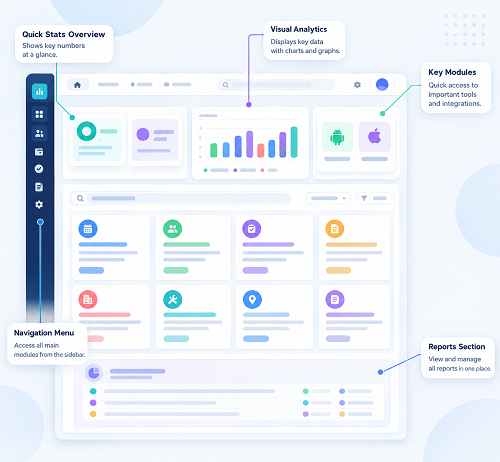
What Is Attendance Software for IT Companies?
Attendance Management Software is a digital system that records employee attendance and helps HR teams manage working hours and attendance-related processes.
Employees may record attendance through:
- Web application
- Mobile application
- Biometric device
- Face recognition
- GPS-enabled attendance
- Other company-approved methods
A typical workflow is:
Employee Check-In → Attendance Recorded → Working Hours → Leave/Overtime → Approval → Payroll
For IT companies, the software should ideally support both office-based and remote/hybrid employees.
Why IT Companies Need Attendance Software
IT companies may have employees working under different arrangements:
- Office-based
- Remote
- Hybrid
- Flexible schedules
- Shift-based
- Client-site
- International teams
Managing all these employee categories using spreadsheets can become complicated.
Attendance software provides a centralized system for HR to monitor attendance and working hours.
1. Office Attendance
Employees working from the company office can record attendance through:
- Biometric devices
- Web applications
- Mobile applications
- Other approved systems
The system can record check-in and check-out times and calculate working hours according to company policies.
2. Remote Employee Attendance
Remote work is common in the IT industry.
Employees may work from:
- Home
- Another approved location
- Co-working space
- Client location
A suitable attendance system can allow authorized employees to record attendance through a mobile or web application.
Depending on the software, companies may also configure location verification.
Remote attendance policies should be clearly communicated to employees and should comply with applicable privacy requirements.
3. Hybrid Attendance Management
Many IT companies operate a hybrid work model.
For example:
Monday → Office
Tuesday → Remote
Wednesday → Office
Thursday → Remote
Friday → Office
Attendance software can help HR manage different attendance arrangements according to company policy.
This can provide a centralized view of employee attendance regardless of where employees work.
4. Mobile Attendance
Mobile attendance can be useful for employees who do not always work from a fixed office.
Employees may be able to:
- Check in
- Check out
- View attendance
- Apply for leave
- Request attendance correction
- View attendance history
Mobile attendance can be particularly useful for field employees and client-facing teams.
5. Web-Based Attendance
IT employees commonly work with computers, making web-based attendance convenient.
Employees can log in to the attendance portal and record attendance.
A web-based system can also provide access to:
- Attendance history
- Working hours
- Leave balance
- Leave applications
- Regularization requests
6. Biometric Attendance
IT companies with fixed office locations may use biometric attendance.
Depending on the device, employees can record attendance through:
- Fingerprint
- Face recognition
Biometric attendance can reduce manual entry and provide an automated attendance record.
Companies should evaluate biometric data security, privacy, and applicable requirements before deployment.
7. Flexible Working Hours
Some IT companies provide flexible working hours.
For example:
Core Hours: 11 AM–4 PM
Employees may start and finish work within defined limits.
Attendance software can be configured according to the organization's working-hour rules, where supported.
The company should clearly define how flexible hours, breaks, and minimum working requirements are calculated.
8. Shift Management
Not every IT company follows a standard 9-to-5 schedule.
Support and operations teams may work:
- Morning shifts
- Evening shifts
- Night shifts
- Rotating shifts
Attendance software can assign employees to different shifts and calculate attendance according to configured schedules.
9. Night-Shift Attendance
IT companies providing 24/7 technical support may have employees working overnight.
For example:
Check-In: 10:00 PM
Check-Out: 6:00 AM
The attendance system should correctly handle shifts that cross midnight.
Businesses should test overnight attendance before implementing the software.
10. Multiple Time Zones
International IT companies may have employees working with clients in different time zones.
For example:
- India Team
- US Team
- UK Team
- Australia Team
Attendance software for multinational organizations should clearly define the employee's assigned location, time zone, shift, and attendance rules.
This can help prevent confusion when employees work with international teams.
11. Client-Site Attendance
IT consultants and project teams may work at client locations.
For example:
Employee → Company Office
or
Employee → Client Location
Mobile attendance can be useful for employees who work outside the company's main office.
Companies should define appropriate location-tracking and attendance policies for client-site employees.
12. GPS and Geofencing
Some attendance systems provide GPS or geofencing.
For example:
Approved Office Location → Employee Check-In
The system may verify whether the employee is within an authorized area.
This can be useful for:
- Field employees
- Client-site employees
- Distributed teams
Companies should communicate location-tracking practices transparently and comply with applicable privacy requirements.
13. Working-Hour Calculation
Attendance software can calculate employee working hours automatically.
For example:
Check-In: 9:30 AM
Check-Out: 6:30 PM
Break: According to company policy
The system calculates the working duration according to configured rules.
This reduces manual calculations by HR.
14. Overtime Tracking
IT employees may sometimes work beyond scheduled hours because of:
- Production incidents
- Client deadlines
- Software releases
- Maintenance windows
- Critical support issues
For example:
Scheduled Hours: 8
Actual Hours: 10
Potential Additional Hours: 2
Attendance software can identify additional working hours for review and approval where applicable.
Whether such time qualifies as overtime should be determined according to the employee's terms and applicable requirements.
15. Leave Management
Attendance software can integrate employee leave with attendance.
A typical process is:
Employee Applies Leave → Manager Approves → Leave Balance Updated → Attendance Updated
This reduces the need to maintain separate leave spreadsheets.
16. Employee Self-Service
Employee self-service is particularly useful for large IT companies.
Employees can access:
- Attendance
- Working hours
- Leave balance
- Leave history
- Attendance corrections
- Regularization requests
This reduces routine HR queries.
17. Attendance Regularization
Employees may occasionally forget to check in or check out.
For example:
Employee Worked → Missing Check-Out
The employee can submit a regularization request.
The workflow can be:
Missing Punch → Employee Request → Manager Approval → Attendance Updated
The system can maintain an audit record of the change.
18. Late Coming and Early Leaving
IT companies can configure attendance rules for late arrivals and early departures.
For example:
Expected Start: 9:30 AM
Check-In: 9:50 AM
The system can identify the late arrival according to configured grace periods.
Similarly, early departures can be reported.
19. Attendance and Payroll Integration
Attendance information can affect payroll through:
- Paid days
- Unpaid leave
- Overtime
- Attendance-based deductions
- Other company-specific rules
An integrated workflow can be:
Attendance → Leave → Overtime → Approval → Payroll
This can reduce duplicate data entry between HR and payroll teams.
20. Multi-Location Attendance
Large IT companies may have offices in multiple cities.
For example:
- Chennai
- Bengaluru
- Hyderabad
- Pune
- Mumbai
- Delhi
- Other locations
Attendance software can centralize attendance across offices.
HR can generate:
- Location-wise reports
- Department-wise reports
- Employee-wise reports
- Shift-wise reports
21. Department-Wise Attendance
IT companies may have multiple teams:
- Software Development
- Testing
- DevOps
- IT Support
- Sales
- HR
- Finance
- Administration
Attendance software can provide department-wise attendance reports.
This allows authorized managers to monitor team attendance.
22. Project-Based Attendance
Some IT companies manage employees according to projects.
For example:
Employee → Project A
Employee → Project B
Employee → Project C
Where supported, attendance or working-time information can be associated with project structures.
However, companies should distinguish between attendance tracking and detailed project time tracking, because they are not always the same requirement.
23. Cloud-Based Attendance Software
Cloud-based attendance software can be particularly useful for distributed IT teams.
Employees and authorized HR users can access the system through supported devices.
Potential benefits include:
- Centralized attendance
- Remote access
- Multi-location support
- Automatic updates
- Employee self-service
- Centralized reports
Before selecting a cloud system, companies should evaluate security, access controls, data backup, availability, and data handling.
24. Attendance Dashboard
A centralized dashboard can provide HR with an overview of employee attendance.
It may display:
- Total employees
- Present employees
- Absent employees
- Employees on leave
- Remote employees
- Late employees
- Missing punches
- Overtime
- Location-wise attendance
This allows HR to identify attendance issues quickly.
25. Attendance Reports
Useful reports for IT companies include:
Daily Attendance Report
Shows employee attendance for a selected date.
Monthly Attendance Report
Provides monthly attendance summaries.
Department-Wise Report
Shows attendance by department.
Location-Wise Report
Shows attendance by office or location.
Remote Attendance Report
Shows employees recorded as working remotely where supported.
Late Coming Report
Identifies late attendance.
Overtime Report
Shows approved or potential overtime.
Leave Report
Provides employee leave information.
26. Data Security and Access Control
IT companies generally place significant emphasis on information security.
Attendance software should provide appropriate security controls such as:
- User authentication
- Role-based access
- Permission management
- Audit logs
- Data backups
- Secure data transmission
For example:
Employee → Own Attendance
Team Manager → Team Attendance
HR → Employee Attendance
Administrator → Organization-Wide Reports
Access should be limited according to job responsibilities.
27. Audit Trail
Attendance records may sometimes require changes.
For example:
Original Record → Correction Request → Approval → Updated Record
An audit trail can show:
- Who requested the change
- Who approved it
- Date and time
- What was changed
This improves transparency and accountability.
28. Offline Attendance
Internet connectivity may occasionally be unavailable.
IT companies should ask whether the attendance system supports offline attendance or temporary local storage.
If supported, attendance records may be synchronized when connectivity returns.
This functionality should be tested before implementation.
29. Attendance for Contractors
IT companies often work with contractors and outsourced employees.
Depending on company requirements, attendance software can help track attendance for different workforce categories.
For example:
- Permanent Employees
- Contract Employees
- Interns
- Temporary Employees
Businesses should configure access and attendance rules according to their employment arrangements.
30. Attendance for Interns and Trainees
IT companies may have interns and trainees working on defined schedules.
Attendance software can help track:
- Check-in
- Check-out
- Working days
- Leave
- Attendance history
This can provide HR with a consistent record.
Best Features to Look for in IT Attendance Software
| Feature | Importance |
|---|---|
| Remote attendance | Very High |
| Hybrid attendance | Very High |
| Mobile attendance | Very High |
| Web attendance | High |
| Biometric integration | High |
| Flexible working hours | High |
| Shift management | High |
| Night-shift support | High |
| Multi-location support | Very High |
| GPS/geofencing | Useful |
| Leave management | Very High |
| Attendance regularization | High |
| Overtime tracking | High |
| Employee self-service | Very High |
| Payroll integration | Very High |
| Role-based access | Very High |
| Audit trail | High |
| Cloud access | High |
| Data security | Very High |
| Scalability | Very High |
Biometric vs. Mobile Attendance for IT Companies
IT companies may use different attendance methods depending on employee work arrangements.
| Requirement | Biometric | Mobile |
|---|---|---|
| Office employees | Excellent | Good |
| Remote employees | Not suitable | Excellent |
| Hybrid employees | Good | Excellent |
| Field employees | Limited | Excellent |
| Client-site employees | Limited | Excellent |
| Fingerprint | Yes | No |
| Face recognition | Supported devices | Some apps |
| GPS | Not primary | Available in some systems |
| Multiple locations | Possible | Useful |
A hybrid approach can work well:
Office Employees → Biometric
Remote Employees → Mobile/Web
Field Employees → Mobile
Client-Site Teams → Mobile
Common Attendance Challenges in IT Companies
Remote Employees
HR may have limited visibility into attendance without a structured system.
Hybrid Work
Employees may work from different locations on different days.
Flexible Hours
Traditional fixed attendance rules may not suit flexible schedules.
Multiple Locations
Central HR teams may need attendance information from several offices.
Night Shifts
Support teams may work across midnight.
Client-Site Employees
Employees may work outside company offices.
Multiple Time Zones
International teams may follow different schedules.
Manual Attendance
Excel spreadsheets can become difficult to maintain as employee numbers increase.
Attendance software can help organize these processes.
Example of Hybrid Attendance Workflow
Consider an IT employee working in a hybrid arrangement.
Monday – Office
The employee checks in through the office attendance system.
Tuesday – Remote
Employees record attendance through the approved web or mobile system.
Wednesday – Office
Employee records office attendance.
Thursday – Remote
Employee records remote attendance.
Friday – Office
Employee records office attendance.
The HR dashboard can provide a consolidated attendance record according to the company's policies.
How Attendance Software Helps IT Companies
Attendance software can help IT companies:
- Automate attendance recording
- Manage remote and hybrid employees
- Track working hours
- Manage flexible schedules
- Handle shifts
- Track leave
- Monitor overtime
- Reduce manual HR work
- Generate attendance reports
- Integrate attendance with payroll
- Support multiple offices
- Improve employee self-service
Conclusion
Attendance Software for IT Companies helps organizations manage employee attendance across office, remote, hybrid, client-site, and shift-based work environments.
The most important features for technology companies include remote attendance, hybrid attendance, mobile and web access, flexible working hours, shift management, multi-location support, leave management, attendance regularization, overtime tracking, employee self-service, payroll integration, and strong security controls.
A practical IT attendance workflow can be:
Employee Check-In → Location/Work Mode → Attendance → Working Hours → Leave/Overtime → Approval → Payroll
For growing IT companies, centralized attendance software can provide HR teams with better visibility while reducing repetitive administrative work.
The right solution should be selected based on the company's work model, employee strength, office locations, shift requirements, remote workforce, international operations, payroll process, security requirements, and future growth.
Before implementation, companies should test real-world scenarios such as remote work, hybrid schedules, flexible hours, night shifts, missed punches, client-site work, multiple locations, time-zone differences, and internet interruptions. This ensures that the attendance system fits the company's actual working environment rather than forcing employees into a rigid attendance model.
IT companies can configure office, hybrid, remote, and flexible attendance policies in InnBuilt Attendance Software. Digital check-ins, leave, hours, and payroll inputs remain accessible to managers.