How Payroll Automation Saves Time and Reduces HR Workload
How Payroll Automation Saves Time and Reduces HR Workload
Payroll is one of the most important responsibilities of an HR department. Every month, HR teams need to calculate salaries, track attendance, manage leave, calculate deductions, process overtime, prepare payslips, and ensure payroll compliance. When these activities are handled manually, they can consume significant time and increase the possibility of errors.
Payroll automation helps businesses simplify these repetitive activities by using software to calculate, process, and manage payroll more efficiently. By connecting payroll with employee attendance, leave, salary structures, and other HR data, businesses can reduce manual work and allow HR teams to focus on more valuable activities.
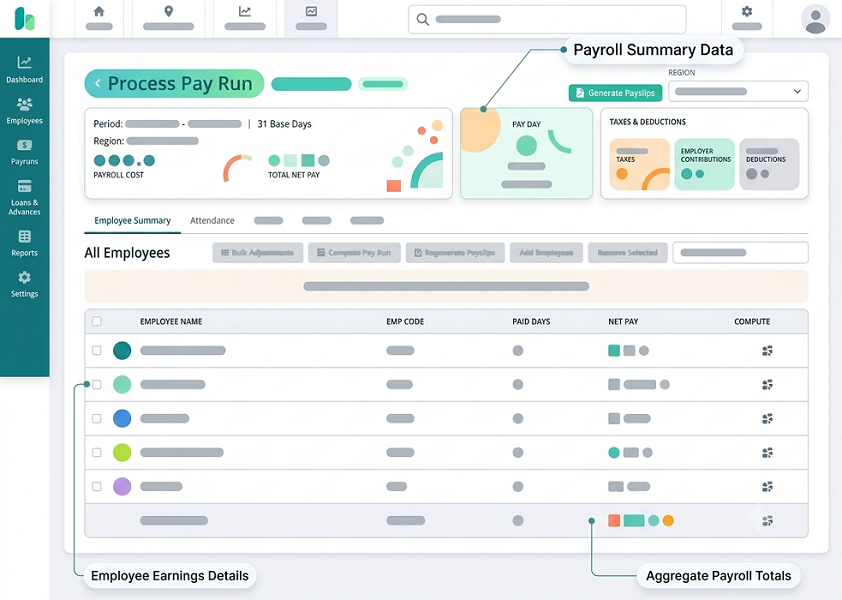
What Is Payroll Automation?
Payroll automation is the use of payroll software to automate routine salary-processing tasks. Instead of manually collecting employee information and performing calculations in spreadsheets, the system processes relevant payroll data based on predefined rules.
Depending on the software, payroll automation can help with:
- Salary calculations
- Attendance and leave integration
- Overtime calculations
- Employee deductions
- Statutory payroll calculations
- Payslip generation
- Payroll reports
- Salary revision management
- Payroll records
- Bank transfer files
- Payroll approval workflows
This reduces the amount of repetitive work HR and payroll teams need to perform every month.
How Payroll Automation Saves Time
1. Automates Salary Calculations
Calculating salaries manually can take considerable time, especially when a company has many employees. HR teams may need to consider basic salary, allowances, deductions, unpaid leave, overtime, bonuses, and other components.
Payroll automation performs these calculations based on configured salary structures and payroll rules. This allows HR professionals to process payroll faster without repeatedly calculating each employee's salary manually.
2. Reduces Manual Data Entry
Manual payroll processing often requires HR teams to enter employee information into spreadsheets or multiple systems. Repeated data entry takes time and can result in incorrect or duplicated information.
Payroll software can centralize employee payroll data and automatically use available information during salary processing. This reduces repetitive data entry and makes payroll preparation more efficient.
3. Connects Attendance and Payroll
Attendance information directly affects salary calculations for many businesses. HR teams may have to collect attendance records, calculate working days, identify absences, and account for late attendance or overtime.
When attendance management and payroll are integrated, relevant attendance information can flow into payroll automatically. This reduces the need to transfer attendance data manually and helps HR process salaries more quickly.
4. Simplifies Leave Calculations
Leave without pay, paid leave, and other leave categories may affect payroll calculations depending on company policies.
An automated system can use approved leave records when calculating payroll. HR teams do not have to manually check multiple leave registers or spreadsheets before processing salaries.
5. Automates Overtime Calculations
Businesses with shift workers, field employees, manufacturing staff, or hourly employees may need to calculate overtime regularly.
Payroll automation can use approved overtime records and apply configured rules to calculate overtime payments. This reduces the manual effort required to review and calculate overtime for individual employees.
6. Generates Payslips Automatically
Creating individual payslips manually can become a repetitive task, particularly for organizations with a large workforce.
Payroll software can generate payslips after payroll processing. Employees can receive or access their payslips digitally, reducing the administrative work involved in preparing and distributing them.
How Payroll Automation Reduces HR Workload
7. Reduces Repetitive Administrative Tasks
HR teams spend a significant amount of time on repetitive activities such as entering data, checking calculations, preparing reports, and generating documents.
Payroll automation handles many of these routine processes, allowing HR professionals to spend more time on employee engagement, recruitment, workforce planning, performance management, and other strategic responsibilities.
8. Helps Reduce Payroll Errors
Manual calculations can result in mistakes, especially when payroll involves numerous employees and salary components.
Automated payroll systems perform calculations according to configured rules and use stored employee information. While HR teams still need to review payroll and maintain accurate configurations, automation can reduce errors caused by repetitive manual calculations.
9. Makes Payroll Data Easier to Manage
Payroll information stored across spreadsheets, documents, and separate systems can be difficult to manage.
A centralized payroll system gives HR teams a single place to access employee salary information, payroll records, payslips, deductions, and reports. This can make routine payroll administration more organized.
10. Speeds Up Payroll Reporting
HR and management may require payroll reports for salaries, deductions, attendance-related payroll data, overtime, or other payroll information.
Instead of preparing reports manually, payroll software can generate reports from existing payroll data. This helps HR teams access required information more quickly.
11. Simplifies Payroll Approvals
Payroll may require review and approval before salaries are finalized.
With an approval workflow, payroll data can be submitted for review and authorized by designated users. This reduces the need for lengthy email exchanges, physical documents, or manual follow-ups.
12. Makes Employee Self-Service Easier
Payroll automation can also reduce HR workload by allowing employees to access certain payroll information themselves.
Depending on the software, employees may be able to view:
- Payslips
- Salary information
- Tax-related documents
- Attendance records
- Leave information
- Payroll history
This reduces the number of routine payroll questions that HR teams need to handle individually.
Payroll Automation and Compliance
Payroll processing may involve several statutory requirements, depending on the business, employee category, and applicable location. Payroll software can help organizations apply configured statutory rules and generate relevant reports.
However, automation does not eliminate the need for HR or payroll professionals to monitor regulatory changes. Payroll rules should be reviewed and updated when applicable laws, rates, thresholds, or company policies change.
Who Can Benefit from Payroll Automation?
Payroll automation can be useful for businesses of different sizes and industries, including:
- Small and medium-sized businesses
- IT and technology companies
- Manufacturing companies
- Retail businesses
- Construction companies
- Healthcare organizations
- Educational institutions
- Hospitality businesses
- Logistics companies
- Companies with multiple locations
- Organizations managing shift or field employees
The benefits generally become more significant as the workforce and complexity of payroll increase.
Manual Payroll vs Payroll Automation
| Manual Payroll | Payroll Automation |
|---|---|
| Repeated data entry | Centralized employee data |
| Manual salary calculations | Automated calculations |
| Spreadsheet-based processes | Software-based workflows |
| Manual payslip preparation | Automated payslip generation |
| Manual attendance transfer | Attendance-payroll integration |
| Time-consuming reports | Faster report generation |
| More repetitive HR work | Reduced administrative workload |
| Manual approval follow-ups | Digital approval workflows |
How Payroll Automation Improves HR Productivity
The main advantage of payroll automation is not simply faster salary processing. It gives HR teams more time to focus on activities that require human judgment and interaction.
Instead of spending hours checking spreadsheets and performing repetitive calculations, HR professionals can focus on:
- Employee engagement
- Recruitment and onboarding
- Performance management
- Training and development
- Workforce planning
- Employee support
- HR policy development
- Strategic workforce initiatives
This makes payroll automation an important part of modern HR operations.
Conclusion
Payroll automation saves time and reduces HR workload by automating repetitive payroll activities such as salary calculations, attendance integration, leave processing, overtime calculations, payslip generation, reporting, and approvals.
For growing businesses, automated payroll can help create a more organized and efficient payroll process while reducing dependence on manual spreadsheets and repetitive administrative tasks.
By integrating payroll with other HR processes, businesses can streamline monthly salary processing and give HR teams more time to focus on employees and strategic business priorities.
Frequently Asked Questions
1. How does payroll automation save HR time?
Payroll automation reduces the time spent on repetitive activities such as salary calculations, data entry, attendance checking, leave calculations, payslip preparation, reporting, and payroll approvals.
2. Can payroll software integrate with attendance management?
Yes. Many payroll systems can integrate with attendance management software so that working days, absences, overtime, and other relevant attendance information can be used during payroll processing.
3. Does payroll automation reduce payroll errors?
Automation can reduce errors caused by repetitive manual calculations and data entry. However, accurate employee data, salary structures, configurations, and regular reviews are still important.
4. Can payroll automation generate employee payslips?
Yes. Payroll software can automatically generate digital payslips after payroll processing, depending on the features provided by the system.
5. Is payroll automation suitable for small businesses?
Yes. Small businesses can use payroll automation to reduce administrative work and manage payroll more efficiently as their employee count grows.
6. Does payroll automation eliminate the need for HR employees?
No. Payroll automation handles repetitive administrative tasks, but HR professionals are still needed to manage employee information, review payroll, handle exceptions, maintain policies, and make workforce-related decisions.
Manual payroll tasks consume significant HR hours each month through repetitive data entry and verification. InnBuilt Payroll reduces manual HR workload by automating routine salary calculations, statutory deductions, and monthly processing workflows. As a result, teams experience faster processing cycles and can reallocate their time toward employee engagement.