How Can Bahrain Clinics Coordinate Practitioners Across Multiple Locations?
How Can Bahrain Clinics Coordinate Practitioners Across Multiple Locations?
Healthcare providers operating multiple clinics in Bahrain must coordinate practitioners, appointments, staffing schedules, patient records, and clinical resources across different locations. A doctor may work at one branch in the morning and another in the evening, while nurses, therapists, dentists, and other healthcare professionals may rotate between facilities according to patient demand.
Without a central coordination process, clinics can experience scheduling conflicts, underused practitioner availability, delayed appointments, gaps in specialist coverage, and inconsistent communication between branches. These issues can affect patient experience, increase administrative workloads, and make it difficult for management to understand actual staffing requirements.
A structured multi-location workforce management approach helps clinics coordinate practitioner availability, maintain appropriate professional authorisations, manage last-minute changes, and ensure that every branch has suitable coverage.
For Bahrain clinics, coordination should also account for the requirements of the National Health Regulatory Authority (NHRA), applicable employment rules, patient confidentiality, and the specific services authorized at each healthcare facility.
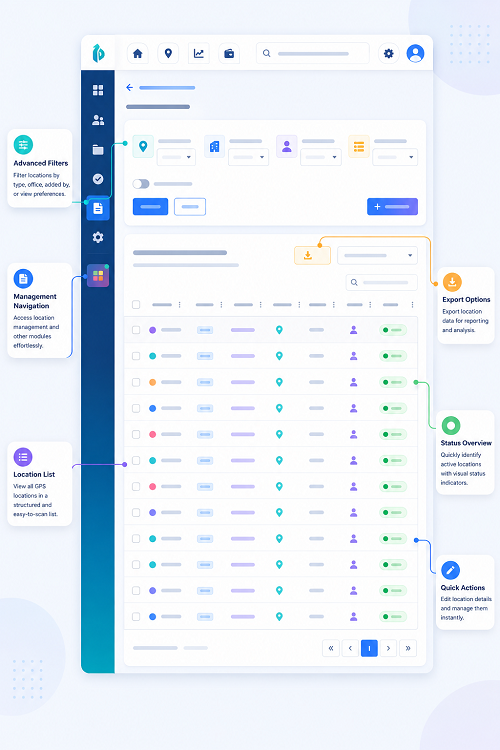
1. Create a Centralised Practitioner Scheduling System
The first step is to maintain a shared scheduling system that shows where each practitioner is expected to work and when they are available.
When every branch manages its own roster separately, managers may not know that a doctor has already been assigned to another location or that a practitioner is unavailable because of approved leave.
A central scheduling system should include:
- Practitioner name and employee identifier.
- Professional role and clinical specialty.
- Assigned clinic or branch.
- Scheduled working days and hours.
- Appointment availability.
- Approved leave and other absences.
- Travel time between locations.
- On-call or emergency coverage, where applicable.
- Relevant training and authorisation information.
- Supervisor approvals for schedule changes.
For example, a specialist may work at a clinic in Manama during the morning and provide consultations at another branch in the afternoon. A shared roster helps administrators reserve realistic appointment slots and avoid scheduling the same practitioner at both locations simultaneously.
The central system should show the latest approved schedule rather than relying on separate spreadsheets, personal calendars, and informal messages.
2. Forecast Practitioner Demand at Each Branch
Practitioner allocation should reflect patient demand, service requirements, and appointment patterns at each clinic.
A branch with high demand for general consultations may need additional general practitioners, while another location may require more specialist sessions on selected days.
Clinic managers should review:
- Appointment bookings by day and time.
- Historical patient attendance.
- No-show and cancellation rates.
- Waiting times for each specialty.
- Walk-in and urgent consultation demand.
- Seasonal changes in patient volume.
- Planned leave and professional training.
- Room, equipment, and support-staff availability.
A demand forecast can help management determine whether to increase practitioner sessions at one branch, move appointments to another location with available capacity, or adjust the weekly roster.
Forecasts should be reviewed regularly. Patient demand can change following a new service launch, changes in referral patterns, or the arrival of a practitioner with a new specialty.
3. Match Practitioner Qualifications to Each Clinic's Requirements
Moving a practitioner between branches should involve more than checking whether their calendar is free. Clinics must confirm that the practitioner is appropriately licensed, authorised, and competent for the services they will provide at the receiving location.
Before confirming an assignment, management should check:
- The practitioner's current professional licence and category.
- The scope of practice associated with the practitioner's authorisation.
- Whether the intended service is permitted at the receiving facility.
- Any required clinical privileges, supervision, or facility approvals.
- The availability of appropriate equipment and clinical support.
- Whether the practitioner has completed relevant site-specific orientation.
Bahrain's NHRA publishes professional qualification and licensing requirements and regulates healthcare facilities. Its published guidance states that healthcare professionals must practise within their specified scope of practice.
A practitioner who is suitable for one service should not automatically be assumed to be authorised for every service at another branch. Clinics should verify the relevant requirements before allocating appointments or clinical duties.
4. Develop a Clear Multi-Branch Roster
A central roster should show both practitioner assignments and the operational requirements of each location.
A useful planning table may look like this:
| Day or period | Clinic A | Clinic B | Clinic C |
|---|---|---|---|
| Morning | General practitioner | Dentist | Specialist |
| Afternoon | Specialist | General practitioner | Nurse-led service, where authorised |
| Evening | General practitioner | Extended-hours service | Scheduled consultations |
This is an illustrative structure only. Actual coverage should be based on the clinic's licensed services, practitioner availability, patient demand, and applicable requirements.
When building the roster, managers should:
- Identify required services and practitioner competencies at each branch.
- Collect staff availability and leave information.
- Allocate practitioners according to demand.
- Allow realistic travel time between locations.
- Check room, equipment, and support-staff capacity.
- Review working hours and rest requirements.
- Obtain the required approvals.
- Publish the final roster to all affected teams.
Managers should avoid building a schedule that appears efficient on paper but leaves insufficient time for travel, documentation, clinical handovers, or preparation between appointments.
5. Coordinate Travel Time Between Locations
When practitioners work at more than one clinic on the same day, travel becomes part of the scheduling decision.
If a consultation session ends at one branch shortly before appointments begin at another, traffic, parking, or an extended consultation may cause delays for the entire second session.
Clinics should therefore:
- Estimate realistic travel time between branches.
- Avoid scheduling back-to-back appointments at distant locations.
- Build transition time into the roster.
- Consider location clusters when allocating practitioners.
- Communicate delays to the receiving clinic.
- Provide a process for rescheduling affected appointments.
- Review repeated late arrivals between branches.
For instance, a clinic group may allocate practitioners to nearby locations on the same day and schedule distant branches on separate days whenever operationally practical.
Location information should be used proportionately. A clinic generally needs to know whether a practitioner can reach the next location on time; continuous monitoring of personal movements may be unnecessary.
6. Use Shared Appointment and Capacity Management
Practitioner schedules and patient appointments should be coordinated through a shared booking process.
If each branch books appointments independently without checking the wider schedule, staff may be double-booked, specialist capacity may be wasted, and patients may be directed to a branch where the required practitioner is unavailable.
A shared appointment system can help administrators:
- View availability across locations.
- Book patients into the correct specialty.
- Identify open appointment slots.
- Prevent duplicate bookings.
- Manage cancellations and rescheduling.
- Allocate urgent appointments according to clinical protocols.
- Notify patients of changes.
- Track appointment utilisation by branch.
Appointment availability should be linked to the relevant practitioner's actual approved roster, not simply to the opening hours of the clinic.
Where a practitioner is moved to another branch, the scheduling team should identify affected appointments before publishing the change. Patients should receive clear instructions about the revised time or location, with appropriate handling of their personal information.
7. Establish a Standard Process for Last-Minute Changes
Illness, emergencies, delayed travel, and unexpected patient demand can disrupt a multi-location schedule.
Clinics should define a clear process for handling these changes so that every branch knows who is responsible for making decisions.
A practical workflow includes:
Step 1: Report the change. The practitioner or branch manager informs the designated scheduling coordinator.
Step 2: Assess the impact. Identify affected appointments, services, rooms, and support staff.
Step 3: Identify alternatives. Check whether an appropriately authorised practitioner is available at the same or another branch.
Step 4: Approve the change. Obtain approval from the designated clinical or operational manager.
Step 5: Update the schedule. Record the revised assignment in the central system.
Step 6: Notify affected people. Inform reception teams, clinical staff, and patients as appropriate.
Step 7: Review the outcome. Record unresolved appointments, delays, and any operational issues that need follow-up.
Clinics should not automatically transfer appointments to another practitioner without confirming competence, availability, and any relevant clinical requirements.
8. Coordinate Clinical Rooms, Equipment, and Support Staff
A practitioner can be available but still unable to deliver a service if the receiving clinic lacks the appropriate room, equipment, or trained support staff.
Multi-location planning should therefore consider the complete service requirement, not just the practitioner's working hours.
For each scheduled session, managers should confirm:
- A suitable consultation or treatment room.
- Required medical equipment and supplies.
- Availability of nursing or technical support.
- Reception and patient-registration capacity.
- Access to relevant clinical records.
- Cleaning and room-preparation arrangements.
- Any special requirements for procedures or diagnostic services.
For example, scheduling a dentist at a branch may require confirmation that the relevant dental room, equipment, supplies, and trained support personnel will be available for the entire session.
A shared operational calendar can help managers identify conflicts before the roster is published. This reduces the likelihood of practitioners arriving at a location where the resources needed for their appointments are unavailable.
9. Maintain Clear Communication Between Branches
Effective coordination requires a consistent way for branch managers, reception teams, clinical leaders, and practitioners to exchange information.
Clinics should establish a common communication process for:
- Daily practitioner assignments.
- Schedule changes and delayed arrivals.
- Appointment cancellations.
- Room or equipment problems.
- Specialist coverage gaps.
- Urgent operational escalations.
- Handover of outstanding administrative tasks.
A central dashboard can show which practitioners are scheduled at each branch, whether they have arrived, and whether their sessions are running as planned.
However, staffing dashboards should not expose unnecessary patient information. Operational messages should include only the details required to resolve the scheduling issue, while clinical information should be shared through authorised healthcare systems.
10. Track Attendance and Actual Working Hours Across Locations
Multi-location clinics need reliable records of when practitioners start and finish work at each branch.
A roster alone does not prove that the scheduled session took place as planned. Practitioners may arrive late, finish early, extend consultations, or move to another branch because of changing patient demand.
Attendance records should capture:
- Scheduled and actual start and finish times.
- The clinic where the work was performed.
- Approved changes to the schedule.
- Additional hours and relevant approvals.
- Missed check-ins or check-outs.
- Travel or inter-branch duties where relevant to time records.
- Supervisor corrections and their reasons.
If a practitioner works at two branches in one day, the system should maintain a separate record for each work period or location as appropriate. The records should then be reconciled to establish the practitioner's total working time.
Clinics should not rely solely on the first check-in and final check-out of the day if that would obscure the actual work periods or any relevant intervals between them.
11. Use Workforce Management Software for Multi-Location Operations
A workforce management platform can give clinic groups a consolidated view of practitioner schedules, attendance, leave, and branch capacity.
Useful capabilities include:
- Centralised multi-branch scheduling.
- Practitioner availability and leave management.
- Role and qualification records.
- Appointment-calendar integration.
- Shift-change approvals.
- Attendance exception alerts.
- Inter-branch assignment history.
- Working-hour and overtime reports.
- Access controls and audit trails.
- Reporting by practitioner, specialty, and location.
When selecting a system, clinics should confirm that it supports their existing practice-management or electronic health record software. They should also test whether authorised users can update a schedule without accidentally overwriting attendance records or creating duplicate appointments.
Technology should support clinical governance rather than replace it. The final decision about practitioner suitability and clinical coverage must remain with appropriately authorised personnel.
12. Protect Patient and Practitioner Information
Coordinating several clinics involves handling personal information about practitioners and patients. Appointment schedules, contact details, attendance records, and clinical records should be managed with appropriate safeguards.
Bahrain's Personal Data Protection Law, Law No. 30 of 2018, establishes requirements for processing personal data, including sensitive information relating to health.
Multi-location clinics should implement controls such as:
- Role-based access to practitioner and patient records.
- Secure authentication for scheduling and clinical systems.
- Appropriate safeguards when sharing records between branches.
- Clear procedures for correcting inaccurate attendance data.
- Defined retention periods for workforce and patient information.
- Staff training on confidentiality and approved communication channels.
- Appropriate review of third-party software providers and data transfers.
- Limited access to employee absence or health information.
Clinics should also review whether any particular processing activity requires additional legal grounds, authorisation, or safeguards. Patient records should be shared across locations only where the sharing is appropriate, authorised, and necessary for the patient's care.
13. Measure Multi-Location Coordination Performance
Clinic managers should track performance indicators to understand whether their coordination process improves access to care and makes effective use of practitioner time.
| KPI | What it measures |
|---|---|
| Practitioner utilisation | The proportion of available clinical session time used for planned services |
| Appointment availability | The number of available appointments by specialty and location |
| Patient waiting time | Time between booking and the appointment date, or arrival and consultation, depending on the metric |
| Schedule-change rate | Frequency of changes after the roster is published |
| Late-arrival rate | Frequency of practitioners arriving after their scheduled start |
| Unfilled session rate | Sessions without the planned practitioner or an approved replacement |
| Appointment cancellation rate | Appointments cancelled because of staffing or operational issues |
| Inter-branch travel delays | Frequency of schedule disruptions associated with travel |
| Attendance-record accuracy | Whether actual working periods are correctly recorded |
| Room and equipment conflicts | Sessions affected by unavailable clinical resources |
These indicators should be reviewed together. High practitioner utilisation may appear efficient but can leave insufficient capacity for urgent appointments, documentation, and unexpected clinical needs.
Managers should compare similar specialties and branches, investigate recurring problems, and use the results to improve schedules rather than treating every variation as an employee performance issue.
14. Establish a Daily Multi-Location Coordination Routine
A consistent daily workflow helps each branch operate from the same approved information.
Before the clinic opens: Review the day's roster, practitioner availability, appointments, leave, and resource requirements.
At the start of each session: Confirm practitioner attendance, room readiness, and any changes affecting patient appointments.
During clinic hours: Monitor delays, urgent booking requests, schedule changes, and resource conflicts. Communicate changes to affected branches promptly.
When a practitioner moves locations: Confirm the destination, expected arrival, revised appointment schedule, and any handover requirements.
At the end of the day: Reconcile attendance, actual working hours, cancelled appointments, and unresolved operational issues.
During the weekly review: Compare utilisation, waiting times, staffing gaps, and last-minute changes to improve the following week's schedule.
A central coordination team can oversee these processes while allowing branch managers to handle local operational decisions within clearly defined limits.
Frequently Asked Questions
1. How can Bahrain clinics coordinate doctors across multiple branches?
They can maintain a shared practitioner roster, allocate sessions according to patient demand, include realistic travel time, and link appointment availability to approved schedules. A central coordinator should manage conflicts and communicate changes to affected branches.
2. What should clinics check before assigning a practitioner to another location?
They should confirm the practitioner's current licence, scope of practice, any relevant clinical privileges or supervision requirements, and whether the receiving facility is authorised and equipped to provide the intended service.
3. How can clinics avoid double-booking practitioners?
A central appointment and scheduling system should show availability across all branches. Any change to a practitioner's location or working hours should update the shared calendar before new appointments are confirmed.
4. How should clinics handle a practitioner who is delayed travelling between branches?
The practitioner or receiving branch should notify the scheduling coordinator. Managers can then update appointment times, inform affected patients, and assess whether an appropriately authorised alternative is available.
5. Can workforce management software track practitioners across multiple clinics?
Yes. Suitable systems can manage branch assignments, attendance, leave, appointment availability, schedule changes, and working-hour reports. Clinics should ensure that access is restricted appropriately and that the system supports their clinical and regulatory requirements.
6. How should multi-location clinics protect patient information?
They should use authorised clinical systems, restrict access by role, establish secure information-sharing procedures, and review the applicable Bahrain data-protection requirements for processing and transferring personal information.
Conclusion
Bahrain clinics can coordinate practitioners across multiple locations by using a central roster, forecasting demand by branch, verifying professional authorisations, and linking appointment schedules with room and staff availability.
Clear procedures for travel time, last-minute changes, attendance recording, and inter-branch communication help prevent double bookings and reduce disruptions to patient care. Workforce management software can provide the visibility needed to coordinate multiple branches, while access controls and audit trails help protect sensitive information.
The most effective approach combines technology with clear clinical accountability. By reviewing staffing performance regularly and ensuring that each location has appropriately authorised practitioners and suitable resources, clinic groups can improve operational efficiency while maintaining patient safety and service quality.
Practitioners moving between clinics need a clear location-based schedule. InnBuilt Shift Management can help Bahrain clinic managers coordinate assignments and review attendance at each branch.