How Can Bahrain Employers Handle Shift Swaps Without Losing Approval History?
How Can Bahrain Employers Handle Shift Swaps Without Losing Approval History?
Introduction
Managing employee shift swaps can be challenging for Bahrain employers, especially when businesses operate rotating schedules, multiple branches, night shifts, or continuous operations. Employees may need to exchange shifts because of personal commitments, unexpected absences, family responsibilities, or changes in workload. Although these changes can help maintain workforce flexibility, poorly managed shift swaps can create scheduling conflicts, attendance discrepancies, overtime disputes, and payroll errors.
One of the biggest risks is losing the approval history. For example, an employee may exchange a Friday shift with a colleague after receiving verbal permission from a supervisor. Later, the attendance system may still show the original roster, leaving HR unsure who was expected to work. If the change was communicated through WhatsApp, email, or a paper form, the evidence may be difficult to locate when payroll is processed.
Bahrain employers can address these challenges by introducing a standard shift-swap workflow that records the original schedule, employee request, colleague acceptance, supervisor decision, revised roster, and actual attendance in one traceable process.
A reliable system should make shift changes easy for employees while ensuring that every approval remains accessible for HR, operations managers, payroll teams, and internal auditors.
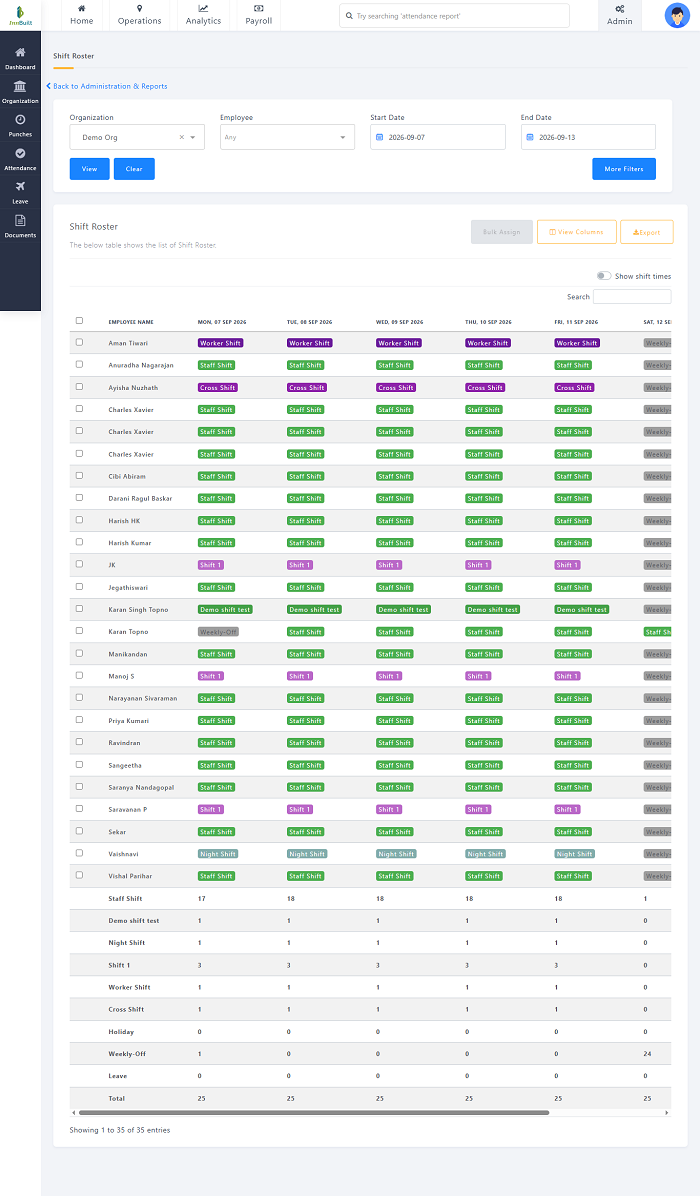
1. Establish a Clear Shift-Swap Policy
The first step is to create a written shift-swap policy that explains when employees can exchange shifts and how requests must be submitted.
The policy should define the circumstances under which a swap is permitted, who must approve it, and how the revised schedule becomes official.
A shift-swap policy should specify:
- Eligibility: Which employees can exchange shifts, including any role, department, skill, or location restrictions.
- Request deadlines: How far in advance employees should submit a request.
- Mutual consent: Whether both employees must confirm the proposed exchange.
- Approval authority: Whether approval is required from a supervisor, department manager, or HR.
- Working-hour limits: How the proposed swap will be checked against applicable working-hour and rest requirements.
- Attendance records: How the revised schedule will be reflected in the attendance system.
- Emergency procedures: How urgent changes are handled outside normal approval hours.
- Cancellation rules: How an approved swap can be withdrawn or replaced.
For example, a hospital, hotel, security company, or logistics business may require confirmation that the replacement employee has the necessary skills and authorisation before approving a shift exchange.
The policy should also state that an employee's request or a colleague's informal agreement does not automatically constitute final approval.
2. Record Every Shift Swap as a Separate Transaction
A common mistake is overwriting the original roster as soon as a shift swap is approved. This removes important information about the schedule that was initially published.
Instead, employers should create a separate shift-swap transaction linked to the original shift records.
Each transaction should contain:
| Record field | Information to capture |
|---|---|
| Swap reference | Unique transaction or request ID |
| Employee requesting the swap | Employee identifier and department |
| Other employee | Employee identifier and department |
| Original shifts | Date, start time, end time, and location for both employees |
| Requested change | The exact shifts each employee proposes to exchange |
| Reason | Optional reason, according to company policy |
| Employee confirmations | Submission and acceptance timestamps |
| Approval history | Approver, decision, timestamp, and comments |
| Final schedule | Approved shift assignments |
| Attendance outcome | Actual clock-in, clock-out, and exceptions |
| Payroll status | Whether the change has been reconciled with payroll |
The original schedule should remain available even after the new roster is published.
This approach gives HR a complete history of what changed, who requested it, who approved it, and how it affected attendance.
3. Use a Standardised Digital Approval Workflow
A digital approval workflow helps Bahrain employers replace scattered messages and informal verbal agreements with a consistent process.
A typical workflow can follow these steps:
- Employee A submits a request. The employee selects the shift to exchange and proposes an eligible colleague.
- Employee B confirms acceptance. The colleague reviews the dates and agrees to the proposed exchange.
- The system validates the request. It checks for overlapping shifts, conflicting assignments, qualifications, location restrictions, and potential working-hour issues.
- The supervisor reviews the request. The supervisor checks staffing coverage and operational requirements.
- The authorised manager approves or rejects it. The decision is recorded with the approver's identity and timestamp.
- The revised roster is published. Both employees and relevant managers receive confirmation.
- Attendance is matched against the revised schedule. Actual working hours are recorded separately from planned hours.
- Payroll receives the approved changes. The system passes relevant schedule and attendance information to payroll for review.
Each stage should have a defined status, such as Draft, Pending Colleague Acceptance, Pending Approval, Approved, Rejected, Cancelled, or Completed.
A request should not be treated as approved simply because it has been submitted or accepted by the other employee.
4. Preserve Approval History With an Audit Trail
The most important feature of a shift-swap process is an audit trail that preserves the sequence of events.
An audit trail should record every meaningful action rather than only the final status.
For example, if a supervisor approves a swap and later changes the decision, the system should retain the original approval and record the subsequent action. It should not erase the earlier decision.
The audit trail should capture:
- Who created the request.
- Who accepted or declined the proposed swap.
- Who reviewed and approved or rejected it.
- When each action occurred.
- What schedule details changed.
- The previous and revised shift assignments.
- Any comments or supporting evidence.
- Whether the request was cancelled or resubmitted.
- When the final schedule was published.
- Whether payroll or attendance records were subsequently updated.
Where possible, the system should use timestamped, append-only event records and restrict the ability to edit or delete historical entries.
If a correction is necessary, an authorised user should add a new correction event with a reason rather than silently replacing the earlier information.
This allows HR to reconstruct the entire approval sequence when investigating an attendance dispute or payroll query.
5. Keep the Original Roster and Revised Roster Separate
Employers should maintain both the originally published roster and the latest approved version.
The original roster establishes what the employee was initially scheduled to work. The revised roster establishes the authorised assignment after the swap.
For example:
| Detail | Employee A | Employee B |
|---|---|---|
| Original shift | 7 a.m.–3 p.m. | 3 p.m.–11 p.m. |
| Requested change | 3 p.m.–11 p.m. | 7 a.m.–3 p.m. |
| Final assignment | 3 p.m.–11 p.m. | 7 a.m.–3 p.m. |
| Approval status | Approved | Approved |
The system should preserve the original assignments and link them to the approved swap reference.
If a second swap occurs later, the system should create another transaction linked to the relevant schedule version. It should not erase the first transaction.
This version-based approach helps managers determine which roster applied at a particular point in time and prevents confusion when several changes affect the same employee.
6. Apply Bahrain Working-Hour and Rest Requirements Before Approval
A shift swap should not be approved solely because both employees agree to it. Employers must also review working hours, rest periods, overtime implications, and the employee's eligibility for the proposed shift.
Bahrain's Labour Law for the Private Sector, Law No. 36 of 2012, includes provisions relevant to working hours, rest breaks, weekly rest, overtime, and published work schedules. Articles 51–57 are particularly relevant when evaluating proposed schedule changes. The official legislation is available through Bahrain's Legislation and Legal Opinion Commission and the Labour Market Regulatory Authority.
Before approving a shift swap, employers should check:
- Whether the proposed schedule creates overlapping shifts.
- Whether the employee will receive the required rest between assignments, where applicable.
- Whether the revised working hours comply with the rules applicable to the employee's role.
- Whether the swap changes weekly rest arrangements.
- Whether the change creates overtime or work on a weekly rest day or public holiday.
- Whether any role-specific or industry-specific requirements apply.
Under Article 54, qualifying overtime is subject to statutory premium-pay requirements, including at least 25% above the wage entitlement for daytime overtime hours and 50% for nighttime overtime hours. Article 57 addresses weekly rest and work on the weekly rest day. The treatment of a particular shift must be assessed against the applicable legal provisions and the employee's circumstances.
An approved shift swap does not automatically eliminate overtime liability. Payroll teams must calculate actual hours worked and apply the relevant rules.
Employers should also review Article 55, which addresses the display of employees' weekly rest days, working hours, rest periods, and changes to the schedule.
Because statutory requirements and applicable decisions may vary by employee category and circumstances, HR should verify the current consolidated law before configuring automated approval rules.
7. Integrate Shift Swaps With Attendance Tracking
Even a well-documented approval process can fail if the attendance system continues to use the original roster.
For this reason, the approved shift swap should update the employee's operational schedule while retaining the original schedule and approval reference.
The attendance system should distinguish between:
- Scheduled shift: The shift the employee is expected to work after approved changes.
- Actual attendance: The employee's recorded clock-in, clock-out, and breaks.
- Approved exception: A documented deviation from the roster, such as an authorised swap or other schedule adjustment.
- Unapproved exception: A discrepancy that requires investigation.
Suppose Employee A is originally scheduled for a morning shift but receives approval to work the evening shift instead. If the attendance system still expects a morning check-in, it may incorrectly flag the employee as absent.
A properly integrated system updates the expected shift and links it to the approved swap record.
Employers should ensure that attendance corrections do not automatically change the historical approval record. Schedule authorisation and actual attendance are related but separate records.
8. Set Rules for Emergency and Last-Minute Shift Swaps
Businesses such as hotels, hospitals, retail stores, security agencies, and logistics companies may need to make last-minute changes when an employee is unexpectedly unavailable.
A practical policy should provide an emergency approval route without removing accountability.
For example, an authorised duty manager may approve an urgent swap through a designated mobile application or controlled system. The approval should be recorded immediately, and any required follow-up documentation should be completed within a defined timeframe.
Emergency procedures should specify:
- Who is authorised to approve an urgent change.
- Which communication channel is acceptable.
- What minimum details must be recorded.
- How the revised schedule is communicated to both employees.
- How HR verifies that the change was authorised.
- How the final record is reconciled with attendance and payroll.
If approval is initially communicated verbally, the authorised manager should record the decision in the official system as soon as practicable.
A message in a personal chat should not be the only evidence of an approved shift swap. Employers should transfer the relevant decision details to the official record while following their privacy and recordkeeping policies.
9. Manage Rejected, Cancelled, and Modified Requests
Not every shift-swap request will be approved. Employees may withdraw requests, supervisors may reject them, or the proposed arrangement may change before the shift begins.
Each outcome should be recorded as a separate event.
For example:
| Event | Required record |
|---|---|
| Request submitted | Request details and submission time |
| Colleague declines | Declining employee and timestamp |
| Supervisor rejects | Decision, timestamp, and reason where appropriate |
| Employee withdraws | Withdrawal action and timestamp |
| Approved swap is cancelled | Cancellation authority and reason |
| New arrangement proposed | New request or linked revision |
| Final arrangement confirmed | Final approved schedule version |
A rejected or cancelled request should remain searchable, but it should not be treated as an active schedule change.
If an approved swap is cancelled, the system should determine which roster applies next and notify the affected employees. It should not automatically assume the original roster remains valid without checking for any later approved changes.
These controls reduce confusion and make it easier to investigate disputes about who was expected to work.
10. Connect Shift-Swap Records With Payroll Processing
Shift swaps can affect payroll when they change overtime, night work, public-holiday work, weekly rest arrangements, allowances, or the allocation of hours between payroll periods.
Payroll teams should receive the approved schedule change alongside the actual attendance records. The approval itself should not be treated as proof that the employee worked the replacement shift.
A reliable reconciliation process should compare:
- The originally published roster.
- The approved shift-swap transaction.
- The final authorised roster.
- Actual clock-in and clock-out records.
- Approved overtime and other relevant exceptions.
- Payroll calculations and the resulting payment records.
For example, an employee may have approval to exchange a daytime shift for a nighttime shift. Payroll should verify the actual hours worked and determine whether any applicable night-work or overtime rules affect the calculation.
If the employee does not attend the replacement shift, the system should flag the discrepancy rather than assuming that the approved swap means the shift was completed.
Before payroll is finalised, HR and payroll should review unresolved swaps, missing attendance records, duplicate entries, and schedule changes made after the normal approval deadline.
11. Protect Employee Information and Control Access
Shift-swap records contain employee information, including work schedules, identifiers, approval decisions, and potentially reasons for requesting a change.
Bahrain's Personal Data Protection Law, Law No. 30 of 2018, provides the legal framework for personal data processing. Employers should consider its requirements when collecting, storing, accessing, and sharing shift-swap information.
Recommended controls include:
- Give employees access to their own requests and relevant outcomes.
- Restrict approval permissions to authorised managers.
- Allow HR and payroll to access only the information required for their responsibilities.
- Maintain access logs for sensitive records.
- Protect records against unauthorised modification or disclosure.
- Establish appropriate retention and deletion rules.
- Review any cross-border transfer or third-party processing arrangements against applicable legal requirements.
Managers generally need to know the requested shift, the staffing impact, and the approval status. They may not need detailed personal explanations for every request.
A role-based system helps maintain confidentiality while ensuring that authorised personnel can retrieve the information needed for audits and payroll reviews.
12. Choose Workforce Software With Strong Approval Controls
Employers that manage multiple departments or branches may benefit from workforce management software that connects scheduling, attendance, approvals, and payroll.
When evaluating a solution, HR and operations teams should look for the following capabilities:
| Feature | Business benefit |
|---|---|
| Employee self-service | Employees submit swap requests without relying on paper forms |
| Colleague confirmation | Both employees can confirm the proposed exchange |
| Configurable approval hierarchy | Requests reach the correct supervisor or manager |
| Timestamped audit trail | Every decision and modification remains traceable |
| Schedule version history | Original and revised rosters remain available |
| Automated conflict checks | Potential overlapping shifts and staffing gaps are identified |
| Mobile notifications | Employees receive decisions and schedule updates |
| Attendance integration | Actual working hours can be reconciled with the approved roster |
| Payroll integration | Approved schedule changes can be reviewed alongside payroll inputs |
| Permission controls | Only authorised users can approve or modify records |
| Reporting and exports | HR can retrieve approval histories for reviews and audits |
Employers should also test whether the system preserves historical records when an employee changes departments, transfers branches, or leaves the organisation.
The objective is not merely to digitise a request form. It is to create a reliable record of the entire scheduling decision.
13. Establish Clear Responsibilities for Employees, Supervisors, HR, and Payroll
Shift-swap management works best when responsibilities are defined.
Employees should submit accurate requests, obtain the required colleague confirmation, and check the final approved schedule before reporting to work.
Supervisors should assess operational coverage, verify employee suitability, review scheduling conflicts, and record decisions through the official process.
HR teams should maintain the shift-swap policy, manage approval permissions, investigate unresolved exceptions, and monitor compliance with applicable workplace requirements.
Payroll teams should verify actual hours and relevant exceptions before calculating wages, overtime, and applicable allowances.
System administrators should manage user access, protect audit records, and maintain system configuration without making unauthorised changes to historical approvals.
For organisations with multiple branches, a central policy can establish consistent rules while allowing designated local managers to approve changes according to their authority.
14. Monitor Shift-Swap Performance Through Reports
Regular reporting helps employers identify recurring staffing problems and weaknesses in the approval process.
Useful metrics include:
- Number of shift-swap requests submitted each month.
- Percentage of requests approved, rejected, or cancelled.
- Average time between submission and final decision.
- Number of swaps made close to shift commencement.
- Number of requests missing required colleague confirmation.
- Number of attendance discrepancies after approved swaps.
- Number of changes requiring payroll correction.
- Number of requests with incomplete approval histories.
- Departments or branches with unusually frequent last-minute swaps.
These reports can help managers distinguish between healthy employee flexibility and deeper workforce-planning problems.
For example, repeated last-minute swaps in one department may indicate insufficient staffing, unrealistic rosters, or recurring scheduling conflicts. Management can then investigate the underlying issue rather than relying on individual swaps to solve it.
Reports should be used to improve workforce planning and process consistency, not to make unsupported assumptions about employee conduct.
15. Practical Implementation Checklist
Bahrain employers can use the following checklist when introducing or reviewing their shift-swap process.
- Publish a written shift-swap policy.
- Define eligible employees and authorised approvers.
- Require both employees to confirm the proposed exchange.
- Assign a unique reference to every request.
- Record submission, confirmation, approval, rejection, and cancellation timestamps.
- Preserve the original roster and every approved revision.
- Configure checks for overlapping shifts and relevant working-hour requirements.
- Update the active roster only through an authorised process.
- Notify affected employees when the final decision is made.
- Reconcile approved changes with actual attendance.
- Review overtime and other relevant payroll implications.
- Restrict access to employee information.
- Test the audit trail before deploying the process across all branches.
- Review unresolved exceptions before monthly payroll close.
- Periodically audit approval records and system permissions.
Frequently Asked Questions (FAQs)
1. What is a shift-swap approval history?
A shift-swap approval history is a record of the entire exchange process, including the original shifts, employee requests, colleague confirmations, supervisor decisions, timestamps, cancellations, and final schedule changes.
2. Should Bahrain employers retain the original shift roster?
Yes. Retaining the original roster alongside the revised schedule helps employers establish what was initially planned and identify which changes were authorised. The organisation should apply an appropriate record-retention policy and comply with applicable legal requirements.
3. Can employees exchange shifts without supervisor approval?
That depends on the employer's policy and applicable requirements. Employers should clearly identify which changes require approval and ensure that employees understand when an exchange becomes official.
4. How can employers prevent unauthorised shift swaps?
They can require colleague confirmation, designated manager approval, automated conflict checks, and publication of the revised schedule only after the required approvals are complete.
5. What happens if a supervisor changes an approved shift swap?
The system should record the new decision as another event, including who made the change, when it occurred, and why. The earlier approval should remain accessible rather than being silently overwritten.
6. How do shift swaps affect payroll in Bahrain?
Depending on the hours actually worked and the employee's circumstances, a swap may affect overtime, nighttime hours, weekly rest, public-holiday work, or applicable allowances. Payroll teams should reconcile the final approved roster with attendance records before processing wages.
Conclusion
Bahrain employers can manage shift swaps without losing approval history by treating each exchange as a controlled, traceable transaction rather than an informal roster edit.
The most effective process records the original schedule, both employees' confirmations, each approval decision, all subsequent changes, the final roster, and actual attendance. Integrating these records with payroll helps employers identify overtime implications, resolve discrepancies, and reduce avoidable payroll corrections.
Employers should combine a clear written policy with digital approval workflows, role-based access, reliable audit trails, and regular exception reviews. They should also ensure that scheduling practices are consistent with applicable Bahrain labour requirements and personal data protection obligations.
With these controls in place, businesses can offer employees greater scheduling flexibility while maintaining reliable records for HR, operations, payroll, and compliance reviews.
A shift swap needs more than an updated calendar: it needs an approval trail. InnBuilt Shift Management can help Bahrain teams record the request, supervisor decision and revised assignment.