How Can Bahrain Employers Organize Ramadan Shifts and Attendance?
How Can Bahrain Employers Organise Ramadan Shifts and Attendance?
Introduction
Organising Ramadan shifts and attendance is an important task for employers in Bahrain. During the holy month, businesses may need to adjust working schedules, manage different customer demand patterns, accommodate employee availability, and maintain essential services while complying with applicable working-hour requirements.
These responsibilities can be particularly challenging for employers operating retail outlets, hotels, restaurants, healthcare facilities, logistics operations, security services, warehouses, and customer support centres. Some teams may need to work early shifts, evening shifts, or overnight schedules, while office-based departments may be able to adopt shorter or more flexible working arrangements.
A clear Ramadan workforce plan helps HR teams coordinate shifts, prevent attendance errors, distribute workloads fairly, and process payroll accurately. It also gives employees advance notice of their working hours and helps managers respond to absences and unexpected changes.
For Bahrain employers, the process should begin with understanding the applicable legal requirements, followed by demand forecasting, roster preparation, attendance monitoring, and payroll reconciliation.
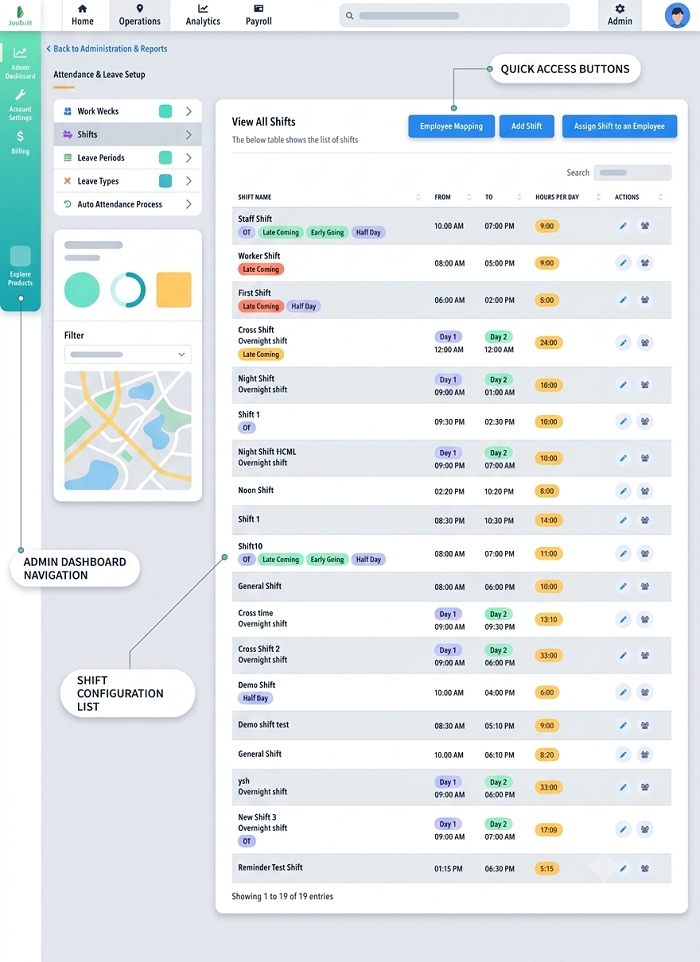
1. Understand Bahrain’s Ramadan Working-Hour Requirements
Before changing employee schedules, HR teams should review Bahrain’s Labour Law for the Private Sector, Law No. 36 of 2012, and any applicable amendments, regulations, exemptions, or sector-specific requirements.
Article 51(b) generally provides that a Muslim worker must not actually be employed for more than six hours per day or 36 hours per week during Ramadan, except in cases covered by the law. Employers should confirm the precise application of this provision to their workforce, including any applicable statutory exceptions.
Employers should not assume that Ramadan working-hour rules are identical for every employee or that a public-sector announcement automatically applies to private-sector businesses. For example, Bahrain's official announcement for Ramadan 2026 specified working hours from 8:00 a.m. to 2:00 p.m. for ministries, authorities, and public institutions. Private employers should distinguish these public-sector arrangements from the requirements governing their own employees.
HR should verify:
- Which employees are covered by the Ramadan working-hour provision.
- The maximum applicable daily and weekly working hours.
- Whether a specific legal exception applies to a role or category of work.
- Applicable break and rest requirements.
- How overtime and night work must be handled.
- Whether any additional official instructions affect the business.
2. Assess Business Demand Before Designing Shifts
Ramadan can change the timing and volume of business activity. Employers should review how customer behaviour, delivery patterns, service requirements, and employee availability may change throughout the month.
For example, a retail business may experience more customer visits in the evening, while an office-based team may receive fewer routine requests late in the day. Restaurants and hospitality businesses may need additional evening coverage, and logistics providers may need to adjust delivery schedules to meet customer demand.
Managers should examine:
- Customer traffic by hour and day.
- Sales and order patterns from previous Ramadan periods.
- Service-level commitments and response-time targets.
- Critical activities that must continue without interruption.
- Work that can be completed earlier in the day.
- Tasks that can be moved outside peak periods.
- Employee availability and transport considerations.
- Dependencies between teams, suppliers, and customer locations.
Use historical attendance and operational data to identify the shifts that require additional staff and those that can operate with reduced coverage.
The goal is to match staffing levels to actual demand without creating unnecessary overtime, fatigue, or gaps in service.
3. Create a Ramadan Shift Plan for Each Department
A single schedule may not work for every department. Employers should prepare shift plans based on the operational needs of each team and the working-hour rules that apply to its employees.
A planning table can help managers identify the right approach.
| Department | Ramadan shift-planning approach |
|---|---|
| Administration and HR | Adjust office schedules and plan approval coverage |
| Retail | Match staffing to expected customer traffic and store hours |
| Restaurants and hospitality | Plan for preparation, evening service, and overnight operations where needed |
| Warehouses | Coordinate receiving, picking, dispatch, and handover schedules |
| Logistics | Align driver availability with delivery windows and route requirements |
| Security | Maintain required site coverage through compliant shift rotations |
| Healthcare | Protect essential service coverage and qualified staffing levels |
| Customer support | Align shift coverage with incoming requests and service commitments |
| IT and maintenance | Assign on-call coverage for urgent incidents |
| Finance and payroll | Schedule attendance reviews, approvals, and payroll deadlines |
For every shift, record the start time, end time, expected working hours, break arrangements, assigned employees, supervisor, and location.
Where operations run continuously, managers should also document shift handovers so that important tasks are not lost when one team finishes and another takes over.
4. Prepare the Ramadan Roster in Advance
Last-minute scheduling can create confusion, missed shifts, and payroll errors. Employers should prepare a provisional Ramadan roster early and communicate the final arrangements before they take effect.
A practical workflow includes:
- Review applicable rules: Confirm working-hour limits, break requirements, weekly rest arrangements, and any relevant exceptions.
- Set operating hours: Establish the opening hours and service commitments for each department or location.
- Calculate staffing needs: Estimate how many employees and which skills are required per shift.
- Collect employee availability: Review approved leave, known absences, and availability constraints.
- Draft the roster: Assign employees while checking daily and weekly working-hour totals.
- Review coverage: Identify understaffed shifts, overlapping assignments, and missing supervisors.
- Obtain approvals: Have HR and department managers approve the schedule.
- Publish the roster: Communicate shift timings, reporting locations, break arrangements, and escalation contacts.
- Maintain version control: Record changes and notify affected employees whenever a shift is updated.
A central roster makes it easier to coordinate multiple branches, compare staffing requirements, and ensure that managers use the same approved schedule.
5. Record Attendance Against the Approved Schedule
Accurate attendance tracking is essential during Ramadan because working hours and shift timings may differ from the rest of the year.
Employers should maintain records showing both the scheduled hours and the hours actually worked. A roster alone does not prove that an employee attended or completed the assigned shift.
Attendance records should include:
- Employee ID and department.
- Worksite, branch, or reporting location.
- Approved shift start and end times.
- Actual clock-in and clock-out timestamps.
- Break records where required or relevant.
- Late arrivals and early departures.
- Missed punches and attendance corrections.
- Approved overtime or schedule extensions.
- Absences and the relevant absence status.
- Supervisor approvals and the reason for changes.
For employees working across several locations, the attendance system should capture the relevant site or assignment so that HR can verify where coverage was required and whether the planned staffing was achieved.
A daily exception report can flag employees who have not clocked in, have incomplete attendance records, or appear to have worked outside their assigned schedule.
HR should review these exceptions promptly rather than waiting until the monthly payroll closing process.
6. Manage Breaks, Rest Periods, and Weekly Rest
Shorter Ramadan schedules do not eliminate the need to manage breaks and rest arrangements correctly.
Article 52 of Bahrain’s Labour Law generally addresses breaks for prayer, meals, and rest, including a total minimum break period of 30 minutes and the requirement that work arrangements prevent more than six consecutive hours of work, subject to the provision’s terms and applicable exceptions. Employers should confirm how these requirements apply to the relevant job and shift pattern.
Article 57 addresses weekly rest. Managers should ensure that the roster includes the required rest period and that operational demands do not result in inappropriate consecutive assignments.
When designing Ramadan shifts, HR should check:
- Whether the shift includes the required break arrangements.
- Whether breaks are recorded or handled according to the approved policy.
- Whether consecutive shifts create insufficient rest between assignments.
- Whether employees are scheduled for weekly rest as required.
- Whether handovers cause actual working time to exceed the planned duration.
- Whether an exception or special rule applies to a particular category of work.
For example, a warehouse shift may be scheduled to end at a particular time, but if employees regularly remain for an additional handover, the actual working hours may differ from the roster. Managers should identify and address this gap.
7. Coordinate Evening, Night, and Overnight Operations
Some businesses experience their busiest periods after sunset or late at night during Ramadan. Employers may therefore need evening and overnight shifts to maintain service levels.
This is common in hospitality, restaurants, retail, logistics, security, and maintenance operations. However, a demand for late-night coverage does not remove the need to comply with the applicable working-hour and rest requirements.
Employers should:
- Identify the hours when demand is highest.
- Assign trained staff to critical evening duties.
- Confirm that employees' schedules comply with applicable limits.
- Maintain safe transport and handover arrangements where relevant.
- Monitor fatigue and avoid unnecessarily extended shifts.
- Record actual night work and any approved additional hours.
- Apply the relevant contractual and legal rules to overtime and night work.
Managers should not assume that a night shift is compliant simply because it is shorter than a standard daytime shift. They must consider the employee's total daily and weekly working hours and any other applicable restrictions.
8. Manage Late Arrivals, Absences, and Shift Swaps
Ramadan schedules may affect employees' routines and transport arrangements. Employers should have a consistent process for handling late arrivals, sickness, unexpected absences, and requests to exchange shifts.
A useful process is:
- Identify the attendance exception.
- Check the employee's approved shift and any recent roster changes.
- Confirm whether the employee reported the absence or delay.
- Obtain an explanation and supporting information where required by policy.
- Determine whether the record needs correction.
- Record the manager's decision and approval.
- Update the attendance system and payroll inputs where necessary.
Shift swaps should be approved before the roster is changed. Employees should not rely solely on informal messages or verbal agreements, because the original roster may continue to drive attendance alerts and payroll calculations.
HR should distinguish between lateness, approved leave, sickness absence, an authorised shift change, and a missing attendance punch. Treating these situations as identical can lead to incorrect deductions or inconsistent disciplinary decisions.
9. Manage Overtime and Additional Working Hours Carefully
Unexpected customer demand, staff shortages, and emergency work may lead managers to request additional hours. Employers should ensure that these requests are authorised and recorded rather than allowing unplanned extensions to become routine.
Article 54 of Bahrain’s Labour Law addresses overtime and specifies minimum additional pay rates for qualifying overtime hours: at least 25% above the wage for daytime overtime and at least 50% for nighttime overtime. Employers should check the current law, applicable exceptions, and the correct calculation for each situation.
For Ramadan scheduling, HR and payroll teams should:
- Require approval for additional hours through a defined process.
- Record the reason for overtime.
- Compare actual hours with the approved roster.
- Check daily and weekly totals against applicable limits and exceptions.
- Apply the correct overtime treatment where legally payable.
- Investigate repeated extensions that indicate poor scheduling.
- Ensure that payroll uses verified attendance and approvals.
Employers should not use overtime as a routine substitute for a properly planned roster. Repeatedly extending shifts can undermine the purpose of Ramadan scheduling, increase fatigue, and create avoidable compliance risks.
10. Communicate Shift Changes Clearly
Employees need to know when and where they are expected to work. Clear communication is especially important when schedules change for Ramadan or when different departments follow different operating hours.
HR should communicate:
- The effective date of the Ramadan schedule.
- The approved shift start and end times.
- Break and rest arrangements.
- Worksite or branch assignments.
- The process for requesting a schedule change.
- The correct method for reporting absence or lateness.
- Supervisor and emergency contact details.
- Overtime approval procedures.
- The process for correcting attendance records.
Use approved communication channels such as the HR portal, email, workforce management software, or a workplace notice. Managers should confirm that employees have received important updates and should retain a record of material schedule changes.
If a shift is changed after publication, the updated roster should be made available to both the employee and the supervisor responsible for attendance approval.
11. Use Workforce Management Software for Ramadan Scheduling
Managing Ramadan schedules through separate spreadsheets, emails, and messaging groups can become difficult when a business has multiple departments or locations.
A workforce management system can centralise scheduling, attendance, leave, approvals, and payroll inputs.
Useful features include:
- Configurable Ramadan calendars and working-hour rules.
- Shift creation by department, branch, and worksite.
- Daily and weekly hour checks.
- Employee availability and leave management.
- Shift-swap and overtime approval workflows.
- Mobile or terminal-based clock-in and clock-out.
- Missing-punch and late-arrival alerts.
- Attendance exception reports.
- Shift handover and supervisor records.
- Payroll integration and audit trails.
- Role-based access and privacy controls.
Before adopting a system, employers should verify that it supports the applicable Bahrain requirements and allows HR to configure different rules for eligible employee groups where legally necessary.
Technology can flag potential problems, but HR should review unusual cases, disputed attendance, exceptions, and payroll adjustments before final approval.
12. Protect Employee Data When Tracking Attendance
Attendance systems may collect employee identifiers, timestamps, work locations, and other personal information. Employers should handle these records carefully and apply appropriate privacy controls.
Good practices include:
- Collecting only information needed for legitimate workforce management.
- Explaining attendance and monitoring procedures to employees.
- Limiting access to authorised HR, payroll, and management personnel.
- Maintaining appropriate security and audit logs.
- Setting retention periods according to applicable requirements.
- Reviewing location-tracking features before introducing them.
- Correcting inaccurate records through a documented process.
If mobile GPS or geofencing is used, employers should assess whether the monitoring is necessary and proportionate to the role. A location-based attendance method should not collect more information than the organisation needs.
13. Reconcile Ramadan Attendance Before Payroll Closing
Attendance records must be reviewed before they are transferred into payroll. Changes to working schedules can create discrepancies if the payroll system continues to apply an old shift template or incorrectly treats approved absences.
Before closing payroll, HR should:
- Compare the approved Ramadan roster with actual attendance.
- Resolve missing clock-ins and clock-outs.
- Verify approved leave and sickness absence records.
- Confirm authorised shift swaps and schedule changes.
- Review additional hours and applicable overtime.
- Check that the correct working-hour rules were applied.
- Confirm relevant deductions and allowances against the employee's terms and applicable law.
- Obtain final supervisor and HR approval.
- Retain the supporting records for audit and future review.
A reconciliation report should highlight unresolved exceptions rather than allowing incomplete records to pass automatically into payroll.
This process reduces the risk of incorrect payments, avoidable employee complaints, and inaccurate workforce reports.
14. Review Performance Throughout Ramadan
Employers should monitor the effectiveness of the Ramadan roster instead of waiting until the month ends to identify problems.
Useful measures include:
- Percentage of shifts published before the effective date.
- Number of uncovered shifts.
- Late arrivals and unplanned absences.
- Missing or corrected attendance records.
- Overtime hours and repeated shift extensions.
- Payroll adjustments linked to attendance errors.
- Customer response times and service-level performance.
- Employee requests for schedule changes.
- Staffing gaps by department or location.
Managers should use these indicators to adjust future rosters where appropriate. For example, recurring understaffing during evening peak periods may indicate that the shift structure needs to change, while repeated late clock-outs may suggest that handover time has not been properly included in the plan.
Ramadan Shift and Attendance Checklist
Before Ramadan
- Review the current Bahrain Labour Law and applicable working-hour rules.
- Identify which employees are covered by Ramadan working-hour limits.
- Forecast workload by department and time of day.
- Prepare shift schedules and check daily and weekly hours.
- Confirm breaks, weekly rest, and supervisor coverage.
- Configure attendance and payroll systems.
- Communicate the roster and approval procedures.
During Ramadan
- Monitor actual attendance against the approved roster.
- Investigate missing punches and late arrivals.
- Record absences and approved schedule changes.
- Review overtime and additional hours.
- Monitor service coverage and employee fatigue.
- Keep the roster updated and communicate changes promptly.
After Each Payroll Period
- Reconcile rostered hours with verified attendance.
- Review leave, deductions, and additional-pay inputs.
- Resolve outstanding attendance exceptions.
- Confirm payroll approval and preserve supporting records.
- Document scheduling issues for the next Ramadan period.
Frequently Asked Questions
1. What are the Ramadan working-hour limits in Bahrain?
Article 51(b) of Bahrain’s Labour Law for the Private Sector generally limits the actual working time of a Muslim worker during Ramadan to six hours per day or 36 hours per week, subject to the exceptions provided by law. Employers should verify the current legal text and its application to the specific worker and role.
2. Do Ramadan working hours for private companies have to match government office hours?
Not automatically. Government circulars set official working arrangements for the public bodies specified in them. Private employers should follow the labour-law requirements applicable to their workforce and any other binding instructions relevant to their business.
3. Can employers operate evening and night shifts during Ramadan?
Businesses may need evening or night operations, depending on their services. Employers should design shifts in line with applicable working-hour, rest, overtime, and sector-specific requirements rather than assuming that all night work is automatically permitted under any schedule.
4. How should HR track attendance during Ramadan?
HR should compare approved shift schedules with actual clock-in and clock-out records, document breaks where relevant, investigate missing punches, and record approved absences, shift swaps, and overtime. Exceptions should be resolved before payroll closing.
5. How should employers manage overtime during Ramadan?
Employers should require appropriate authorisation, record actual additional hours, check applicable legal limits and exceptions, and apply the correct overtime treatment. Article 54 sets minimum additional pay rates for qualifying overtime, subject to the law's application and any relevant provisions.
6. Can employers change employee shifts during Ramadan?
Employers should manage changes through a defined approval process, consider applicable contractual and legal requirements, update the official roster, and notify affected employees. Any change should also be reflected in attendance and payroll records.
7. What software features help with Ramadan workforce management?
Useful features include configurable shift templates, daily and weekly hour checks, leave management, shift-swap approvals, attendance exception alerts, overtime tracking, payroll integration, and audit trails. Employers should verify that the system can be configured for applicable Bahrain requirements.
Conclusion
Organising Ramadan shifts and attendance in Bahrain requires early planning, clear communication, accurate records, and a sound understanding of applicable labour requirements. Employers should review working-hour rules, forecast demand, prepare department-specific rosters, manage breaks and rest periods, and monitor actual attendance throughout the month.
A central workforce management system can help HR teams control schedule changes, identify attendance exceptions, and reconcile verified hours with payroll. By reviewing staffing performance regularly and resolving problems promptly, employers can maintain essential operations while supporting employees and managing Ramadan working arrangements consistently.
Ramadan schedules may call for different coverage and clearer time records. InnBuilt Shift Management can help Bahrain teams set period-specific rosters and compare attendance with assigned shifts.