How Can Bahrain Hospitals Cover Nurse Shifts When Staff Call in Sick?
How Can Bahrain Hospitals Cover Nurse Shifts When Staff Call in Sick?
Hospitals in Bahrain need reliable nurse-coverage plans to maintain patient safety, clinical continuity, and appropriate staffing when nurses call in sick unexpectedly. An unplanned absence can leave a ward short-staffed, disrupt handovers, increase pressure on the remaining team, and affect patient care if managers do not respond quickly.
The challenge is not simply finding someone to fill an empty shift. Hospitals must identify the affected clinical unit, assess patient acuity and workload, confirm that replacement nurses have the appropriate qualifications and authorisation, and arrange coverage without creating unsafe workloads elsewhere.
A structured approach combines real-time absence reporting, a trained relief pool, cross-unit coordination, fair overtime procedures, and accurate attendance records. Bahrain's healthcare regulatory framework also emphasises appropriate workforce planning and staffing that reflects the services provided and the needs of patients.
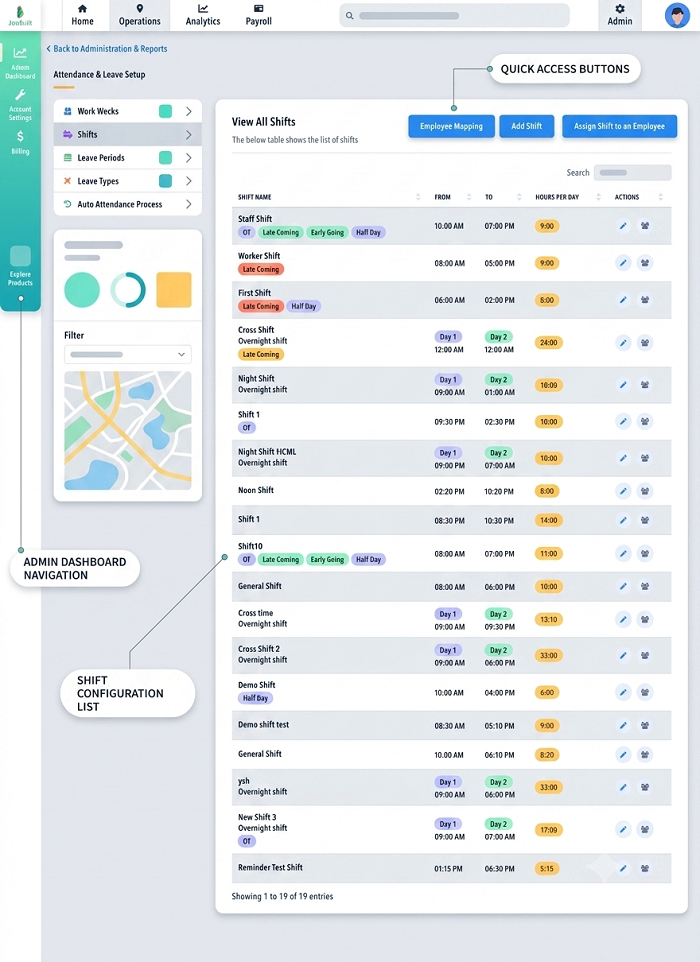
1. Establish a Clear Sick-Call Reporting Process
Hospitals should make it easy for nurses to report illness as early as possible, including outside normal office hours. A delayed notification can leave a night shift, intensive care unit, emergency department, or other clinical area without enough appropriately qualified staff.
A clear process should specify:
- Whom the nurse must notify, such as the nurse-in-charge or staffing coordinator.
- Which phone number, messaging channel, or absence-reporting system to use.
- What information is needed to arrange coverage.
- How medical documentation should be submitted under hospital policy and applicable rules.
- Who is responsible for recording the absence and updating the roster.
- How urgent, last-minute absences are escalated.
Hospitals should maintain an absence-reporting contact available around the clock. If a nurse becomes unwell shortly before a shift, the receiving manager should acknowledge the report, confirm the affected shift, and start the coverage process immediately.
The hospital should collect only the health information necessary to administer the absence and follow applicable privacy requirements. Managers generally need to know that a shift is uncovered and the expected duration of the absence, not unnecessary details about an employee's medical condition.
2. Assess the Staffing Gap Before Reassigning Nurses
Not all nurse absences create the same operational risk. Losing one nurse from a well-staffed general ward may require a different response from losing a specialist nurse in intensive care or an emergency department.
The nurse manager should assess:
- The clinical unit and shift affected.
- The number of nurses already scheduled and present.
- Current patient numbers and acuity.
- Required nursing competencies and specialist qualifications.
- The experience and supervision needs of the team.
- Admissions, discharges, procedures, and expected patient transfers.
- Any additional staffing requirements imposed by hospital policy or applicable standards.
The first priority is to determine whether the unit can continue operating safely with its available workforce. Managers should escalate shortages that cannot be resolved promptly through the established clinical leadership structure.
Hospitals should not use a universal nurse-to-patient ratio as a substitute for a proper assessment. Appropriate staffing depends on the care setting, patient needs, staff competencies, and relevant regulatory or accreditation requirements.
3. Maintain a Trained Relief Nurse Pool
One of the most effective ways to cover unexpected absences is to maintain a relief pool of nurses who can be deployed when regular employees become unavailable.
A relief pool may include:
- Nurses contracted for flexible or bank shifts.
- Part-time employees who have agreed to additional shifts.
- Staff with relevant experience who are available for approved redeployment.
- Nurses returning to their normal roster after scheduled leave.
- Appropriately credentialed temporary staff, where permitted.
The hospital should maintain an up-to-date record of each relief nurse's availability, qualifications, clinical experience, required training, and authorisation to work in specific units.
For example, a nurse experienced in a general medical ward should not automatically be assigned to an intensive care unit simply because a vacancy exists. The replacement must have the competencies required for the role and meet the hospital's credentialing and clinical governance requirements.
Relief-pool availability should be reviewed regularly. A list of nurses who are already working, on approved leave, or unavailable at short notice provides little practical protection against unexpected absences.
4. Use a Structured Shift-Replacement Workflow
A standard workflow helps staffing coordinators respond consistently, even during nights, weekends, and public holidays.
- Receive the absence report
- Assess clinical coverage
- Find a suitable replacement
- Monitor the shift and review the outcome
If the normal replacement process fails, the nurse manager should escalate the issue to the designated clinical leader and follow the hospital's contingency plan. Patient-care decisions must remain with appropriately authorised clinical personnel.
5. Coordinate Coverage Across Wards and Departments
Hospitals may be able to cover a shortage by redeploying an appropriately qualified nurse from another unit. However, internal transfers should not simply move the staffing problem from one ward to another.
Before approving a reassignment, managers should check:
- Whether the sending unit can maintain safe coverage.
- Whether the receiving unit requires specialist competencies.
- Whether the nurse has current training and authorisation for the new assignment.
- Whether an orientation or handover is required.
- Whether the transfer affects the employee's working hours or rest period.
- Who will update both units' rosters.
A hospital-wide staffing dashboard can help nursing leadership see where staff are available and where coverage is at risk. This supports informed decisions about redeployment rather than relying on informal requests between ward managers.
Hospitals should define which roles can authorise cross-unit reassignment, especially when critical care, operating theatres, maternity, emergency services, or other specialist departments are involved.
6. Create an On-Call and Escalation Plan
A relief pool may not always be enough, especially during widespread illness, seasonal infection surges, or periods of high patient demand. Hospitals should establish an escalation plan for shortages that cannot be filled through routine channels.
The plan may include:
- Contacting available relief-pool nurses.
- Checking whether a qualified nurse can voluntarily accept an additional shift.
- Reviewing safe internal redeployment options.
- Contacting approved temporary staffing providers, if permitted.
- Escalating unresolved gaps to nursing leadership and hospital operations.
- Applying the hospital's contingency arrangements if safe staffing cannot be maintained.
An on-call arrangement should specify who is contacted, how availability is confirmed, and how the assignment is documented. Staff should not be assumed to be available merely because their contact details appear on an emergency list.
If the hospital cannot safely staff a service, clinical leadership should follow the relevant escalation and operational contingency procedures. Staffing pressure should not be resolved by assigning unqualified staff to clinical duties or silently accepting an unsafe workload.
7. Avoid Fatigue From Repeated Overtime and Double Shifts
Asking nurses to work extra hours may help cover a short-term gap, but repeated overtime can contribute to fatigue, errors, reduced concentration, and further sickness absence.
Hospitals should therefore establish controls for additional shifts, including:
- Confirming that the nurse is appropriately qualified for the assignment.
- Checking previous and upcoming shifts.
- Reviewing required rest periods and applicable working-hour rules.
- Recording the employee's agreement where required.
- Obtaining the appropriate manager's approval.
- Monitoring cumulative overtime and consecutive working days.
- Reviewing whether repeated shortages require a staffing-plan adjustment.
A replacement should not be assigned solely because they are the first person to respond. Their fitness for duty, workload, competence, and working-time circumstances must also be considered.
If a unit repeatedly relies on double shifts, managers should examine whether the underlying cause is insufficient staffing, high absence rates, inefficient rostering, or an inadequate relief pool.
8. Use Workforce Scheduling Software to Identify Coverage Gaps
Manual rosters can become difficult to manage when a hospital has multiple departments, rotating shifts, night duty, specialist teams, and frequent last-minute changes.
Workforce scheduling software can provide a consolidated view of planned and actual coverage.
Useful capabilities include:
- Real-time absence reporting.
- Shift vacancy alerts.
- Relief-pool availability.
- Qualification and competency records.
- Rules for shift length and rest periods.
- Approval workflows for additional shifts.
- Cross-unit staffing dashboards.
- Automated notifications to authorised staff.
- Attendance and overtime reconciliation.
- Reports on recurring vacancies and sickness absence.
Hospitals should verify that software supports their own clinical staffing policies and does not automatically approve a reassignment simply because a person is available.
Access controls are particularly important. Staffing coordinators may need roster and availability information, while sensitive medical documentation should be restricted to personnel with a legitimate need to access it.
9. Record Attendance, Shift Changes, and Actual Hours Worked
Once a replacement has accepted a shift, the hospital should update the roster and maintain accurate attendance records for both the absent employee and the replacement.
Records should capture:
- The originally scheduled employee and shift.
- The absence notification and relevant administrative status.
- The replacement nurse's identity and assignment.
- The approval and communication of the change.
- Actual clock-in and clock-out times.
- Any additional hours worked.
- The supervisor responsible for reviewing the shift.
- Any correction made after the shift.
This distinction is important because a planned replacement shift and actual attendance are not always identical. A replacement may arrive late, leave early, or work beyond the scheduled finish.
Approved hours should be reconciled with payroll so that additional work is handled correctly. The absent employee's leave record should be processed separately from the replacement nurse's attendance and pay.
Hospitals should also preserve an audit trail so that managers can explain why a roster changed and who approved the change.
10. Apply Bahrain's Relevant Employment and Sick-Leave Rules
Hospitals in Bahrain need to distinguish between private-sector employment arrangements and the rules governing government healthcare institutions.
For employees covered by Bahrain's Labour Law for the Private Sector, Article 65 generally provides that a worker who has completed three consecutive months of service and provides the required medical certification is entitled, within the relevant year, to:
- 15 days of sick leave on full pay.
- 20 days of sick leave on half pay.
- 20 days of sick leave without pay.
The law also addresses accumulation of eligible sick leave, subject to its provisions. Employers should check the current consolidated legislation and the employee's circumstances before applying these entitlements.
Government healthcare institutions may be subject to separate employment and personnel rules. Bahrain's regulations for government health institutions include specific provisions concerning staffing, leave, working arrangements, and overtime. Hospitals should confirm which rules apply to each employee rather than assuming that private-sector provisions automatically govern every nurse.
Operationally, sickness reporting, replacement scheduling, and leave administration should be connected but treated as separate processes. A manager arranging cover should not delay urgent staffing action while waiting for routine administrative processing to finish.
11. Protect Patient Information and Employee Privacy
Staffing systems may contain employee contact information, schedules, absence details, and medical documentation. Hospitals should protect these records while ensuring that authorised managers can act quickly when coverage is needed.
Recommended controls include:
- Limiting access to absence and medical records.
- Sharing only the information needed to arrange coverage.
- Using approved communication channels.
- Maintaining a record of roster changes.
- Applying appropriate retention and security measures.
- Restricting access to staffing dashboards by role.
- Reviewing third-party staffing and software providers' data practices.
A shift notification should ordinarily provide the replacement with the necessary information about the assignment, location, reporting time, and handover arrangements. It should not disclose unnecessary details about the absent nurse's diagnosis or personal circumstances.
12. Measure Nurse-Coverage Performance
Hospitals should track whether their sick-call process fills vacancies quickly and safely. Useful indicators include:
| KPI | What it measures |
|---|---|
| Shift coverage rate | Percentage of affected shifts successfully covered |
| Time to fill a vacancy | Time between receiving an absence report and confirming a replacement |
| Unfilled shift rate | Frequency of shifts that remain uncovered |
| Overtime hours | Reliance on additional working time to maintain staffing |
| Relief-pool utilisation | How effectively the available relief workforce is used |
| Repeat absence patterns | Trends that may require workforce planning or wellbeing review |
| Last-minute roster changes | Stability of the staffing plan |
| Attendance-record accuracy | Whether actual hours and approved changes are recorded correctly |
| Unit-level staffing exceptions | Shifts requiring escalation because coverage targets were not met |
These metrics should be interpreted carefully. A high shift-coverage rate does not automatically mean staffing is safe if it depends on excessive overtime or unsuitable redeployment.
Managers should use the results to improve staffing resilience, protect employee wellbeing, and identify recurring operational weaknesses.
13. Establish a Daily and Shift-Level Coverage Routine
A practical coverage process should operate across all shifts, including nights, weekends, and public holidays.
- At the start of each shift: Review actual attendance, patient acuity, vacancies, and the availability of qualified staff.
- When a nurse calls in sick: Record the absence, assess the affected unit, and begin the replacement workflow.
- When arranging coverage: Confirm competence, availability, working-time constraints, approval, and communication of the new assignment.
- During the shift: Monitor changes in patient workload, additional absences, and whether the unit continues to meet its staffing requirements.
- At handover: Confirm the incoming team's coverage and communicate any unresolved operational issues through the hospital's normal clinical handover process.
- After the shift: Reconcile attendance, additional hours, and roster changes, and record any issue that requires follow-up.
Nursing leadership should periodically review repeated shortages and use the findings to improve the relief pool, recruitment plan, roster design, and absence-management process.
Frequently Asked Questions
1. How should a Bahrain hospital respond when a nurse calls in sick before a shift?
The manager should record the absence, assess the affected unit's staffing and patient needs, contact an appropriate replacement, and escalate the issue if safe coverage cannot be arranged through normal channels.
2. Can hospitals move nurses between departments to cover an absence?
They may be able to redeploy suitably qualified nurses where hospital policy and applicable requirements permit. Managers should assess the competence of the replacement and ensure that the sending unit does not become unsafe.
3. What is a nurse relief pool?
A relief pool is a group of appropriately qualified nurses who can be scheduled to cover vacancies caused by sickness, leave, or unexpected increases in workload. Their availability, credentials, and competencies should be kept up to date.
4. How can hospitals reduce dependence on overtime?
Hospitals can improve absence forecasting, maintain sufficient relief capacity, review recurring vacancies, and establish clear limits and approval processes for additional shifts. Overtime should not be the default response to a persistent staffing shortage.
5. How can software help manage sick-call coverage?
Workforce scheduling software can alert managers to vacancies, display available qualified nurses, track shift approvals, and reconcile actual attendance with the updated roster.
6. What sick-leave rules apply to nurses in Bahrain?
The applicable rules depend on the employee's employment status and the relevant legal framework. Article 65 of the private-sector Labour Law sets out sick-leave entitlements for eligible workers, while government healthcare employees may be governed by separate personnel regulations.
7. What should hospitals record when a replacement nurse covers a shift?
They should record the affected shift, absence status, replacement's assignment, approval, actual attendance, additional hours, and any roster corrections. Medical information should be handled separately and shared only where authorised.
Conclusion
Bahrain hospitals can cover nurse shifts when staff call in sick by establishing a clear reporting process, maintaining a trained relief pool, assessing patient needs, and using an organised escalation workflow. Cross-unit redeployment and additional shifts can provide flexibility, but only when the nurse is appropriately qualified and the arrangement does not compromise patient safety or employee wellbeing.
Digital workforce systems can improve visibility of vacancies, availability, approvals, and actual hours worked. When supported by sound clinical leadership, accurate records, and the correct employment rules, these processes help hospitals respond to unexpected absences while maintaining continuity of care.
A sick call can create an immediate gap in a nursing roster. InnBuilt Shift Management can help Bahrain hospitals identify available cover, record replacements and keep attendance aligned with the revised shift.