How Can Bahrain Manufacturing Plants Track Operator Attendance by Production Line?
How Can Bahrain Manufacturing Plants Track Operator Attendance by Production Line?
Introduction
Manufacturing plants in Bahrain depend on reliable operator attendance to maintain production schedules, operate machinery safely, meet delivery commitments, and control labour costs. When operators work across multiple production lines, rotating shifts, and different departments, recording attendance alone may not provide enough information to determine whether each line has the required staffing.
For example, an operator may arrive at the factory on time but be assigned to the wrong production line. Another employee may be transferred to a different machine during the shift, while a third may work overtime to cover an unexpected absence. If these changes are not recorded correctly, production managers may struggle to reconcile staffing records with output, supervisors may lose visibility into line coverage, and payroll teams may receive inaccurate working-time data.
A structured operator attendance tracking process connects employee check-ins with production-line assignments, shift schedules, authorised transfers, machine-operation requirements, and payroll records.
1. Create a Centralised Register of Production Lines and Operators
The first step is to create a central record of production lines, workstations, operators, and staffing requirements.
Each production line may have different equipment, operating procedures, skill requirements, and minimum staffing levels. The attendance system should therefore identify where an operator is expected to work, rather than recording only that the employee entered the factory.
A production-line register should include:
- Production line or department identifier.
- Workstation and machine identifiers, where relevant.
- Required number of operators per shift.
- Approved operator assignments.
- Required training, authorisations, or certifications.
- Shift start and finish times.
- Line supervisor and department manager.
- Relief operators and authorised substitutes.
- Planned maintenance or production shutdown periods.
For example, a packaging line may require two machine operators and one quality-check employee, while an assembly line may require five operators with different responsibilities.
A central register helps managers identify staffing shortages before production begins and prevents employees from being counted against a line where they are not actually assigned.
2. Build Shift Rosters Around Production Requirements
Operator attendance tracking should begin with an accurate shift roster. Production planners and supervisors should prepare schedules based on expected demand, machine availability, required skills, and planned maintenance.
A useful roster should show:
- Which employees are scheduled to work.
- The production line assigned to each employee.
- The scheduled reporting time.
- The planned shift duration.
- Break and relief arrangements.
- Employees authorised to cover multiple lines.
- Approved overtime or additional shifts.
Consider the following illustrative roster:
| Production line | Required operators | Scheduled operators | Shift |
|---|---|---|---|
| Assembly Line A | 5 | 5 | Morning |
| Packaging Line B | 3 | 3 | Morning |
| Machining Line C | 4 | 3 | Morning |
| Inspection Line D | 2 | 2 | Morning |
The roster immediately highlights a potential staffing shortage on Machining Line C.
The supervisor can arrange an authorised replacement, redistribute appropriately qualified employees, or adjust the production plan before the shortage affects output.
The roster should be updated whenever an approved change occurs, with the original assignment retained for audit and reporting purposes.
3. Record Attendance at Shift Start and End
Factories can use digital attendance systems to record when operators arrive and leave. Depending on the plant's layout and operating requirements, attendance may be captured through biometric terminals, employee cards, RFID devices, mobile applications, or other approved methods.
A useful attendance record should capture:
- Employee identifier.
- Date and shift.
- Actual check-in and check-out times.
- Scheduled start and finish times.
- Attendance method or terminal.
- Relevant production-line assignment.
- Late arrival, early departure, or missed check-in exceptions.
- Supervisor approval for corrections.
Factory entry attendance and production-line attendance should be treated as separate records when they serve different purposes.
An employee may enter the factory at 7:55 AM but reach the assigned workstation at 8:05 AM because of changing procedures, safety checks, or a line briefing. The company should define how these events are recorded and how they relate to working time.
A missed check-in should trigger verification rather than automatically being treated as proof of absence. The employee may have used an alternative authorised terminal or encountered a technical issue.
4. Link Every Operator to the Correct Production Line
The most important step is to connect attendance records with line-level assignments.
A factory-wide attendance register may show that 100 employees reported for work, but production managers also need to know whether each line received its required operators.
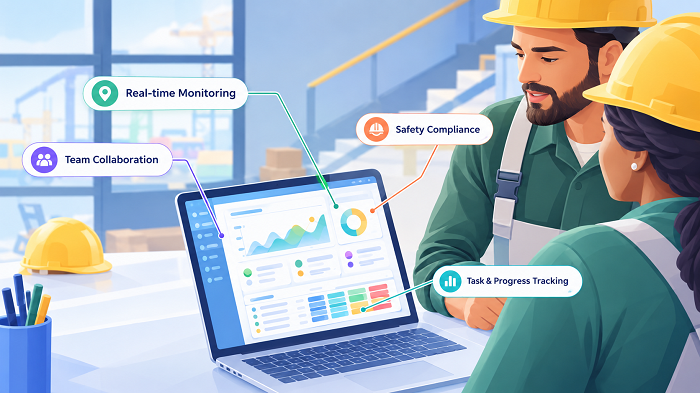
A line-level dashboard can show the following:
| Production line | Required staff | Verified assigned staff | Status |
|---|---|---|---|
| Assembly Line A | 5 | 5 | Fully staffed |
| Packaging Line B | 3 | 3 | Fully staffed |
| Machining Line C | 4 | 3 | Staffing gap |
| Inspection Line D | 2 | 2 | Fully staffed |
The dashboard should distinguish between employees who have checked in at the factory and those whose assignments to a particular line have been verified.
If an operator moves to another line during the shift, the system should record the change, its effective time, the destination line, and the authorising supervisor.
This creates a clearer picture of staffing by line and prevents the same employee from being counted as covering two lines simultaneously.
5. Track Transfers Between Lines and Workstations
Manufacturing operations often require employees to move between production lines because of machine downtime, changing order volumes, breakdowns, or staffing shortages.
Without a formal transfer process, the original roster may become inaccurate within the first few hours of a shift.
A line-transfer workflow should include:
- Identify the operational reason for the transfer.
- Confirm the operator is authorised and suitably trained for the new assignment.
- Obtain approval from the responsible supervisor.
- Record the employee's original and destination lines.
- Capture the effective transfer time.
- Update the line-level staffing dashboard.
- Record the return transfer if the employee moves back.
For example, if an operator moves from Assembly Line A to Packaging Line B at 11:00 AM, the system should retain the time spent on each line rather than assigning the entire shift to one department.
This supports more accurate labour allocation, production-cost analysis, and investigation of staffing gaps.
Attendance tracking should not override machine safety requirements. Employees should not be reassigned to equipment for which they lack the required training or authorization.
6. Monitor Staffing Gaps Before They Affect Production
A production line can become understaffed even when most employees have reported for work. Common causes include late arrivals, sickness, unplanned leave, transfers, training, and employees being temporarily assigned to other duties.
Manufacturing plants should configure alerts for situations such as:
- A required operator has not checked in by the reporting deadline.
- A line has fewer assigned operators than its approved staffing requirement.
- An employee is recorded against two active assignments.
- A critical workstation lacks an authorised operator.
- A shift handover has not been confirmed.
- A transfer has not received the required approval.
- A line has unresolved attendance discrepancies.
When an alert appears, the supervisor should assess whether the shortage affects safety, production capacity, or delivery deadlines.
Possible actions include assigning an authorised relief operator, redistributing qualified staff, adjusting the production schedule, or escalating the issue to the production manager.
The system should record the time the shortage was identified, the action taken, the person responsible, and when the staffing gap was resolved.
This helps managers identify recurring problems and evaluate whether relief staffing is sufficient.
7. Coordinate Shift Handover and Operator Replacement
Shift changes can create gaps when outgoing operators leave before incoming staff are ready to take over. These gaps may be especially important for production lines that operate continuously or require a formal handover.
A handover process should confirm:
- The identity of the incoming operator.
- The assigned production line and workstation.
- The actual reporting and handover times.
- Relevant machine status and operational instructions.
- Outstanding quality, maintenance, or safety issues.
- The supervisor responsible for confirming the handover.
If the incoming operator is late, the supervisor should follow the approved coverage procedure. The outgoing employee should not be required to remain beyond the authorised arrangement without appropriate consideration of working-time and overtime requirements.
A digital handover record can help managers identify whether production delays are linked to late arrivals, insufficient overlap, or incomplete communication.
For manufacturing plants with multiple shifts, consistent handover records also help ensure that staffing and production issues are not lost between teams.
8. Connect Attendance With Machine and Production Records
Attendance data becomes more useful when it can be compared with production records, but the two should not be treated as interchangeable.
Production systems may record machine start and stop events, units produced, downtime, rejected products, or completed work orders. Attendance systems record employee-related events and assignments.
When these systems are connected appropriately, managers can investigate questions such as:
- Was the line staffed when production began?
- Did an operator transfer coincide with a production delay?
- Was overtime approved for a shift with an urgent production requirement?
- Did a staffing shortage affect a planned production order?
- Were operators assigned to the line during a reported quality issue?
For example, if Packaging Line B experiences a 30-minute delay, a manager may compare the production timeline with operator attendance, machine downtime, and maintenance records.
The comparison can help identify possible contributing factors, but it should not automatically attribute a production problem to a particular employee. Machine failures, material shortages, process changes, and other operational factors may also explain the result.
Access to machine and production data should be controlled, and only the information necessary for the intended analysis should be connected to employee records.
9. Manage Breaks, Overtime, and Shift Extensions
Manufacturing plants need reliable records of scheduled shifts, actual attendance, approved overtime, and relevant breaks.
When a line is understaffed, supervisors may ask operators to extend their shifts or work additional hours. If the approval and attendance records are disconnected, payroll teams may receive incomplete information.
A structured process should record:
- Scheduled working hours.
- Actual recorded start and finish times.
- Approved overtime and the reason for it.
- Shift extensions and the approving manager.
- Relevant break and rest arrangements.
- Work performed on weekly rest days, where applicable.
- Corrections and explanations for attendance discrepancies.
Bahrain's Labour Law for the Private Sector, Law No. 36 of 2012, contains provisions relating to working hours, breaks, overtime, and weekly rest. The general framework includes provisions in Articles 51–57, but the applicable rules should be assessed for the specific workforce and any relevant exceptions or ministerial decisions. Manufacturing plants should not assume that every working arrangement is governed identically. HR teams should verify the current applicable requirements before setting shift limits, break policies, or overtime calculations.
10. Reconcile Production-Line Attendance With Payroll
Payroll teams need accurate attendance and approval records to calculate wages and review overtime. Line-level assignments can also help manufacturing companies allocate labour costs to the correct department or production activity.
Before payroll is finalised, HR and operations should review:
- Missing check-ins or check-outs.
- Late arrivals and early departures.
- Approved line transfers.
- Additional shifts and overtime.
- Unplanned absences and authorised leave.
- Supervisor-approved corrections.
- Conflicting or duplicate assignments.
- Hours assigned to different departments or cost centres.
For example, an operator who works four hours on Assembly Line A and four hours on Packaging Line B may need their labour cost allocated between the two lines. The attendance record should preserve the transfer time so the allocation is based on recorded work assignments rather than estimates.
Companies should distinguish between attendance corrections, working-time calculations, and cost allocation. A department transfer may change where labour costs are recorded without changing the employee's total working hours.
Discrepancies should be investigated and resolved through a documented process rather than automatically deducting time because a digital record is missing.
11. Protect Employee Data and Attendance Records
Manufacturing attendance systems may contain employee identifiers, timestamps, shift assignments, biometric information, or records of movement between departments. Companies should establish appropriate controls for collecting, accessing, storing, and sharing this information.
Good practices include:
- Explain the purpose of attendance tracking to employees.
- Collect only the data necessary for defined operational purposes.
- Restrict attendance and assignment records by user role.
- Secure terminals, mobile devices, and administrator accounts.
- Maintain an audit trail for changes and corrections.
- Define retention periods for attendance records.
- Review access to biometric or other sensitive data.
- Establish procedures for correcting inaccurate records.
If a factory uses biometric attendance, management should assess the applicable legal requirements, the necessity of the chosen method, and suitable safeguards before implementation.
Employee monitoring should remain proportionate to operational needs. Tracking which production line an operator is assigned to does not automatically require continuous monitoring of every movement throughout the factory.
12. Choose Workforce Software for Production-Line Attendance
Manufacturing plants may use separate systems for access control, attendance, production planning, machine monitoring, and payroll. If these systems do not share reliable assignment information, managers may have to reconcile records manually.
A suitable workforce management system should support:
| Software capability | Benefit |
|---|---|
| Shift roster management | Shows who is scheduled for each shift |
| Production-line assignments | Links operators to specific lines or workstations |
| Digital attendance | Records check-in and check-out events |
| Line-level staffing dashboard | Highlights understaffed production areas |
| Transfer approvals | Preserves authorised assignment changes |
| Shift handover records | Documents incoming and outgoing operators |
| Overtime approval | Links additional hours to authorised requests |
| Exception alerts | Highlights missing or conflicting records |
| Payroll integration | Supports accurate working-time reconciliation |
| Labour-cost allocation | Helps assign recorded hours to the correct department |
| Audit history | Shows who changed a record and when |
Before choosing a system, companies should consider its ability to handle multiple shifts, rotating assignments, factory connectivity limitations, employee access controls, and integrations with existing production and payroll systems.
A successful implementation also requires clear procedures and employee training. Software cannot compensate for an unclear roster, missing approval rules, or supervisors who do not update assignments.
13. Measure Attendance and Staffing Performance With KPIs
Key performance indicators help production managers understand whether staffing processes are reliable and where improvements are needed.
Useful measures include:
- On-time arrival rate: Percentage of scheduled operators who arrive within the defined reporting window.
- Line staffing coverage rate: Percentage of required operator-hours that are staffed by appropriately assigned employees.
- Assignment accuracy rate: Percentage of recorded operator assignments that match approved deployment records.
- Unresolved attendance exception rate: Percentage of shifts with attendance discrepancies still awaiting review.
- Transfer recording compliance: Percentage of line transfers documented and approved as required.
- Shift handover completion rate: Percentage of required handovers with complete records.
- Overtime approval compliance: Percentage of recorded overtime supported by the required approval.
- Payroll reconciliation rate: Percentage of attendance records resolved before payroll close.
Each KPI should have a clear definition. For example, on-time arrival does not necessarily mean a production line is fully staffed, and a fully staffed line does not guarantee that the planned output will be achieved.
Managers should review the results by production line, shift, department, and time period to identify patterns such as recurring shortages on night shifts or frequent transfers during peak production periods.
Frequently Asked Questions
1. How can a manufacturing plant track attendance by production line?
It can connect employee attendance records to approved line assignments in a workforce management system. A line-level dashboard can then compare required staffing with verified operator assignments for each shift.
2. Is factory gate attendance enough to confirm production-line coverage?
No. Gate attendance confirms entry into the factory but does not establish which production line the employee worked on. Plants should record line assignments and approved transfers separately when line-level visibility is required.
3. How should factories record operators who move between production lines?
The system should capture the employee, original line, destination line, effective transfer time, reason, and required approval. This helps prevent double-counting and supports accurate labour-cost allocation.
4. Can operator attendance tracking help prevent production delays?
Yes. Alerts for missing operators and understaffed lines can help supervisors arrange qualified replacements or adjust production plans before a shortage becomes a larger problem. Attendance data should be considered alongside machine status, material availability, and other production factors.
5. How does line-level attendance support payroll?
It helps reconcile actual working time, approved overtime, and departmental labour allocation. HR and payroll teams should investigate missing or conflicting records before making pay adjustments.
6. What should manufacturers consider when choosing attendance software?
They should evaluate shift scheduling, line-level assignment tracking, transfer approvals, exception alerts, audit history, payroll integration, security controls, and compatibility with existing factory systems.
7. What labour-law requirements should Bahrain manufacturers review?
They should review Bahrain's Labour Law for the Private Sector, Law No. 36 of 2012, and any applicable amendments or ministerial decisions covering working hours, breaks, overtime, and weekly rest. The rules should be checked against the actual workforce and work arrangements.
Conclusion
Bahrain manufacturing plants can track operator attendance by production line by combining accurate shift rosters, digital check-ins, line-level assignments, authorised transfers, staffing alerts, and payroll reconciliation.
The key is to move beyond factory-wide attendance totals and verify whether the right operators are assigned to the right production lines at the required times. Maintaining a record of transfers, handovers, overtime approvals, and attendance corrections gives production managers a clearer view of actual staffing.
With suitable workforce management software and well-defined procedures, manufacturing companies can identify staffing gaps earlier, improve shift coordination, allocate labour costs more accurately, and support reliable production planning.
Production-line coverage is easier to manage when operator attendance matches line assignments. InnBuilt Attendance Software can help Bahrain plants compare planned teams with actual check-ins by shift.