How Can Malaysia Employers Track Attendance Across Kuala Lumpur and Regional Branches?
How Can Malaysia Employers Track Attendance Across Kuala Lumpur and Regional Branches?
Managing employee attendance across Kuala Lumpur and regional branches can be challenging for Malaysian employers. Businesses with offices, retail outlets, factories, warehouses, and remote teams must ensure that attendance records are accurate, consistent, and accessible to authorised HR and payroll personnel.
When employees work at different locations, manual attendance registers and disconnected spreadsheets can create problems. HR teams may receive late attendance reports, inconsistent working-hour information, duplicate entries, and incomplete overtime records. These issues can affect payroll calculations, leave balances, workforce planning, and compliance with employment requirements.
A centralised attendance management system can help employers monitor attendance across locations while allowing branch managers to manage their own teams. However, businesses must also consider working-hour arrangements, location verification, employee privacy, system security, and Malaysia's employment requirements.
This guide explains how Malaysian employers can track attendance across Kuala Lumpur and regional branches, improve attendance accuracy, and connect workforce records with payroll processing.
1. Establish a Centralised Attendance Management Policy
The first step is to create a consistent attendance policy for all branches. Although employees may work in different locations, the organisation should establish common procedures for recording working hours, reporting absences, requesting leave, and correcting attendance errors.
The policy should explain:
- Standard working hours for each employee group.
- Branch-specific work schedules.
- Clock-in and clock-out requirements.
- Break periods and rest days.
- Late arrival and early departure procedures.
- Absence reporting and approval processes.
- Overtime request and approval procedures.
- Attendance correction procedures.
- Rules for employees working remotely or travelling.
- Responsibilities of employees, supervisors, and HR administrators.
For example, a company may operate its headquarters in Kuala Lumpur, a warehouse in Johor Bahru, and sales offices in Penang and Kota Kinabalu. Each location may have different opening hours, but all branches should follow the same central attendance-recording and approval principles.
A standard policy reduces confusion and makes it easier for HR teams to compare attendance information across the organisation.
2. Create One Employee Database for All Branches
Employers should maintain one central employee database instead of creating separate employee records for each branch.
Each employee should have a unique employee ID that remains unchanged when they transfer between locations. The employee profile should contain:
- Full name and employee ID.
- Job title and department.
- Employment category.
- Assigned branch or work location.
- Reporting manager.
- Normal working schedule.
- Shift assignment.
- Employment commencement date.
- Leave entitlement and balance.
- Attendance-recording method.
For example, an employee transferred from Kuala Lumpur to the Penang branch should retain the same employee ID and employment history. HR should update the employee's assigned location and schedule rather than creating a new profile.
A central database helps prevent duplicate records, preserves attendance history, and allows head office to review workforce information across the organisation.
3. Configure Attendance Rules for Each Location
Not every branch operates on the same schedule. Employers should configure location-specific attendance rules while maintaining consistent company-wide controls.
Consider the following example:
| Location | Example operating hours | Possible attendance method |
|---|---|---|
| Kuala Lumpur headquarters | 9:00 a.m.–6:00 p.m. | Biometric device or office Wi-Fi |
| Penang branch | 8:30 a.m.–5:30 p.m. | QR code or biometric device |
| Johor Bahru warehouse | 7:00 a.m.–4:00 p.m. | Biometric terminal |
| Kota Kinabalu office | 8:00 a.m.–5:00 p.m. | Web or mobile attendance |
| Kuching branch | 8:30 a.m.–5:30 p.m. | Biometric or mobile attendance |
These are illustrative schedules, not prescribed working hours. Each business should configure its actual employee schedules, breaks, rest days, and applicable employment requirements.
The attendance platform should allow HR to manage different schedules without maintaining separate, disconnected systems for every branch.
4. Select Suitable Attendance Recording Methods
Employers can use different attendance methods depending on branch size, workplace conditions, and employee responsibilities.
Common options include:
- Biometric devices: Fingerprint or facial-recognition terminals can record attendance at fixed workplaces.
- RFID or access cards: Employees tap their cards at designated entry points.
- QR-code attendance: Employees scan a branch-specific QR code to record attendance.
- Mobile applications: Employees clock in and out using an authorised smartphone application.
- Web-based attendance: Office employees record working hours through a company portal.
- Office Wi-Fi verification: The system checks whether an employee is connected to an approved workplace network.
A business does not necessarily need the same device at every branch. A large Kuala Lumpur office may use biometric terminals, while a smaller regional outlet may use QR-code attendance.
The important requirement is that all approved methods transfer records into the same central attendance database.
5. Use GPS-Based Attendance for Field Employees
Employees who travel between customer locations, construction sites, warehouses, and regional offices may not have access to a fixed attendance terminal.
For these employees, GPS-enabled mobile attendance can help employers verify where a clock-in or clock-out was recorded.
Useful features include:
- Location verification at clock-in and clock-out.
- Approved worksite geofencing.
- Timestamped attendance records.
- Employee check-in confirmation.
- Location-based exception alerts.
- Manager approval for attendance outside assigned areas.
For example, a sales employee based in Kuala Lumpur may visit customers in Selangor throughout the day. The mobile application can record attendance at an approved starting location or customer site, according to company policy.
Employers should avoid unnecessary continuous location monitoring. They should explain what location information is collected, when it is collected, why it is required, who can access it, and how long it is retained.
6. Establish Branch-Level Manager Approval Workflows
A central HR team should not have to investigate every missed clock-in or attendance correction across every branch.
Instead, employers can assign branch managers or supervisors to review routine attendance exceptions.
A practical approval workflow may look like this:
- Employee records attendance through the approved method.
- The system identifies a missing punch, late arrival, early departure, or other exception.
- The employee submits an explanation or correction request.
- The branch supervisor reviews the request.
- The supervisor approves or rejects the correction.
- HR reviews significant or unusual exceptions.
- Approved records become available for payroll processing.
For example, if an employee at the Johor Bahru warehouse forgets to clock out, the employee can submit a correction request. The warehouse supervisor verifies the actual working time and approves the adjustment.
The system should preserve the original attendance record, the requested correction, the reason, and the approval history.
7. Standardise Attendance Rules Across Kuala Lumpur and Regional Branches
Different branches may have different operating schedules, but core attendance procedures should remain consistent.
Employers should standardise:
- Employee clock-in and clock-out requirements.
- Late-arrival recording.
- Early-departure procedures.
- Missed-punch corrections.
- Overtime request and approval.
- Absence reporting.
- Leave application workflows.
- Attendance cut-off dates.
- Monthly attendance review procedures.
For example, all branches may follow the same missed-punch correction procedure, even if they use different attendance devices.
Standardisation makes consolidated reporting easier and helps HR identify locations where attendance procedures are not being followed consistently.
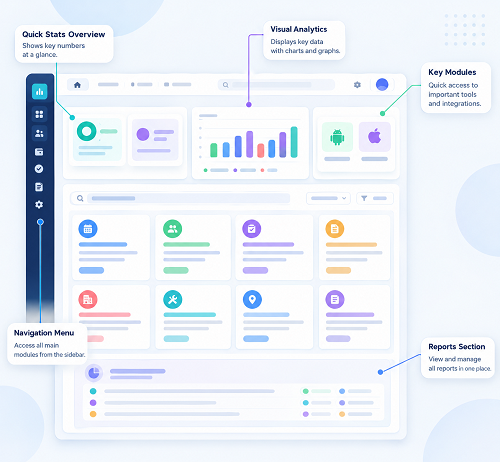
8. Monitor Attendance in Real Time Through a Central Dashboard
A central dashboard helps the head office monitor employee attendance without requesting separate daily reports from every branch.
The dashboard should provide a consolidated view of:
- Employees present.
- Employees not yet checked in.
- Employees on approved leave.
- Employees marked absent.
- Late arrivals.
- Early departures.
- Missing attendance punches.
- Employees working overtime.
- Attendance by branch and department.
For example, the HR manager in Kuala Lumpur can view attendance across Penang, Johor Bahru, Kuching, and Kota Kinabalu from one dashboard.
Branch managers should have access to their own employees' records, while authorised head-office personnel can view consolidated company-wide information.
This arrangement provides central visibility without giving every manager unrestricted access to employee information across the organisation.
9. Configure Different Working Hours, Shifts, and Rest Days
Some Malaysian businesses operate on rotating shifts or extended working schedules. Attendance software should therefore support different work patterns across branches and departments.
Important capabilities include:
- Fixed and rotating shifts.
- Day and night shifts.
- Overnight shifts crossing midnight.
- Flexible working hours.
- Split shifts.
- Different rest days.
- Weekend schedules.
- Temporary shift changes.
- Shift swaps and manager approvals.
For example, a warehouse in Johor Bahru may operate in two shifts, while the Kuala Lumpur administrative office follows regular office hours.
The software should calculate attendance against the employee's assigned schedule rather than applying one company-wide start time to everyone.
Employers should also configure working-hour limits and overtime rules according to the law applicable to the employee's work location and employment category.
10. Integrate Attendance With Leave Management
Attendance and leave management should work together so that approved leave is not incorrectly recorded as an absence.
The system should connect:
- Annual leave.
- Sick leave.
- Hospitalisation leave.
- Maternity leave.
- Paternity leave.
- Unpaid leave.
- Other approved company leave categories.
When an employee submits a leave application, the request should be routed to the appropriate supervisor. Once approved, the attendance calendar should reflect the employee's leave status.
For example, if an employee in the Penang branch receives approval for two days of annual leave, the attendance dashboard should show the employee as on approved leave rather than absent.
This integration also helps payroll teams distinguish between paid leave, unpaid leave, and unauthorised absence when processing monthly salaries.
11. Connect Attendance Records With Payroll Processing
Attendance data can affect salary calculations, overtime payments, unpaid-leave adjustments, and other payroll components.
Employers should choose a system that transfers verified attendance information into payroll without repeated manual spreadsheet uploads.
Important integration features include:
- Regular working-hour summaries.
- Late-arrival and absence records.
- Approved overtime hours.
- Rest-day work records.
- Public-holiday work records.
- Unpaid-leave information.
- Shift allowances, where applicable.
- Attendance adjustments.
- Branch-level payroll reports.
For example, if an employee at the Kuala Lumpur headquarters completes approved overtime, the attendance system should transfer the verified overtime hours to payroll for calculation under the applicable rules.
Payroll teams should review exceptions before finalising salary calculations. Attendance software should provide reliable inputs, but it should not automatically treat every recorded extra hour as payable overtime without the required review.
12. Review Malaysian Employment Law Requirements by Location
A multi-branch attendance policy must account for the employment legislation applicable to each employee's workplace.
This is particularly important for businesses operating in Peninsular Malaysia, Labuan, Sabah, and Sarawak.
- Peninsular Malaysia and Labuan: The Employment Act 1955 applies.
- Sabah: The Labour Ordinance of Sabah applies.
- Sarawak: The Labour Ordinance of Sarawak applies.
The Sabah and Sarawak labour ordinances were amended in 2025, with major amendments taking effect on 1 May 2025. Employers should therefore avoid assuming that an attendance policy designed only for Kuala Lumpur automatically covers employees in East Malaysia.
The Employment Act 1955 provides for normal working hours not exceeding 45 hours per week, subject to its detailed provisions and exceptions. The amended Sabah and Sarawak frameworks also provide for a 45-hour normal working week.
Employers should configure attendance systems to account for:
- Applicable normal working-hour limits.
- Employee-specific work schedules.
- Rest days and public holidays.
- Overtime eligibility and calculations.
- Shift-work arrangements.
- Required employee and wage records.
The treatment of overtime and other statutory entitlements can depend on employee coverage, wage level, job category, and the applicable legislation. Employers should obtain appropriate advice before configuring payroll rules for employees in different states.
13. Maintain Separate Public Holiday Calendars for Each State
Malaysia has federal public holidays as well as state-specific public holidays. A company with branches in several states should not apply one identical holiday calendar to every employee.
For example, public holidays observed in Kuala Lumpur may differ from those in Penang, Johor, Sabah, and Sarawak.
The attendance system should allow HR to:
- Assign public holiday calendars by state.
- Apply the correct calendar to each branch.
- Record approved substitute holidays.
- Identify employees scheduled to work on public holidays.
- Distinguish between public holidays and normal working days.
- Transfer holiday attendance information to payroll.
This is particularly important for businesses with employees who transfer between branches or temporarily work at another location. HR should confirm which calendar applies to the employee's work arrangement and the relevant employment terms.
14. Protect Employee Attendance Data and Follow the PDPA
Attendance systems may collect personal information such as employee names, identification details, work schedules, clock-in records, photographs, biometric information, and location data.
Employers should review their obligations under Malaysia's Personal Data Protection Act 2010 (PDPA), including applicable amendments and current regulatory requirements.
Important safeguards include:
- Provide employees with an appropriate privacy notice.
- Explain why attendance information is collected.
- Restrict access according to job responsibilities.
- Protect records through suitable security controls.
- Use secure connections when transmitting attendance data.
- Establish appropriate retention and deletion procedures.
- Review the privacy practices of third-party software providers.
- Assess cross-border data transfers where cloud services are hosted outside Malaysia.
For example, a branch supervisor may need access to the attendance records of employees reporting to that supervisor. However, the supervisor may not need access to every employee's salary information or personal records across the company.
Employers should also review the Personal Data Protection Commissioner's current guidance, including relevant requirements introduced by the Personal Data Protection (Amendment) Act 2024.
15. Retain Attendance and Employment Records for the Required Period
Employers should maintain reliable attendance and employment records that can be retrieved when needed for payroll reviews, employee queries, or labour inspections.
Section 61 of the Employment Act 1955 requires employers to maintain prescribed employee registers and preserve the recorded particulars so they remain available for inspection for at least six years after recording.
The Employment Regulations 1957 also specify employee information to be maintained in the register. Employers should ensure that their recordkeeping arrangements satisfy the applicable requirements.
A central attendance platform can help employers retain:
- Daily clock-in and clock-out records.
- Working schedules and shift assignments.
- Overtime records.
- Absence and leave information.
- Attendance correction requests.
- Supervisor approval history.
- Employee transfer records.
- Payroll attendance summaries.
Businesses with operations in Sabah and Sarawak should also check the applicable provisions of the relevant labour ordinances and regulations rather than assuming that every recordkeeping rule is identical across jurisdictions.
16. Generate Branch-Wise Attendance Reports
Regular reporting helps HR identify attendance patterns and compare workforce information across locations.
Useful reports include:
| Report | What HR can review |
|---|---|
| Daily attendance report | Employees present, absent, or on leave |
| Branch attendance summary | Attendance levels by location |
| Late-arrival report | Repeated late check-ins |
| Early-departure report | Employees leaving before scheduled hours |
| Overtime report | Recorded and approved additional hours |
| Leave report | Leave taken and remaining balances |
| Missing-punch report | Incomplete clock-in or clock-out records |
| Shift attendance report | Attendance against assigned shifts |
| Payroll attendance report | Verified attendance inputs for salary processing |
| Attendance exception report | Unusual entries requiring investigation |
HR should review these reports regularly instead of waiting until the end of the month.
For example, if the Penang branch has a repeated pattern of missing clock-out records, HR can investigate whether the issue relates to device configuration, employee training, or local management procedures.
17. Train Employees and Branch Managers
Even a well-designed attendance system may produce inaccurate records if employees and supervisors do not understand how to use it.
Employers should provide training covering:
- How to clock in and clock out.
- How to use biometric devices or mobile applications.
- How to report missed attendance entries.
- How to submit leave requests.
- How to request attendance corrections.
- How to submit overtime requests.
- How managers approve attendance exceptions.
- How to contact HR when technical problems occur.
Training should be provided to new employees and repeated when attendance procedures or software features change.
Employers should also appoint an attendance administrator or responsible manager at each branch. This creates a clear contact point for resolving local issues.
18. Test the System Before Introducing It Across All Branches
Before implementing a new attendance platform company-wide, employers should conduct a pilot at selected locations.
A practical pilot could include the Kuala Lumpur headquarters and one regional branch with a different attendance method.
Test scenarios such as:
- An employee clocking in at the normal office location.
- A regional employee recording attendance through a mobile application.
- An employee working a night shift.
- An employee transferring temporarily to another branch.
- An employee requesting a missed-punch correction.
- An employee applying for annual leave.
- A supervisor approving overtime.
- An employee working on a state-specific public holiday.
- An employee experiencing a device or internet connection failure.
- HR exporting attendance information for payroll.
Compare the system's records with manually verified attendance information. Check whether the central dashboard, branch reports, approval workflows, and payroll exports work as expected.
After the pilot is successful, the business can gradually introduce the system to additional locations.
Conclusion
Tracking attendance across Kuala Lumpur and regional branches requires a combination of centralised technology, consistent procedures, and location-specific workforce management.
Malaysian employers should maintain one employee database, configure branch-specific schedules, use suitable attendance-recording methods, and establish clear approval workflows. They should also connect attendance information with leave management and payroll while protecting employee data.
A centralised attendance management system can give HR teams better visibility into employee working hours, absences, overtime, and attendance exceptions across the organisation. By reviewing records regularly and considering the employment requirements applicable in Peninsular Malaysia, Labuan, Sabah, and Sarawak, businesses can improve attendance accuracy and support more reliable payroll processing.
One attendance view makes it easier to compare teams working across Kuala Lumpur and regional branches. InnBuilt Attendance Software can help Malaysia managers consolidate check-ins while retaining location-level detail.