How Can Malaysia Delivery Companies Review Driver Routes and Stop Records?
How Can Malaysia Delivery Companies Review Driver Routes and Stop Records?
Delivery companies in Malaysia manage drivers travelling between warehouses, distribution centres, retail outlets, customer addresses, and collection points. Reviewing driver routes and stop records helps businesses understand delivery progress, identify delays, verify completed visits, and improve fleet operations.
With GPS-enabled mobile applications and fleet management systems, managers can compare planned routes with actual journeys and review when drivers arrive at or leave delivery locations. However, route and stop data should be interpreted carefully. A deviation from the planned route does not automatically indicate misconduct, and a recorded stop does not necessarily mean a delivery was completed.
A structured review process helps Malaysia delivery companies maintain accurate operational records, investigate exceptions fairly, and improve delivery performance.
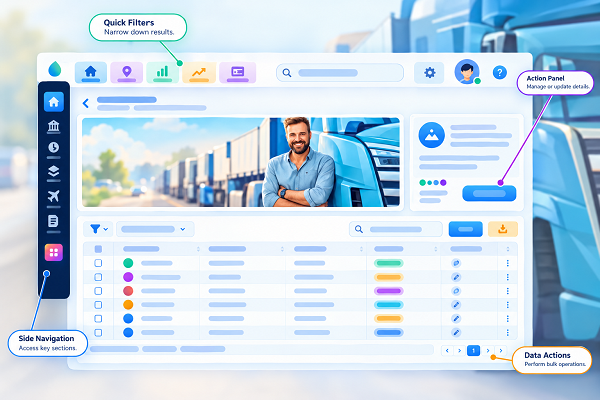
1. Compare Planned Routes With Actual Driver Journeys
The first step is to compare the route assigned to a driver with the journey recorded by the fleet management or delivery application.
Managers should review:
- The driver's assigned delivery route.
- The planned sequence of delivery locations.
- Actual GPS route information.
- Departure and arrival timestamps.
- Route deviations.
- Delivery completion records.
- Changes made by dispatchers or supervisors.
For example, a driver assigned to deliver goods from a distribution centre in Shah Alam to several customer locations in Klang Valley may take a different route because of traffic congestion or a road closure.
Managers should determine whether the deviation was reasonable before recording it as an exception.
2. Review Stop Locations and Duration
Stop records help managers understand where drivers paused during their journeys and how long they remained at each location.
A delivery management system may record:
- Stop location or GPS coordinates.
- Arrival timestamp.
- Departure timestamp.
- Duration of the stop.
- Related delivery or collection reference.
- Stop status, where recorded.
Managers can compare these records with the planned delivery schedule to identify unusual delays or unplanned stops.
For example, a driver may spend longer than expected at a customer warehouse because unloading requires additional time. The stop duration should be considered alongside the delivery instructions and proof of service.
A longer stop should not automatically be treated as an unauthorised break.
3. Verify Stops Against Assigned Delivery Locations
Businesses should compare recorded stops with the locations listed in delivery orders, route plans, and customer records.
This helps managers determine whether drivers reached the intended delivery locations.
A review may include:
| Record | What managers should verify |
|---|---|
| Assigned delivery address | Whether it matches the customer order |
| GPS stop location | Whether the recorded location is consistent with the destination |
| Arrival timestamp | Whether the driver arrived within the expected period |
| Departure timestamp | Whether the visit duration is reasonable |
| Delivery reference | Whether the stop relates to an assigned order |
| Proof of delivery | Whether the delivery was completed and acknowledged |
For example, a driver assigned to a retail outlet in Petaling Jaya may stop at a nearby location because the customer has requested delivery at a different entrance. Managers should check the updated instructions before treating the stop as incorrect.
4. Identify Unplanned Stops and Route Deviations
Unplanned stops can affect delivery schedules, vehicle utilisation, and customer service. However, managers should investigate the reason before taking action.
Common reasons include:
- Traffic congestion or road closures.
- Vehicle breakdowns.
- Fuel or charging requirements.
- Customer-requested delivery changes.
- Waiting for warehouse loading or unloading.
- Rest breaks.
- Emergency situations.
- Incorrect destination information.
A fleet management dashboard can flag stops outside approved delivery locations or route deviations beyond a defined threshold.
Managers should review these alerts with dispatch records, driver explanations, and relevant delivery documents.
The objective is to identify genuine operational issues rather than automatically classify every route deviation as a violation.
5. Use GPS Timestamps to Review Delivery Progress
Accurate timestamps help managers understand how a delivery journey progresses.
Important events include:
- The driver starts the assigned route.
- The vehicle leaves the warehouse or distribution centre.
- The driver arrives at the delivery location.
- Delivery activity begins.
- Delivery is completed or marked unsuccessful.
- The driver leaves the customer's location.
- The driver reaches the next assigned destination.
- The driver completes the route.
Comparing these events with planned schedules helps managers identify delays and recurring bottlenecks.
For example, if drivers consistently spend additional time waiting at a particular warehouse, the company may need to review loading arrangements rather than attribute the delay to driver performance.
6. Verify Delivery Completion Using Supporting Records
A GPS stop alone does not prove that goods were delivered. Businesses should connect route records with proof-of-delivery information.
Useful supporting records include:
- Customer signatures.
- Digital proof-of-delivery confirmations.
- Delivery photographs, where appropriate.
- Order or consignment numbers.
- Quantity and item confirmations.
- Failed-delivery reasons.
- Customer acknowledgement messages.
For example, a driver may reach a customer's address but be unable to complete the delivery because nobody is available to receive the goods. The GPS record confirms the visit, while the delivery application should record the unsuccessful outcome and its reason.
Separating arrival verification from delivery completion helps businesses maintain more reliable records.
7. Review Repeated Stops and Unusually Long Waiting Times
Repeated or unusually long stops may indicate operational problems that require investigation.
Managers can look for patterns such as:
- Multiple stops at the same location without assigned deliveries.
- Repeated delays at a particular loading point.
- Long waiting periods at customer premises.
- Frequent route interruptions.
- Stops that do not match delivery records.
- Repeated unsuccessful delivery attempts.
These patterns may reveal warehouse inefficiencies, inaccurate customer addresses, scheduling problems, or driver support requirements.
For example, if several drivers regularly wait at the same distribution centre before beginning their routes, management may need to improve loading schedules or vehicle allocation.
Managers should consider the operational context and allow drivers to explain unusual records before reaching conclusions.
8. Give Drivers a Way to Explain Route and Stop Exceptions
Drivers should have a simple way to report why their actual journeys differ from planned routes.
A mobile delivery application can provide exception categories such as:
- Traffic delay.
- Road closure.
- Vehicle breakdown.
- Customer unavailable.
- Address incorrect.
- Delivery rescheduled.
- Warehouse waiting time.
- Emergency stop.
- Supervisor-directed route change.
Drivers may also attach relevant notes or supporting documents.
A structured explanation process helps managers distinguish genuine operational circumstances from unexplained exceptions.
For example, a driver redirected to a different customer location by a dispatcher should be able to submit the updated delivery instruction or assignment reference.
9. Use Route Review Dashboards to Monitor Fleet Performance
When a delivery company manages multiple drivers and vehicles, reviewing individual GPS records can become time-consuming.
A fleet management dashboard can summarise route and stop information across teams.
Useful dashboard indicators include:
- Planned versus actual routes.
- Total completed deliveries.
- Delayed deliveries.
- Unplanned stops.
- Average stop duration.
- Failed delivery attempts.
- Route deviations.
- Vehicle downtime.
- Pending driver explanations.
Managers can filter information by driver, vehicle, delivery area, branch, or operating date.
Dashboards should help identify patterns and prioritise investigations. They should not automatically determine employee misconduct based on GPS information alone.
10. Integrate Route Records With Delivery and Dispatch Systems
Route information becomes more useful when it is connected with delivery orders, dispatch schedules, and customer service records.
Integration can help managers compare planned activities with actual events.
For example:
- The dispatch system provides assigned routes and delivery addresses.
- The GPS application records vehicle or driver location events.
- The delivery application captures arrival and completion status.
- The customer service system records complaints or rescheduling requests.
- The fleet platform provides vehicle and journey information.
This creates a more complete operational picture.
Businesses should ensure that integrations use consistent delivery references, timestamps, and driver or vehicle identifiers. They should also establish controls to prevent unauthorised changes to delivery records.
11. Protect Driver Location Data and Employee Privacy
Driver route histories can reveal detailed information about an employee's movements. Malaysia delivery companies should therefore establish clear rules for collecting, accessing, using, and retaining location information.
Under Malaysia's Personal Data Protection Act 2010 (PDPA), as amended in 2024, organisations should consider their obligations when processing personal data in commercial transactions.
Practical safeguards include:
- Explain why route and stop information is collected.
- Inform drivers whether the system records occasional check-ins or continuous GPS updates.
- Limit tracking to legitimate work-related requirements.
- Avoid unnecessary tracking outside working hours.
- Restrict access to authorised fleet managers, supervisors, and relevant HR personnel.
- Protect location records with suitable security controls.
- Establish retention and deletion periods.
- Review third-party fleet software providers and their data-handling practices.
- Provide a process for drivers to challenge inaccurate location records.
Businesses should also assess applicable notice, consent, security, cross-border transfer, and other PDPA requirements based on their specific tracking arrangements.
12. Establish a Fair Process for Investigating Route Exceptions
A consistent investigation process helps managers make decisions based on evidence rather than assumptions.
A practical workflow can include:
- Identify the exception: The system flags a route deviation, unplanned stop, or unusual delay.
- Review the records: The manager checks GPS data, timestamps, delivery assignments, and customer instructions.
- Request an explanation: The driver provides the reason for the exception.
- Verify supporting evidence: The manager checks dispatch updates, proof-of-delivery records, or service documents.
- Record the decision: The exception is approved, corrected, or referred for further investigation.
- Identify recurring issues: Management reviews whether the problem relates to route planning, customer access, vehicle condition, or employee practices.
This approach supports fair treatment and creates a clear record of how exceptions were handled.
13. Use Route and Stop Records to Improve Delivery Planning
Route reviews should not focus only on identifying problems. They can also help businesses improve operational efficiency.
Managers can use historical information to:
- Identify frequently congested delivery areas.
- Improve delivery time estimates.
- Adjust the sequence of customer visits.
- Allocate vehicles more effectively.
- Identify locations with long unloading times.
- Reduce repeated unsuccessful delivery attempts.
- Improve warehouse dispatch schedules.
- Plan more realistic driver workloads.
For example, if route data shows that deliveries to a particular industrial area regularly take longer during specific hours, the company can adjust delivery windows and departure times.
Historical route information can also help management decide whether additional vehicles or delivery staff are needed in certain regions.
Best Practices for Reviewing Driver Routes and Stop Records
Malaysia delivery companies can improve their review process by following these practices:
- Maintain accurate route assignments: Keep delivery addresses, customer instructions, and schedules updated.
- Compare planned and actual journeys: Review route deviations in the context of traffic and operational requirements.
- Verify stop records: Check arrival times, departure times, and assigned delivery references.
- Separate arrival from completion: Use proof-of-delivery records to confirm whether goods were actually delivered.
- Allow driver explanations: Provide clear exception categories and a simple reporting process.
- Investigate recurring patterns: Identify operational bottlenecks before attributing problems to individual drivers.
- Use dashboards: Monitor delays, unplanned stops, and delivery exceptions across the fleet.
- Protect location information: Apply appropriate privacy, security, access, and retention controls.
- Maintain audit trails: Record route changes, approvals, corrections, and investigation outcomes.
- Improve route planning: Use reviewed data to make schedules more realistic and efficient.
Conclusion
Malaysia delivery companies can review driver routes and stop records by comparing planned journeys with GPS information, checking stop locations and durations, verifying delivery completion, and investigating unusual exceptions. Integrating these records with dispatch systems and proof-of-delivery applications gives managers a clearer view of daily delivery operations.
However, route deviations and long stops should be assessed in context. Traffic, customer requests, vehicle issues, and warehouse delays can all affect actual journeys. A fair review process should allow drivers to explain exceptions and ensure location information is handled responsibly.
By combining accurate route data, transparent procedures, privacy safeguards, and effective delivery planning, businesses can improve fleet visibility, customer service, and operational efficiency.
Driver route reviews work better when assigned stops and recorded visits can be compared. InnBuilt Employee Tracking App can help Malaysia delivery managers examine route progress and missed checkpoints.