How Can Malaysia Field Sales Managers Verify Customer Visits Across States?
How Can Malaysia Field Sales Managers Verify Customer Visits Across States?
Introduction
Managing field sales employees across multiple states can be challenging for Malaysian businesses. Sales representatives frequently travel between customer offices, retail outlets, distributors, industrial facilities, and other business locations. When employees operate across different regions, sales managers may find it difficult to confirm whether scheduled customer visits have actually taken place.
For example, a company may have sales representatives covering Selangor, Johor, Penang, Perak, and Negeri Sembilan. Managers need reliable information about customer visits, employee attendance, travel activities, and daily sales performance without depending entirely on phone calls or manual reports.
Traditional methods, such as paper visit registers, WhatsApp updates, and manually prepared spreadsheets, may not provide sufficient visibility into field activities.
Mobile workforce management software, GPS verification, geofenced attendance, and customer visit management systems can help businesses improve field sales monitoring.
By combining location verification with digital visit records and supervisor approvals, Malaysia field sales managers can establish a more transparent and accountable customer visit process.
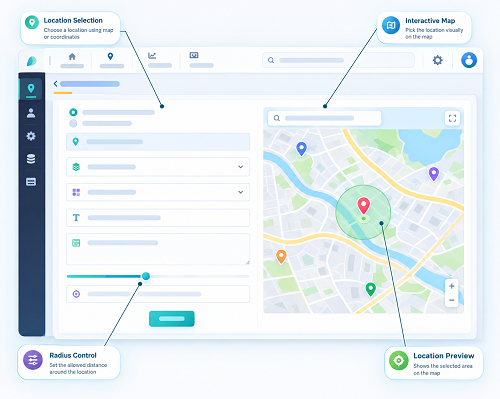
1. Use GPS-Based Location Verification
GPS-based location verification is one of the practical ways to confirm whether field sales representatives have reached their assigned customer locations.
A mobile attendance or sales application can capture the employee's device location when a customer visit is recorded.
Managers can compare the reported coordinates with the registered customer address to determine whether the representative was near the intended location.
Useful features include:
- GPS-based visit check-ins.
- Automatic date and time recording.
- Customer location verification.
- Visit history reports.
- Location-based attendance records.
- Exception notifications for unusual check-ins.
For example, a sales representative assigned to visit a distributor in Johor Bahru can record the visit through a mobile application. The system captures the check-in time and available location information for managerial review.
GPS information provides supporting evidence of a visit, although it does not independently prove that a customer meeting took place.
2. Create Geofences Around Customer Locations
Geofencing allows employers to establish virtual geographical boundaries around registered customer premises.
When a sales representative reaches an authorised customer location, the mobile application can verify whether the reported device location falls within the configured boundary.
Malaysia businesses can create geofences around:
- Retail outlets.
- Distributor warehouses.
- Corporate customer offices.
- Industrial facilities.
- Dealer locations.
- Regional sales territories.
For example, a company with distributors in Kuala Lumpur, Shah Alam, and Klang can configure separate geofences for each distributor location.
Sales representatives can record customer visits after reaching the approved premises.
This helps managers identify visits recorded outside the expected customer locations.
Employers should configure reasonable geofence boundaries because GPS accuracy can vary between indoor and outdoor environments.
3. Maintain a Centralised Customer Location Database
Field sales managers need accurate customer information to verify visits across different states.
A centralised customer database helps organisations maintain consistent location records and assign sales representatives to the correct accounts.
The database should include:
- Customer or business name.
- Registered customer address.
- State and city.
- GPS coordinates, where appropriate.
- Customer contact details.
- Assigned sales representative.
- Territory or regional manager.
- Planned visit frequency.
- Customer account status.
For example, a distributor operating in Penang should have an accurate registered address and assigned sales representative within the system.
When the employee records a visit, the application can compare the available location information with the registered customer premises.
Regularly updating customer addresses is important because businesses may relocate, open new branches, or change their operating locations.
4. Implement Digital Customer Visit Check-Ins
Digital customer visit check-ins allow employees to record customer interactions through a mobile application rather than relying entirely on manual reports.
A typical visit workflow includes:
- The sales representative opens the mobile application.
- The employee selects the customer from the registered database.
- The application records the visit date and time.
- GPS verification checks the reported location, where enabled.
- The employee enters relevant visit details.
- The system saves the visit record for managerial review.
The recorded information can include customer name, visit purpose, discussion notes, and follow-up requirements.
For example, a sales representative visiting a retail distributor in Ipoh can record the visit and document discussions about product availability, pricing, and upcoming orders.
This gives managers more structured information than a simple message stating that a customer was visited.
5. Track Customer Visits Across Multiple States
Businesses operating throughout Malaysia may have sales representatives covering several states.
Managing these territories requires a centralised system that provides managers with visibility into customer visits across different regions.
For example, a business may organise its sales territories as follows:
| State | Example coverage | Management requirement |
|---|---|---|
| Selangor | Shah Alam, Klang, Petaling Jaya | Frequent customer visit monitoring |
| Johor | Johor Bahru, Muar, Batu Pahat | Regional visit verification |
| Penang | George Town, Butterworth | Distributor visit tracking |
| Perak | Ipoh, Taiping | Customer coverage monitoring |
| Negeri Sembilan | Seremban, Port Dickson | Territory-based visit reporting |
| Melaka | Melaka City, Alor Gajah | Scheduled customer verification |
| Pahang | Kuantan, Temerloh | Regional sales activity monitoring |
A centralised dashboard can display visit information by state, territory, employee, and customer.
Regional managers can use these reports to identify missed visits, review sales coverage, and coordinate future customer appointments.
6. Compare Planned Customer Visits With Actual Visits
Sales managers should not evaluate field employees only by the number of visits recorded.
They should compare planned customer visits with actual completed visits to understand whether employees are following their assigned schedules.
A sales visit management system can maintain daily or weekly visit plans.
Managers should review:
- Scheduled customer appointments.
- Actual visit check-in times.
- Completed and missed visits.
- Rescheduled appointments.
- Customer cancellations.
- Unplanned customer visits.
- Pending follow-up activities.
For example, a representative assigned to visit eight customers in Selangor may complete six visits and reschedule two because of customer availability.
The system should distinguish between genuine customer cancellations and unexplained missed visits.
This provides a fairer picture of employee performance.
7. Capture Customer Visit Evidence
Location verification is useful, but managers may also need evidence that a genuine business interaction occurred.
Field sales applications can allow employees to submit supporting information after each visit.
Depending on business requirements, useful evidence may include:
- Customer meeting notes.
- Visit purpose and discussion summary.
- Customer acknowledgement.
- Follow-up commitments.
- Order or quotation references.
- Relevant documents.
- Photographs of products or displays, where appropriate and authorised.
For example, a sales representative visiting a supermarket in Johor can record the products discussed, the customer's feedback, and the next follow-up date.
Businesses should collect only necessary information and avoid capturing confidential customer information or photographs without appropriate authorisation.
8. Use Customer Acknowledgement for Important Visits
For certain business activities, customer acknowledgement can provide additional confirmation that a meeting or service interaction occurred.
Malaysia businesses can introduce digital acknowledgement features for important customer visits.
Possible methods include:
- Customer confirmation through a mobile application.
- Digital visit completion forms.
- Approved electronic signatures.
- Customer confirmation messages.
- Visit reference numbers.
For example, a sales representative completing a distributor review meeting can request customer confirmation through an approved digital form.
This provides additional supporting information for the visit record.
However, customer acknowledgement should not be mandatory for every routine sales visit if it creates unnecessary inconvenience.
9. Monitor Field Sales Activities Through Real-Time Dashboards
A centralised dashboard helps regional managers monitor sales activities without repeatedly contacting employees for updates.
Managers can review customer visit information across multiple states from one platform.
Useful dashboard indicators include:
- Total planned customer visits.
- Completed visits.
- Pending visits.
- Missed appointments.
- Employee-wise visit activity.
- State-wise customer coverage.
- Visit duration, where appropriately recorded.
- Customer follow-up status.
For example, a national sales manager can review whether the Penang team has completed its scheduled distributor visits while the Johor team is still working through its daily route.
Real-time visibility helps managers identify operational issues and provide timely support.
10. Integrate Customer Visit Records With CRM Software
Customer visit verification becomes more useful when field attendance and sales activities are connected to a Customer Relationship Management (CRM) system.
A CRM platform maintains customer information, sales opportunities, communication history, and follow-up activities.
Integrating mobile visit management with CRM software can help businesses:
- Update customer interaction histories.
- Record visit outcomes.
- Track sales opportunities.
- Assign follow-up activities.
- Monitor customer relationship development.
- Review employee-wise sales performance.
- Maintain consistent customer records across states.
For example, after visiting a distributor in Kuala Lumpur, a representative can update the customer's CRM profile with meeting notes and a new sales opportunity.
The sales manager can review both the visit record and the resulting business activity from the same platform.
11. Identify Unusual Customer Visit Patterns
Automated reporting can help managers identify inconsistencies in field sales activity.
Instead of manually checking every visit, businesses can configure alerts for unusual transactions.
Examples include:
- Multiple customer visits recorded at nearly identical times.
- Visits recorded far from registered customer locations.
- Duplicate visit entries.
- Visits outside approved working schedules.
- Unusually short visit durations.
- Repeated missed customer appointments.
- Multiple customer visits recorded within unrealistic travel intervals.
For example, if an employee records visits at two customer premises in different states within an impractically short period, the system can flag the records for investigation.
Managers should treat these alerts as indicators rather than conclusive evidence of misconduct. GPS inaccuracies, customer address changes, and genuine operational circumstances should be considered before taking action.
12. Connect Customer Visit Records With Attendance and Payroll
Field sales employees may work different schedules depending on customer appointments, travel requirements, and regional assignments.
Connecting customer visit management with attendance and payroll software can help HR teams maintain more accurate employee working-hour records.
Integration can support:
- Employee check-in and check-out records.
- Approved working schedules.
- Field assignment information.
- Attendance exception reviews.
- Approved overtime records.
- Monthly attendance reporting.
- Payroll data preparation.
For example, a sales representative travelling from Kuala Lumpur to Melaka for an approved customer visit may record attendance through the company's mobile application.
The attendance system can maintain the relevant check-in and check-out information, while the CRM system stores the customer interaction details.
These records serve different purposes but can be reviewed together when necessary.
Employers should not automatically treat customer visit duration as working time or use GPS records alone to calculate salary deductions or overtime. Payroll decisions should consider actual working arrangements and applicable Malaysian employment requirements.
13. Protect Employee Location and Customer Information
Location-based customer visit verification involves collecting information about employee movements and potentially sensitive business information about customers.
Malaysia employers should consider the Personal Data Protection Act 2010 (PDPA), including amendments introduced through the Personal Data Protection (Amendment) Act 2024.
Businesses should adopt appropriate safeguards, including:
- Informing employees about location verification practices.
- Explaining the purpose of collecting customer visit information.
- Limiting location collection to legitimate business requirements.
- Avoiding unnecessary continuous tracking.
- Restricting access to employee location histories.
- Protecting customer contact information.
- Establishing appropriate data retention policies.
- Reviewing third-party software security arrangements.
Employers should also explain whether location information is collected only during check-ins or at other times.
If facial recognition is used alongside GPS verification, businesses must additionally consider the PDPA requirements applicable to sensitive biometric personal data, including express consent where required.
Transparent data handling practices help maintain employee confidence and protect customer information.
14. Train Field Sales Representatives and Regional Managers
Technology alone cannot ensure accurate customer visit verification. Employees and managers must understand how to use the system consistently.
Businesses should provide training covering:
For sales representatives:
- Recording customer visits through the mobile application.
- Selecting the correct customer account.
- Enabling location services when required.
- Recording accurate visit details.
- Submitting customer follow-up notes.
- Reporting GPS or network problems.
- Correcting inaccurate visit records.
For regional managers:
- Reviewing visit verification reports.
- Monitoring planned versus actual visits.
- Investigating unusual location records.
- Approving legitimate visit corrections.
- Reviewing customer follow-up activities.
- Maintaining consistent reporting standards.
Regular training helps improve adoption and reduces errors in customer visit reporting.
Best Practices for Verifying Customer Visits Across Malaysia
Malaysia businesses can strengthen field sales management by following these practical recommendations:
- Maintain accurate customer records: Keep customer addresses, locations, and assigned territories updated.
- Use GPS verification: Capture location information during authorised customer visit check-ins.
- Configure geofences: Establish virtual boundaries around important customer premises.
- Introduce digital visit records: Record visit timestamps, customer details, and meeting outcomes.
- Compare planned and actual visits: Identify missed appointments and unexplained discrepancies.
- Collect supporting evidence: Use customer acknowledgements and visit notes where appropriate.
- Monitor regional dashboards: Review field sales activity across all assigned states.
- Integrate with CRM software: Maintain complete customer interaction histories.
- Investigate unusual patterns: Review suspicious visit records before making management decisions.
- Protect employee privacy: Establish transparent location collection, access, and retention policies.
Conclusion
Verifying customer visits across multiple states requires Malaysian field sales managers to move beyond manual reporting and informal employee updates.
GPS-based location verification, geofenced check-ins, digital customer visit records, customer acknowledgements, and CRM integration can provide better visibility into field sales activities.
A centralised system also helps managers compare planned and actual customer visits, identify reporting discrepancies, and improve regional sales coordination.
However, location information should be treated as supporting evidence rather than automatic proof of a completed customer meeting. Businesses should combine technology with appropriate verification procedures, supervisor reviews, and clear employee policies.
By implementing a structured customer visit management process, Malaysia businesses can improve field sales accountability, strengthen customer relationship management, and maintain more reliable records across different states.
Sales activity across states needs more than a list of planned calls. InnBuilt Field Management can help Malaysia managers compare assigned customers, visit check-ins and follow-up outcomes.