How Can Malaysia Employers Manage Shift Swaps With Supervisor Approval?
How Can Malaysia Employers Manage Shift Swaps With Supervisor Approval?
Shift swaps are common in Malaysian businesses that operate beyond standard office hours. Manufacturing plants, hospitals, hotels, logistics companies, retail outlets, security services and customer support centres often rely on rotating schedules to maintain daily operations.
Employees may need to exchange shifts because of personal commitments, family responsibilities, transport difficulties or unexpected circumstances. Allowing shift swaps can improve workforce flexibility, but informal arrangements may create attendance gaps, overtime disputes, fatigue risks and payroll errors.
Malaysia employers should establish a clear shift-swap process that requires supervisor approval before any roster changes take effect. The process should confirm that both employees are eligible for the proposed shifts, that staffing requirements remain covered and that working-hour and rest-day requirements are respected.
This article explains how Malaysian employers can manage shift swaps systematically, document approvals and connect roster changes with attendance and payroll systems.
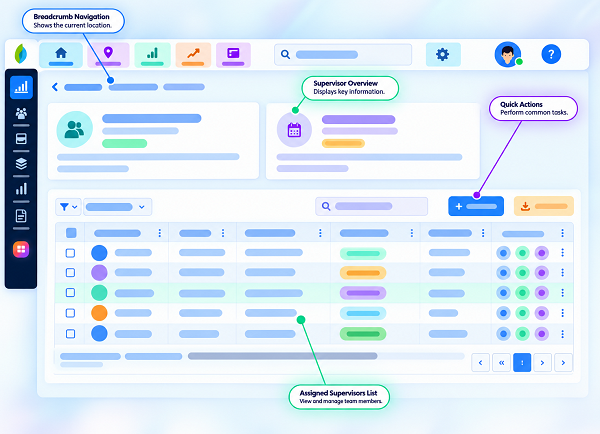
1. Establish a Formal Shift-Swap Policy
The first step is to create a written policy explaining when employees can exchange shifts and what approval is required.
Without a formal process, employees may arrange swaps through informal messages or verbal agreements. Supervisors may not know who is expected to report for duty, and HR may continue using the original roster when calculating attendance and wages.
A shift-swap policy should explain:
- Which employees are eligible to request a shift swap.
- Whether swaps are allowed within the same department or between departments.
- How much advance notice employees should provide.
- Whether both employees must agree to the exchange.
- Who has authority to approve or reject requests.
- How emergency shift swaps should be handled.
- How approved changes will be recorded in attendance and payroll systems.
- What happens if an employee does not report for the newly assigned shift.
The policy should also clarify that employees must not treat a proposed swap as approved until the authorised supervisor confirms it.
2. Define Which Types of Shift Swaps Are Allowed
Not all shift exchanges have the same operational or payroll implications. Employers should identify the types of swaps permitted under their scheduling arrangements.
| Shift-swap type | Example | Main consideration |
|---|---|---|
| Same-day swap | Two employees exchange morning and evening shifts | Confirm both employees can cover the assigned hours |
| Different-day swap | An employee exchanges Monday's shift for a colleague's Thursday shift | Check weekly hours and rest periods |
| Morning-to-night swap | An employee exchanges a morning shift for a night shift | Review fatigue and night-work arrangements |
| Weekend swap | Two employees exchange Saturday and Sunday duties | Check rest-day and public-holiday implications |
| Emergency swap | An employee requests a replacement because of an unexpected situation | Verify coverage and document approval promptly |
Employers should specify whether cross-department or cross-location swaps are permitted. A worker may not have the training, certification or access permissions required to perform another employee's duties.
3. Require Agreement From Both Employees
A shift swap affects two employees, so both should confirm that they agree to the proposed exchange.
The employee requesting the swap should identify the colleague who will take the original shift. The colleague should confirm that they are willing and available to work the replacement shift.
Before submitting the request, employees should check:
- Whether the proposed shift conflicts with another work commitment.
- Whether they have the necessary skills and training.
- Whether the exchange creates an insufficient rest period.
- Whether the swap affects their weekly working hours.
- Whether either employee has already requested leave or another roster change.
Employers should avoid allowing one employee to change another employee's roster without their consent. Both employees should be able to review the proposed dates and times before the request reaches the supervisor.
4. Introduce a Supervisor Approval Workflow
Supervisor approval is the central control in a shift-swap process. It helps employers ensure that an exchange does not leave a department understaffed or create a compliance problem.
A recommended approval workflow is:
- The requesting employee submits a shift-swap request.
- The replacement employee confirms agreement.
- The supervisor checks staffing and operational requirements.
- The supervisor reviews working hours, rest periods and employee eligibility.
- The supervisor approves or rejects the request.
- HR or the scheduling administrator updates the official roster.
- Both employees receive confirmation of the final arrangement.
The supervisor should not approve a swap based only on employee agreement. They should also consider whether the replacement employee is qualified to perform the work and whether the proposed schedule is workable.
For larger organisations, approval authority can be assigned by department, location or shift type. For example, a production supervisor may approve factory-floor swaps, while a nursing manager may approve changes to clinical rosters.
5. Set Clear Deadlines for Shift-Swap Requests
Employers should establish a submission deadline so supervisors have enough time to assess coverage and update the roster.
For example, a company may require employees to submit ordinary shift-swap requests at least 24 or 48 hours before the affected shift. This is an internal policy choice, not a universal statutory notice period.
A practical policy could distinguish between ordinary and urgent requests:
| Request type | Suggested submission time | Approval approach |
|---|---|---|
| Planned swap | 48 hours in advance | Standard supervisor review |
| Short-notice swap | Before the affected shift, where practicable | Priority review |
| Emergency request | As soon as the employee becomes aware of the issue | Supervisor or duty manager review |
| Repeated swaps | According to company policy | Additional HR review |
Employers should explain how urgent requests will be handled outside normal office hours. A factory operating overnight, for example, may need an authorised duty supervisor who can approve an urgent change when the HR department is closed.
6. Check Working Hours and Rest Periods Before Approval
A shift swap should not cause an employee to work excessive hours or receive inadequate rest between shifts.
For employees covered by the Employment Act 1955 in Peninsular Malaysia and Labuan, Section 60A generally provides limits on working hours, including a 45-hour working week and specified daily and break requirements. Section 60C provides special arrangements for employees engaged in shift work, including an average limit of 45 hours per week over three weeks, or a longer approved period, subject to the statutory conditions.
Consider this example:
| Employee | Original roster | Proposed change |
|---|---|---|
| Employee A | Monday, 7 a.m.–3 p.m. | Tuesday, 3 p.m.–11 p.m. |
| Employee B | Tuesday, 3 p.m.–11 p.m. | Monday, 7 a.m.–3 p.m. |
Before approving the exchange, the supervisor should check each employee's preceding and following shifts. An employee who finishes a night shift shortly before a replacement morning shift may not have adequate recovery time.
The review should include:
- Total hours worked during the relevant week and shift cycle.
- Time between the end of one shift and the beginning of the next.
- Meal and rest breaks.
- Any additional hours created by the swap.
- Applicable daily and weekly limits.
- Fatigue and workplace safety risks.
A shift swap should not be used to avoid statutory working-hour limits or overtime obligations.
7. Review Rest-Day and Public-Holiday Implications
Shift swaps may change which employee works on a scheduled rest day or public holiday. These changes need particular attention because they can affect statutory entitlements and payroll calculations.
Under Section 59 of the Employment Act 1955, employees covered by the provision are generally entitled to one whole rest day each week. For shift workers, a continuous period of at least 30 hours constitutes a rest day under Section 59(1A). Employers must also prepare the relevant rest-day roster before the beginning of the month, subject to the Act's provisions.
Before approving a swap involving a rest day, supervisors should confirm that the revised schedule still provides the required rest period.
For public holidays, HR should check whether the exchanged shift overlaps with a qualifying gazetted holiday or a substituted holiday. Section 60D governs paid public holidays and relevant payment arrangements for employees within its scope.
The employer should not assume that swapping shifts automatically changes an employee's statutory holiday or rest-day entitlement. The actual roster, applicable legal provisions and employment arrangements must be reviewed.
8. Check Employee Skills, Qualifications and Department Coverage
A shift swap is not only an attendance change. It may also affect operational safety and service quality.
For example, a manufacturing employee may be trained to operate one machine but not another. A hospital employee may not have the qualifications or authorisation required for a particular clinical assignment.
Supervisors should check:
- Required job skills and certifications.
- Machine or equipment authorisation.
- Department-specific training.
- Minimum staffing levels.
- Required supervisory coverage.
- Security access and work-location permissions.
- Any legal or contractual qualification requirements.
Employers should maintain a skills matrix so supervisors can quickly identify employees who are qualified to cover particular shifts. If a proposed swap creates a staffing gap or assigns an employee to work outside their competence, it should be rejected or referred for further review.
9. Record Every Approved Swap in the Official Roster
Verbal approval or a message exchange should not be the only record of a shift change. Once a supervisor approves the request, the official roster should be updated.
A shift-swap record should contain:
| Record field | Information to capture |
|---|---|
| Request ID | Unique reference number |
| Requesting employee | Name or employee ID |
| Replacement employee | Name or employee ID |
| Original shift | Date, start time and end time |
| Proposed shift | Date, start time and end time |
| Reason | Employee-provided explanation, where required |
| Employee confirmations | Agreement from both employees |
| Supervisor decision | Approved or rejected |
| Approval timestamp | Date and time of decision |
| HR update | Confirmation that the roster was changed |
The system should preserve the original roster and record the revised arrangement. This creates an audit trail if an employee later disputes attendance, working hours or payment.
Employers should also notify both employees of the final decision. A submitted request should not be treated as a completed roster change.
10. Connect Approved Shift Swaps With Attendance and Payroll
An approved swap must be reflected in the systems used to record attendance and calculate wages.
If the roster is not updated, an employee may clock in for an approved replacement shift but appear absent from the original shift. The colleague may also be incorrectly recorded as absent or late.
HR and payroll teams should reconcile:
- The original roster.
- The approved revised roster.
- Actual clock-in and clock-out records.
- Break records.
- Overtime hours.
- Rest-day and public-holiday work.
- Leave and absence records.
For example, if Employee A takes Employee B's evening shift, the attendance system should recognise Employee A as the assigned worker for that shift. Employee B should be associated with the shift they have agreed to cover in exchange.
The payroll system should calculate wages using actual hours worked and the applicable employment terms. A shift swap does not automatically create overtime, but it also does not remove overtime or other statutory payment obligations where they arise.
Under Section 60A(3) of the Employment Act 1955, eligible employees are generally entitled to at least 1.5 times their hourly rate for overtime beyond normal working hours on an ordinary working day. Statutory overtime-payment coverage depends on the First Schedule: employees earning more than RM4,000 per month are generally excluded from these particular provisions unless they fall within specified occupational categories. Contractual or collective-agreement terms may provide more favourable benefits.
11. Use HR Software to Automate Shift-Swap Approvals
Manual shift-swap management can become difficult when an organisation has multiple departments, locations and rotating schedules. HR software can help standardise requests and reduce errors.
Useful features include:
| Software feature | How it helps |
|---|---|
| Employee self-service | Allows employees to submit swap requests |
| Colleague confirmation | Records agreement from both employees |
| Supervisor approval | Prevents unauthorised roster changes |
| Eligibility checks | Identifies unqualified replacement employees |
| Working-hour alerts | Flags potential schedule or overtime issues |
| Rest-day validation | Highlights changes affecting rest-day arrangements |
| Live roster updates | Keeps supervisors and employees informed |
| Attendance integration | Matches clock-ins to the revised roster |
| Payroll integration | Transfers approved attendance data for processing |
| Audit history | Records requests, decisions and changes |
Automated checks should support, not replace, supervisor judgement. For example, software may flag a short gap between shifts, but a supervisor still needs to review the applicable legal requirements and operational circumstances.
12. Establish Rules for Rejected and Cancelled Requests
Not every shift-swap request can be approved. Employers should establish a consistent way to communicate decisions and manage changes after approval.
Common reasons for rejection include:
- Insufficient staffing in one shift.
- The replacement employee lacks required qualifications.
- The proposed schedule creates a working-hour or rest-period concern.
- The swap conflicts with approved leave or another roster commitment.
- The request was submitted too late for safe operational planning.
Where practical, supervisors should provide a clear reason for rejection and explain whether another date or employee could be considered.
If an approved swap must later be cancelled, both employees should be notified promptly. The original roster should only be restored after the change is authorised and the affected employees have been informed. HR should also update attendance and payroll records if the revised arrangement has already taken effect.
13. Train Supervisors to Apply the Policy Consistently
Supervisors are responsible for balancing employee flexibility with operational needs. Inconsistent decisions can create perceptions of unfairness and encourage employees to make informal arrangements.
Training should cover:
- How to review a swap request.
- How to check employee availability and qualifications.
- How to assess staffing levels.
- How to identify working-hour and rest-day concerns.
- How to recognise possible overtime or holiday-pay implications.
- How to update the roster and attendance system.
- How to document approvals and rejections.
- How to handle urgent requests outside normal office hours.
HR should periodically review approval patterns across departments. If some supervisors approve nearly all requests while others reject similar requests, the organisation may need clearer criteria or additional training.
14. Consider Different Labour Laws Across Malaysia
Employers should check the employment legislation applicable to their workplace before finalising shift-swap procedures.
The Employment Act 1955 generally applies to employees working in Peninsular Malaysia and Labuan. Sabah and Sarawak have separate Labour Ordinances, and employers operating in those states should review the relevant ordinances and amendments.
The following provisions of the Employment Act 1955 are particularly relevant to shift scheduling:
| Provision | Subject | Relevance to shift swaps |
|---|---|---|
| Section 59 | Rest days | Check weekly rest-day arrangements |
| Section 60 | Work on rest days | Review payment where employees work on rest days |
| Section 60A | Hours of work and overtime | Check working-hour limits and overtime |
| Section 60C | Shift work | Review working-hour averaging for shift workers |
| Section 60D | Public holidays | Check holiday entitlements and payment |
Employers should also consider employment contracts, collective agreements, company policies and any applicable industry-specific requirements. A supervisor's approval cannot override statutory employment rights.
Conclusion
Malaysia employers can manage shift swaps effectively by introducing a formal request process, requiring agreement from both employees and obtaining supervisor approval before changing the official roster. Every proposed exchange should be checked against staffing needs, employee qualifications, working hours, rest days and payroll implications.
HR software can make this process easier by automating requests, approval notifications, roster updates and attendance reconciliation. However, clear company rules and consistent supervisor decisions remain essential.
A properly managed shift-swap process gives employees flexibility while helping employers maintain operational coverage, accurate payroll records and compliance with applicable Malaysian employment requirements.
A shift swap needs a visible replacement and a supervisor decision. InnBuilt Shift Management can help Malaysia teams record requests, approvals and the final schedule without losing the history.