How Can Qatar Businesses Manage Shift Swaps and Supervisor Approvals?
How Can Qatar Businesses Manage Shift Swaps and Supervisor Approvals?
Introduction
Businesses in Qatar often operate with rotating shifts to maintain service coverage, meet customer demand, and manage employees across different departments and locations. Retail stores, hotels, restaurants, healthcare facilities, logistics companies, maintenance providers, and security businesses may need employees to exchange shifts because of personal commitments, unexpected absences, or changing operational requirements.
However, informal shift swaps can create scheduling problems if managers are not informed or approvals are not recorded. Two employees may assume that a swap is confirmed when the supervisor has not approved it. A replacement worker may lack the required skills, a department may become understaffed, or actual working hours may differ from the schedule used by payroll.
A structured shift-swap process helps businesses manage these changes while maintaining clear responsibilities, accurate attendance records, appropriate staffing levels, and reliable payroll calculations.
By combining digital scheduling, employee requests, supervisor approval workflows, and attendance reconciliation, Qatar employers can make shift changes easier to manage without losing control of daily operations.
1. Establish a Clear Shift-Swap Policy
The first step is to define when employees may exchange shifts and how the business will approve those requests.
A written policy should explain the difference between a shift swap, a shift change, a shift replacement, and a leave request.
- Shift swap: Two employees exchange assigned shifts with each other's agreement.
- Shift change: An employee requests a different working time, and the manager adjusts the schedule.
- Shift replacement: Another eligible employee covers a shift because the original employee is unavailable.
- Leave request: An employee requests authorised time away from work rather than arranging a replacement.
The policy should specify:
- How employees submit requests.
- How much notice is normally required.
- Whether both employees must confirm a mutual swap.
- Which supervisor approves the change.
- Which roles or shifts require additional authorisation.
- How urgent requests are handled.
- When a request becomes officially confirmed.
- How approved changes are reflected in attendance and payroll.
The rules should be communicated to all employees and supervisors. Businesses should also define a procedure for genuine emergencies when the normal approval process cannot be completed in advance.
Most importantly, employees should not assume that finding a colleague to cover a shift automatically authorises the change.
2. Use a Digital Shift-Swap Request System
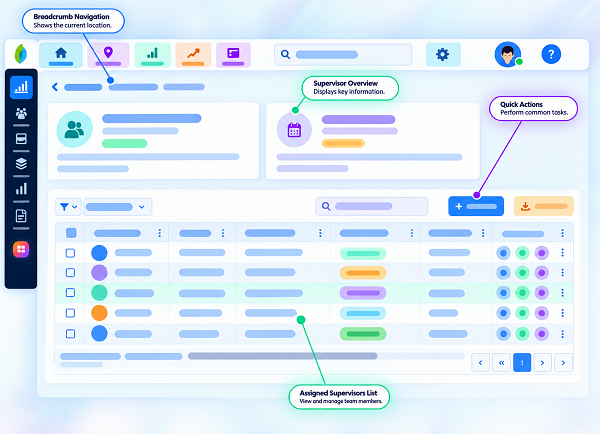
A digital scheduling platform can replace informal messages and paper forms with a consistent request process.
Employees can submit a request through a mobile application, employee self-service portal, or other approved system. The request should identify the original shift, proposed replacement, and reason for the change where the business needs that information.
A typical request should include:
- Employee requesting the swap.
- Original shift date and time.
- Proposed replacement employee.
- Replacement shift date and time, where applicable.
- Work location or department.
- Confirmation from both employees.
- Submission date and time.
- Approval status.
- Supervisor comments or rejection reasons.
For example, an employee scheduled for an evening shift at a Doha retail outlet may request to exchange shifts with a colleague scheduled for the following morning. The system records the proposed exchange and sends it to the responsible supervisor for review.
The schedule should remain unchanged until the required approval is recorded. Once approved, the system should update both employees' assignments and notify the affected team.
This prevents an unapproved request from being mistaken for a confirmed roster change.
3. Create a Defined Supervisor Approval Workflow
Supervisor approval should be based on consistent business rules rather than informal decisions.
A standard workflow can follow five stages:
- Employee request: The employee submits the proposed shift swap.
- Employee confirmation: Both employees confirm their agreement, where a mutual exchange is involved.
- Eligibility review: The system or supervisor checks role requirements, shift coverage, working hours, and other scheduling constraints.
- Supervisor decision: The authorised manager approves, rejects, or requests changes.
- Schedule update: The approved swap is reflected in the roster and relevant notifications are sent.
Some changes may require more than one approval. For example, a shift swap involving a specialist technician, a regulated role, or a high-risk work area may require confirmation from the department manager as well as the direct supervisor.
Businesses should avoid routing every request through multiple managers if a single authorised supervisor can make the decision. Excessive approval layers can delay responses and encourage employees to arrange changes informally.
A digital system should also identify requests that are still pending so that supervisors can review them before the affected shift begins.
4. Check Staffing Coverage Before Approving a Swap
A shift swap should not be approved solely because two employees agree to exchange their hours. The resulting roster must still meet the business's operational requirements.
Supervisors should check:
- Minimum staffing levels.
- Required skills and qualifications.
- Department or location coverage.
- Language requirements, where relevant to the role.
- Equipment or system access permissions.
- Customer demand during the shift.
- Availability of team leaders or designated responsible staff.
- Whether the swap creates an additional staffing gap elsewhere.
For example, a hotel may need a minimum number of trained reception staff during check-in hours. A proposed swap should not reduce coverage below the hotel's operating requirement, even if both employees are willing to exchange shifts.
Similarly, a maintenance company should verify that the replacement employee has the appropriate technical skills before approving a shift involving specialised equipment.
Digital scheduling tools can flag shortages or show how the proposed change affects the overall roster. The supervisor should then approve the request only when the required coverage is maintained.
5. Check Working Hours, Rest Periods, and Overtime
A shift swap can change more than the employee's start and finish times. It may affect total working hours, rest between assignments, overtime, and weekly rest arrangements.
Before approving a change, the employer should review the employee's existing schedule and the proposed schedule together.
For employees covered by Qatar Labour Law No. 14 of 2004, Article 73 generally establishes ordinary working hours of up to 48 hours per week and eight hours per day, reduced during Ramadan to 36 hours per week and six hours per day. Article 74 addresses additional working hours and applicable compensation, while Article 75 addresses paid weekly rest.
These provisions are subject to statutory exceptions and differences in coverage for certain categories of workers. Employers should therefore assess the applicable rules for their workforce rather than applying one scheduling rule to every employee.
A scheduling system should flag potential issues such as:
- Excessive daily or weekly hours.
- A shift that extends into another scheduled assignment.
- Additional hours that may qualify for overtime.
- Work scheduled during a weekly rest period.
- Insufficient recovery time under company policy or applicable requirements.
- Changes to a Ramadan roster that may affect permitted working hours.
These alerts should prompt a review rather than automatically determine legal compliance. Payroll and HR teams should verify the applicable treatment, including any relevant exceptions.
6. Set Deadlines for Requests and Approval Decisions
Shift-swap requests are easier to manage when employees know how far in advance they should apply and when supervisors are expected to respond.
Businesses can establish different deadlines for routine swaps and urgent requests.
For example, a company might ask employees to submit routine requests at least 48 hours before the affected shift, while allowing urgent requests to be escalated directly to the duty supervisor. These are example policy choices, not universal legal deadlines.
A practical policy should cover:
- Standard request lead time.
- Supervisor response expectations.
- Escalation when the approving manager is unavailable.
- Urgent absence procedures.
- Rules for requests submitted after the roster is finalised.
- Confirmation that the schedule has been updated.
A digital system can send reminders for requests awaiting action. It can also escalate overdue approvals to an authorised alternate manager.
Businesses operating around the clock should designate an approval contact for each shift so that employees are not left uncertain about who can authorise an urgent change.
7. Maintain an Accurate Record of Approved Changes
Every approved swap should leave a clear audit trail.
The organisation should retain the original schedule, the requested change, employee confirmations, the approval decision, and the final roster.
This record helps answer questions such as:
- Who requested the change?
- Which employees agreed to the swap?
- Who approved it?
- When was the approval given?
- What was the original schedule?
- What schedule was finally authorised?
- Were any further changes made after approval?
An audit trail is especially important when an employee disputes a late arrival, a missing shift, or the number of hours recorded for payroll.
Employers should restrict schedule-editing permissions to authorised users. Changes made after approval should be recorded rather than silently overwriting the original entry.
Where a company still uses paper forms for exceptional circumstances, the information should be entered into the central schedule promptly and marked as manually recorded.
8. Connect Approved Swaps With Attendance Records
A shift-swap approval is only useful if the attendance system reflects the correct assignment.
If the roster is updated but the attendance terminal continues to show the original shift, employees may be incorrectly flagged as late or absent.
To avoid this problem, businesses should connect scheduling and attendance systems where practical, or establish a reliable procedure for updating both.
The process should confirm that:
- The employee is assigned to the correct shift.
- The correct location or department is recorded.
- Attendance reports use the approved schedule.
- Any changed start or end time is reflected in the roster.
- Exceptions are reviewed before payroll is finalised.
For example, if an employee is approved to work a morning shift instead of an evening shift, the attendance system should use the revised assignment. Otherwise, the employee could appear absent from the evening shift despite having worked the approved morning shift.
Managers should also distinguish between the planned schedule and actual attendance. Approval to swap shifts does not prove that the replacement employee attended; the attendance record must still be checked.
9. Reconcile Shift Swaps With Payroll
Approved shift changes can affect the calculation of working hours, overtime, allowances, and other payroll items, depending on the employee's arrangements.
Before payroll is processed, HR or payroll staff should compare the final approved roster with actual attendance records and relevant approvals.
They should check for:
- Shifts worked by a replacement employee.
- Changes to recorded start and finish times.
- Duplicate or overlapping assignments.
- Unapproved additional hours.
- Missing clock-ins or clock-outs.
- Work performed on weekly rest days or public holidays.
- Allowances linked to particular shifts, where applicable.
- Corrections made after the roster was approved.
A simple reconciliation example is shown below.
| Employee | Original shift | Approved change | Payroll review |
|---|---|---|---|
| Employee A | 2 PM–10 PM | Exchanges with Employee B | Verify actual hours worked |
| Employee B | 10 PM–6 AM | Works Employee A's original shift | Review night-shift treatment where applicable |
| Employee C | 8 AM–4 PM | No change | Reconcile attendance as usual |
This is an illustrative example only. Actual pay treatment depends on the employee's working arrangement and applicable rules.
Employers should not assume that a mutual swap automatically cancels overtime or other entitlements. Payroll should calculate the actual working time and apply the appropriate legal and contractual rules.
10. Manage Shift Swaps Across Multiple Locations
Businesses with several branches or work sites need controls to ensure that a shift swap does not create confusion between locations.
This is relevant to retailers, restaurants, hotels, facilities management providers, security companies, and logistics operators in Qatar.
A multi-location scheduling system should show:
- Employee's assigned branch or site.
- Original and proposed shifts.
- Required role or qualification.
- Supervisor responsible for each location.
- Whether the replacement employee is authorised to work at the new site.
- Any location-specific access or onboarding requirements.
For example, a retail employee who normally works at one branch may agree to cover a shift at another branch. The manager should confirm the transfer, update the roster, and ensure that the employee can access the required systems and facilities.
Where two locations have separate managers, the company should define whether approval from one manager is sufficient or whether both managers must confirm the change.
A central view helps prevent duplicate assignments and makes it easier to move eligible employees between sites when staffing needs change.
11. Use Notifications and Escalations to Reduce Missed Shifts
A reliable notification process helps ensure that employees and supervisors are aware of approved changes.
Once a swap is approved, the system should notify both employees and the relevant supervisor. If a request is rejected, the employee should receive the decision and the reason, where appropriate.
Useful notifications include:
- Request submitted.
- Confirmation needed from the other employee.
- Approval pending.
- Request approved or rejected.
- Shift details changed.
- Upcoming shift reminder.
- The replacement employee has not checked in.
- Attendance record requires review.
Notifications should be sent through approved company channels and should avoid exposing unnecessary employee information.
Businesses should also establish an escalation procedure for cases where the replacement employee does not arrive. The supervisor should be able to contact the employee, arrange eligible backup coverage, and record the action taken.
12. Measure the Effectiveness of Shift-Swap Management
Regular reporting helps managers understand whether their shift-swap process is efficient and whether it creates recurring staffing problems.
Useful indicators include:
| KPI | What it measures |
|---|---|
| Shift-swap request volume | Number of requests submitted in a given period |
| Approval turnaround time | Time taken to decide a request |
| Approval rate | Share of requests approved |
| Late-change rate | Share of requests made close to the affected shift |
| Uncovered-shift rate | Shifts left without required staffing |
| Attendance exception rate | Frequency of discrepancies after approved changes |
| Payroll correction rate | Frequency of payroll records requiring adjustment because of scheduling errors |
| Unplanned absence rate | Frequency of absences requiring urgent coverage |
These indicators should be used to improve scheduling rather than to penalise employees automatically for requesting changes.
For example, a high volume of last-minute swaps may indicate unpredictable demand, insufficient staffing, or a roster that does not reflect employees' availability. Managers should investigate the underlying cause before changing the policy.
Frequently Asked Questions
1. Should employees be allowed to swap shifts without supervisor approval?
Employers should define an approval process and communicate it clearly. A swap should not be treated as confirmed until the required authorisation is recorded, except where a documented emergency procedure provides otherwise.
2. What information should a shift-swap request contain?
It should include the employees involved, original shift details, proposed replacement shift, location, employee confirmations, submission time, and approval status. Additional information should be collected only when it is necessary for the decision.
3. How can digital systems prevent shift-swap conflicts?
They can check for overlapping assignments, staffing shortages, role requirements, and potential working-hour issues. They can also notify supervisors about pending requests and update the official roster after approval.
4. How do shift swaps affect payroll in Qatar?
A swap can change the actual hours worked, overtime assessment, and applicable shift-related payments. Payroll teams should reconcile approved schedules with actual attendance and apply the relevant employment rules and contractual arrangements.
5. How should businesses handle last-minute shift swaps?
They should provide a clear urgent-request process, identify an authorised duty supervisor, and document the decision. Any replacement should meet the role requirements and the resulting schedule should be updated promptly.
6. Can a supervisor reject a shift-swap request?
A supervisor may need to reject a request when it would leave a shift understaffed, create a scheduling conflict, or involve an ineligible replacement. Businesses should apply their policy consistently and explain decisions where appropriate.
7. What records should employers keep after approving a shift swap?
They should retain the original schedule, request details, employee confirmations, approval decision, revised schedule, relevant attendance records, and any subsequent corrections. These records support payroll reconciliation and help resolve disputes.
Conclusion
Qatar businesses can manage shift swaps more effectively by introducing a clear policy, using digital request forms, assigning approval responsibilities, checking staffing coverage, and connecting approved changes with attendance and payroll systems.
A successful process makes it clear which schedule is authoritative, who approved the change, and how the employee's actual working hours will be recorded. It also helps supervisors respond to urgent requests without overlooking staffing requirements or applicable working-time rules.
By combining straightforward approval workflows with accurate records and regular reporting, employers can reduce scheduling conflicts, improve workforce flexibility, and maintain more reliable payroll and attendance data.
A shift swap is easier to manage when the request and decision are traceable. InnBuilt Shift Management can help Qatar supervisors record proposed changes, approvals and the final roster.