HR and Payroll Audit Readiness in Saudi Arabia: Records, Approvals, and Reports
HR and Payroll Audit Readiness in Saudi Arabia: Records, Approvals, and Reports
Maintaining accurate HR and payroll records is essential for businesses operating in Saudi Arabia. Payroll teams need reliable documentation covering employee information, attendance, salaries, leave, overtime, statutory deductions, approvals, and payroll processing.
Audit readiness does not mean preparing documents only when an inspection or internal audit is announced. Companies should maintain organized records throughout the year so that HR and payroll information can be retrieved and verified when required.
A structured digital HR and payroll system can help organizations maintain an audit trail and improve the accuracy of their records.
1. Maintain Complete Employee Records
HR teams should maintain an up-to-date employee master record.
Depending on the organization's requirements, records may include:
- Employee identification details
- Employment information
- Job title
- Department
- Work location
- Joining date
- Contract information
- Salary information
- Bank details
- Leave entitlement
- Reporting manager
- Employment status
Employee information should be updated whenever there is a change.
2. Keep Employment Documentation Organized
Employment-related documents should be stored securely and linked to the correct employee record.
Examples include:
- Employment contracts
- Contract amendments
- Job-related documents
- Employee acknowledgements
- Transfer records
- Promotion records
- Relevant policy acknowledgements
- Separation documents
Digital document management makes it easier for authorized HR personnel to retrieve records when required.
3. Maintain Accurate Attendance Records
Attendance records are an important source of payroll information.
Organizations should maintain records such as:
- Clock-in times
- Clock-out times
- Working hours
- Breaks
- Absences
- Late arrivals
- Early departures
- Shift assignments
- Overtime
- Attendance corrections
The system should preserve historical records rather than simply replacing old attendance information.
4. Document Attendance Corrections
Attendance corrections should have an approval trail.
For example:
Employee submits correction → Manager reviews → HR approves → Attendance updated
The system should retain:
- Original attendance
- Requested correction
- Reason
- Person requesting the change
- Approver
- Approval date
- Final attendance record
This creates transparency when payroll teams need to explain why an attendance record was changed.
5. Maintain Payroll Records
Payroll teams should maintain detailed records supporting salary calculations.
A payroll audit file may contain:
- Payroll period
- Basic salary
- Allowances
- Deductions
- Overtime
- Leave adjustments
- Other approved earnings
- Statutory deductions
- Net salary
- Payment information
Payroll records should be consistent with approved employee and attendance data.
6. Maintain an Approval Trail
Approvals are an important part of audit readiness.
Organizations should establish approval workflows for:
- New hires
- Salary changes
- Promotions
- Transfers
- Leave
- Overtime
- Attendance corrections
- Payroll
- Expenses
- Employee separation
A digital workflow can record who approved an action and when it was approved.
7. Separate Payroll Preparation and Approval
Where practical, organizations should establish appropriate controls over payroll processing.
For example:
HR prepares employee changes → Payroll processes payroll → Authorized manager reviews → Payroll is finalized
This creates a review stage before salary payments are released.
Access permissions should also prevent unauthorized employees from modifying payroll information.
8. Reconcile Attendance With Payroll
Payroll teams should periodically compare attendance information with payroll results.
For example, they can check whether:
- Approved overtime was included
- Unpaid leave was correctly reflected
- Absences were handled correctly
- Working hours match approved records
- Salary changes were applied from the correct effective date
Automated payroll integration can reduce discrepancies caused by manual data entry.
9. Maintain Overtime Records
Overtime should be supported by appropriate documentation.
Records can include:
- Employee
- Date
- Scheduled hours
- Actual hours
- Overtime hours
- Reason
- Manager approval
- Payroll treatment
An attendance and payroll system can automatically transfer approved overtime into the payroll calculation workflow.
10. Maintain Leave Records
HR should maintain a complete history of employee leave.
This can include:
- Leave type
- Request date
- Start date
- End date
- Number of days
- Approval status
- Leave balance
- Payroll impact
Employees and managers can also use self-service portals to review approved leave and balances.
11. Maintain Statutory Payroll Records
Saudi payroll teams should maintain documentation supporting applicable statutory and regulatory payroll obligations.
Depending on the employee and organization, this may include records relating to:
- Social insurance contributions
- Wage payments
- Employment documentation
- Applicable deductions
- Other statutory payroll requirements
Payroll teams should regularly verify that their processes reflect current Saudi requirements.
12. Keep Wage Payment Records
Organizations should maintain evidence supporting salary payments.
Payroll reconciliation can compare:
Approved payroll → Bank payment file → Payment confirmation → Payroll register
Any difference should be investigated and documented.
This is particularly important when organizations process payroll for large numbers of employees.
13. Maintain Employee Transfer Records
Employees may move between branches, departments, projects, or worksites.
HR should maintain records showing:
- Previous assignment
- New assignment
- Effective date
- New manager
- New work location
- Approved changes
- Payroll impact, where applicable
This helps explain differences in attendance, scheduling, or payroll records after a transfer.
14. Maintain Final Settlement Records
When an employee leaves the organization, HR should maintain supporting documentation for the final settlement process.
Records may include:
- Employment end date
- Final salary calculation
- Unpaid salary
- Leave-related amounts
- Other applicable benefits
- Deductions
- Approved settlement
- Payment record
- Exit documentation
The exact calculation should follow applicable Saudi requirements and the employee's contractual arrangements.
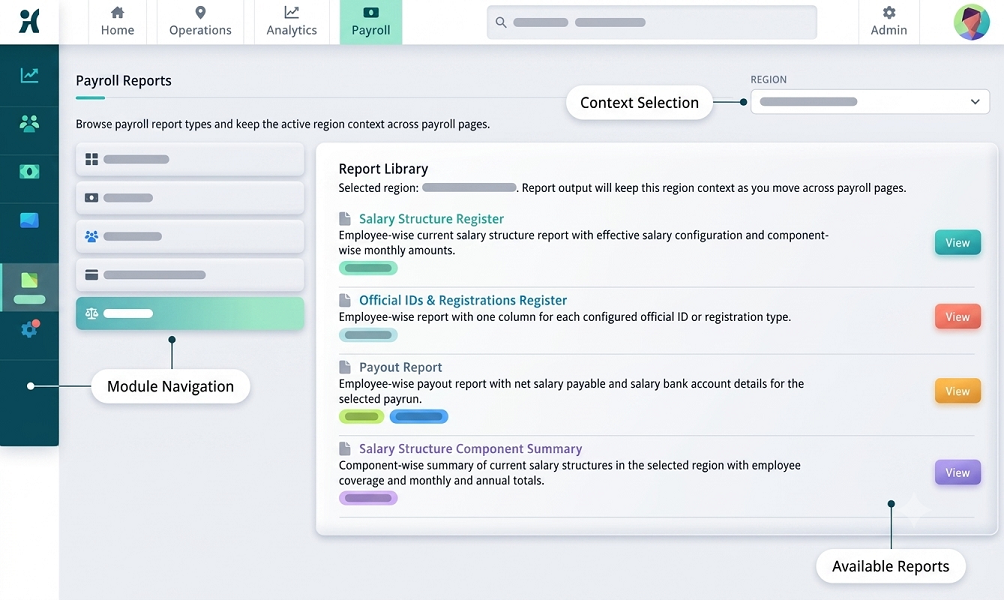
15. Use Audit-Friendly Reports
HR and payroll systems should provide reports that can be generated when required.
Useful reports include:
- Employee master report
- Payroll register
- Attendance report
- Overtime report
- Leave report
- Salary-change report
- Payroll variance report
- Bank payment reconciliation
- Employee transfer report
- New-hire report
- Separation report
- Statutory contribution report
- Approval history
Reports should clearly identify the reporting period and the data included.
16. Maintain an Audit Trail
A strong HR system should record important changes made to employee and payroll data.
An audit trail can show:
What changed → Previous value → New value → Who changed it → When it changed → Approval status
This is particularly useful for investigating payroll discrepancies or unauthorized modifications.
17. Control User Access
Not every HR employee needs access to payroll information.
Organizations should establish role-based access such as:
- Employee
- Manager
- HR administrator
- Payroll specialist
- Finance user
- HR manager
- System administrator
Access should be reviewed periodically and removed when an employee changes roles or leaves the company.
18. Protect Personal and Payroll Data
Payroll systems contain sensitive employee information. Companies should implement appropriate security controls.
These may include:
- Strong authentication
- Role-based permissions
- Encryption
- Secure backups
- Audit logs
- Controlled document access
- Data-retention policies
- Periodic access reviews
Organizations operating in Saudi Arabia should also consider applicable personal-data protection obligations when storing and processing employee information.
19. Perform Regular Internal Reviews
Organizations should not wait for an external audit to identify payroll problems.
HR and payroll teams can conduct periodic internal checks covering:
- Employee records
- Salary changes
- Attendance
- Overtime
- Leave
- Payroll calculations
- Statutory deductions
- Payment reconciliation
- Approval workflows
Regular reviews help identify discrepancies before they become larger problems.
20. Use a Centralized HR and Payroll Platform
Managing audit records across spreadsheets, emails, paper documents, and separate systems can make reconciliation difficult.
A centralized HR and payroll platform can connect:
Employee records → Attendance → Leave → Overtime → Payroll → Approvals → Reports
This provides a consistent data trail and reduces repetitive manual work.
Conclusion
HR and payroll audit readiness in Saudi Arabia depends on maintaining accurate records, documented approvals, secure employee information, and reliable reports throughout the year. Organizations should maintain employee documentation, attendance, leave, overtime, payroll, statutory records, payment evidence, and change histories in an organized manner.
An integrated HR and payroll system can strengthen audit readiness by providing approval workflows, automated calculations, historical records, audit trails, role-based access, and customizable reports. With these controls in place, HR and payroll teams can respond more efficiently to internal reviews and regulatory requirements while improving overall payroll accuracy.
Audit preparation becomes more efficient when InnBuilt Payroll Software consolidates Saudi Arabia employee records, attendance evidence, payroll calculations, approval trails, and exportable reports in one controlled system.