Payroll and Attendance Records Employers Should Maintain in Saudi Arabia
Payroll and Attendance Records Employers Should Maintain in Saudi Arabia
Maintaining accurate payroll and attendance records is an important part of employment compliance in Saudi Arabia. Employers need reliable records to demonstrate how employees were paid, how working time was recorded, how leave and overtime were managed, and how statutory payroll obligations were handled.
For businesses with large workforces, multiple branches, shift workers, remote employees, or frequent payroll changes, maintaining these records manually can become difficult. An integrated HR and payroll system can help employers maintain consistent records and create an audit trail for payroll and attendance transactions.
Saudi Arabia's Labor Law and implementing regulations contain requirements relating to employment records, wages, working hours, leave, contracts, and other employment matters. Employers should therefore establish a documented record-retention process based on the current legal requirements applicable to their workforce.
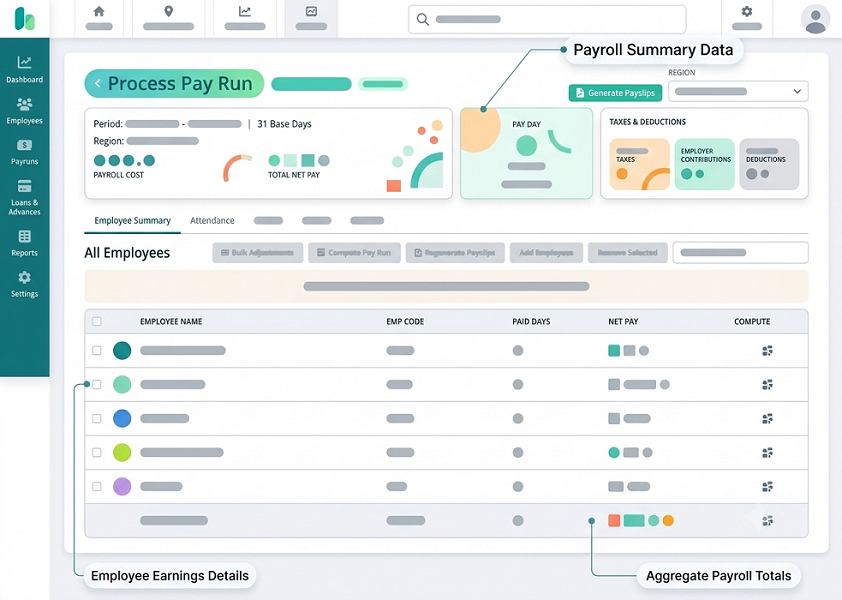
Why Payroll and Attendance Records Matter
Payroll and attendance records can help employers:
- Demonstrate accurate salary payments
- Verify working hours
- Support overtime calculations
- Track annual and other leave
- Document employee absences
- Support GOSI records
- Reconcile payroll with banking records
- Support Wage Protection System processes
- Resolve employee payroll disputes
- Demonstrate compliance during inspections
- Maintain accurate employee histories
A payroll record should not exist separately from attendance and HR records.
For example:
Attendance → Leave → Overtime → Payroll → Salary Payment → Employee Record
When these systems are connected, employers can more easily demonstrate how an employee's final salary was calculated.
What Payroll Records Should Employers Maintain?
Employers should establish a payroll file for each employee containing relevant information and supporting documents.
Important payroll records can include:
- Employee identification details
- Employment contract
- Basic wage
- Allowances
- Deductions
- Overtime payments
- Bonuses and commissions
- Leave-related payments
- Salary advances
- Loans
- Final settlement calculations
- End-of-service benefit calculations
- Payslips
- Salary payment records
- Payroll approvals
- Relevant statutory records
The exact documents required can vary according to the employer's business, employee category, and applicable regulations.
1. Employee Salary Information
Payroll systems should maintain the employee's current salary structure.
This can include:
- Basic salary
- Housing allowance
- Transport allowance
- Other contractual allowances
- Fixed benefits
- Variable payments
- Commission
- Overtime
- Bonuses
Salary changes should also be recorded.
For example:
| Effective Date | Basic Salary | Allowances | Total |
|---|---|---|---|
| January 2026 | SAR 8,000 | SAR 2,000 | SAR 10,000 |
| July 2026 | SAR 9,000 | SAR 2,000 | SAR 11,000 |
Maintaining effective dates helps payroll explain why an employee received different amounts in different months.
2. Employment Contracts
The employee's contract should be retained as part of the employment record.
Important contract information includes:
- Employee name
- Job title
- Employer
- Contract type
- Start date
- Contract duration where applicable
- Wage
- Allowances
- Working hours
- Leave entitlement
- Notice provisions
- Other contractual terms
Saudi Arabia employment contracts should also be documented through the applicable employment-contract processes.
Employers should ensure that the payroll system reflects the current contractual salary rather than relying on outdated employee records.
3. Monthly Payroll Records
Employers should maintain payroll information for each payroll period.
A monthly payroll record may contain:
- Gross salary
- Basic salary
- Allowances
- Overtime
- Bonuses
- Leave adjustments
- Deductions
- Statutory contributions
- Net salary
- Payment date
- Payment status
For example:
| Component | Amount |
|---|---|
| Basic salary | SAR 8,000 |
| Housing allowance | SAR 1,500 |
| Transport allowance | SAR 500 |
| Overtime | SAR 600 |
| Gross earnings | SAR 10,600 |
| Deductions | SAR 700 |
| Net salary | SAR 9,900 |
The figures above are illustrative only.
4. Payslips
Employers should maintain employee salary statements or payslip records showing how the employee's salary was calculated.
A useful payslip can include:
- Employee name
- Payroll period
- Basic salary
- Allowances
- Overtime
- Other earnings
- Deductions
- Net salary
- Payment date
Digital payslips can make it easier for employees to access their salary information while reducing paperwork.
5. Salary Payment Records
Payroll records should be reconciled against actual salary payments.
Employers should retain appropriate evidence of:
- Salary payment date
- Payment amount
- Employee account/payment reference
- Bank transaction
- Payroll batch
- Payment status
This is especially important when investigating differences between payroll calculations and actual payments.
6. Wage Protection System Records
Employers should maintain records associated with their Wage Protection System processes.
This may include:
- Payroll data
- Salary transfer records
- Wage files
- Bank payment information
- Submission records
- Reconciliation reports
- Exception reports
- Corrective actions
Employers should ensure that payroll records and actual salary payments are consistent.
7. GOSI Records
Employers should maintain relevant GOSI records for employees.
These may include:
- Employee registration
- Contribution information
- Wage information used for contributions
- Registration changes
- Employee status
- Work injury records
- Occupational Hazards information
Payroll and GOSI records should be reconciled regularly.
A mismatch between employee salary information and statutory records can create administrative problems.
8. Attendance Records
Attendance records should show when employees were scheduled to work and when they actually worked.
Depending on the employer's system, attendance information can include:
- Date
- Shift
- Check-in time
- Check-out time
- Breaks
- Total hours
- Late arrival
- Early departure
- Absence
- Overtime
- Attendance corrections
For employees working shifts, the schedule should be retained alongside actual attendance.
9. Working Hours Records
Employers should maintain records that allow them to verify working time.
This is especially important for:
- Shift employees
- Factory workers
- Construction employees
- Security personnel
- Hospital staff
- Retail employees
- Restaurant employees
- Logistics workers
- Field employees
The system should distinguish between:
Scheduled Hours and Actual Hours Worked
This allows payroll to calculate overtime and other attendance-related payments more accurately.
10. Overtime Records
Overtime should have a clear audit trail.
Records can include:
- Date of overtime
- Start time
- End time
- Total overtime hours
- Employee
- Manager approval
- Payroll treatment
- Payment amount
For example:
| Date | Regular Hours | Overtime | Approval |
|---|---|---|---|
| 10 June | 8 | 2 | Approved |
| 15 June | 8 | 3 | Approved |
| 22 June | 8 | 1.5 | Approved |
Payroll can then link approved overtime directly to the relevant payroll period.
11. Leave Records
Employers should maintain leave histories.
These can include:
- Annual leave
- Sick leave
- Maternity leave
- Paternity leave
- Bereavement leave
- Unpaid leave
- Other approved leave
Each transaction should ideally show:
- Leave type
- Start date
- End date
- Number of days
- Approval
- Supporting documentation where required
- Payroll treatment
12. Absence Records
Unapproved absences should be separately documented.
The system should distinguish between:
- Approved leave
- Sick leave
- Public holiday
- Weekly rest day
- Unpaid leave
- Unauthorized absence
This prevents payroll from incorrectly treating every missing attendance record as unpaid leave.
13. Shift Records
Shift schedules are particularly important for organizations operating 24/7.
Employers should maintain:
- Shift assignment
- Shift start time
- Shift end time
- Employee
- Location
- Shift changes
- Shift swaps
- Approved overtime
- Rest days
This is useful for hospitals, security companies, hotels, restaurants, factories, and logistics operations.
14. Attendance Corrections
Employees may occasionally forget to clock in or out.
Instead of manually changing attendance, employers should maintain an audit trail.
A correction record should identify:
- Original attendance record
- Corrected record
- Reason
- Employee
- Approver
- Date of correction
For example:
Original: No check-out
Correction: 5:10 PM
Reason: Device failure
Approved by: Supervisor
This is more defensible than simply overwriting the original record.
15. Remote and Field Employee Records
For field employees, attendance may be recorded through:
- Mobile attendance
- GPS-enabled attendance
- Geo-fencing
- Supervisor approval
- Project-site attendance
- Other approved methods
Employers should maintain only the information necessary for legitimate business and compliance purposes and handle personal data according to applicable Saudi Arabia data-protection requirements.
16. Biometric Attendance Records
Employers using fingerprint or face-recognition attendance should maintain appropriate system records and access controls.
The employer should document:
- Attendance event
- Employee identifier
- Device/location
- Date and time
- Correction history
- Authorized administrators
Biometric information requires particularly careful handling because it is personal information subject to Saudi Arabia privacy and data-protection requirements.
17. Salary Deduction Records
Every payroll deduction should have a clear reason.
Examples include:
- Approved unpaid leave
- Employee loans
- Salary advances
- Statutory deductions
- Other legally permitted deductions
The record should contain:
- Deduction type
- Amount
- Payroll period
- Supporting authorization
- Calculation
- Approval
Saudi Arabia Labor Law contains specific restrictions on wage deductions, so payroll teams should not make arbitrary deductions.
18. Salary Advance and Loan Records
If an employer provides salary advances or employee loans, the payroll system should maintain:
- Original amount
- Date issued
- Repayment schedule
- Amount deducted
- Remaining balance
- Employee authorization
- Final outstanding balance
This prevents disputes about outstanding employee balances.
19. Payroll Adjustment Records
Manual payroll adjustments should always have an audit trail.
Examples include:
- Salary correction
- Retroactive allowance
- Overtime adjustment
- Attendance correction
- Leave adjustment
- Bonus adjustment
- Deduction reversal
The record should explain:
What changed? Why did it change? Who approved it? Which payroll period was affected?
20. Final Settlement Records
When an employee leaves the company, payroll should retain the final settlement calculation.
This may include:
- Final salary
- Unused leave payment
- Overtime
- Notice compensation where applicable
- End-of-service benefit
- Deductions
- Other outstanding payments
- Final payment date
The calculation should be supported by the employee's employment and payroll history.
21. Work Injury and Occupational Injury Records
Where an employee suffers a work injury, employers should maintain:
- Incident report
- Date and time
- Location
- Injury description
- Medical documentation
- GOSI report
- Treatment records
- Attendance records
- Return-to-work information
GOSI requires qualifying occupational injuries to be reported within the applicable timeframe, so employers should maintain a clear record of notification and submission.
22. Employee Record Changes
Employers should maintain a history of important employee changes.
Examples include:
- Salary increases
- Promotions
- Transfers
- Department changes
- Job title changes
- Branch transfers
- Contract changes
- Working schedule changes
A historical record is more useful than maintaining only the employee's current information.
How Long Should Payroll Records Be Kept?
Record-retention requirements can differ depending on the type of record and the applicable Saudi Arabia legal or regulatory requirement.
Employers should therefore establish a formal retention schedule covering:
- Employment contracts
- Payroll records
- Attendance
- Leave
- Overtime
- Salary payments
- GOSI records
- WPS records
- Employee correspondence
- Final settlements
- Disciplinary records
- Work injury records
The retention policy should be reviewed periodically against current Saudi Arabia Labor Law, implementing regulations, GOSI requirements, WPS requirements, and applicable data-protection obligations.
Employers should avoid deleting records simply because an employee has left the company.
Payroll and Attendance Records for Multiple Branches
Companies operating across Saudi Arabia may have employees in:
- Riyadh
- Jeddah
- Dammam
- Makkah
- Madinah
- Khobar
- Other cities and project locations
A centralized HR system can allow headquarters to monitor records while branch managers maintain local attendance.
For example:
| Branch | Employees | Attendance System | Payroll |
|---|---|---|---|
| Riyadh | 250 | Biometric | Central |
| Jeddah | 180 | Mobile | Central |
| Dammam | 120 | Biometric | Central |
| Other branches | 300 | Mixed | Central |
This structure helps standardize payroll while allowing different attendance methods where operationally necessary.
Payroll Records for Remote Employees
Remote employees may not use traditional biometric devices.
Employers may use:
- Mobile attendance
- Web attendance
- Approved time sheets
- Project-based attendance
- Manager approval
The employer should maintain sufficient records to demonstrate working time and payroll calculations without collecting unnecessary personal information.
Payroll Records for Construction Sites
Construction businesses may need to maintain:
- Project assignment
- Site attendance
- Shift
- Working hours
- Overtime
- Site allowance
- Employee transfer
- Leave
- Safety incidents
Mobile attendance and geo-fencing can help employers associate attendance with an approved project location.
Payroll Records for Hospitals and 24/7 Operations
Hospitals and other continuous operations require detailed shift records.
The system should maintain:
- Shift roster
- Actual attendance
- Night shifts
- Overtime
- Rest days
- Shift changes
- Leave
- Replacement shifts
This makes payroll calculations easier when employees work irregular schedules.
Who Should Have Access to Payroll Records?
Access should be based on job responsibilities.
For example:
| Role | Typical Access |
|---|---|
| Employee | Own payslips and attendance |
| Manager | Team attendance |
| HR | Employee HR records |
| Payroll | Payroll and salary records |
| Finance | Payment/reconciliation data |
| IT Administrator | System administration |
| Senior Management | Approved reports |
Employees should not automatically have access to other employees' salary information.
Payroll Audit Trail
A strong payroll system should maintain an audit trail.
For every important change, the system should record:
- User
- Date
- Time
- Original value
- New value
- Reason
- Approval
For example:
Salary: SAR 10,000 → SAR 11,000
Effective date: July 1
Changed by: HR administrator
Approved by: HR manager
This can help explain payroll changes during an internal review.
How Payroll Software Helps Maintain Records
Modern payroll and HR software can centralize employee records.
Automated Attendance
Capture attendance from biometric devices, mobile applications, or web systems.
Leave Management
Automatically update employee leave balances.
Overtime
Connect approved overtime with payroll.
Payroll Processing
Calculate salaries based on configured payroll rules.
Digital Payslips
Give employees secure access to their salary statements.
GOSI Integration
Help reconcile relevant employee and contribution information.
WPS Support
Maintain payroll and salary-payment data needed for applicable Wage Protection processes.
Audit Trails
Track changes to employee and payroll information.
Reports
Generate:
- Attendance reports
- Overtime reports
- Payroll registers
- Leave reports
- Deduction reports
- Branch reports
- Employee history
- Salary reconciliation reports
Frequently Asked Questions
What payroll records should employers maintain in Saudi Arabia?
Employers should maintain relevant employment contracts, salary records, payslips, allowances, deductions, overtime, leave, salary payments, GOSI information, WPS-related records, final settlements, and other documentation required by applicable Saudi Arabia regulations.
Should employers maintain attendance records?
Yes. Attendance records are important for demonstrating working time, leave, overtime, absences, and payroll calculations.
Should overtime records be maintained separately?
Employers should maintain sufficient records to show when overtime was worked, how it was approved, and how it was paid.
Should attendance corrections be recorded?
Yes. Maintaining an audit trail showing the original attendance entry, correction, reason, and approval provides greater transparency.
Should payroll and attendance records be integrated?
Integration is highly beneficial because attendance, overtime, leave, and payroll calculations are closely connected.
Should employers maintain records after an employee leaves?
Employers should retain records according to the applicable legal and regulatory retention requirements rather than deleting them immediately after termination.
How can payroll software help with recordkeeping?
Payroll software can centralize salary, attendance, leave, overtime, deductions, payslips, approvals, and audit trails, making it easier to retrieve and reconcile records.
Are payroll and attendance records subject to Saudi Arabia data-protection requirements?
Yes. Employee payroll and attendance information constitutes personal data, and certain systems may also process more sensitive information such as biometrics, medical information, or location data. Employers should apply appropriate PDPL-compliant data-processing and security practices.
Conclusion
Accurate payroll and attendance records are essential for Saudi Arabia employers seeking to maintain reliable employment and payroll processes. Employers should maintain a complete record covering employment contracts, salary structures, working hours, attendance, overtime, leave, deductions, salary payments, GOSI information, WPS-related records, and final settlements.
The strongest recordkeeping approach connects the entire payroll process:
Employee Contract → Attendance → Leave → Overtime → Payroll → Salary Payment → GOSI/WPS → Employee Record
Employers with multiple branches, shift-based workforces, construction sites, hospitals, retail operations, logistics teams, and field employees can benefit significantly from centralized HR and payroll software.
A digital system with role-based access, audit trails, automated approvals, secure document storage, and payroll-attendance integration can reduce manual errors while making important employment records easier to retrieve and reconcile.
Accurate employment records are easier to maintain with InnBuilt Payroll Software, which organizes timesheets, salary registers, leave histories, overtime approvals, and downloadable compliance reports for Saudi Arabia employers.