Shift Handover and Fatigue Management for 24/7 Teams in Saudi Arabia
Shift Handover and Fatigue Management for 24/7 Teams in Saudi Arabia
Many businesses in Saudi Arabia operate continuously, including oil and gas facilities, hospitals, manufacturing plants, security services, logistics operations, utilities, and large industrial sites. These organizations depend on shift-based employees to maintain uninterrupted operations.
For 24/7 teams, effective shift handover and fatigue management are essential. Poorly managed shift changes can lead to missed information, excessive working hours, attendance problems, safety incidents, and payroll errors. A structured workforce management process helps employers maintain adequate coverage while protecting employee wellbeing.
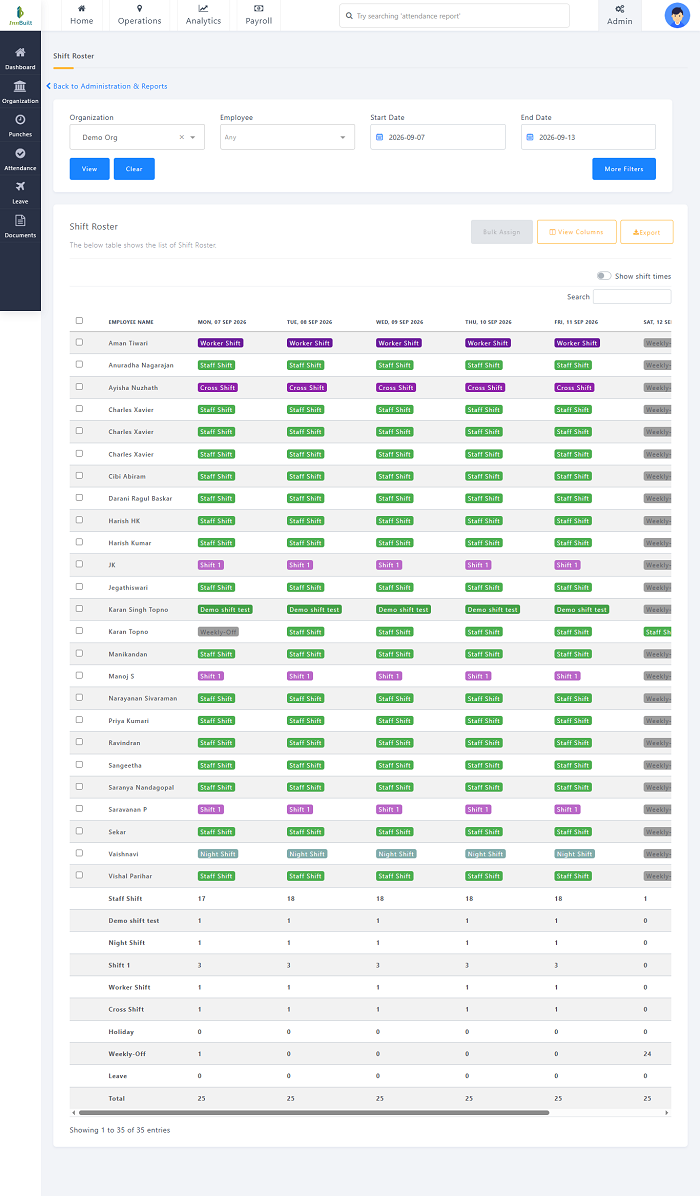
1. Create Clear Shift Patterns
Employers should establish consistent shift patterns that clearly define when employees start and finish work.
Common arrangements include:
- Day shifts
- Night shifts
- Rotating shifts
- Fixed shifts
- Extended shifts
- Weekend shifts
- Emergency or standby shifts
Each employee should have a clearly documented schedule showing their assigned shift, rest periods, and expected working hours.
2. Plan Adequate Time for Handover
A shift should not end simply because the next employee has arrived. Critical information must be transferred before responsibility changes.
A handover may include:
- Current operational status
- Outstanding tasks
- Equipment issues
- Safety concerns
- Incidents
- Maintenance activities
- Customer or production requirements
- Employees requiring attention
- Pending approvals
Employers should include appropriate handover time in workforce planning rather than relying on informal communication.
3. Prevent Excessive Consecutive Working Hours
Fatigue can increase when employees work excessive hours or repeatedly extend their shifts.
Attendance software can identify patterns such as:
- Excessive daily hours
- Repeated overtime
- Consecutive shifts
- Insufficient rest between shifts
- Frequent night shifts
- Employees working on scheduled rest days
Managers can review these patterns before assigning additional work.
4. Monitor Night-Shift Employees
Night work can create additional fatigue-management challenges because employees work against their normal sleep cycle.
Organizations operating 24/7 should monitor night-shift patterns and avoid unnecessarily assigning excessive consecutive night shifts.
Workforce software can help managers review:
Employee → Shift → Hours worked → Overtime → Previous shift → Next shift
This provides a clearer picture of whether an employee is being scheduled appropriately.
5. Use Automated Handover Alerts
Digital workforce systems can notify employees and supervisors before a shift ends.
For example:
- 30 minutes before shift end: Handover reminder
- 15 minutes before shift end: Pending-task reminder
- Shift end: Handover confirmation
- Next shift: Incoming employee receives outstanding-task information
This creates a consistent process across departments and locations.
6. Track Attendance in Real Time
Accurate attendance data is important for fatigue management.
A workforce management system can monitor:
- Clock-in time
- Clock-out time
- Actual hours worked
- Breaks
- Overtime
- Shift changes
- Late arrivals
- Early departures
- Unplanned additional shifts
If an employee remains on-site significantly beyond their scheduled shift, the supervisor can investigate the reason rather than automatically allowing the additional hours to continue.
7. Build Rest Periods Into Rosters
Rest should be considered when designing shift schedules, especially for physically demanding or safety-critical jobs.
Managers should review the time between:
- End of one shift
- Start of the next shift
- Additional overtime
- Emergency call-outs
- Standby assignments
This is particularly important for employees working in oil and gas, construction, manufacturing, transportation, and other safety-sensitive environments.
8. Manage Emergency Call-Outs Carefully
Industrial operations may require employees to return to work unexpectedly because of equipment failures, emergencies, or operational incidents.
After an emergency call-out, managers should review the employee's next scheduled shift rather than automatically requiring the employee to work the original schedule.
Attendance systems can help identify the additional hours worked and provide managers with the information needed to make appropriate staffing decisions.
9. Use Skill-Based Shift Coverage
Fatigue management should not result in critical positions being left unstaffed.
Instead, companies can maintain a pool of qualified employees who can cover different shifts when required.
For example:
Primary employee unavailable → Qualified backup identified → Shift reassigned → Attendance schedule updated → Payroll records adjusted
This approach helps maintain operational continuity without repeatedly overloading the same employees.
10. Standardize Shift Handover Checklists
A checklist reduces the risk of important information being missed.
A handover checklist can include:
- Employee attendance
- Equipment condition
- Production status
- Maintenance work
- Safety incidents
- Open work orders
- Pending tasks
- Emergency issues
- Required follow-up
- Supervisor instructions
Digital checklists can provide a record that the handover was completed.
11. Manage Contractor and Temporary Workers
Large Saudi Arabia industrial projects may have employees from multiple companies working on the same site.
Attendance and handover processes should therefore account for:
- Direct employees
- Contractors
- Subcontractors
- Temporary workers
- Project-based personnel
- Security teams
- Maintenance crews
A centralized workforce platform can provide managers with a clearer picture of total site coverage.
12. Consider Saudi Arabia Working-Time Requirements
Shift planning should be aligned with applicable Saudi Arabia labor requirements, employment contracts, company policies, and any sector-specific rules.
HR teams should review working hours, rest periods, overtime, night work, and weekly rest arrangements when creating 24/7 rosters.
Automated attendance and payroll systems can help flag schedules that require HR review rather than relying entirely on manual calculations.
13. Manage Heat-Related Fatigue
During Saudi Arabia's hot summer months, outdoor teams can experience additional physical strain.
For employees performing outdoor work, employers should incorporate heat-safety measures into shift planning, including appropriate scheduling, hydration, shaded rest areas, and compliance with applicable restrictions on outdoor work during the midday period.
This is especially important for construction, infrastructure, utilities, logistics, and other field operations.
14. Connect Attendance With Payroll
Shift changes and fatigue-management measures can affect payroll.
For example, an employee may:
- Work overtime
- Cover another employee's shift
- Work a night shift
- Change shifts
- Work during a rest day
- Be called back for an emergency
When attendance and payroll systems are integrated, approved working hours and overtime can flow into payroll without repeated manual data entry.
15. Use Workforce Analytics
Managers can use attendance reports to identify potential fatigue risks.
Useful indicators include:
- Average hours worked per employee
- Overtime frequency
- Consecutive working days
- Night-shift frequency
- Shift extensions
- Missed breaks
- Unplanned call-outs
- Short intervals between shifts
- Absence patterns
These reports can help HR and operations teams identify problematic scheduling patterns before they become operational or safety issues.
16. Give Employees a Clear Reporting Process
Employees should know how to report fatigue, illness, unsafe working conditions, or problems with their schedules.
A clear process can include:
- Employee reports the concern.
- Supervisor reviews the situation.
- Suitable action is taken.
- Shift coverage is arranged if necessary.
- Attendance records are updated.
- The incident is documented where appropriate.
Employees should understand that reporting genuine fatigue or safety concerns is part of responsible workplace management.
17. Maintain a Digital Handover Record
For critical operations, digital handover records can provide continuity between shifts.
Instead of relying solely on verbal communication, teams can maintain a record of:
What happened → What is pending → Who is responsible → What action is required → When it should be completed
This is particularly useful for facilities operating continuously across multiple shifts.
Conclusion
Effective shift handover and fatigue management are essential for organizations operating 24/7 in Saudi Arabia. Oil and gas facilities, industrial plants, hospitals, logistics companies, utilities, security organizations, and other continuous operations need reliable systems for managing shift coverage and employee working hours.
A modern workforce management platform can combine shift scheduling, attendance, overtime, leave, handover checklists, alerts, and workforce analytics in one system. By monitoring working patterns and providing structured handovers, employers can maintain operational continuity while reducing the risks associated with excessive working hours and employee fatigue.
Round-the-clock operations can use InnBuilt Shift Management Software to plan balanced rosters, document handovers, identify excessive hours, and maintain staffing continuity across Saudi Arabia workplaces.