How Can Singapore Delivery Teams Use Live Tracking Without Overloading Drivers?
How Can Singapore Delivery Teams Use Live Tracking Without Overloading Drivers?
Introduction
Live tracking software helps Singapore delivery businesses monitor vehicle or rider locations, coordinate deliveries, update customers and respond to unexpected delays. However, greater visibility does not automatically mean better productivity. If managers use tracking data to add more stops, shorten delivery windows or constantly contact drivers, the technology can increase pressure instead of improving operations.
Delivery teams need a balanced approach. Live tracking should help dispatchers make better decisions, reduce unnecessary travel, manage workloads fairly and support drivers when problems arise. It should not become a tool for pushing unrealistic schedules or encouraging unsafe driving.
Singapore's Workplace Safety and Health Council (WSHC) has highlighted the importance of protecting delivery riders and drivers from excessive workloads. Its delivery industry guidelines recommend that workers should not be penalised for declining excessive loads and should not receive bonuses or penalties based on the delivery time of a single trip. These principles are important when designing live tracking and delivery management processes.
This article explains how Singapore delivery businesses can use live tracking to improve coordination while protecting driver capacity, safety and wellbeing.
1. Use Live Tracking to Improve Visibility, Not Increase Workloads
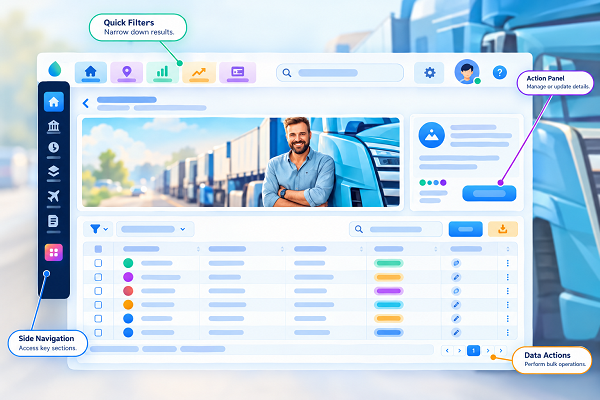
The main purpose of live tracking should be to give dispatchers an accurate view of delivery operations. Managers can see which drivers are on the road, which deliveries are pending, which stops have been completed and where delays may be developing.
This information can help teams coordinate work without repeatedly calling drivers for updates.
For example, if a driver is delayed because of traffic or a long waiting time at a loading bay, the dispatcher can adjust the delivery schedule or inform affected customers. The driver does not need to compensate for every delay by driving faster or accepting additional deliveries.
Businesses should establish a clear principle: location visibility is for operational support, not a reason to continuously increase delivery targets.
Useful live tracking information includes:
- Current or most recently reported vehicle location.
- Time of the last location update.
- Assigned delivery stops.
- Completed and pending deliveries.
- Estimated arrival times.
- Reported delays and delivery exceptions.
- Driver availability and shift status.
The dashboard should distinguish a genuinely current location from an older location caused by poor connectivity, a disabled device or an app running in the background.
2. Allocate Deliveries Based on Driver Capacity
One of the most effective ways to prevent driver overload is to consider capacity before assigning jobs.
A delivery route should not be judged only by the number of parcels or stops. Dispatchers should also consider:
- Total distance and expected travel time.
- Number of delivery locations.
- Delivery time windows.
- Parcel size, weight and handling requirements.
- Loading and unloading time.
- Building access and loading bay restrictions.
- Traffic conditions and parking availability.
- Vehicle type and carrying capacity.
- Driver working hours and scheduled breaks.
- Special handling requirements, such as fragile or temperature-sensitive goods.
For example, a route with eight deliveries in one industrial estate may be more manageable than a route with five deliveries spread across several parts of Singapore. Stop count alone is not a reliable measure of workload.
Live tracking software can help dispatchers understand actual travel patterns and compare planned routes with completed journeys. Over time, businesses can use this information to create more realistic delivery allocations.
3. Optimise Routes Instead of Pressuring Drivers to Move Faster
Route optimisation can reduce unnecessary travel and help drivers complete their assigned work with less effort.
A suitable system can group nearby delivery locations, consider delivery time windows and recommend an efficient sequence of stops. It may also help dispatchers identify routes that create excessive backtracking or unnecessary cross-town travel.
For example, a delivery team serving customers in Jurong, Clementi and the western industrial areas may benefit from grouping nearby stops instead of assigning locations in an inefficient sequence.
However, route optimisation should not assume that the shortest route is always the best route. A practical route plan should account for:
- Road restrictions and vehicle access.
- Traffic conditions and peak-hour congestion.
- Loading and unloading requirements.
- Customer availability.
- Building security and delivery procedures.
- Parking and loading bay access.
- Driver breaks and shift-end requirements.
Singapore's Urban Redevelopment Authority has described a delivery-routing initiative that used dynamic job matching and delivery clustering. The project reported reductions in vehicle use and distance travelled in its specific implementation. Such results demonstrate the potential of better planning, but individual businesses should measure their own outcomes rather than assume the same savings will apply everywhere.
4. Set Realistic Delivery Time Windows
Unrealistic delivery deadlines can turn a useful tracking system into a source of pressure.
If the software calculates estimated arrival times without allowing for traffic, loading delays, building access or customer availability, drivers may be expected to meet targets that are difficult to achieve safely.
Businesses should use realistic time windows based on actual operating conditions.
A practical approach includes:
- Review historical travel times for common delivery routes.
- Account for peak-hour traffic and known congestion.
- Include reasonable time for parking and unloading.
- Consider building access and loading bay procedures.
- Allow for customer-specific delivery instructions.
- Include scheduled rest breaks and operational buffers.
- Update customers when delays occur instead of demanding unsafe recovery.
Estimated arrival times should be treated as planning information, not guaranteed deadlines. If a delay occurs, the system should help the dispatcher revise the schedule.
5. Avoid Assigning Extra Jobs Whenever a Driver Appears Nearby
Live location can help identify drivers who are close to a new delivery location. However, proximity does not necessarily mean that a driver has spare capacity.
A driver may be nearby because they are completing another delivery, travelling to a scheduled appointment, returning to a depot or taking an authorised break.
Before assigning an additional job, dispatchers should check:
- Whether the driver is available for new work.
- Whether the existing route has enough time capacity.
- Whether the new delivery fits the vehicle's remaining capacity.
- Whether the additional stop affects committed delivery windows.
- Whether the driver has sufficient time for breaks and shift completion.
- Whether the driver has the required equipment or delivery skills.
Software should distinguish between nearby, available and suitable for assignment. These are different operational conditions.
A fair allocation process prevents the same drivers from repeatedly receiving extra work simply because their locations are visible.
6. Use Live Tracking to Manage Delays, Not Blame Drivers
Delivery delays can happen for many reasons, including road congestion, heavy rain, loading bay queues, customer unavailability, inaccurate addresses and access restrictions.
Live tracking helps managers identify where a delay may be occurring. It should support problem-solving rather than automatically attribute responsibility to the driver.
For example:
- If a vehicle remains stationary near a commercial building, the dispatcher can check whether the driver is waiting for loading bay access.
- If a delivery is delayed because the customer is unavailable, the team can arrange a revised appointment.
- If traffic affects several vehicles in the same area, dispatchers can update estimated arrival times.
- If a vehicle breaks down, the company can arrange assistance or redistribute urgent deliveries.
Managers should allow drivers to report the reason for a delay through the app. A simple exception category, such as traffic, customer unavailable, access issue, vehicle problem or weather, can provide useful context.
Location data alone cannot establish why a vehicle stopped or whether a driver was working inefficiently.
7. Protect Scheduled Breaks and Manage Fatigue
Driver safety must remain a priority even when delivery demand is high.
Long working hours and inadequate rest can reduce alertness and increase safety risks. The Singapore logistics industry's guidance on driver management identifies fatigue management practices such as periodic short breaks, limits on continuous driving or working hours, and planning breaks in advance.
Live tracking software can support these practices by helping managers:
- Include planned breaks in delivery schedules.
- Identify routes that leave insufficient time for rest.
- Monitor whether schedules are repeatedly running beyond planned hours.
- Reassign urgent work when a driver needs a break.
- Avoid sending new jobs to drivers who have completed their assigned work.
- Review workload patterns that may contribute to fatigue.
The software should not encourage drivers to skip breaks to meet delivery targets. Managers should also avoid treating a stationary vehicle during a scheduled break as an operational failure.
Businesses must separately comply with applicable employment, working-time and road-safety requirements. A tracking dashboard is not a substitute for a proper fatigue management process.
8. Reduce Unnecessary Calls and Messages to Drivers
Frequent calls from dispatchers can distract drivers and interrupt delivery work. Repeated requests for location updates are particularly unnecessary when the software already provides reliable tracking information.
A better communication process uses the system for routine updates and direct communication for situations that genuinely require attention.
Useful features include:
- Automatic delivery status updates.
- In-app job instructions.
- Push notifications for schedule changes.
- Customer contact details and delivery notes.
- Delay and exception reporting.
- Dispatcher messaging.
- Emergency contact procedures.
Messages should be concise and should not require drivers to interact with their phones while driving. Drivers should only review or respond to notifications when safely stopped.
Singapore's road-safety requirements prohibit drivers from holding and using mobile devices while driving. Businesses should design their communication procedures around safe vehicle operation, rather than expecting immediate responses on the road.
9. Use Alerts Carefully to Avoid Notification Overload
Alerts help managers respond to important events, but too many notifications can make the system difficult to use.
If every minor location change, traffic delay or route deviation triggers an alert, dispatchers may overlook genuinely important problems. Drivers may also become frustrated by repeated notifications.
Businesses should classify alerts by priority.
| Alert category | Example | Recommended response |
|---|---|---|
| Critical | Accident, breakdown or emergency | Follow the emergency response procedure |
| High priority | Missed delivery window or major route disruption | Dispatcher reviews and contacts the driver when safe |
| Operational | Customer unavailable or loading delay | Reschedule or update the delivery plan |
| Informational | Delivery completed or arrival recorded | Update the job record automatically |
| Technical | GPS or network connection lost | Check the last update and investigate if necessary |
Businesses should configure alert thresholds according to operational needs. A temporary GPS signal interruption should not automatically be treated as misconduct or a missed delivery.
The dashboard should show the event time, notification time and last location update where relevant. This helps managers understand whether an alert reflects a current situation or delayed information.
10. Make Delivery Targets Fair and Based on More Than Speed
A tracking system can generate useful performance information, but businesses should avoid judging drivers using a single metric.
For example, measuring only the number of deliveries completed per hour may encourage rushed driving, skipped breaks or unsafe handling of goods.
A more balanced performance review can consider:
- Successful delivery completion.
- On-time delivery performance, adjusted for valid exceptions.
- Customer feedback and complaints.
- Accurate proof of delivery.
- Safe driving practices.
- Compliance with delivery procedures.
- Vehicle care and incident reporting.
- Appropriate handling of customer goods.
- Working hours and break management.
The Workplace Safety and Health Council's delivery industry guidelines specifically recommend that companies should not provide bonuses or penalties based on the delivery time of a single trip. They also recommend that delivery workers should not be penalised for declining excessive loads.
These principles are important when designing incentives, driver scorecards and automated performance reports. A single late delivery or route deviation should not automatically trigger a penalty without reviewing the circumstances.
11. Match Delivery Loads to Vehicle and Parcel Capacity
Workload management also involves checking whether the assigned goods are suitable for the vehicle and driver.
A delivery route may appear manageable based on distance and stop count but become unsafe if the vehicle is overloaded or the goods are too large, heavy or difficult to handle.
Before assigning deliveries, businesses should consider:
- Vehicle load limits.
- Parcel dimensions and total volume.
- Weight distribution and secure loading.
- Handling requirements.
- Number of collection and delivery points.
- Availability of suitable handling equipment.
- Whether additional staff are needed for heavy or bulky items.
For platform delivery operations, Singapore's Approved Code of Practice for Platform Services addresses the risks associated with excessive or irregularly shaped loads. It sets out expectations around obtaining accurate load information and providing ways for workers to raise concerns about excessive loads.
Live tracking cannot determine whether a load is safe. Businesses need a separate process for recording parcel dimensions, weight, vehicle capacity and handling requirements.
12. Give Drivers a Simple Mobile App
A complicated mobile app can add to drivers' workload rather than reduce it.
Drivers should not have to spend excessive time entering information, navigating multiple screens or responding to unnecessary notifications.
A useful delivery app should provide:
- A clear list of assigned deliveries.
- Delivery addresses and navigation support.
- Customer contact details and instructions.
- Simple job status updates.
- Easy proof-of-delivery capture.
- A way to report delays and exceptions.
- Clear break and availability status.
- Offline access where network coverage is limited.
- Automatic synchronisation when connectivity returns.
The app should minimise manual data entry. For example, a driver should not need to enter the same delivery reference number in several screens.
Businesses should test the app on the devices their drivers actually use. Battery consumption, mobile data usage, screen readability and reliability in background operation are important considerations.
13. Provide Accurate Customer Updates Without Making Drivers Responsible for Every Delay
Live tracking can improve customer communication by providing more reliable delivery estimates.
Instead of asking drivers to call customers individually whenever a delivery is delayed, businesses can use automated notifications or customer service teams to share updates.
A customer-facing system may provide:
- Delivery confirmation.
- Estimated arrival window.
- Notification when the driver is approaching.
- Delay notification.
- Failed delivery reason.
- Rescheduling instructions.
- Proof-of-delivery confirmation.
Customer updates should be based on reliable information and should not expose unnecessary employee location details.
If an estimated arrival time changes, the system should update the customer rather than pressure the driver to meet the original estimate at any cost.
14. Use Workload Reports to Identify Operational Problems
Live tracking reports can help managers understand whether delivery schedules are consistently too demanding.
Useful reports include:
| Report | What it helps managers understand |
|---|---|
| Deliveries per driver | Distribution of assigned work |
| Stops per route | Route complexity and workload |
| Planned versus actual travel time | Accuracy of route planning |
| Waiting time by location | Delays caused by access or loading arrangements |
| Delivery completion rate | Overall operational performance |
| Missed delivery reasons | Recurring customer or address issues |
| Overtime and shift duration | Potential workload and fatigue concerns |
| Break schedule adherence | Whether planned rest periods are being maintained |
| Route distance | Unnecessary travel and inefficient allocation |
| Failed delivery and repeat visit report | Avoidable rework and customer service issues |
Reports should be reviewed over a suitable period. A single unusually busy day may not represent a driver's normal workload.
Managers should also compare similar routes and delivery conditions. A driver serving high-rise commercial buildings may experience different waiting times and access procedures from a driver delivering to landed properties.
15. Protect Driver Privacy When Using Live Location Data
Live tracking involves personal data when location information can be linked to an identifiable employee or platform worker.
Singapore employers and organisations should consider their obligations under the Personal Data Protection Act (PDPA), including appropriate notification, protection, access control and retention practices.
An employment-related exception may apply in certain circumstances when personal data is reasonably collected, used or disclosed for managing the employment relationship. However, this does not remove other applicable PDPA obligations, including the need to inform employees of relevant purposes.
Good practices include:
- Explain why location tracking is used.
- Tell drivers when tracking starts and stops.
- Avoid unnecessary tracking outside authorised work periods.
- Limit access to location history to staff who need it.
- Set appropriate retention periods.
- Protect location records against unauthorised access.
- Review vendor security and data-handling arrangements.
- Provide a process for drivers to raise questions or correct inaccurate records.
Businesses should avoid using live tracking to monitor personal activities unrelated to work. They should also avoid treating GPS records as conclusive evidence of attendance, delivery completion or misconduct.
16. Integrate Live Tracking With Delivery and Workforce Systems
Live tracking becomes more useful when connected to the systems that manage orders, schedules and delivery records.
A suitable integration can connect:
- Order management systems for delivery requests.
- Transport management systems for route planning and job assignment.
- Customer relationship management systems for customer details.
- Inventory systems for parcel and stock information.
- Proof-of-delivery systems for signatures and photographs.
- Attendance and workforce systems for shift information.
- Payroll systems for approved working-time records.
Integration helps prevent duplicate data entry and gives dispatchers a more complete view of delivery operations.
However, businesses should establish clear rules about which system is the source of truth for each record. A GPS arrival event should not automatically mark a delivery as completed. Completion should be supported by the required proof-of-delivery process.
17. Measure Whether Live Tracking Is Actually Reducing Driver Pressure
Businesses should assess whether the technology is making work more manageable, not just whether it is increasing delivery volume.
A practical measurement framework can include:
| Area | Suggested measure | What a positive result may indicate |
|---|---|---|
| Route efficiency | Travel distance per completed delivery | Less unnecessary travel |
| Scheduling | Difference between planned and actual route duration | More realistic planning |
| Workload | Distribution of stops and delivery time by driver | Fairer allocation |
| Safety | Reported incidents and unsafe delivery practices | Better safety management |
| Fatigue | Overtime and break adherence trends | More sustainable schedules |
| Customer service | Failed deliveries and customer complaints | Better coordination |
| Administration | Dispatcher calls and manual status updates | Less avoidable communication |
| Driver experience | Feedback on workload and app usability | Improved day-to-day working conditions |
Businesses should establish a baseline before implementation and compare results during a controlled pilot. They should also ask drivers whether route changes, alerts and delivery assignments have become easier to manage.
An increase in completed deliveries should not automatically be considered a success if it comes with longer working hours, missed breaks or increased safety risks.
18. Choose Live Tracking Software With Workload Management Features
When evaluating software, Singapore delivery businesses should look beyond the map and GPS functionality.
Important capabilities include:
- Real-time or configurable location updates.
- Route planning and delivery clustering.
- Driver availability and shift management.
- Workload-aware job assignment.
- Delivery time-window management.
- Break scheduling.
- Delivery status and proof-of-delivery records.
- Delay and exception reporting.
- Driver-to-dispatcher communication.
- Offline functionality and automatic synchronisation.
- Role-based access and privacy controls.
- Workload, travel-time and performance reports.
IMDA's transport management solution guidance identifies job creation, scheduling and assignment, job monitoring, driver and dispatcher mobile applications, communication and coordination as relevant system capabilities. These functions can support a more organised delivery operation when configured around realistic driver capacity.
During a vendor demonstration, businesses should test a practical scenario: a driver is delayed, another driver is nearby but already has a full route, and a new urgent delivery arrives. The software should help the dispatcher make a sensible decision without automatically adding work to the nearest driver.
Conclusion
Singapore delivery teams can use live tracking to improve visibility, reduce unnecessary travel, coordinate dispatch and provide better customer updates. However, the technology must be supported by realistic scheduling, fair workload allocation and clear safety procedures.
The most effective approach is to use location information to understand operational conditions, not to push drivers to complete more deliveries at any cost. Businesses should consider route complexity, parcel capacity, traffic, loading delays, working hours and scheduled breaks before assigning additional jobs.
By combining live tracking with workload-aware dispatch, sensible alerts, driver feedback and privacy safeguards, delivery businesses can improve efficiency while creating a safer and more manageable working environment for their drivers.
Compare useful delivery visibility with driver workload, safety and notification burden. Test InnBuilt alerts against practical Singapore routes and shift patterns.