How to Track Leave for Employees Working Across Singapore Locations
How to Track Leave for Employees Working Across Singapore Locations
Managing employee leave becomes more challenging when a business operates across multiple locations in Singapore. Retail chains, restaurants, healthcare providers, logistics companies, construction businesses, and service organisations may have employees working at different branches, offices, warehouses, or project sites.
When leave information is maintained separately at each location, HR teams may struggle to obtain accurate employee balances, identify overlapping absences, coordinate staffing, and prepare payroll. Managers may also approve leave without knowing whether another location has already scheduled several employees off on the same day.
Singapore employers need a consistent leave management process that provides central visibility while allowing individual location managers to manage their teams.
A centralized leave tracking system can help businesses maintain accurate records, apply consistent policies, monitor staffing levels, and transfer approved leave information to payroll.
This article explains how Singapore employers can track leave for employees working across multiple locations and the important processes HR teams should establish.
1. Create a Centralised Leave Management System
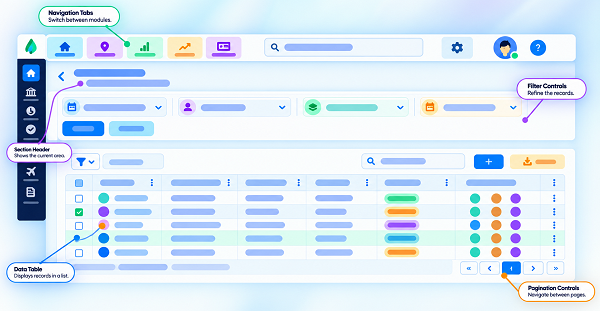
The first step is to establish a centralised system for recording employee leave across all business locations.
Instead of allowing each branch to maintain separate spreadsheets or paper-based records, employers should use a common HR platform where employee leave information is accessible to authorised HR personnel and managers.
A centralised system should maintain:
- Employee name and identification details.
- Employment start date.
- Assigned department and work location.
- Leave category and entitlement.
- Leave applications and approval status.
- Approved leave dates.
- Leave taken and remaining balances.
- Public holidays and rest days.
- Paid and unpaid leave records.
- Payroll adjustments related to leave.
For example, a retail company operating outlets in Orchard, Tampines, Jurong East, and Woodlands can maintain all employee leave information in one platform.
The HR team can view leave activity across the entire organisation, while each outlet manager can access information relevant to their assigned employees.
This reduces duplicate records and helps ensure that leave balances remain consistent when employees work at different locations.
2. Maintain Accurate Employee Location Information
Employers should maintain an accurate record of each employee's assigned workplace.
This is important because employees may work at different branches depending on business requirements, shift schedules, or temporary assignments.
The HR system should allow employers to record:
| Employee information | Purpose |
|---|---|
| Primary work location | Identifies the employee's regular workplace |
| Department | Groups employees by business function |
| Reporting manager | Determines the responsible approver |
| Secondary work locations | Records other locations where the employee may work |
| Transfer history | Tracks changes in workplace assignments |
| Employment start date | Supports service-based leave calculations |
| Work schedule | Helps determine working days and leave deductions |
For example, an employee may normally work at a Jurong outlet but occasionally cover shifts at a Clementi outlet.
The system should retain the employee's primary assignment while recording temporary work locations separately.
This prevents temporary assignments from creating unnecessary changes to the employee's leave profile.
3. Apply Consistent Leave Policies Across All Locations
Businesses operating across Singapore should establish a common leave policy wherever practical.
Employees working at different branches should not receive inconsistent treatment simply because their managers maintain separate records.
The policy should explain:
- Annual leave eligibility and entitlement.
- Sick leave eligibility and notification procedures.
- Childcare and parental leave arrangements.
- Public holiday treatment.
- Unpaid leave procedures.
- Leave application notice periods.
- Approval responsibilities.
- Carry-forward rules.
- Leave cancellation and adjustment procedures.
Employers may introduce additional arrangements for particular departments or locations where operational requirements differ. However, these arrangements should be documented and should not reduce statutory entitlements.
For example, a company may require retail employees to submit annual leave requests earlier during major sales periods because staffing demand is higher.
The same organisation may have a different scheduling process for office employees. Both arrangements should remain consistent with applicable employment requirements.
4. Track Leave Balances Centrally
Employees working across multiple locations should have one accurate leave balance rather than separate balances maintained by different branches.
A central leave balance should reflect:
- Opening leave balance.
- Current-year entitlement.
- Accrued leave, where applicable.
- Approved leave taken.
- Pending applications.
- Carry-forward balance.
- Manual adjustments.
- Remaining available leave.
Example:
An employee works at a company's Singapore retail outlet and has the following annual leave information:
| Description | Days |
|---|---|
| Opening balance | 3 |
| Current-year entitlement | 14 |
| Additional approved adjustment | 1 |
| Annual leave taken | 5 |
| Remaining balance | 13 |
Calculation:
3 + 14 + 1 − 5 = 13 days.
If the employee transfers temporarily to another outlet, the leave balance should remain connected to the same employee profile.
HR should also ensure that pending applications are distinguished from approved leave so that employees and managers do not mistake requested leave for confirmed leave.
5. Configure Location-Based Leave Approval Workflows
A multi-location business may have different managers responsible for different branches.
The leave management system should route applications to the correct approver based on the employee's reporting structure and assigned location.
A typical workflow may operate as follows:
- Employee submits a leave application.
- The system identifies the employee's department and assigned location.
- Request is sent to the relevant reporting manager.
- Manager reviews leave balance and staffing requirements.
- HR reviews exceptions where necessary.
- Approved leave is recorded centrally.
- The employee receives confirmation.
For example, a staff member working at a Tampines branch submits an annual leave request.
The request should reach the Tampines outlet manager rather than a manager responsible for another branch.
For employees who regularly work across locations, employers may configure approval based on the employee's primary reporting manager or a designated operations manager.
Clear approval rules reduce delays and prevent applications from being sent to the wrong person.
6. Monitor Overlapping Leave Across Branches
One of the biggest challenges in multi-location operations is managing overlapping employee absences.
If several employees request leave during the same period, a branch may not have enough staff to maintain normal operations.
A centralised leave calendar helps managers identify potential staffing gaps before approving applications.
Employers should monitor:
- Number of employees on leave at each location.
- Employees assigned to critical roles.
- Overlapping annual leave requests.
- Department-level absence levels.
- Peak business periods.
- Minimum staffing requirements.
- Availability of replacement employees.
For example, a restaurant group may operate five outlets across Singapore. If several experienced kitchen employees request leave during the same weekend, managers may need to coordinate coverage across outlets.
A shared leave calendar allows operations managers to identify these overlaps and discuss alternative arrangements before approving requests.
Employers should use staffing requirements as a fair and transparent consideration when scheduling annual leave, while respecting employees' applicable statutory rights.
7. Track Public Holidays and Different Work Schedules
Employees working across different locations may follow different work schedules.
For example:
- Office employees may work Monday to Friday.
- Retail employees may work rotating shifts.
- Restaurant employees may work weekends and public holidays.
- Warehouse employees may follow morning, evening, or overnight shifts.
- Healthcare employees may work rotating rosters.
Although Singapore's gazetted public holidays apply nationally, the way employees are scheduled to work and compensated may depend on their employment arrangements and applicable statutory rules.
HR systems should therefore maintain accurate information about:
- Employee work schedules.
- Normal working days.
- Rest days.
- Non-working days.
- Public holidays.
- Substitute holidays, where applicable.
- Employees scheduled to work on public holidays.
Employers should avoid deducting annual leave for public holidays that should be treated separately under the applicable rules.
The system should also distinguish between a public holiday, a rest day, and an ordinary non-working day.
8. Handle Employee Transfers Between Locations
Employees may move between branches because of promotions, staffing shortages, business expansion, or operational requirements.
The leave management process should ensure that such transfers do not result in duplicate employee records or incorrect balances.
When an employee changes location, HR should update:
- Primary work location.
- Department and reporting manager.
- Work schedule, if applicable.
- Approval workflow.
- Location-specific operational arrangements.
- Effective date of the transfer.
The employee's existing leave history should remain accessible.
Example:
An employee moves from a company's Jurong East outlet to its Ang Mo Kio outlet.
The HR team updates the employee's assigned location and reporting manager. The employee's existing annual leave balance, approved leave applications, and historical records remain attached to the same employee profile.
Where a move involves a change of employing a legal entity rather than merely a branch transfer, HR should separately assess the employment arrangement and continuity-of-service implications. A change of work location within the same employer should not automatically be treated as a new employment relationship.
9. Manage Part-Time and Shift-Based Employees
Multi-location businesses frequently employ part-time and shift-based workers.
These employees may work different numbers of hours each week or follow schedules that change depending on business demand.
Employers should ensure that leave calculations reflect the applicable rules for each employee category.
For eligible part-time employees under Singapore's Employment Act, statutory annual and sick leave entitlements are calculated in hours based on the employee's annual working hours relative to a comparable full-time employee.
HR teams should therefore record:
- Contracted working hours.
- Actual scheduled hours.
- Comparable full-time working hours.
- Working days and shift patterns.
- Leave entitlement in hours, where applicable.
- Leave hours taken.
- Changes to the employee's work schedule.
For example, a part-time retail employee may work four-hour shifts at different outlets. The leave management system should deduct the appropriate number of hours for the scheduled absence rather than automatically deducting a full-time employee's standard daily hours.
This is particularly important when employees work different shift lengths across locations.
10. Integrate Leave Tracking With Attendance Management
Leave records should be connected with attendance information to prevent discrepancies.
For example, if an employee has approved annual leave on a particular date, the attendance system should recognise the approved absence rather than flagging it as an unexplained absence.
Integration should help HR teams identify:
- Approved leave with matching absence records.
- Employees absent without an approved request.
- Employees who report for work during approved leave.
- Incorrect leave deductions.
- Missed attendance entries.
- Shift changes affecting leave calculations.
- Employees scheduled at a different location.
Example:
An employee working at a Woodlands warehouse has approved annual leave for Monday and Tuesday.
The attendance system should recognise these dates as approved leave. It should not generate an unauthorised absence alert or deduct additional leave because the employee was not scheduled to work.
The integration should also account for cancellations and changes to approved leave dates.
11. Connect Leave Data With Payroll
Leave information from multiple locations should be consolidated before payroll processing.
Payroll teams should receive accurate information about paid leave, unpaid leave, and any leave-related salary adjustments.
Important payroll inputs include:
| Leave information | Payroll purpose |
|---|---|
| Annual leave taken | Confirms paid leave records |
| Sick leave taken | Supports applicable paid sick leave processing |
| Unpaid leave | Provides authorised salary adjustment information |
| Public holiday work | Supports applicable holiday compensation |
| Part-time leave hours | Supports accurate leave and pay calculations |
| Leave corrections | Prevents incorrect payroll deductions |
| Approved leave adjustments | Maintains consistent payroll records |
For monthly-rated employees covered by the relevant Employment Act provisions, salary for an incomplete month should be calculated using the applicable statutory formula.
Payroll teams should not use arbitrary fixed-day deductions without checking the employee's pay arrangement and the applicable rules.
Before payroll cut-off, HR should reconcile leave records from all locations and resolve discrepancies with branch managers.
12. Use Real-Time Leave Dashboards and Reports
A multi-location organisation needs reports that show both individual employee balances and overall staffing availability.
A central dashboard can help HR and operations teams monitor leave activity across branches.
Useful reports include:
- Location-wise leave report: Shows the number of employees on leave at each branch during a selected period.
- Department-wise leave report: Displays leave activity across departments such as sales, operations, customer service, and administration.
- Employee leave balance report: Shows opening balances, entitlement, leave taken, and remaining balances.
- Pending approval report: Identifies leave requests awaiting manager or HR approval.
- Overlapping leave report: Highlights multiple employees requesting leave on the same dates.
- Unpaid leave report: Shows approved unpaid leave and relevant payroll adjustments.
- Monthly absence report: Provides an overview of leave patterns and employee availability.
These reports help management identify staffing issues, plan replacement coverage, and improve workforce scheduling.
13. Protect Employee Leave Information Across Locations
Centralised leave tracking involves collecting and sharing employee information across different branches.
Employers should ensure that only authorised personnel can access the information required for their responsibilities.
For example:
- Employees should be able to view their own leave balances and applications.
- Branch managers should access relevant information about their teams.
- HR personnel may need organisation-wide access for administration.
- Payroll staff should receive the leave information required for salary processing.
- Medical information should be restricted to personnel with a legitimate need to access it.
Employers should also consider data security when using cloud-based HR systems.
Under Singapore's Personal Data Protection Act (PDPA), organisations must comply with applicable data protection obligations. Where personal data is transferred outside Singapore, the transfer limitation requirements must also be considered. The organisation should ensure that the transferred information receives a standard of protection comparable to that required under the PDPA.
Role-based access, secure authentication, appropriate retention practices, and audit logs can help protect employee information.
14. Maintain Employment Records for All Locations
Employers should ensure that employee leave records are complete regardless of the branch or location where the employee works.
MOM requires employers covered by the Employment Act to maintain the prescribed employment records.
These records include:
- Employee employment start and end dates.
- Daily working hours and breaks.
- Dates of public holidays.
- Dates and details of leave taken.
- Salary information.
- Applicable salary deductions.
Generally, employers must retain the latest two years of employment records for current employees. For former employees, the last two years of records must be retained for one year after the employee leaves.
A centralised HR platform can help businesses maintain these records in a consistent format and retrieve them when needed.
Employers should not assume that separate branch spreadsheets automatically provide complete or accurate records. The organisation should have a defined process for consolidating and checking the information.
15. Evaluate Leave Management Software for Multi-Location Operations
Businesses with multiple branches should evaluate whether their leave management software can support their operational structure.
Important features include:
| Software feature | Why it matters |
|---|---|
| Centralised employee database | Maintains one employee record across locations |
| Multiple location management | Separates branch and department information |
| Location-based approvals | Routes requests to the correct managers |
| Shared leave calendar | Shows employee availability across branches |
| Automatic leave calculations | Reduces manual balance errors |
| Shift schedule integration | Supports rotating and variable work patterns |
| Attendance integration | Matches approved leave with absence records |
| Payroll integration | Consolidates leave information for salary processing |
| Employee self-service | Allows employees to submit and monitor requests |
| Customised reports | Provides location-wise and organisation-wide insights |
| Role-based access | Limits employee information to authorised users |
| Audit trails | Records changes, approvals, and adjustments |
During a software demonstration, employers should test realistic situations such as an employee transferring between branches, a manager approving leave for a remote team member, and multiple employees requesting leave during the same period.
16. Establish a Standard Leave Tracking Process
A standard process helps ensure that every location follows the same basic procedures.
A practical implementation process includes:
- Build the employee database: Collect employee information, joining dates, assigned locations, departments, and reporting managers.
- Define leave policies: Document statutory leave categories, contractual benefits, approval procedures, and location-specific operational arrangements.
- Configure the HR system: Set up leave entitlements, work schedules, public holidays, approval workflows, and employee access.
- Train branch managers: Explain how to review requests, check team availability, and update employee information.
- Enable employee self-service: Allow employees to submit leave requests and check their balances through a common platform.
- Integrate attendance and payroll: Ensure approved leave is reflected in attendance records and relevant payroll inputs.
- Review reports regularly: Monitor leave balances, pending approvals, overlapping absences, and location-wise staffing levels.
- Conduct periodic audits: Compare HR records with branch attendance information and payroll data to identify errors.
17. Common Mistakes to Avoid
Singapore employers should watch for these common problems when tracking leave across multiple locations.
| Common mistake | Recommended approach |
|---|---|
| Maintaining separate leave spreadsheets at every branch | Use a centralised employee leave database |
| Creating duplicate employee profiles after transfers | Retain one employee record and update location details |
| Allowing managers to approve leave without checking balances | Use system-based balance validation |
| Applying different leave policies without proper documentation | Establish consistent policies and clearly define legitimate variations |
| Ignoring different shift patterns | Configure employee-specific work schedules |
| Deducting leave incorrectly for public holidays | Apply the relevant public holiday and leave rules |
| Failing to update payroll after leave approval | Reconcile leave data before payroll cut-off |
| Providing all managers with unrestricted access | Apply role-based permissions |
| Ignoring pending leave applications | Monitor pending requests through dashboards |
| Failing to retain historical records | Maintain complete and accessible employment records |
Conclusion
Tracking leave for employees working across multiple Singapore locations requires more than maintaining separate branch-level leave registers. Employers need a centralised process that connects employee information, leave balances, approval workflows, attendance records, and payroll.
A well-configured leave management system allows HR teams to monitor employee availability across branches while giving local managers the information they need to plan staffing.
By maintaining consistent policies, accurate work-location records, appropriate access controls, and regular audits, Singapore businesses can reduce leave administration errors and improve workforce coordination.
For organisations operating retail outlets, restaurants, warehouses, offices, or multiple service locations, centralised leave tracking can support better planning, more transparent approvals, and more reliable HR and payroll operations.
Centralise requests while preserving the right approval chain at each location. Try InnBuilt with multiple Singapore outlets and shared HR oversight.