How Can Singapore Employers Manage Leave During Probation?
How Can Singapore Employers Manage Leave During Probation?
Probation is an important stage in the employment relationship. It allows Singapore employers to assess a new employee’s performance, conduct, attendance, and suitability for the role. At the same time, HR teams must ensure that employees receive the leave benefits they are entitled to under Singapore employment laws.
One common misconception is that employees cannot take leave until their probation is completed. In reality, statutory leave eligibility is generally determined by the employee’s length of service and the relevant legal conditions, rather than probation confirmation alone.
For example, an employee who has completed three months of service may qualify for statutory annual leave and paid sick leave even if the employer has placed them on a six-month probation period.
Employers should therefore establish clear leave policies, maintain accurate service records, and configure HR systems to distinguish statutory entitlements from additional company benefits. This article explains how Singapore businesses can manage leave during probation effectively.
1. Understand the Difference Between Probation and Leave Eligibility
Probation is a contractual arrangement between an employer and an employee. It is commonly used to evaluate a new employee before confirming permanent employment.
However, being on probation does not automatically remove an employee’s statutory employment rights.
Singapore employers should understand three important principles:
- Statutory leave eligibility is generally linked to the employee’s length of service and other qualifying conditions.
- Employment contracts and company policies may provide additional leave benefits beyond statutory minimums.
- Internal approval procedures should not be used to deny statutory leave entitlements once an employee qualifies.
For example, an employee who has completed three months of continuous service may qualify for statutory annual leave even if their probation has been extended.
HR teams should therefore track the employee’s original joining date separately from the probation confirmation date.
2. Explain Annual Leave Entitlement During Probation
Under Singapore's Employment Act, employees covered by the Act are entitled to paid annual leave after completing at least three months of service with their employer.
This entitlement applies even when the employee is still serving probation.
The statutory minimum annual leave entitlement increases according to years of service:
| Years of service | Minimum annual leave |
|---|---|
| 1st year | 7 days |
| 2nd year | 8 days |
| 3rd year | 9 days |
| 4th year | 10 days |
| 5th year | 11 days |
| 6th year | 12 days |
| 7th year | 13 days |
| 8th year onwards | 14 days |
For employees who have completed between three and 12 months of service, annual leave is prorated according to completed months of service.
Example:
An employee is entitled to seven days of annual leave in the first year and has completed six months of service.
The calculation is:
Annual leave = (Completed months of service ÷ 12) × Annual entitlement
= (6 ÷ 12) × 7
= 3.5 days
Under MOM's rounding rules, a fraction of half a day or more is rounded up. The employee therefore receives four days.
Employers should not postpone statutory annual leave eligibility simply because an employee has not received formal probation confirmation.
3. Manage Sick Leave According to Completed Service
Sick leave is another important consideration during probation.
Singapore's Ministry of Manpower (MOM) clarifies that paid sick leave entitlement is not determined by probation status. Eligible employees covered by the Employment Act qualify after completing at least three months of service.
The entitlement increases with completed service:
| Completed service | Paid outpatient sick leave | Paid hospitalisation leave |
|---|---|---|
| 3 months | 5 days | 15 days |
| 4 months | 8 days | 30 days |
| 5 months | 11 days | 45 days |
| 6 months onwards | 14 days | 60 days |
Hospitalisation leave includes outpatient sick leave; the two entitlements are not added together.
To qualify for paid sick leave, employees must satisfy the applicable conditions, including informing or attempting to inform their employer within 48 hours of absence and obtaining the required medical certification.
For employees who have worked for less than three months, statutory paid sick leave is generally not yet available. However, employers are encouraged to be flexible and may provide paid medical leave under their company policies.
HR teams should avoid automatically treating every medical absence during probation as unpaid leave. They should first check the employee's service duration and applicable entitlement.
4. Review Childcare Leave Eligibility
Employees serving probation may also qualify for statutory childcare leave if they meet the relevant eligibility requirements.
For example, eligible working parents may receive:
- Government-Paid Childcare Leave: Up to six days per year for eligible parents of Singapore citizen children below seven years old.
- Childcare Leave under the Employment Act: Up to two days per year for eligible parents of non-Singapore citizen children below seven years old.
- Extended Childcare Leave: Up to two days per year for eligible parents of Singapore citizen children aged seven to 12.
The employee generally needs to have completed at least three continuous months of service and satisfy the other requirements for the relevant scheme.
MOM specifically confirms that an employee can qualify for paid childcare leave while still on probation, provided the employee meets the remaining eligibility conditions.
HR systems should therefore assess childcare leave based on the employee's service period, the child's age and citizenship, and the applicable statutory scheme—not simply the employee's probation status.
5. Establish a Clear Policy for Leave During the First Three Months
Employees may need time off during their first few weeks at work. They may experience illness, family emergencies, or other unavoidable personal circumstances.
Before the statutory three-month service threshold, employees may not yet qualify for certain statutory paid leave entitlements. Employers can nevertheless provide additional support through internal policies.
Possible arrangements include:
- Paid discretionary leave for urgent personal circumstances.
- Unpaid leave subject to approval.
- Annual leave advances where permitted by the employment terms and company policy.
- Flexible working arrangements were operationally suitable.
- Additional medical or family-related leave provided by the employer.
For example, an employee who becomes ill during the second month of employment may not yet qualify for statutory paid sick leave. The employer may still grant paid medical leave under its internal policy.
The company should document the arrangement and explain whether the absence is paid or unpaid. This helps HR and payroll teams apply the correct treatment.
6. Create a Consistent Annual Leave Approval Process
Employers may establish reasonable procedures for reviewing annual leave requests during probation.
New employees may be undergoing training, onboarding, or important role-specific activities. Managers may therefore need to consider staffing requirements when reviewing leave applications.
A consistent approval process should include:
- The employee submits a leave request through the HR system or designated channel.
- The system checks the employee's available entitlement.
- The reporting manager reviews the requested dates and operational requirements.
- HR verifies the leave category and applicable policy.
- The manager approves or discusses alternative dates with the employee where necessary.
- The system updates the leave balance and sends a notification.
Employers should apply approval criteria consistently. A policy that automatically rejects all leave requests from probationary employees may create unnecessary problems, particularly where the employee has already qualified for statutory leave.
7. Distinguish Statutory Leave From Additional Company Benefits
Some employers provide more generous leave benefits than the statutory minimum.
For example, a company may allow employees to use annual leave from their first day of employment, even though statutory annual leave eligibility generally begins after three months for eligible employees.
HR teams should distinguish between the following categories:
| Leave category | Explanation |
|---|---|
| Statutory leave | Leave required under applicable Singapore legislation when eligibility conditions are met |
| Contractual leave | Additional benefits stated in the employment contract |
| Company-policy leave | Additional leave provided under the employee handbook or internal policy |
| Discretionary leave | Additional time off granted at the employer's discretion |
The employment contract should explain when additional leave benefits begin and whether special arrangements apply during probation.
This distinction helps prevent confusion when employees compare their entitlements with those of confirmed colleagues.
8. Handle Unpaid Leave and Payroll Adjustments Correctly
An employee may request unpaid leave during probation if they have not yet qualified for a particular statutory paid leave entitlement or have exhausted an applicable balance.
Employers should establish a documented process for handling such requests.
HR should record:
- Employee details and employment start date.
- Requested leave dates.
- Total working days or hours absent.
- Leave category and reason, where necessary.
- Manager and HR approval.
- Paid or unpaid status.
- Applicable payroll adjustment.
- Payroll period for processing.
For monthly-rated employees covered by the relevant Employment Act provisions, salary for an incomplete month is calculated using the applicable statutory formula:
Pay for an incomplete month = Monthly gross rate of pay ÷ Total working days required in the month × Number of days actually worked
Payroll teams should apply the correct calculation method rather than automatically using a fixed 30-day or 26-day divisor.
They should also ensure that statutory paid leave is not incorrectly classified as unpaid absence.
9. Apply Public Holiday Rules Equally
Probationary employees should not automatically lose applicable public holiday entitlements.
Employers should configure public holidays according to the employee's working arrangement and the relevant statutory requirements.
HR teams should:
- Include applicable public holidays in the company calendar.
- Avoid deducting public holidays from annual leave balances.
- Record employees required to work on public holidays.
- Apply the appropriate compensation or time-off arrangements.
- Share relevant information with payroll.
Public holiday work should be recorded accurately, especially in organisations that operate shifts, retail outlets, factories, healthcare facilities, or customer support operations.
10. Configure HR Software to Track Probationary Leave
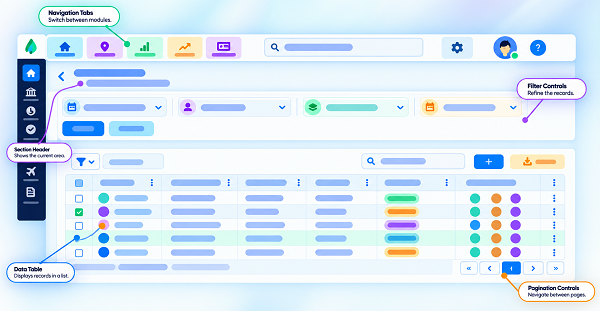
Leave management software can help employers calculate entitlements and process applications accurately.
The system should use the employee's joining date and applicable eligibility rules rather than relying only on the probation confirmation field.
Important software features include:
| Feature | Business benefit |
|---|---|
| Joining-date tracking | Calculates completed service duration |
| Probation status management | Helps HR monitor probation reviews |
| Automatic eligibility checks | Identifies when statutory leave conditions are met |
| Prorated annual leave | Calculates entitlement based on completed months |
| Sick leave tracking | Applies service-based sick leave entitlements |
| Multiple leave categories | Separates statutory and company-provided benefits |
| Approval workflows | Routes applications to the appropriate manager |
| Payroll integration | Transfers paid and unpaid leave information |
| Employee self-service | Allows employees to check balances and submit requests |
| Audit history | Tracks approvals and manual adjustments |
The system should also allow HR teams to configure company-specific benefits without confusing them with statutory entitlements.
11. Maintain Accurate Leave Records
Employers should maintain complete leave records for probationary employees just as they do for confirmed employees.
Accurate records help HR teams resolve employee queries, calculate balances, process payroll, and demonstrate that leave requests have been handled consistently.
Important records include:
- Employment start date and probation period.
- Applicable leave policies and contractual benefits.
- Leave eligibility dates.
- Leave applications and approval decisions.
- Leave taken and remaining balances.
- Medical certificates where required.
- Approved unpaid leave.
- Payroll adjustments.
- Manual balance changes and their reasons.
Under MOM's employment recordkeeping requirements, employers covered by the Employment Act generally need to retain the latest two years of records for current employees. For former employees, the last two years of records must be kept for one year after the employee leaves.
Medical certificates and other personal information should be accessible only to authorised personnel. Employers should apply appropriate data protection safeguards and avoid collecting unnecessary medical details.
12. Communicate Leave Policies During Onboarding
Employees should understand their leave rights and company procedures from the beginning of their employment.
HR teams can include a leave policy briefing in the onboarding process.
The briefing should explain:
- Which leave categories are available.
- When statutory leave eligibility begins.
- Whether the company offers additional leave during probation.
- How annual leave is calculated.
- How to report sickness and submit medical certificates.
- How to apply for childcare and parental leave.
- Who approves leave applications.
- How unpaid leave affects salary.
- Where employees can view their leave balances.
A written policy or employee handbook can provide a consistent reference for employees and managers.
Clear communication reduces misunderstandings and helps new employees follow the correct application procedures.
13. Manage Leave When Probation Is Extended
Some employers extend probation when additional time is needed to assess an employee's performance.
An extension does not automatically reset the employee's length of service or remove leave entitlements already earned.
For example, an employee who has completed four months of employment may still be entitled to applicable statutory annual and sick leave even if their probation is extended for another month.
HR teams should:
- Document the reason for extending probation.
- Communicate the revised probation review date.
- Retain the original employment start date.
- Continue tracking statutory leave eligibility.
- Update the probation status without resetting service calculations.
- Apply leave approval procedures consistently.
This distinction is particularly important when calculating annual leave and sick leave entitlements.
14. Avoid Common Leave Management Mistakes
Singapore employers should avoid the following mistakes when managing leave during probation:
| Common mistake | Recommended practice |
|---|---|
| Prohibiting all leave during probation | Check statutory eligibility and company policy |
| Waiting for probation confirmation before granting statutory leave | Calculate entitlement using actual service duration |
| Automatically treating medical absence as unpaid | Check sick leave eligibility first |
| Ignoring childcare leave eligibility | Review the employee's service period and family-related conditions |
| Deducting public holidays from annual leave | Apply the relevant public holiday rules |
| Recording every absence as unpaid leave | Use the correct leave category |
| Resetting service calculations after probation extension | Retain the original employment start date |
| Failing to update payroll | Reconcile approved leave before payroll cut-off |
| Applying inconsistent approval standards | Use documented and transparent procedures |
| Providing unrestricted access to medical records | Apply role-based access controls |
15. Use a Practical HR Checklist
Before processing a probationary employee's leave request, HR teams can use the following checklist:
- Confirm the employee's original joining date.
- Check completed months of service.
- Identify applicable statutory leave eligibility.
- Review contractual and company-specific benefits.
- Confirm the correct leave category.
- Check the available leave balance, where applicable.
- Obtain the required approval.
- Record the leave in the HR system.
- Update attendance and payroll information.
- Communicate the decision to the employee.
- Retain supporting records securely.
Conclusion
Singapore employers should manage leave during probation based on statutory eligibility, contractual benefits, and transparent company procedures rather than probation status alone.
Eligible employees may qualify for annual leave, paid sick leave, and childcare leave before their probation is formally completed, provided they satisfy the relevant service and other statutory conditions.
A clear leave policy, consistent approval process, accurate service-date tracking, and properly configured HR software can help employers avoid incorrect leave deductions, payroll disputes, and employee dissatisfaction.
By explaining leave entitlements during onboarding and reviewing requests fairly, HR teams can support new employees while maintaining business continuity and compliance with Singapore employment requirements.
Compare company probation rules with configured leave access and accrual settings. Test InnBuilt using joiners at different start dates.