What Privacy Questions Should Thailand Employers Ask Before Using Face Attendance?
What Privacy Questions Should Thailand Employers Ask Before Using Face Attendance?
Introduction
Face recognition attendance can help Thailand businesses automate employee check-ins, reduce proxy attendance and manage large worksites. However, it also involves collecting and processing biometric information, which receives special protection under Thailand's Personal Data Protection Act B.E. 2562 (2019), commonly known as the PDPA.
Before introducing face attendance, employers should look beyond device accuracy and software features. They need to understand what facial information is collected, why it is necessary, whether the processing has a valid legal basis, who can access the data, how long it is retained and what happens if information is exposed.
The following questions can help HR, IT, compliance and management teams assess privacy risks before adopting facial recognition attendance.
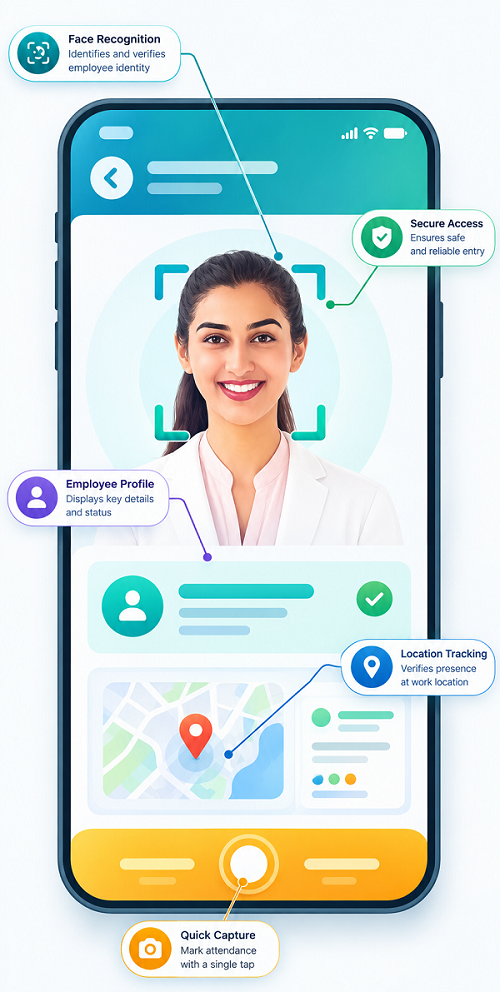
1. Are We Collecting Facial Images or Biometric Templates?
The first question should be what information the attendance system actually collects and processes.
Face attendance systems may handle several types of information:
- Facial photographs captured during employee registration.
- Live images captured during check-in.
- Biometric templates or mathematical representations generated from facial characteristics.
- Employee identification numbers linked to facial templates.
- Check-in and check-out timestamps.
- Device identifiers and worksite information.
- Verification results, including successful and failed attempts.
These data types should not automatically be treated as identical.
A photograph of an employee is personal data if it identifies the individual. A facial template generated through technology to uniquely identify that employee is biometric data and is treated as sensitive personal data under Section 26 of Thailand's PDPA.
Thailand's Department of Intellectual Property PDPA guidance specifically discusses fingerprint and facial scanning for attendance. It distinguishes biometric templates from ordinary photographs and identifies facial data used for attendance verification as sensitive personal data.
Employers should ask vendors:
- Does the system store original facial photographs?
- Does it create biometric templates?
- Are images retained after template creation?
- Can facial templates be reconstructed into images?
- Are check-in images stored permanently or temporarily?
- Can the system operate without retaining unnecessary photographs?
Understanding the data flow helps employers determine which privacy protections are required.
2. Why Do We Need Face Recognition for Attendance?
Employers should be able to explain why facial recognition is necessary for their attendance process.
Possible business reasons include:
- Reducing proxy attendance and buddy punching.
- Improving identity verification at factory entrances.
- Managing check-ins across multiple worksites.
- Reducing manual attendance administration.
- Improving the reliability of attendance records.
- Coordinating employee access to restricted areas.
However, a business benefit does not automatically establish that collecting sensitive biometric information is legally justified.
Employers should compare face recognition with less intrusive alternatives, such as:
- RFID or employee access cards.
- PIN-based attendance.
- QR-code check-ins.
- Supervisor-approved attendance records.
- Mobile attendance applications with appropriate verification controls.
For example, a small office with a limited workforce may be able to manage attendance accurately through access cards. A large industrial facility with repeated proxy-attendance problems may have a stronger operational reason to evaluate biometric verification.
The employer should document why the selected method is proportionate to the problem being addressed.
3. What Is Our Legal Basis Under Thailand's PDPA?
This is one of the most important questions to resolve before implementation.
Section 26 of the PDPA generally prohibits collecting sensitive personal data, including biometric data, without the employee's explicit consent, unless a specific statutory exception applies.
One exception concerns employment protection, social security, national health security, social health welfare and other specified social-protection purposes. It applies where collecting the information is necessary for exercising the rights or carrying out the obligations of the data controller or data subject under the relevant law, with suitable safeguards for fundamental rights and interests.
Other exceptions may apply in particular circumstances, but employers should not assume that ordinary attendance administration automatically qualifies.
Thailand's Department of Intellectual Property guidance provides a practical example specifically addressing facial and fingerprint scanning for attendance. It states that biometric data used for attendance identification should receive explicit consent, while recognising that applicable statutory exceptions must be assessed separately where relevant. This is useful guidance, although employers should distinguish the department's internal guidance from a universal ruling for every private-sector employer.
Before implementation, employers should ask:
- Which PDPA legal basis applies to this processing?
- Is explicit consent required?
- If an exception is being relied upon, what specific legal obligation or right does the processing support?
- Why is biometric identification necessary for that purpose?
- What safeguards protect employees' rights and interests?
- Has the legal basis been documented and reviewed?
A general statement that face recognition improves security or convenience is not, by itself, a complete legal assessment.
Employers should obtain advice from qualified Thai privacy counsel where the legal basis is uncertain.
4. Can Employees Give Freely Informed Consent?
Where explicit consent is the applicable legal basis, employers must consider whether employees can genuinely make an informed and voluntary choice.
Workplace consent requires particular care because employees may feel pressure to agree to an employer's request.
Employers should ask:
- Is the consent request separate from the employment contract?
- Is the purpose of biometric collection explained clearly?
- Does the employee understand what information is being collected?
- Is consent recorded in writing or through a suitable electronic process?
- Can employees ask questions before agreeing?
- Can they withdraw consent where consent is the applicable basis?
- Are the consequences of withdrawal explained?
- Is an alternative attendance method available where appropriate?
Consent should not be hidden inside a general HR policy or bundled with unrelated permissions.
For example, agreeing to use face recognition for attendance should not automatically authorise the employer to use facial information for marketing, employee profiling or unrelated security activities.
Employers should maintain evidence of the consent process, including the notice provided, the employee's decision and any later withdrawal.
5. What Happens If an Employee Refuses Face Recognition?
A practical privacy policy should explain how attendance will be recorded when an employee does not agree to biometric processing or cannot use the system.
Employers should consider alternative methods such as:
- RFID cards.
- Secure PIN-based attendance.
- Supervisor-verified check-ins.
- An approved mobile attendance application.
- A manual exception process.
The alternative method should be reliable enough to record attendance without unnecessarily disadvantaging employees.
HR should also establish a procedure for employees who experience repeated recognition failures because of lighting, protective equipment, physical changes or technical limitations.
A refusal to provide biometric information should not automatically be treated as misconduct. The employer should first establish the applicable legal basis, the employee's rights and the company's approved alternative procedure.
This approach can reduce employee concerns and help prevent disputes about attendance records.
6. Have We Provided a Clear Employee Privacy Notice?
Employees should receive clear information about how their facial information will be collected, used, stored and disclosed.
Section 23 of the PDPA requires data controllers to provide specified information to data subjects before or at the time personal data is collected, subject to the statutory conditions.
A face attendance privacy notice should explain:
- The employer's identity and contact details.
- The purpose of facial recognition.
- The categories of personal and biometric data collected.
- The applicable legal basis.
- Whether data is shared with software providers or other parties.
- Whether information is transferred outside Thailand.
- The retention period or criteria used to determine it.
- How employees can exercise their data protection rights.
- How employees can contact the organisation about privacy concerns.
The notice should be written in language employees can understand and made available before biometric enrolment.
For organisations with employees who speak different languages, providing suitable translations can improve understanding.
Employers should also explain whether the system captures images only when employees actively check in or whether it uses cameras for other purposes.
A notice that simply says "facial recognition is used for attendance" may not provide enough detail for employees to understand the processing.
7. Are We Collecting Only the Information We Need?
Data minimisation is an important part of responsible biometric attendance management.
Employers should ask whether the system collects more information than is necessary for identity verification and attendance recording.
For example:
- Does the system need to retain every check-in photograph?
- Does it need continuous camera monitoring?
- Does it collect location information in addition to facial data?
- Does it record employee movements outside attendance events?
- Does it share facial information with unrelated HR applications?
- Does it use facial data to analyse employee behaviour or productivity?
If the business purpose is to verify attendance at shift start and end, continuous facial monitoring may be unnecessary.
Employers should also separate attendance verification from other workplace surveillance activities. A system introduced for attendance should not automatically become a tool for tracking employees throughout the workday.
The organisation should document what information is essential and disable unnecessary collection wherever possible.
8. Who Can Access Facial Information?
Access to biometric information should be strictly controlled.
Not every supervisor, department manager or HR employee needs access to facial templates or stored images.
Employers should ask:
- Who can view facial images?
- Who can access biometric templates?
- Can supervisors access only attendance results?
- Who can export biometric information?
- Can administrators modify or delete employee templates?
- Are access activities logged?
- Are privileged accounts reviewed regularly?
- Is access removed when an employee changes roles or leaves the organisation?
A practical access structure might look like this:
| User role | Appropriate access |
|---|---|
| Employee | Own attendance records and relevant privacy information |
| Line supervisor | Attendance status and approved exceptions for assigned employees |
| HR administrator | Employee enrolment and attendance administration, as authorised |
| Payroll team | Verified working-hour and attendance information needed for payroll |
| IT administrator | Technical system administration with restricted access to biometric content |
| Privacy or compliance team | Access necessary for audits, rights requests and compliance reviews |
| Software vendor | Limited access required to provide contracted services |
Employers should also use strong authentication, administrator activity logs and periodic access reviews.
9. Where Are Facial Templates and Attendance Records Stored?
Storage location and system architecture can affect security, access and cross-border compliance.
Face recognition systems may store information:
- On the attendance terminal.
- On an employer-controlled local server.
- In a private cloud environment.
- In a vendor-operated cloud platform.
- Across multiple systems or backup locations.
Employers should ask vendors:
- Where are facial templates stored?
- Where are original photographs stored?
- Are attendance records stored separately from biometric information?
- Is the information encrypted at rest and in transit?
- Who controls the encryption keys?
- Are backups protected?
- Can the employer retrieve or delete information when required?
- Are data storage locations documented?
A vendor's statement that its system is "secure" is not enough. Employers should request technical documentation and clear contractual commitments.
If the service uses overseas infrastructure, the employer must also assess the PDPA's cross-border transfer requirements.
10. Will Employee Biometric Data Be Transferred Outside Thailand?
Some attendance software providers host their services on cloud infrastructure located outside Thailand.
Facial templates or employee records may therefore be transferred to another country for storage, support, backup or system administration.
Section 28 of the PDPA generally requires overseas transfers to meet applicable data-protection adequacy requirements, subject to statutory exceptions and prescribed safeguards. Section 29 also addresses certain transfers involving group companies and other recipients.
Employers should ask vendors:
- Which countries host biometric information?
- Where are backups maintained?
- Can overseas support staff access employee records?
- Are international subcontractors involved?
- What transfer mechanism applies?
- Are suitable contractual or other safeguards in place?
- Can the vendor notify the employer before changing storage locations?
Employers should not assume that using a globally recognised cloud provider automatically resolves Thai cross-border transfer obligations.
The organisation should document the transfer arrangements and verify that they meet the applicable requirements.
11. Does the Vendor Have a Data Processing Agreement?
A face attendance vendor may process employee information on behalf of the employer.
Under the PDPA, the employer will commonly act as the data controller when it decides why and how employee biometric information is collected. The software provider may act as a data processor when it processes that information under the employer's instructions.
Section 40 establishes obligations for data processors, including processing personal data in accordance with the data controller's instructions and applicable legal requirements.
Employers should ask whether the vendor will sign a suitable data processing agreement covering:
- The scope and purpose of processing.
- Types of personal and biometric data involved.
- Processing instructions.
- Confidentiality obligations.
- Security requirements.
- Subcontractor arrangements.
- International data transfers.
- Data breach notification and cooperation.
- Retention and deletion.
- Assistance with employee rights requests.
- Audit and compliance support.
- Data return or deletion when the service ends.
The agreement should also clarify whether the vendor uses employee biometric information for its own purposes, such as product development, artificial intelligence training or analytics.
A vendor should not be allowed to reuse employee facial information for unrelated purposes simply because the employer has purchased its attendance software.
12. How Long Will We Retain Facial Data?
Biometric information should not be stored indefinitely.
Employers should establish separate retention rules for:
- Original facial photographs.
- Biometric templates.
- Attendance timestamps.
- Failed verification records.
- Device logs.
- Consent records.
- System access logs.
- Payroll-related attendance records.
These records may have different purposes and legal retention requirements.
For example, attendance and wage-related records may need to be retained under Thailand's labour legislation. However, this does not automatically mean that the employer must retain the employee's biometric template for the same period.
Employers should ask:
- When is facial information no longer needed?
- Is the template deleted when the employee leaves?
- How quickly can a deletion request be processed?
- Are backup copies also covered by the deletion policy?
- Are there legal claims or obligations that require particular records to be retained?
- How is deletion verified?
Section 37 of the PDPA requires appropriate measures for erasure or destruction when the retention period expires or the information is no longer necessary, subject to statutory exceptions.
A retention schedule should be documented and configured in the attendance system wherever possible.
13. What Security Measures Protect Biometric Information?
Biometric information requires careful protection because employees cannot simply replace their facial characteristics in the same way they can replace a password or access card.
Employers should ask vendors about:
Encryption: Is biometric information encrypted during transmission and storage?
Access control: Are permissions restricted according to job responsibilities?
Authentication: Does the administrator portal support multi-factor authentication?
Audit logs: Can the employer review who accessed, changed or exported information?
Device security: Are attendance terminals protected against unauthorised physical and network access?
Software updates: Are vulnerabilities addressed through regular security updates?
Backup protection: Are backup files encrypted and access-controlled?
Incident response: Does the vendor have a documented procedure for handling suspected breaches?
Independent testing: Can the provider supply relevant security audit reports, penetration-test summaries or certifications?
Employers should evaluate the complete system rather than relying only on the security of the attendance terminal.
14. What Happens If Facial Data Is Exposed or Stolen?
A biometric-data breach can create serious risks for employees, particularly if facial templates or linked identity information are exposed.
Employers should establish a response process before deploying the system.
Questions to ask include:
- Who will detect and investigate a breach?
- How quickly will the vendor inform the employer?
- Who will assess the risk to employees?
- Who will decide whether notification is required?
- How will affected employees be informed?
- Can compromised accounts and access credentials be disabled?
- Can exposed biometric templates be isolated or replaced?
- What evidence will be preserved for investigation?
Under Section 37, a data controller must notify the Office of the Personal Data Protection Committee without delay and, where feasible, within 72 hours after becoming aware of a personal data breach, unless the breach is unlikely to result in a risk to individuals' rights and freedoms. If the breach is likely to result in a high risk, affected individuals must also be notified without delay, together with remedial measures.
Employers should ensure that vendor contracts provide prompt incident reporting so that the organisation has enough time to assess and meet its legal obligations.
15. Can Employees Exercise Their Data Protection Rights?
Employees are data subjects under the PDPA and may have rights concerning their personal information.
Depending on the applicable legal conditions and exceptions, these can include rights to:
- Request access to personal data.
- Request a copy of relevant information.
- Request correction of inaccurate data.
- Request deletion or destruction.
- Request suspension of use.
- Object to certain processing activities.
- Withdraw consent where consent is the legal basis.
- Request data portability where the statutory conditions apply.
- Lodge a complaint through the applicable process.
Employers should ask whether the attendance software can support these requests.
For example, if an employee disputes a facial recognition record, HR should be able to review the relevant attendance event, identify the source of the record and investigate whether a correction is necessary.
The organisation should establish a clear channel for privacy requests and assign responsibility for responding within applicable legal timeframes.
16. Are We Using Facial Recognition Only for the Disclosed Purpose?
Purpose limitation is important when introducing biometric attendance.
Employees may agree to facial verification for recording attendance. That does not automatically mean the employer can use the same information for every other workplace activity.
Employers should ask whether the system or vendor intends to use facial information for:
- Continuous employee monitoring.
- Productivity scoring.
- Behavioural analysis.
- Employee profiling.
- Marketing or promotional activities.
- AI model training.
- Unrelated access-control applications.
- Sharing with other companies.
If the employer wants to introduce a new purpose, it should assess whether the proposed use is compatible with the original purpose and whether a new legal basis or additional notice is required.
For example, a facial template collected to verify shift check-ins should not automatically be reused to analyse employee emotions or evaluate work performance.
The organisation should configure the system to prevent unrelated uses and ensure that the vendor's contractual permissions match the employer's privacy commitments.
17. Do We Need a Data Protection Officer?
Employers should assess whether the organisation is required to appoint a Data Protection Officer (DPO) under Section 41 of the PDPA.
The requirement can apply in circumstances including:
- The organisation is a prescribed public authority.
- Its activities require regular monitoring of personal data or systems because of large-scale processing.
- Its core activities involve collecting, using or disclosing sensitive personal data under Section 26.
Using face recognition for attendance does not automatically mean every employer must appoint a DPO. The organisation should assess its overall processing activities, scale and applicable statutory criteria.
However, even where a formal DPO appointment is not required, it is good practice to assign responsibility for:
- Reviewing the legal basis.
- Managing privacy notices and consent records.
- Monitoring vendor compliance.
- Reviewing retention policies.
- Handling employee requests.
- Coordinating breach response.
- Supporting internal privacy audits.
Employers with multiple sites should also establish a consistent privacy process across branches and departments.
18. Have We Assessed the Impact on Employees?
Privacy compliance should include an assessment of how the system affects employees in practice.
Employers should consider whether:
- Employees understand how the system operates.
- The check-in process creates queues or delays.
- Facial verification works with workplace safety equipment.
- Employees with different physical characteristics experience repeated failures.
- Alternative attendance methods are accessible.
- Supervisors can correct errors fairly.
- Biometric data is collected only when necessary.
- Employees know how to raise concerns.
A system that repeatedly rejects certain employees can create unfair attendance outcomes, even if the software is technically functioning as designed.
Employers should test the technology across different worksite conditions and employee groups before full deployment.
They should also provide a clear process for reviewing failed scans rather than automatically treating every failed verification as absence or lateness.
Conclusion
Face recognition attendance can improve check-in efficiency and reduce manual attendance administration for Thailand businesses. However, it involves sensitive biometric information and should not be introduced as an ordinary attendance-system upgrade without a privacy assessment.
Before implementation, employers should ask why facial recognition is necessary, what legal basis permits the processing, whether explicit consent is required, how employees will be informed and what alternatives are available.
They should also examine vendor access, cloud storage, international transfers, retention periods, security measures, breach response and employee data rights.
A responsible implementation combines appropriate technology with clear policies, contractual safeguards and transparent employee communication. By addressing these privacy questions before deployment, Thailand employers can manage attendance more effectively while protecting employee information and reducing PDPA compliance risks.
Face attendance involves sensitive employee information, not just a faster punch. Thailand employers should assess notices, access controls, retention and applicable privacy requirements when evaluating InnBuilt Face Attendance Software.