How Can Thailand Factories Track Operator Attendance by Production Line?
How Can Thailand Factories Track Operator Attendance by Production Line?
Introduction
Factories in Thailand often operate multiple production lines, departments and shifts simultaneously. A manufacturing facility may have separate lines for assembly, packaging, machining, quality inspection, finishing and material handling. Each line requires an appropriate number of trained operators to maintain production schedules and meet quality standards.
Knowing that an employee has entered the factory does not necessarily mean that the employee has reported to the correct production line. An operator may clock in at the main entrance but be assigned to a different line, transferred to another workstation or asked to support a temporary production activity.
This creates challenges for production managers, HR teams and payroll departments. They need to know who is present, where employees are assigned, whether each line has sufficient coverage and how actual working hours should be recorded.
A reliable attendance system should therefore connect employee attendance with production-line assignments, shift schedules and approved movements between work areas. It should also distinguish attendance information from production output, machine utilisation and employee performance.
This article explains how Thailand factories can track operator attendance by production line, improve workforce visibility and maintain accurate working-time records.
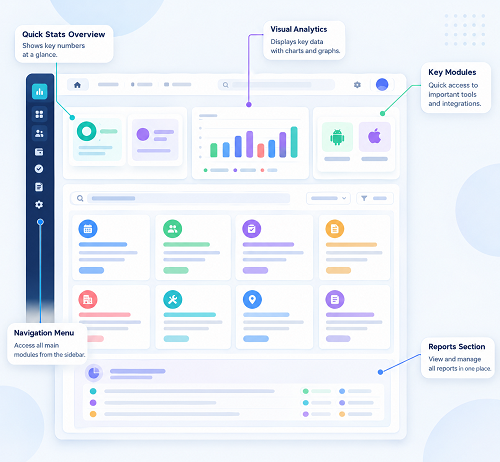
1. Create a Clear Employee and Production-Line Register
The first step is to establish a central employee register that identifies each operator's normal department, assigned production line and job responsibilities.
Factories should avoid relying only on employee names or ID numbers displayed on a general attendance report. Production managers need additional information to understand where employees are expected to work.
A useful employee register can include:
- Employee name and identification number.
- Department and production unit.
- Designated production line.
- Job title and operator category.
- Supervisor or team leader.
- Employment status.
- Shift eligibility.
- Relevant skills and training.
- Authorised work areas.
- Home production line and approved alternative assignments.
For example, an operator may normally work on Assembly Line A but may also be trained to support Assembly Line B during peak production.
The employee register should identify both the primary assignment and the additional lines for which the employee is authorised.
This helps supervisors allocate staff according to production requirements without losing visibility of the employee's normal department.
2. Assign Employees to Production Lines Before Each Shift
A factory should prepare a production-line staffing plan before employees begin their shifts.
The plan should identify the number of operators required for each line, the positions they will fill and the supervisor responsible for the team.
For example:
| Production area | Required operators | Assigned team |
|---|---|---|
| Assembly Line A | 12 | Team A |
| Assembly Line B | 10 | Team B |
| Packaging Line C | 8 | Team C |
| Quality Inspection | 4 | Inspection Team |
| Material Handling | 5 | Warehouse Support |
These figures are illustrative. Actual requirements depend on production volume, equipment, work methods and the skills required for each operation.
The staffing plan should be connected to the shift roster so that managers can compare the required number of operators with the employees scheduled to work.
If Assembly Line A requires 12 operators but only 10 are scheduled, the supervisor can identify the shortage before production begins.
A clear assignment process also reduces confusion when employees report to the factory but do not know which line they should join.
3. Record Attendance at the Factory Entrance
The main attendance system should capture when employees enter and leave the workplace.
Factories can use several methods to record attendance:
- Biometric attendance terminals: Employees use fingerprint or facial recognition devices to record their attendance.
- Employee ID cards: Operators scan their individual access cards at designated terminals.
- PIN-based terminals: Employees enter their unique identification numbers.
- Mobile attendance applications: Authorised employees use mobile devices to record attendance where the work arrangement permits.
- Integrated access-control systems: Attendance records are linked with authorised entry and exit events.
The selected method should provide a reliable timestamp and identify the employee correctly.
However, factory entrance attendance alone does not establish which production line an operator has joined. A second assignment or verification process is needed to connect the employee's attendance with the correct work area.
Factories should also establish procedures for terminal failures, forgotten cards and missed punches. Manual corrections should be approved and preserve an audit trail.
4. Capture Production-Line Check-In Separately
After recording attendance at the factory entrance, operators can confirm their assigned production line through a separate check-in process.
This creates two useful records:
- Factory attendance: when the employee reports to and leaves the workplace.
- Production-line assignment: which line or work area the employee is assigned to during a particular period.
For example, an employee may clock in at 7:55 a.m. and then confirm an assignment to Packaging Line C at 8:02 a.m.
The system can display the employee as present at the factory and assigned to Packaging Line C.
Production-line verification can be implemented using:
- Line-specific RFID readers.
- Employee ID card scanners.
- QR codes displayed at authorised work areas.
- Fixed biometric terminals, where appropriate.
- Supervisor-confirmed digital assignments.
- Integrated workforce management applications.
A line check-in should not automatically replace the official attendance record. It is an additional operational record that helps managers understand employee deployment.
For factories with multiple workstations, the system may record a workstation or production-zone assignment rather than requiring employees to scan at every machine.
The verification method should be practical and should not create unnecessary queues or interrupt production activities.
5. Link Attendance With Production-Line Staffing Requirements
The main benefit of line-based attendance is the ability to compare actual employee availability with the staffing required for production.
A factory may have enough employees present overall but still experience shortages on particular lines.
For example, 100 operators may be present at the factory, but only 18 may be assigned to a production area that requires 24 employees.
A line-level dashboard can show:
| Production line | Required operators | Assigned operators | Staffing position |
|---|---|---|---|
| Assembly Line A | 20 | 20 | Covered |
| Assembly Line B | 16 | 14 | Short by 2 |
| Packaging Line C | 12 | 13 | 1 additional operator |
| Inspection Line D | 8 | 7 | Short by 1 |
This information allows production managers to identify shortages before they affect the production schedule.
Supervisors can then review whether trained employees are available for reassignment or whether the production plan needs adjustment.
Staffing requirements should be based on actual production needs, not simply on the number of employees available.
6. Track Transfers Between Production Lines
Operators may move between production lines during a shift because of machine breakdowns, workload changes, employee absences or urgent production requirements.
A factory should record these movements rather than leaving the employee permanently assigned to the original line.
For example, an operator may work on Assembly Line A from 8:00 a.m. to 11:00 a.m. and then transfer to Assembly Line B from 11:00 a.m. until the end of the shift.
The assignment history should record:
- Employee ID.
- Original production line.
- New production line.
- Transfer date.
- Transfer start time.
- Transfer end time, where applicable.
- Reason for the transfer.
- Authorising supervisor.
A sample record might look like this:
| Time | Employee assignment | Status |
|---|---|---|
| 8:00 a.m. | Assembly Line A | Started |
| 11:00 a.m. | Assembly Line A | Assignment ended |
| 11:00 a.m. | Assembly Line B | New assignment started |
| 4:00 p.m. | Assembly Line B | Assignment completed |
This provides a history of where the employee was assigned throughout the working day.
It also helps managers identify which production areas received temporary support and whether staffing changes were authorised.
7. Manage Attendance Across Multiple Shifts
Factories may operate morning, evening and night shifts to maintain continuous production.
Line-based attendance should therefore support different shift schedules and employees assigned to different production areas.
A typical shift arrangement may include:
| Shift | Example timing | Production coverage |
|---|---|---|
| Morning shift | 6:00 a.m.–2:00 p.m. | Day production team |
| Evening shift | 2:00 p.m.–10:00 p.m. | Second production team |
| Night shift | 10:00 p.m.–6:00 a.m. | Overnight production team |
These are illustrative schedules, not prescribed standard shifts.
The system should identify the correct shift when employees clock in, especially when a night shift crosses midnight.
Factories should avoid treating the date change at midnight as the end of the employee's working period. Attendance records should preserve the actual start and end timestamps and associate them with the correct scheduled shift.
Managers should also check that shift changes, handovers, breaks and weekly rest days are recorded consistently.
This is particularly important when employees move from one shift to another or temporarily support a different production line.
8. Record Actual Working Hours and Break Periods
Production-line attendance should be connected to accurate working-time records.
A factory should maintain the actual clock-in and clock-out times for each employee, along with relevant rest periods and approved additional work.
A useful record includes:
- Scheduled shift start and end.
- Actual clock-in time.
- Actual clock-out time.
- Break periods.
- Production-line assignment periods.
- Approved overtime.
- Holiday work.
- Missed punches and corrections.
Under Section 23 of Thailand's Labour Protection Act B.E. 2541 (1998), normal working time for general work is generally limited to eight hours per day and 48 hours per week. Certain work prescribed as potentially harmful to health and safety has lower limits.
Section 24 generally requires prior employee consent for overtime on a normal working day on each occasion, subject to statutory exceptions.
Section 27 generally requires at least one hour of rest per working day after no more than five consecutive hours of work, subject to the statutory rules on agreed rest-period arrangements. Section 28 generally requires at least one weekly holiday, with no more than six days between weekly holidays.
Factories should ensure that attendance software records actual working time rather than simply copying scheduled hours into payroll.
A production-line transfer does not automatically create a new working day or reset the employee's working-hour calculation. Total working time should be assessed across the employee's actual work periods.
9. Distinguish Attendance From Production Output
An important point is that attendance records and production records serve different purposes.
Attendance answers questions such as:
- Did the employee report for work?
- When did the employee start and finish?
- Which production line was assigned?
- Was the employee transferred during the shift?
- Were additional hours approved?
Production records answer different questions:
- How many units were produced?
- How many products passed quality inspection?
- How many units were rejected?
- How long was a machine operating?
- Was the production target achieved?
Factories should avoid assuming that an operator's attendance at a production line proves that the employee personally completed a particular quantity of work.
Production output may depend on machine availability, raw materials, product complexity, team operations and other factors.
Where managers need to analyse productivity, attendance data can be combined with production records. However, the two datasets should remain identifiable so that operational performance is not incorrectly attributed to individual employees.
10. Use Line Supervisors to Verify Daily Assignments
Line supervisors play an important role in confirming that the planned workforce matches the employees who actually report to each production area.
A supervisor should review the line staffing dashboard at the beginning of the shift and identify:
- Employees who have reported.
- Employees who are absent or late.
- Operators assigned to the wrong line.
- Temporary replacements.
- Employees awaiting work-area allocation.
- Employees who require additional training or authorisation.
Supervisors should also approve assignment changes when operators move between lines.
A digital approval process can reduce reliance on paper forms and informal verbal instructions.
For example, if an operator is moved from Packaging Line C to Inspection Line D, the supervisor can update the assignment through the workforce management system.
The system should record who approved the change and when it became effective.
This helps HR and production management resolve discrepancies between the planned roster and actual line deployment.
11. Handle Absences and Staffing Shortages by Production Line
Absence management is especially important when a production line requires a minimum number of trained operators.
A single absence may have a greater operational impact on one line than another.
Factories should therefore review absences at both the employee and production-line levels.
A useful process includes:
- Identify employees who have not reported by the scheduled start time.
- Confirm whether the absence is authorised or unexplained.
- Check whether the affected line can operate with the available team.
- Identify trained employees who may be reassigned.
- Obtain the required approval for the reassignment.
- Update the production-line staffing record.
- Record any resulting overtime or schedule changes.
For example, if two trained operators are absent from a specialised assembly line, the supervisor may request support from another line.
However, employees should only be reassigned to tasks for which they are appropriately trained and authorised.
Attendance software can help managers identify shortages quickly, but decisions about whether a line can safely continue operating should remain with authorised production and safety personnel.
12. Integrate Attendance With Production Planning and HR Systems
Factories often use separate systems for attendance, production planning, quality control, inventory and payroll.
Connecting these systems can improve workforce visibility and reduce duplicate data entry.
Useful integrations include:
- HR management system: Provides employee details, departments, job roles and employment status.
- Production planning system: Shows planned production volumes and staffing requirements.
- Manufacturing Execution System (MES): Provides production orders, line information, work-centre status and operational events.
- Access-control system: Records authorised entry and exit events.
- Payroll system: Receives verified working hours, overtime and holiday work information.
- Training and skills database: Helps confirm whether an employee is authorised for a particular production line or task.
For example, when production planning increases the target for a particular line, workforce planning can review whether additional operators are needed.
Attendance information can then show whether the scheduled employees actually reported for the shift.
The integration should not automatically assume that every employee recorded near a machine is operating it. Work assignments should be supported by reliable employee and supervisor records.
13. Use Real-Time Dashboards to Monitor Line Attendance
A central dashboard can help production managers and HR teams monitor staffing across multiple lines.
Useful dashboard information includes:
- Total employees scheduled.
- Employees present at the factory.
- Employees assigned to each production line.
- Employees who have not reported.
- Employees awaiting assignment.
- Temporary transfers.
- Current staffing shortages.
- Approved overtime.
- Shift coverage.
- Attendance exceptions.
A dashboard can use simple status indicators:
| Status | Meaning |
|---|---|
| Present and assigned | Employee has reported and has a confirmed line assignment |
| Present, not assigned | Employee has reported but does not yet have a production-line assignment |
| Absent | Employee has not reported as scheduled |
| Late | Employee reported after the scheduled start time |
| Transferred | Employee has moved to another approved line |
| On approved leave | Employee has an authorised absence |
| Attendance exception | A clock-in, clock-out or assignment record requires review |
These statuses help supervisors identify operational problems without reviewing individual paper registers.
Factories with multiple production buildings or geographically separated work areas may also use zone-based dashboards.
14. Protect Employee Data When Using Digital Attendance
Digital attendance systems may collect employee names, identification numbers, timestamps, access records, location information and biometric data.
Factories in Thailand should consider their obligations under the Personal Data Protection Act (PDPA).
Practical safeguards include:
- Purpose limitation: Explain that attendance data is collected for workforce administration, working-time records, access management or other defined purposes.
- Data minimisation: Collect only the information required for the stated purpose. Continuous employee location tracking may be unnecessary when a line-specific check-in is sufficient.
- Access restrictions: Limit detailed attendance and assignment records to authorised HR, payroll, production and supervisory personnel.
- Biometric safeguards: Fingerprint and facial recognition data used to uniquely identify an individual are sensitive personal data under Section 26 of the PDPA. Factories should assess the appropriate legal basis and safeguards before introducing biometric attendance.
- Retention controls: Establish suitable retention periods for attendance and assignment records.
- Vendor security: Review how attendance software providers store, process and protect employee information.
- Audit trails: Record authorised changes to employee assignments and attendance information.
Employee attendance systems should provide operational visibility without turning routine attendance management into unnecessary continuous surveillance.
15. Maintain Working-Time and Wage Records
Factories should ensure that attendance information can support payroll processing and statutory recordkeeping.
Under Sections 112–115 of the Labour Protection Act, employers with 10 or more employees have specific employee-record and wage-document obligations.
Section 114 requires documents relating to wages, overtime pay, holiday pay and holiday overtime pay to include working days and working time, along with applicable payment details.
Section 115 generally requires employee records to be retained for at least two years from termination of employment and wage-related payment documents for at least two years from the date of payment. Where a relevant complaint, labour dispute or legal proceeding exists, the records must be retained until the matter is finally resolved.
Factories should therefore maintain records that allow them to trace:
- Employee attendance.
- Scheduled and actual working hours.
- Production-line assignments.
- Approved transfers.
- Overtime and holiday work.
- Attendance corrections.
- Payroll calculations and payments.
For employers with 10 or more employees, Section 108 also requires work rules in Thai covering matters such as working days, normal working hours, rest periods, holidays, overtime, holiday work and leave.
Production-line assignments are useful operational records, but they should complement rather than replace the required employee and wage records.
16. Evaluate Attendance Software for Production-Line Tracking
A suitable attendance system should support the operational structure of the factory rather than only record entrance and exit times.
When evaluating software, manufacturers should consider the following capabilities:
| Software feature | Operational benefit |
|---|---|
| Employee and department database | Identifies employees and their normal work areas |
| Production-line assignment | Connects attendance with specific production lines |
| Multiple work-area check-ins | Records approved attendance verification at different areas |
| Shift scheduling | Supports morning, evening and night shifts |
| Transfer management | Records movement between lines and departments |
| Real-time staffing dashboard | Shows staffing coverage by production area |
| Skills-based assignment | Helps allocate appropriately trained operators |
| Overtime approval | Records additional working time and approvals |
| Attendance correction workflow | Manages missed punches and inaccurate records |
| Payroll integration | Transfers verified working hours for salary processing |
| Audit trail | Preserves assignment changes and approvals |
| Reporting | Compares planned staffing with actual attendance |
Factories should also test whether the system can handle temporary production lines, changing work orders, multiple buildings and shift handovers.
A pilot on one or two production lines can help identify practical issues before the system is introduced throughout the facility.
17. Monitor Useful Production-Line Attendance KPIs
Once attendance and line assignments are recorded consistently, managers can use reports to improve workforce planning.
Useful indicators include:
| KPI | What it helps managers understand |
|---|---|
| Line attendance rate | Percentage of scheduled operators who reported |
| Staffing coverage | Whether each line has the required number of operators |
| Late arrival rate | Frequency of late reporting |
| Absenteeism rate | Employee absence patterns |
| Unassigned employee count | Employees present but awaiting line allocation |
| Transfer frequency | How often employees move between production lines |
| Overtime hours by line | Additional working time used by each production area |
| Missed-punch rate | Frequency of incomplete attendance records |
| Shift coverage rate | Whether scheduled staffing is available throughout the shift |
| Attendance correction rate | Frequency of records requiring manual adjustment |
Managers should interpret these indicators carefully.
For example, a high transfer frequency may indicate that production demand changes frequently, that staffing forecasts need improvement or that particular lines experience recurring shortages.
It should not automatically be treated as poor employee performance.
Similarly, attendance rate alone does not show whether a production line is operating efficiently. It should be reviewed alongside production output, quality, machine availability and safety information.
Conclusion
Tracking operator attendance by production line helps Thailand factories move beyond basic entrance and exit records. It provides a clearer understanding of which employees are present, where they are assigned and whether each production area has sufficient workforce coverage.
The most effective approach combines central attendance recording, line-specific assignments, shift scheduling, supervisor verification and a controlled process for employee transfers.
When connected with production planning, HR and payroll systems, attendance information can help factories identify staffing shortages earlier, improve workforce allocation and maintain more accurate working-time records.
However, factories should keep attendance, production output and machine activity as distinct records. They should also protect employee information, maintain appropriate rest and overtime arrangements and ensure that only trained and authorised employees are assigned to specialised production tasks.
With suitable attendance software and consistent operating procedures, manufacturers can improve production-line visibility while supporting fair and transparent workforce management.
Production supervisors need to see whether each line has enough operators on duty. InnBuilt Attendance Software can help Thailand factories compare assigned teams with shift check-ins by production line.