How Can Thailand Clinics Coordinate Practitioners Across Multiple Locations?
How Can Thailand Clinics Coordinate Practitioners Across Multiple Locations?
Introduction
Clinics in Thailand that operate across multiple branches must coordinate practitioners, appointments, patient records, equipment, and daily operations across different locations. A clinic group may have doctors, nurses, dentists, physiotherapists, pharmacists, and other healthcare professionals working at several branches, sometimes on different days or shifts.
Without a coordinated system, clinics can experience double-booked practitioners, uneven appointment availability, delayed patient care, incomplete handovers, and confusion about where practitioners are expected to work. These problems become more challenging when specialists visit certain branches only on selected days or when patients need follow-up care at a different location.
Effective multi-location coordination requires a centralised scheduling process, clear practitioner assignments, reliable communication, and secure access to relevant patient information. Workforce management and clinic management software can help administrators manage these activities while allowing each branch to maintain its own operational responsibilities.
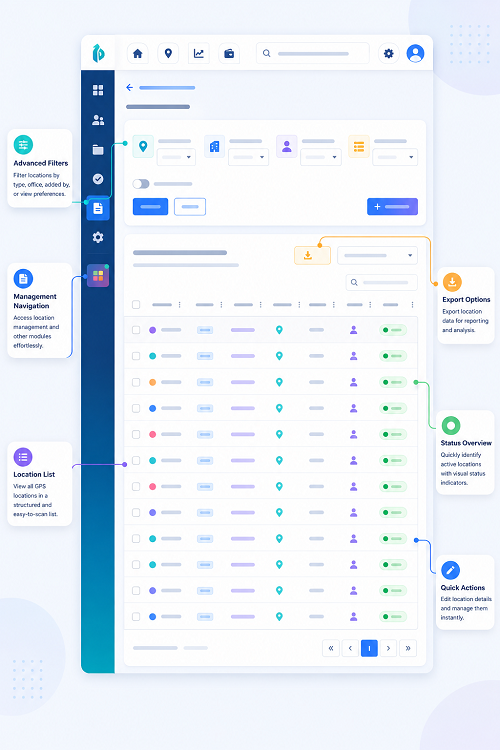
1. Create a Central Register of Practitioners and Clinic Locations
The first step is to maintain a central register of practitioners and the locations where they are authorised and scheduled to provide services.
The register should contain relevant information such as:
- Practitioner name and employee or professional identification number
- Professional qualification and registration details
- Clinical speciality and areas of practice
- Primary clinic location
- Approved secondary locations
- Regular working days and hours
- Availability for additional sessions
- Department or service assignment
- Relevant training and competency information
- Contact details and reporting manager
Clinics should also maintain a location register containing branch addresses, operating hours, available consultation rooms, treatment facilities, equipment, and services offered.
For example, a clinic group may have five branches, but only two may have the equipment and facilities required for a particular specialist service. The scheduling system should identify these restrictions before assigning a practitioner.
A central register reduces the risk of assigning practitioners to unsuitable locations or relying on outdated availability information.
2. Standardise Practitioner Scheduling Across Branches
Each branch may have different appointment volumes, opening hours, and service requirements. A central scheduling process helps administrators coordinate these differences.
A practitioner schedule should identify:
- Working date
- Clinic location
- Start and finish times
- Consultation or treatment sessions
- Break periods
- Appointment capacity
- Assigned department
- Travel time between branches, where relevant
- Leave and other unavailability
- Responsible branch coordinator
For example, a specialist may work at Branch A on Monday and Wednesday, Branch B on Tuesday, and Branch C on Friday. The schedule should clearly show these assignments so that administrators at all branches can view the same confirmed availability.
A centralised schedule also helps prevent two branches from booking the same practitioner for overlapping sessions.
3. Match Practitioners to Each Branch's Service Requirements
Not every practitioner can provide every service at every location. Clinics should match practitioner availability with the services, facilities, and equipment available at each branch.
For example:
| Clinic service | Practitioner requirement | Location consideration |
|---|---|---|
| General consultation | Qualified general practitioner | Suitable consultation room |
| Dental treatment | Registered dental practitioner | Dental chair and equipment |
| Physiotherapy | Qualified physiotherapist | Appropriate treatment space and equipment |
| Dermatology consultation | Appropriately qualified specialist | Required examination facilities |
| Diagnostic services | Relevant qualified personnel | Approved equipment and procedures |
| Nursing services | Qualified nursing personnel | Department and patient-care requirements |
The scheduling system should identify these requirements before confirming a practitioner assignment.
Clinics should also verify that practitioners meet applicable professional registration, scope-of-practice, and facility requirements. A practitioner's availability alone does not establish that the person is suitable or authorised to provide a particular service at a particular location.
4. Use a Shared Calendar for Multi-Location Appointments
A shared calendar provides administrators with a consolidated view of practitioner availability across all branches.
Instead of maintaining separate spreadsheets for each clinic, the group can use a central calendar that shows:
- Confirmed working sessions
- Available consultation slots
- Booked appointments
- Leave and unavailable periods
- Specialist visiting schedules
- Temporary schedule changes
- Reserved emergency or follow-up capacity
Colour-coded location labels can help administrators distinguish between branches.
For example, a doctor scheduled at a clinic in Bangkok should not appear available at another branch during the same period unless sufficient travel time and a valid schedule arrangement have been considered.
The calendar should also distinguish between a practitioner's general working hours and actual appointment availability. A practitioner may be working at a branch but have time reserved for administrative work, clinical meetings, or other responsibilities.
5. Prevent Double-Booking and Scheduling Conflicts
Double-booking can occur when branches maintain separate appointment systems or update practitioner availability without communicating with other locations.
A central scheduling system should check for conflicts before confirming appointments.
Important controls include:
- One shared practitioner availability record.
- Automatic conflict detection.
- Location-specific working schedules.
- Minimum travel-time buffers.
- Appointment duration rules.
- Break and administrative-time blocks.
- Leave and absence synchronisation.
- Approval for schedule changes.
- Notifications when a booking is moved or cancelled.
For example, if a practitioner has a consultation scheduled at Branch A until 11:00 AM, the system should not allow another branch to confirm an appointment at 11:00 AM if travel between the locations makes that appointment impractical.
Administrators should also establish rules for urgent appointments and emergency clinical requirements so that exceptions are handled by authorised personnel rather than informal calendar changes.
6. Plan Travel Time Between Clinic Locations
Practitioners who work across multiple branches may need to travel between locations during the same day.
A realistic schedule must account for travel time rather than treating the end of one appointment session as the immediate start of another.
Clinics should consider:
- Distance between branches
- Typical traffic conditions
- Appointment finishing times
- Parking and check-in requirements
- Equipment or document transfers
- The practitioner's availability for travel
- Patient appointments already confirmed
For example, a doctor may finish a morning session at one branch and begin an afternoon session at another. The clinic should allow sufficient time for travel and preparation before confirming appointments at the second location.
Where travel is frequent, clinics may benefit from assigning practitioners to geographical clusters of branches. This can reduce unnecessary travel and make schedules more predictable.
Travel arrangements should also be documented where they affect working hours, expense reimbursement, or employment policies.
7. Coordinate Patient Appointments Across Branches
Patients may prefer a particular clinic because of its location, appointment availability, or specialist services. A multi-location appointment system should allow authorised staff to identify suitable appointment options across the network.
The system can support:
- Branch-specific appointment availability.
- Practitioner-based appointment searches.
- Appointment transfers between branches.
- Follow-up scheduling.
- Specialist referral appointments.
- Cancellation and rescheduling notifications.
- Patient reminders.
- Waiting-list management.
For example, if a patient needs a follow-up consultation but the preferred branch has no available appointment, an administrator may check whether the same practitioner is scheduled at another suitable branch.
Before transferring an appointment, the clinic should verify that the alternative location provides the required service and has access to relevant clinical information.
Patients should be informed of the new location, appointment time, and any preparation requirements.
8. Maintain Consistent Patient Records Across Locations
One of the most important requirements for multi-location clinics is maintaining accurate and accessible patient records.
When a patient visits different branches, authorised practitioners may need access to relevant medical history, previous consultation notes, treatment plans, medication information, investigation results, and follow-up instructions.
A central electronic medical record system can help authorised users access the information needed for continuity of care.
Important capabilities include:
- A consistent patient identification process.
- Centralised medical history.
- Previous consultation records.
- Medication and allergy information.
- Investigation and diagnostic results.
- Treatment plans and follow-up instructions.
- Referral information.
- Clinical notes and attachments.
- Record access logs.
Clinics should avoid creating separate patient records at every branch without a reliable process for identifying and reconciling duplicates.
Access should be limited according to professional responsibilities and legitimate care requirements. A practitioner should not automatically receive unrestricted access to every patient record simply because they work within the same clinic group.
9. Establish a Clinical Handover Process Between Practitioners
When patients receive care from different practitioners or visit different branches, a clear handover process helps maintain continuity.
A handover may be required when:
- A practitioner is unavailable for a follow-up appointment.
- A patient transfers to another branch.
- A specialist reviews a patient initially seen by a general practitioner.
- A patient requires ongoing treatment.
- A practitioner leaves the clinic group.
- A patient needs urgent review by another clinician.
The handover should contain relevant information, such as:
- Patient identification.
- Reason for consultation or referral.
- Relevant medical history.
- Current clinical findings.
- Diagnosis or working assessment, where applicable.
- Treatment already provided.
- Medication and allergy information.
- Pending investigations.
- Follow-up requirements.
- Clinical concerns and escalation instructions.
Handover information should be communicated through approved clinical systems. General messaging groups or informal conversations should not replace the clinic's official patient-record process.
The receiving practitioner should review the information and determine whether additional assessment is necessary.
10. Manage Practitioner Leave and Unexpected Absences
Unexpected illness, annual leave, training, and personal commitments can affect practitioner availability across multiple branches.
Clinics should maintain a process for identifying affected appointments and arranging suitable alternatives.
A practical absence-management process includes:
- Record the practitioner's absence in the central system.
- Identify affected branches and consultation sessions.
- Review confirmed patient appointments.
- Identify suitable replacement practitioners.
- Verify qualifications, scope of practice, and location suitability.
- Confirm the replacement schedule.
- Notify affected patients and branch administrators.
- Update appointment and attendance records.
- Record unresolved appointments requiring follow-up.
For example, if a specialist becomes unavailable on a scheduled clinic day, the coordinator may check whether another appropriately qualified practitioner can cover the session or whether patients should be rescheduled.
Clinics should avoid automatically assigning any available practitioner to a vacant session. Clinical suitability and continuity of care must remain the priority.
11. Coordinate Nurses and Support Staff Alongside Practitioners
Multi-location scheduling should cover more than doctors and specialists. Consultation sessions often depend on nurses, receptionists, technicians, assistants, and other support personnel.
A practitioner may be available, but the clinic may still be unable to operate the session effectively if the required support staff or facilities are unavailable.
Managers should coordinate:
- Nursing coverage.
- Reception and registration staff.
- Treatment assistants.
- Laboratory or diagnostic personnel.
- Pharmacy support, where applicable.
- Cleaning and room preparation.
- Equipment availability.
- Administrative support.
For example, a specialist consultation session may require a nurse to prepare patients, assist with clinical procedures, and coordinate follow-up instructions. The schedule should account for these staffing requirements.
A branch-level staffing dashboard can show whether each confirmed practitioner session has the necessary operational support.
12. Use a Central Dashboard to Monitor All Locations
A central dashboard helps clinic administrators and managers monitor operations across branches.
Useful dashboard information includes:
| Dashboard indicator | Management purpose |
|---|---|
| Practitioners scheduled by branch | Shows planned clinical coverage |
| Practitioners currently on duty | Helps confirm actual availability |
| Appointment utilisation | Measures use of available consultation capacity |
| Unfilled consultation sessions | Identifies gaps in the schedule |
| Practitioner absences | Highlights affected sessions |
| Appointment cancellations | Helps monitor service disruption |
| Patient waiting times | Identifies potential scheduling problems |
| Branch staffing levels | Shows availability of supporting employees |
| Room and equipment availability | Helps prevent facility-related conflicts |
| Outstanding follow-ups | Supports continuity of care |
Managers should be able to filter the dashboard by location, department, practitioner, date, and service type.
However, performance indicators should be interpreted carefully. A high appointment count does not necessarily indicate better clinical performance. Consultation complexity, patient needs, and service quality should also be considered.
13. Connect Practitioner Scheduling With Clinic Management Software
Managing multiple locations through separate spreadsheets, phone calls, and messaging applications can lead to duplicated work and outdated information.
Clinic management software can provide a shared platform for scheduling and administrative coordination.
Useful features include:
Central practitioner profiles
Maintain practitioner qualifications, specialities, availability, and location assignments.
Multi-branch scheduling
Create and update schedules across all clinic locations.
Appointment management
Allow authorised staff to book, reschedule, and cancel appointments using shared availability information.
Conflict detection
Identify overlapping appointments, insufficient travel time, and schedule clashes.
Leave and absence management
Update practitioner availability when leave or unexpected absence is reported.
Electronic medical records
Provide authorised practitioners with access to relevant patient information.
Branch-level access controls
Allow employees to access the information required for their responsibilities.
Automated notifications
Inform practitioners, administrators, and patients about approved schedule changes.
Reporting
Provide management with information about appointment utilisation, practitioner coverage, cancellations, and branch activity.
The software should support clinical and administrative workflows without replacing professional judgement or required approvals.
14. Manage Practitioner Attendance Across Multiple Locations
Attendance records help clinic administrators confirm whether practitioners reported to their assigned locations and worked their scheduled sessions.
A central attendance system can record:
- Scheduled location and working hours.
- Actual check-in and check-out times.
- Attendance corrections.
- Approved shift or session changes.
- Leave and absence.
- Additional working hours.
- Branch transfers during the day.
- Supervisor approval.
For practitioners who work at several branches, attendance records should identify the location associated with each work session.
For example, a practitioner may work at Branch A in the morning and Branch B in the afternoon. Separate attendance events or approved location assignments can help the clinic maintain accurate working-time records.
GPS-based or location-based check-ins may be useful for certain mobile practitioners, but location information should be collected only where necessary and with appropriate privacy safeguards. A check-in confirms an attendance event; it does not prove that a consultation or treatment was completed.
Clinics should also maintain appropriate procedures for missed punches and attendance corrections.
15. Understand Thailand's Professional and Data Protection Requirements
Clinics coordinating practitioners across multiple locations should consider professional licensing, facility requirements, patient confidentiality, and employment obligations.
Professional practice and clinic locations
The Medical Council of Thailand has rules governing medical practice and the conduct of medical practitioners. Its regulations emphasise that medical practitioners should maintain appropriate standards of practice within their competence and the circumstances of the setting.
Clinics should verify applicable professional registration, scope-of-practice requirements, and any restrictions associated with the premises or services provided. The Medical Profession Act and relevant Medical Council regulations should be reviewed when arranging doctors to work across multiple locations.
Patient confidentiality
Medical practitioners have professional duties to protect confidential patient information. Clinic groups should ensure that patient records are accessed and disclosed only through appropriate channels and for legitimate purposes.
Personal Data Protection Act (PDPA)
Thailand's PDPA applies to the collection, use, and disclosure of personal data. Health information is sensitive personal data under Section 26, which establishes additional requirements and exceptions for its processing.
Clinics should consider the following safeguards:
- Provide appropriate privacy notices to patients and employees.
- Establish a lawful basis for processing personal information.
- Limit patient-record access according to professional responsibilities.
- Maintain access logs for electronic medical records.
- Use secure systems for transferring information between branches.
- Establish retention and deletion procedures.
- Review third-party software and data-processing arrangements.
- Apply appropriate safeguards to information stored or transferred outside Thailand.
- Maintain procedures for handling data breaches and requests from data subjects.
The Ministry of Public Health's published privacy guidance also emphasises collecting personal data only to the extent necessary for the relevant service and protecting the confidentiality of that information.
Employment and working-time requirements
Where practitioners and support staff are employees covered by Thailand's Labour Protection Act, clinics should review applicable provisions concerning normal working hours, overtime, rest periods, weekly holidays, and employment records. Different employment categories may be subject to different legal frameworks, so clinics should confirm the status of each worker before applying a particular set of rules.
16. Plan for Specialist Visiting Schedules
Some clinics rely on specialists who visit selected branches rather than working at every location on a full-time basis.
These arrangements require advance planning because patients may book appointments weeks ahead.
A specialist visiting schedule should identify:
- Specialist name and clinical speciality.
- Confirmed branch and visit dates.
- Consultation hours.
- Available appointment capacity.
- Required equipment and room arrangements.
- Supporting nursing and administrative staff.
- Patient booking deadlines.
- Travel arrangements.
- Cancellation and replacement procedures.
For example, a specialist may visit a provincial branch twice a month. The clinic should publish confirmed dates, open the appropriate appointment slots, and avoid accepting bookings beyond the specialist's confirmed availability.
Where visiting practitioners are employed or contracted under specific arrangements, clinics should also confirm that professional, licensing, facility, and contractual requirements are satisfied.
17. Use Telemedicine Where Appropriate
Telemedicine may help multi-location clinics coordinate consultations and follow-up services when an in-person visit is not necessary or practical.
Potential uses include:
- Follow-up consultations.
- Reviewing certain test results.
- Medication-related follow-up where clinically appropriate.
- Patient education.
- Specialist consultations.
- Coordination between local practitioners and specialists.
However, telemedicine should not be used as a universal replacement for in-person care. The practitioner should assess whether remote consultation is appropriate for the patient's condition and whether physical examination, diagnostic testing, or treatment at a clinic is required.
Clinics should establish procedures for patient identity verification, secure communication, documentation, consent where applicable, emergency escalation, and access to relevant medical records.
They should also confirm that the practitioner is permitted to provide the relevant service under applicable Thai professional requirements.
18. Measure Multi-Location Coordination Performance
Clinic managers should regularly review operational indicators to identify scheduling problems and improve service delivery.
| KPI | What it measures |
|---|---|
| Practitioner schedule utilisation | Percentage of available sessions used |
| Appointment availability | Number of suitable open appointment slots |
| Double-booking incidents | Frequency of scheduling conflicts |
| Practitioner absence rate | Frequency of unplanned practitioner absences |
| Session cancellation rate | Percentage of planned sessions cancelled |
| Patient waiting time | Time patients wait before consultation |
| Appointment rescheduling rate | Frequency of appointments moved to another time or branch |
| Cross-branch appointment rate | Patient appointments arranged at alternative branches |
| Follow-up completion rate | Percentage of required follow-ups completed |
| Practitioner travel time | Time spent travelling between branches |
| Record completion rate | Percentage of consultations with required documentation completed |
Managers should use these indicators to identify operational issues rather than treating them as a direct measure of clinical quality.
For example, low appointment utilisation may indicate poor scheduling, unsuitable opening hours, or insufficient patient demand. It does not automatically mean that a practitioner is underperforming.
Conclusion
Thailand clinics can coordinate practitioners across multiple locations more effectively by maintaining a central practitioner register, using shared scheduling tools, matching clinical skills to branch requirements, and establishing consistent patient-record and handover procedures.
A centralized system helps administrators prevent double-booking, coordinate specialist visits, manage practitioner absences, and maintain visibility into appointment availability across the clinic network. At the same time, secure patient-record access, professional requirements, and appropriate privacy controls help protect continuity of care and patient confidentiality.
By combining clear operational procedures with clinic management and workforce scheduling software, multi-location clinics can make better use of practitioner availability, reduce administrative delays, and provide a more consistent patient experience across their branches.
Practitioners working across clinics need schedules that show both time and location. InnBuilt Shift Management can help Thailand managers review branch assignments, changes and attendance.