How Can Thailand Managers Handle Overlapping Leave Requests During Peak Season?
How Can Thailand Managers Handle Overlapping Leave Requests During Peak Season?
Introduction
Peak seasons often create difficult scheduling decisions for managers in Thailand. During periods such as Songkran, year-end holidays, major sales campaigns, tourism peaks and manufacturing deadlines, several employees may request leave for the same dates. While employees want time off to manage personal commitments, businesses must maintain sufficient staffing to serve customers, meet production targets and complete essential operations.
Overlapping leave requests can create problems when too many employees from the same department are absent simultaneously. Managers may face understaffed shifts, delayed projects, increased workloads for remaining employees and unexpected overtime costs. If leave decisions are inconsistent or poorly communicated, employees may also feel that the approval process is unfair.
Thailand employers should manage these situations through a clear leave policy, transparent approval criteria, accurate leave balances and advance workforce planning. They must also distinguish annual leave from statutory entitlements such as sick leave and other legally protected leave categories.
Under Section 30 of Thailand's Labour Protection Act B.E. 2541 (1998), employees who have completed one uninterrupted year of service are generally entitled to at least six working days of annual holiday per year. The employer must fix annual holidays in advance or as agreed between the employer and employee. Employers may provide more generous annual leave benefits under company policies or employment agreements.
This article explains how Thailand managers can handle overlapping leave requests during peak season while maintaining operational continuity, applying consistent approval procedures and respecting employee rights.
1. Identify Peak Seasons Before Employees Submit Leave Requests
The first step is to identify periods when employee availability is especially important. Managers should not wait until several leave applications arrive before reviewing staffing requirements.
Different industries experience peak seasons at different times.
Examples include:
- Retail: Songkran, year-end shopping, major promotional campaigns and seasonal sales.
- Hospitality: Songkran, long weekends, school holidays and high tourist seasons.
- Manufacturing: Production deadlines, major customer orders and planned maintenance periods.
- Logistics: Year-end deliveries, promotional campaigns and periods of increased e-commerce demand.
- Professional services: Financial year-end, audit periods, tax deadlines and major client projects.
- Healthcare: Periods when patient demand or emergency service requirements increase.
Managers should review historical workload data, customer demand, production forecasts and previous leave patterns to identify likely staffing pressure.
For example, a hotel in Thailand may experience high demand during Songkran. If most front-desk and housekeeping employees request leave during the same dates, the hotel may struggle to maintain service levels.
Identifying these periods early allows managers to communicate staffing expectations and encourage employees to submit leave requests before schedules become difficult to manage.
2. Establish a Clear Annual Leave Approval Policy
A written leave policy gives managers a consistent framework for reviewing overlapping requests. Without clear rules, supervisors may approve applications based on personal preference, informal arrangements or the order in which requests happen to reach them.
The policy should explain:
- How employees submit annual leave requests.
- How far in advance requests should normally be submitted.
- Who reviews and approves applications.
- How overlapping requests are evaluated.
- Whether certain roles require minimum staffing levels.
- How urgent or exceptional requests are handled.
- How employees can request reconsideration.
- How approved leave can be changed or cancelled.
- How unused annual leave is carried forward, where permitted.
Employers should distinguish between a request deadline and an automatic entitlement rule. A deadline helps managers plan staffing, but it should not be applied in a way that overrides statutory leave rights or other legal obligations.
Employers with 10 or more employees must provide work rules in Thai under Section 108 of the Labour Protection Act. These rules must include holidays and leave arrangements, including the rules for taking leave.
Managers should therefore ensure that the company's leave approval procedure is consistent with its published work rules, employment agreements and applicable law.
3. Forecast Minimum Staffing Requirements for Each Department
Before approving multiple leave requests, managers should determine how many employees must remain available to operate each department.
A minimum staffing plan helps managers make decisions based on business requirements rather than assumptions.
For each department, consider:
- The minimum number of employees needed per shift.
- Essential roles that cannot remain uncovered.
- Employees with specialist skills or certifications.
- Expected customer or production demand.
- Existing approved leave.
- Employees assigned to temporary projects or client sites.
- Available backup employees.
- The possibility of temporary or cross-trained coverage.
For example, a customer support department may need at least six employees during a normal shift. If two employees are already scheduled for training and three additional employees request annual leave, approving all requests could reduce coverage below the required level.
Managers can use a simple staffing table to understand the impact.
| Department | Required staff | Scheduled staff | Existing leave | Additional leave capacity |
|---|---|---|---|---|
| Customer support | 12 | 12 | 2 | 0 |
| Finance | 6 | 6 | 1 | 1 |
| Warehouse | 15 | 15 | 3 | 0 |
| Administration | 8 | 8 | 1 | 2 |
The figures are illustrative. Actual leave capacity should be calculated using employee availability, shift requirements, skills and expected workload.
4. Introduce Advance Leave Planning for Peak Periods
Advance planning gives employees an opportunity to request leave before managers finalise staffing arrangements.
For known peak seasons, employers can introduce a special planning window. For example, a company may ask employees to submit planned annual leave requests for Songkran several weeks or months in advance.
A practical process includes:
- Announcing the peak-season planning period.
- Publishing expected high-demand dates.
- Asking employees to submit preferred leave dates.
- Reviewing requests by department and shift.
- Identifying overlapping applications.
- Discussing alternative dates with affected employees.
- Publishing preliminary decisions.
- Confirming the final schedule.
Advance planning is particularly useful for businesses with large teams, rotating shifts or multiple branches.
However, employers should avoid treating the planning window as a reason to disregard later requests automatically. Genuine emergencies and statutory leave requirements must be assessed separately.
5. Use Transparent Criteria to Evaluate Overlapping Requests
When several employees request the same dates, managers need a consistent method for deciding which requests can be approved.
A fair process should consider operational requirements and employee circumstances without relying on personal relationships or arbitrary preferences.
Possible criteria include:
Minimum staffing requirements: Determine whether approving the request would leave the department below its required staffing level.
Role coverage: Check whether the employee performs a specialist or essential function that cannot easily be reassigned.
Previously approved leave: Avoid creating conflicts with leave that has already been confirmed.
Alternative coverage: Consider whether another trained employee can cover the role.
Previous peak-season leave opportunities: Review whether employees have repeatedly been unable to take leave during popular periods.
Employee flexibility: Where appropriate, consider whether an employee can accept alternative dates.
Relevant company policy: Apply the same published approval criteria to employees in comparable situations.
Managers should avoid automatically prioritising senior employees, personal favourites or employees who make the most frequent requests. If the company uses a first-come-first-served system, it should explain how submission time is recorded and how exceptions are handled.
A balanced approach may combine operational requirements with a fair rotation system for highly contested periods.
6. Apply a Fair Rotation System for Popular Leave Dates
Some periods attract repeated leave requests every year. Songkran, New Year and long holiday weekends are common examples.
A rotation system can prevent the same employees from receiving priority every year.
For example, a department may divide employees into two groups:
- Group A receives priority consideration for Songkran leave in one year.
- Group B receives priority consideration the following year.
The arrangement can be reversed in subsequent years, subject to staffing requirements and employee circumstances.
A rotation system should not guarantee approval regardless of operational needs. Instead, it provides a fair starting point when several employees request the same popular dates.
Managers should maintain records of previous peak-season approvals so that they can assess whether employees have had reasonably balanced opportunities.
7. Separate Annual Leave Requests From Statutory Leave Entitlements
One of the most important responsibilities of managers is to distinguish annual leave requests from other forms of leave.
Not every absence should be handled through the same approval process.
Annual leave
Section 30 of the Labour Protection Act provides that employees who have worked continuously for one year are entitled to at least six working days of annual holiday per year. The employer must fix the dates in advance or as agreed between the employer and employee.
Employers may provide more generous annual leave benefits. They may also set pro-rata annual holiday arrangements for employees who have not completed one year of service.
Sick leave
Under Section 32, employees are entitled to sick leave when they are actually sick. For sick leave of three days or more, the employer may require a medical certificate from a first-class physician or an official medical establishment. If the employee cannot provide the certificate, the employee must explain the reason.
Section 57 generally requires employers to pay wages for sick leave up to 30 working days per year.
Managers should not treat genuine sick leave as an ordinary annual leave request simply because the business is experiencing peak demand.
Necessary business leave
Section 34 provides an entitlement to necessary business leave in accordance with the applicable workplace rules. Employers should follow their established policy and applicable legal requirements when reviewing these requests.
Other statutory leave
Other categories, including maternity-related leave, sterilisation leave, military service leave and training or development leave, have their own legal provisions and conditions.
Managers should refer to the applicable legal provisions and company policy rather than applying annual leave approval limits to every absence category.
A leave management system should maintain separate categories so that statutory entitlements are not incorrectly deducted from annual leave balances.
8. Communicate Alternative Dates When Requests Cannot All Be Approved
When multiple employees request the same dates, managers may need to discuss alternatives with some employees.
Instead of simply rejecting an application, managers should explain the staffing conflict and explore practical alternatives.
Possible solutions include:
- Approving a shorter leave period.
- Moving the leave start or end date.
- Splitting the requested leave into two periods.
- Offering an alternative week.
- Allowing a different shift arrangement where appropriate.
- Checking whether another trained employee can provide coverage.
For example, if five employees request the same five working days but the department can release only two employees at a time, the manager could discuss staggered leave periods with the affected employees.
The discussion should be respectful and consistent. Managers should avoid pressuring employees to withdraw valid requests without considering their circumstances.
All agreed changes should be recorded in the HR system to prevent later disputes about approved dates.
9. Cross-Train Employees to Improve Leave Coverage
Cross-training is an effective way to reduce dependence on a small number of employees during peak seasons.
When only one employee knows how to perform a critical task, approving that employee's leave may create a serious operational problem.
Managers should identify roles that require backup coverage and train suitable employees before the peak season begins.
Examples include:
- Training another finance employee to handle routine payment processing.
- Preparing backup customer support agents for common customer enquiries.
- Training warehouse employees to operate more than one workstation.
- Developing secondary approvers for routine operational decisions.
- Training supervisors to manage essential attendance and scheduling activities.
Cross-training should be planned in advance rather than introduced suddenly after leave applications have been submitted.
Employers should also ensure that employees receive the appropriate training, access permissions and supervision before being assigned additional responsibilities.
10. Use Shift Swaps and Flexible Scheduling Carefully
Shift swaps can help managers accommodate overlapping leave requests without reducing total staffing coverage.
For example, an employee who wants to take leave on a Friday may be able to exchange an assigned shift with a trained colleague who is available to work that day.
However, shift swaps should be formally approved and recorded.
Managers should check:
- Whether both employees agree to the change.
- Whether the replacement employee has the required skills.
- Whether the new schedule creates overtime.
- Whether working-hour and rest-period requirements are satisfied.
- Whether weekly rest days are maintained.
- Whether payroll and attendance records are updated.
Under Sections 23, 27 and 28 of the Labour Protection Act, employers must generally observe applicable normal working-hour limits, daily rest periods and weekly rest-day requirements.
A shift swap should not be used to create excessive working hours or avoid statutory rest requirements.
11. Create a Peak-Season Leave Approval Timeline
A structured approval timeline helps managers review overlapping applications before the business reaches its busiest period.
A sample process is shown below.
| Planning stage | Suggested timing | Manager's responsibility |
|---|---|---|
| Peak-season identification | 8–12 weeks before | Identify high-demand dates |
| Leave request announcement | 6–10 weeks before | Communicate submission deadlines |
| Employee submissions | 4–8 weeks before | Collect leave requests |
| Staffing review | 3–6 weeks before | Identify overlapping requests |
| Alternative-date discussions | 2–4 weeks before | Resolve scheduling conflicts |
| Final approval | 2–3 weeks before | Confirm leave decisions |
| Coverage confirmation | 1 week before | Check backup staffing |
| Peak-season monitoring | During peak period | Manage unexpected absences |
This is an example planning schedule rather than a statutory deadline. Employers should adapt it to their operational requirements and existing leave policy.
For businesses with predictable seasonal demand, the same planning cycle can be repeated every year.
12. Maintain Accurate Leave Balances and Employee Records
Managers cannot make reliable leave decisions without accurate information about employee entitlements and previously approved absences.
HR should maintain records showing:
- Employee name and department.
- Employment start date.
- Annual leave entitlement.
- Leave accrued or allocated under company policy.
- Leave already taken.
- Approved future leave.
- Remaining balance.
- Carried-forward leave, where permitted.
- Pending requests.
- Leave adjustments and approval history.
Section 30 permits employers and employees to agree in advance to accumulate and postpone unused annual holidays for use in subsequent years. Employers should document applicable carry-forward arrangements and apply their policy consistently.
Leave balances should also be reconciled before approving large blocks of leave. This prevents employees from being approved for more leave than they have available under the applicable policy.
Accurate records help managers avoid duplicate approvals and provide a clear basis for resolving employee queries.
13. Use Leave Management Software to Detect Scheduling Conflicts
Manual leave management can become difficult when several departments receive applications for the same dates.
Leave management software can help managers identify overlapping requests and understand their effect on staffing levels.
Useful features include:
| Software feature | Benefit during peak season |
|---|---|
| Central leave calendar | Displays employee absences across departments |
| Overlap alerts | Identifies multiple requests for the same dates |
| Department-level views | Shows staffing availability by team |
| Leave balance tracking | Displays available annual leave |
| Approval workflows | Routes requests to the appropriate manager |
| Minimum staffing rules | Flags possible coverage shortages |
| Employee self-service | Allows employees to submit and track requests |
| Alternative-date management | Helps managers record revised leave dates |
| Approval history | Maintains a record of decisions |
| Payroll integration | Transfers approved leave information for payroll processing |
Before implementing the system, employers should configure leave categories, approval levels, employee groups, work schedules and minimum staffing rules.
The system should also allow managers to distinguish pending applications from approved leave. Otherwise, they may make staffing decisions using incomplete information.
Automated approval should be used carefully. A system can flag scheduling conflicts, but managers may still need to consider employee circumstances, legal entitlements and operational requirements.
14. Protect Employee Privacy When Reviewing Leave Requests
Leave applications can contain sensitive personal information, particularly when employees provide medical documents or details about family circumstances.
Thailand's Personal Data Protection Act (PDPA) applies to personal information processed through HR and leave management systems. Health information is sensitive personal data under Section 26, subject to specific legal conditions and safeguards.
Employers should:
- Collect only information necessary to administer the leave request.
- Restrict access to medical documents.
- Avoid sharing personal leave reasons with unrelated employees.
- Give managers only the information required for scheduling.
- Use secure systems to store leave records.
- Establish appropriate retention and deletion procedures.
- Review access permissions regularly.
For example, a department manager may need to know that an employee will be absent for three days. The manager may not need access to the employee's detailed medical information.
Employers should also review the legal basis for processing sensitive personal data rather than assuming that employee consent is always the appropriate basis.
15. Prepare Backup Staffing for Unexpected Absences
Even after annual leave schedules are finalised, unexpected absences may occur during peak season.
Managers should prepare a backup plan for important roles and shifts.
A practical backup plan can include:
- Identifying employees trained to cover critical positions.
- Maintaining a list of available backup personnel.
- Establishing a process for urgent shift replacement.
- Identifying supervisors authorised to approve schedule changes.
- Keeping contact details for relevant team members.
- Monitoring workload and overtime.
- Recording all changes in the attendance system.
For example, a warehouse manager may identify two trained employees who can cover essential inventory and dispatch duties if a scheduled employee becomes unavailable.
Backup arrangements should comply with working-hour, rest-period and overtime requirements. Managers should not repeatedly rely on the same employees without reviewing workload and fatigue risks.
16. Monitor Workload and Employee Well-Being During Peak Season
Approving leave for some employees can increase the workload of those who remain at work. If managers do not monitor this effect, employees may experience fatigue, stress and reduced productivity.
Managers should review:
- Work volume per employee.
- Overtime frequency.
- Missed breaks or rest periods.
- Delayed tasks.
- Customer complaints.
- Employee feedback.
- Repeated requests for additional shift coverage.
Where necessary, managers can redistribute work, reduce non-essential activities, use temporary support or adjust operating hours.
Employees who remain at work during peak periods should not be expected to absorb unlimited additional responsibilities simply because colleagues are on leave.
A balanced workload helps maintain service quality and reduces the risk of further unexpected absences.
17. Review Leave Decisions After the Peak Season
A post-season review helps managers improve future leave planning.
HR and department managers should examine whether the approval process worked as intended.
Useful review questions include:
- Were minimum staffing levels maintained?
- Were leave requests submitted early enough?
- Were overlapping requests resolved fairly?
- Did managers communicate decisions on time?
- Were alternative dates accepted?
- Were employees required to work excessive overtime?
- Were there unexpected absences?
- Were leave balances accurate?
- Did any employee raise concerns about inconsistent treatment?
- Did the business experience delays or service problems?
Managers should record lessons learned and update the following year's planning process.
For example, if the customer support team experienced repeated shortages during Songkran, the company could cross-train additional employees or introduce an earlier leave planning window before the next holiday period.
Conclusion
Handling overlapping leave requests during peak season requires advance planning, consistent decision-making and accurate workforce information. Thailand managers should identify busy periods early, establish clear leave procedures, assess minimum staffing requirements and apply transparent criteria when several employees request the same dates.
A fair approval process should balance business continuity with employee entitlements. Managers should distinguish annual leave from statutory leave categories, consider alternative dates, use cross-trained employees for coverage and maintain accurate leave records.
Leave management software can make the process more efficient by displaying overlapping requests, tracking leave balances, highlighting staffing shortages and maintaining approval histories. However, technology should support sound management decisions rather than replace the need to assess legal requirements and employee circumstances.
By combining clear policies, advance scheduling, fair approval practices and reliable workforce data, Thailand businesses can manage peak-season absences while maintaining productivity and employee confidence.
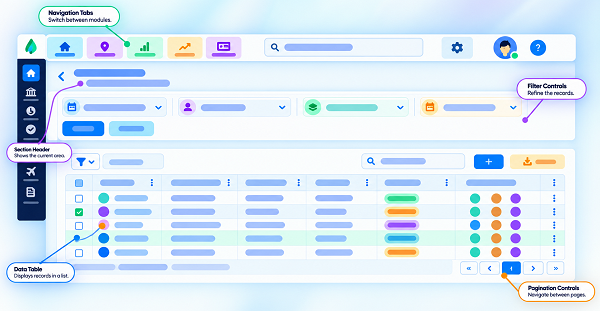
Competing leave requests during a busy season call for visible team coverage. InnBuilt leave management can help Thailand managers compare requested dates, available staff and approval status.