How Can Thailand Businesses Manage Payroll for Part-Time and Daily-Paid Workers?
How Can Thailand Businesses Manage Payroll for Part-Time and Daily-Paid Workers?
Introduction
Managing payroll for part-time and daily-paid workers in Thailand requires businesses to follow accurate wage calculations, attendance tracking, statutory deductions, and employment compliance procedures. Unlike monthly-paid employees, part-time and daily-paid workers may have different working schedules, payment arrangements, and wage calculation methods. These differences can make payroll administration more complicated, particularly for businesses that employ temporary staff, shift workers, seasonal employees, or workers on short-term assignments.
Industries such as hospitality, retail, manufacturing, logistics, construction, and food services frequently employ part-time and daily-paid workers to manage changing operational requirements. Employers must ensure that these workers receive the correct wages for their working hours or days, along with applicable overtime payments, holiday entitlements, and statutory benefits.
Thailand businesses can simplify this process by implementing structured payroll procedures, maintaining accurate attendance records, applying the correct wage rates, and using payroll software to automate calculations.
1. Establish Clear Employment Arrangements
The first step in managing payroll for part-time and daily-paid workers is to establish clear employment arrangements. Employers should identify the employment terms, working schedules, wage rates, and payment frequency before workers begin their assignments.
Part-time employees generally work fewer hours than full-time employees, while daily-paid workers receive wages based on the number of days worked. However, payment frequency alone does not determine whether someone is an employee or an independent contractor. The actual employment relationship and working arrangements must be considered.
Employers should document the following information:
- Employee's full name and identification details.
- Employment start date and job position.
- Employment classification and working arrangement.
- Daily wage or hourly wage rate.
- Normal working hours and shift schedules.
- Overtime payment conditions.
- Weekly holidays and applicable public holidays.
- Wage payment frequency and payment method.
- Applicable statutory benefits and deductions.
Maintaining clear employment documentation helps payroll teams apply consistent wage calculations and avoid misunderstandings about employee entitlements.
2. Calculate Daily and Hourly Wages Accurately
Thailand employers must establish an accurate method for calculating wages based on the employee's agreed payment arrangement.
For daily-paid workers, payroll teams generally calculate gross wages by multiplying the applicable daily wage by the number of payable working days.
For hourly-paid or part-time workers, employers calculate wages using the agreed hourly rate and the number of payable working hours.
Example: Daily-paid employee
Consider an employee who receives THB 400 per working day and works 24 payable days during a payroll period.
| Payroll component | Amount |
|---|---|
| Daily wage | THB 400 |
| Payable working days | 24 |
| Total basic wages | THB 9,600 |
Example: Hourly-paid employee
Consider a part-time employee who receives THB 60 per hour and works 100 payable hours during a payroll period.
| Payroll component | Amount |
|---|---|
| Hourly wage | THB 60 |
| Payable working hours | 100 |
| Total basic wages | THB 6,000 |
These examples illustrate basic wage calculations. Employers must separately assess overtime, holiday work, paid leave, and other applicable entitlements rather than assuming that all payments are covered by the basic wage.
3. Maintain Accurate Attendance and Working-Hour Records
Attendance tracking is especially important when businesses employ workers with changing schedules or irregular working hours.
Unlike employees who follow fixed monthly schedules, part-time and daily-paid workers may work different shifts depending on operational requirements. Without reliable attendance records, payroll teams may struggle to determine the correct payable days and hours.
Employers should maintain attendance records containing:
- Employee identification details.
- Scheduled working dates and shifts.
- Actual clock-in and clock-out times.
- Total hours worked.
- Break periods.
- Approved overtime hours.
- Absence and leave information.
- Supervisor attendance confirmations.
Businesses can use biometric attendance systems, employee mobile applications, digital timesheets, or electronic shift-management tools.
For example, a retail business may employ part-time workers for different shifts throughout the week. Integrating attendance records with payroll software allows the payroll team to calculate payable hours without manually reviewing every employee's timesheet.
Employers should also maintain appropriate working-time records to demonstrate compliance with Thai labour requirements.
4. Apply Thailand's Minimum Wage Requirements
Thailand businesses must ensure that part-time and daily-paid employees receive at least the applicable minimum wage.
Minimum wage rates may differ depending on the province, business location, and applicable Wage Committee notifications. Employers should therefore verify the latest minimum wage requirements for every location where employees work.
Payroll teams should consider the following:
- Check the applicable provincial minimum daily wage.
- Ensure daily-paid workers receive at least the required minimum for a normal working day.
- Calculate hourly wages in accordance with applicable legal requirements.
- Review wage rates whenever the government announces changes.
- Update payroll software whenever new minimum wage rates take effect.
For example, a business operating in Bangkok and Chiang Mai may need to configure different minimum wage rates depending on the applicable wage notifications.
Employers should avoid applying a single national wage rate without checking the relevant regional requirements. The Thai Ministry of Labour publishes information about employee wage protections and minimum wage regulations.
5. Calculate Overtime and Holiday Payments Correctly
Part-time and daily-paid employees may also be entitled to overtime and holiday payments under Thailand's Labour Protection Act.
Employers should not assume that workers paid by the hour or day are automatically excluded from overtime protection.
The main overtime and holiday payment categories include:
| Payment category | Minimum statutory rate |
|---|---|
| Overtime on normal working days | 1.5 times the hourly wage |
| Holiday work for employees entitled to holiday wages | Additional 1 time the hourly wage |
| Holiday work for employees not entitled to holiday wages | At least 2 times the hourly wage |
| Overtime beyond normal working hours on holidays | 3 times the hourly wage |
For example, consider a daily-paid employee whose normal working day is eight hours and whose daily wage is THB 400.
The hourly wage is:
THB 400 ÷ 8 = THB 50.
If the employee works two hours of approved weekday overtime, the calculation is:
THB 50 × 1.5 × 2 = THB 150.
The employee should receive THB 150 in overtime compensation in addition to the regular wages.
Employers should also obtain employee consent for overtime where required under Section 24 and maintain records of approved additional working hours.
6. Manage Weekly Holidays, Public Holidays, and Leave Entitlements
Part-time and daily-paid workers may have different holiday payment arrangements depending on their employment classification and wage calculation method.
For example, Section 56 of Thailand's Labour Protection Act excludes employees paid on a daily, hourly, or piece-rate basis from the general entitlement to paid weekly holidays. However, the same provision provides for holiday wages on traditional holidays and annual holidays, subject to the applicable legal conditions.
Employers should distinguish between:
- Weekly rest days.
- Traditional public holidays.
- Annual leave.
- Sick leave.
- Other statutory leave entitlements.
Payroll teams should also consider the employee's length of service and applicable statutory conditions when calculating leave payments.
For example, an eligible daily-paid employee who takes a traditional holiday should receive the applicable holiday wage even if the employee does not perform work on that day.
Businesses should avoid automatically treating every non-working day as unpaid leave. Each absence or holiday should be assessed according to the employee's legal entitlement and employment arrangement.
7. Handle Social Security Contributions for Eligible Workers
Thailand businesses must assess social security obligations when employing part-time and daily-paid workers.
An employee's daily or hourly payment arrangement does not automatically exclude that employee from the Social Security Fund. Workers who meet the applicable employee and insured-person conditions generally need to be registered under Section 33 of the Social Security Act.
Employers should:
- Identify employees who must be registered with the Social Security Office.
- Complete employer and employee registration within the required deadlines.
- Determine the applicable contribution wage base.
- Calculate employee and employer contributions.
- Deduct the employee's contribution through payroll.
- Submit contributions and supporting information within the statutory deadline.
The employer generally has to register eligible employees within 30 days of employment and remit social security contributions by the 15th of the following month.
Payroll teams should configure contribution calculations according to the current statutory rates and wage ceilings rather than assuming that every employee receives the same monthly salary.
8. Calculate Personal Income Tax Withholding
Part-time and daily-paid employees may also have personal income tax obligations in Thailand.
Employers should assess taxable employment income and calculate withholding tax according to the applicable Revenue Code requirements.
Payroll teams should consider:
- Basic daily or hourly wages.
- Overtime payments.
- Bonuses and other taxable employment benefits.
- Applicable deductions and allowances.
- Employee income projections.
- The relevant withholding tax calculation method.
For employees who receive irregular payments, payroll teams should maintain accurate payment records and apply the appropriate withholding tax treatment.
For example, a business employing temporary workers for different periods should consolidate relevant employment income information when determining the appropriate tax withholding treatment.
Employers must also maintain the necessary payroll tax documentation and submit applicable withholding tax returns, including P.N.D.1, within the prescribed deadlines.
Accurate employee identification and payroll records help businesses prepare tax reports and respond to employee requests for annual income documentation.
9. Establish a Consistent Payroll Payment Schedule
Daily-paid and part-time workers may receive wages at different intervals depending on their employment arrangements.
However, businesses must ensure that their payment schedules comply with Thailand's wage payment requirements.
Under Section 70 of the Labour Protection Act, wages calculated on a monthly, daily, hourly, or other specified basis must generally be paid at least once a month, unless a more favourable arrangement is agreed upon. Overtime pay, holiday pay, and holiday overtime pay must also be paid at least once a month.
Employers should establish clear payroll cut-off dates and payment procedures.
A practical payroll schedule may include:
| Payroll activity | Suggested process |
|---|---|
| Attendance collection | Record daily working hours |
| Timesheet verification | Review attendance at the end of each period |
| Wage calculation | Calculate payable days and hours |
| Overtime processing | Verify approved overtime |
| Statutory deductions | Calculate applicable contributions and withholding |
| Payroll review | Check calculations and exceptions |
| Wage payment | Pay employees according to the agreed schedule |
| Payslip distribution | Provide individual earnings statements |
If employment is terminated, employers should also consider the requirement to settle outstanding wages and applicable overtime and holiday payments within three days of termination.
10. Generate Clear Payslips for Part-Time and Daily-Paid Employees
Providing clear payslips helps employees understand how their wages have been calculated and what deductions have been applied.
Even when employees work only a few days per month, employers should maintain individual payroll records and provide transparent payment information.
A typical payslip should contain:
- Employee name and identification number.
- Payroll period.
- Number of payable working days.
- Total hours worked.
- Applicable daily or hourly wage rate.
- Basic wage earnings.
- Overtime and holiday payments.
- Applicable bonuses and allowances.
- Social security contributions.
- Personal income tax withholding, where applicable.
- Other lawful deductions.
- Total gross earnings.
- Final net salary payable.
Example of a daily-paid employee's payslip
| Payslip component | Amount |
|---|---|
| Daily wage | THB 400 |
| Payable working days | 24 |
| Basic wages | THB 9,600 |
| Weekday overtime | THB 150 |
| Gross earnings | THB 9,750 |
| Employee social security contribution | As applicable |
| Income tax withholding | As applicable |
| Net salary | After deductions |
Employers should ensure that payroll software generates individual payslips based on actual employee attendance and verified payroll calculations.
11. Use Payroll Software to Automate Wage Calculations
Managing payroll manually becomes difficult when businesses employ large numbers of part-time and daily-paid workers.
Payroll software can simplify the process by connecting employee information, attendance records, wage calculations, statutory deductions, and payment processing.
Thailand businesses should consider software with the following capabilities:
| Software feature | How it helps payroll teams |
|---|---|
| Employee classification | Separates monthly, daily, and hourly employees |
| Shift scheduling | Organizes changing employee work schedules |
| Attendance integration | Captures actual working hours and payable days |
| Wage calculation | Calculates daily and hourly earnings |
| Overtime management | Applies the appropriate overtime rates |
| Social security calculations | Calculates applicable employee and employer contributions |
| Tax withholding | Supports payroll tax calculations and reporting |
| Payslip generation | Creates individual employee payslips |
| Payroll reporting | Produces payroll summaries and cost reports |
| Audit trails | Maintains records of payroll changes and approvals |
Businesses should also choose software that supports different wage structures and can accommodate changes to Thailand's minimum wage and statutory contribution requirements.
Automation reduces repetitive administrative work and helps payroll teams process employee payments more consistently.
12. Maintain Payroll Records for Compliance and Audits
Accurate documentation is essential when managing part-time and daily-paid employees.
Employers should maintain records that demonstrate how wages were calculated, which days employees worked, and whether statutory payments were processed correctly.
Important documents include:
- Employment agreements and employee registration details.
- Daily attendance records.
- Timesheets and shift schedules.
- Wage calculation reports.
- Overtime approval records.
- Social security contribution reports.
- Personal income tax withholding records.
- Monthly payroll registers.
- Payslips and payment confirmations.
Under Section 114 of the Labour Protection Act, employers with at least ten employees must maintain statutory employee wage and payment records. Section 115 generally requires these records to be retained for at least two years from the date of payment, with extended retention where relevant disputes or proceedings remain unresolved.
Businesses should organize digital records by employee, payroll period, department, and payment category to make retrieval easier during audits and inspections.
13. Avoid Common Payroll Mistakes When Paying Part-Time and Daily Workers
Thailand businesses can encounter several payroll problems when managing employees with irregular working schedules.
Some common mistakes include:
- Applying incorrect minimum wage rates: Employers may use outdated wage rates or fail to consider differences between provinces.
- Misclassifying employees: Treating an employee as an independent contractor simply because they work part-time or receive daily wages can result in compliance problems.
- Ignoring overtime payments: Part-time and daily-paid employees may still qualify for statutory overtime compensation.
- Incorrect attendance calculations: Missing clock-in records or inaccurate timesheets can lead to underpayment or overpayment.
- Overlooking statutory holidays: Employers may incorrectly treat traditional holidays as unpaid days for employees who are legally entitled to holiday wages.
- Missing social security registration: Employers may incorrectly assume that daily-paid employees do not need social security registration.
- Incorrect tax withholding: Failing to account for taxable employment income can create reporting and payment discrepancies.
- Delayed wage payments: Businesses may overlook statutory payment deadlines when processing irregular employee schedules.
Implementing standardized payroll procedures and automated validation checks can help prevent these problems.
Conclusion
Managing payroll for part-time and daily-paid workers in Thailand requires more than simply multiplying daily or hourly wage rates by the number of days or hours worked. Employers must also consider minimum wage requirements, attendance records, overtime compensation, statutory holidays, social security contributions, personal income tax withholding, and wage payment deadlines.
A structured payroll process helps businesses manage different employee payment arrangements while maintaining accurate financial and employment records.
By integrating attendance management, wage calculations, statutory deductions, and payslip generation through payroll software, Thailand businesses can reduce administrative errors, improve payment transparency, and strengthen labour law compliance.
Ultimately, effective payroll management ensures that part-time and daily-paid workers receive their correct compensation while helping employers maintain a reliable and compliant payroll operation.
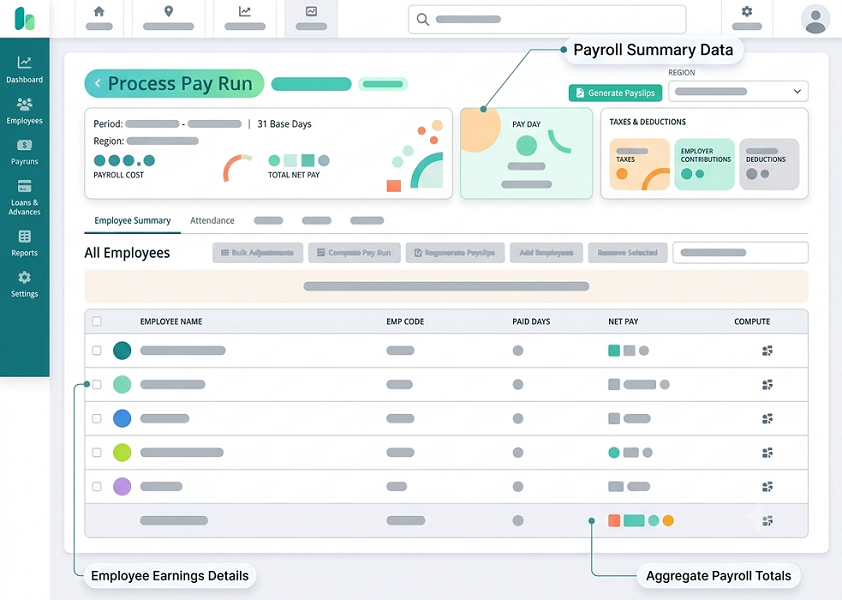
Part-time and daily-paid staff need time records matched to their pay basis. InnBuilt Payroll Software can help Thailand employers organise approved days, hourly inputs and adjustments before payroll.