What Payroll Reports Help Thailand Employers Prepare for an Audit?
What Payroll Reports Help Thailand Employers Prepare for an Audit?
Introduction
Preparing for a payroll audit is an important responsibility for businesses operating in Thailand. Employers must ensure that salary payments, employee deductions, overtime calculations, social security contributions, and personal income tax withholdings are accurate and supported by reliable documentation.
Payroll audits may involve internal finance reviews, external auditors, labour inspections, or government authorities checking whether employers have followed applicable employment, tax, and social security requirements.
Without organized payroll reports, businesses may struggle to explain salary calculations, identify discrepancies, verify statutory contributions, or provide supporting documents during an audit.
Thailand employers can simplify audit preparation by maintaining standardized payroll reports that connect employee information, attendance records, wage calculations, statutory deductions, and payment confirmations.
This article explains the essential payroll reports that Thailand employers should prepare for an audit and how payroll software can help organize these records.
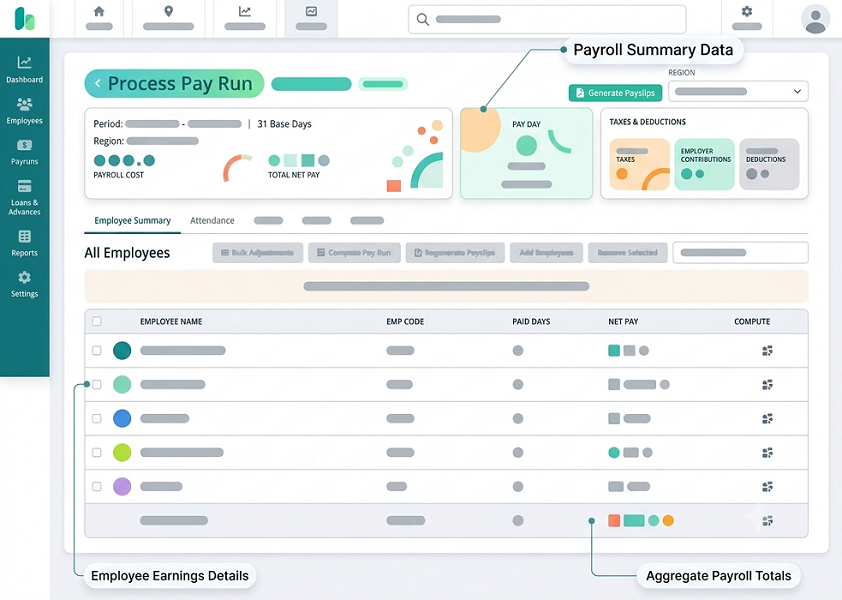
1. Employee Master Data Report
The employee master data report provides an overview of the workforce and serves as the foundation for payroll audit preparation.
Auditors may use this report to verify whether employee information in the payroll system matches employment agreements, HR records, and statutory registration documents.
The report should include:
- Employee identification number.
- Employee's full name.
- Employment commencement date.
- Department and job position.
- Employment classification.
- Monthly, daily, or hourly wage structure.
- Basic salary or agreed wage rate.
- Employment status.
- Social Security Fund registration details.
- Tax identification information.
- Bank payment details, with appropriate access controls.
For example, if an employee's employment contract specifies a monthly salary of THB 35,000 but the payroll report shows THB 38,000, auditors may request supporting documentation for the salary revision.
HR teams should regularly update employee master data whenever changes occur in compensation, employment status, department, or personal information.
2. Monthly Payroll Register Report
The monthly payroll register is one of the most important documents for payroll audit preparation.
It provides a consolidated view of employee earnings, deductions, and net salary payments for a particular payroll period.
A typical payroll register should include:
- Employee identification details.
- Basic salary.
- Overtime payments.
- Holiday payments.
- Bonuses and incentives.
- Allowances.
- Other taxable or non-taxable benefits.
- Social security deductions.
- Personal income tax withholding.
- Other lawful deductions.
- Total gross earnings.
- Net salary payable.
Example of a monthly payroll register
| Payroll component | Amount (THB) |
|---|---|
| Basic salary | 500,000 |
| Overtime payments | 25,000 |
| Allowances | 30,000 |
| Bonuses | 20,000 |
| Total gross earnings | 575,000 |
| Employee social security contributions | 7,500 |
| Personal income tax withholding | 22,000 |
| Other deductions | 5,000 |
| Total net salary | 540,500 |
Illustrative figures only. Actual payroll amounts depend on employee records and applicable statutory rates.
Auditors can use this report to compare payroll expenses with accounting records, bank transfers, and statutory filings.
Employers should generate a separate payroll register for every payroll period and maintain records of approved adjustments.
3. Attendance and Working Hours Report
Attendance reports help employers demonstrate that salary and overtime payments are supported by actual working-time records.
This is particularly important for businesses with shift-based employees, hourly-paid workers, daily-paid workers, and employees who regularly perform overtime.
The attendance report should contain:
- Employee name and identification number.
- Scheduled working days.
- Actual attendance dates.
- Clock-in and clock-out times.
- Total working hours.
- Absence records.
- Approved leave.
- Weekly holidays.
- Holiday work.
- Overtime hours.
For example, if the payroll register includes THB 10,000 in overtime payments for an employee, auditors may compare the payment with attendance records and overtime approval documents.
Employers should ensure that attendance reports match the payroll period and that corrections to working-hour records are properly documented.
4. Overtime and Holiday Payment Report
Thailand employers should maintain a separate overtime and holiday payment report to demonstrate that additional employee compensation has been calculated correctly.
Under the Labour Protection Act B.E. 2541 (1998), overtime and holiday payments are subject to different statutory minimum rates.
The report should include:
- Employee identification details.
- Overtime date.
- Normal working hours.
- Actual additional working hours.
- Approved overtime hours.
- Applicable hourly wage.
- Overtime payment multiplier.
- Holiday work payments.
- Total overtime compensation.
- Supervisor approval details.
The main statutory payment categories include:
| Payment category | Minimum rate |
|---|---|
| Normal working-day overtime | 1.5 times hourly wage |
| Holiday work for employees entitled to holiday wages | Additional 1 time hourly wage |
| Holiday work for employees not entitled to holiday wages | At least 2 times hourly wage |
| Holiday overtime | 3 times hourly wage |
Auditors may compare overtime reports with attendance records, supervisor approvals, payroll registers, and employee payslips.
Maintaining separate overtime reports helps employers identify incorrect calculations, unauthorized entries, and missing payments.
5. Social Security Contribution Report
The Social Security contribution report is another essential document for Thailand payroll audits.
Employers must verify that eligible employees are registered with the Social Security Office and that employee and employer contributions have been calculated and submitted correctly.
The report should include:
- Employee name and identification number.
- Social Security registration number.
- Monthly contribution wage base.
- Employee contribution amount.
- Employer contribution amount.
- Applicable contribution rate.
- Contribution month.
- Submission date.
- Payment confirmation.
- Employee registration and termination changes.
Payroll teams should reconcile the report with Social Security Office filings and payment receipts.
For example, if the payroll system shows employee Social Security deductions of THB 7,500 for a month, the payroll team should verify that the corresponding contribution information agrees with the statutory submission and applicable contribution limits.
Employers should also check that newly hired and terminated employees have been reported within the required deadlines.
6. Personal Income Tax Withholding Report
Thailand employers must prepare personal income tax withholding reports to demonstrate that employment income has been correctly assessed and applicable tax has been deducted.
Payroll audits may examine whether employers have correctly calculated withholding tax on salaries, bonuses, commissions, allowances, and other taxable employment benefits.
Important information includes:
- Employee name and tax identification details.
- Monthly taxable employment income.
- Taxable allowances and benefits.
- Applicable deductions and allowances.
- Taxable bonuses and incentives.
- Monthly withholding tax.
- Annual income reconciliation.
- Tax certificate information.
Employers should reconcile monthly payroll withholding records with the applicable P.N.D.1 submissions and payment confirmations.
They should also maintain annual employee income and withholding records used to prepare P.N.D.1 Kor and the applicable withholding tax certificates under Section 50 Bis of the Revenue Code.
This helps auditors verify that reported employment income agrees with payroll records and tax filings.
7. P.N.D.1 and P.N.D.1 Kor Filing Reports
Thailand employers should maintain copies of their withholding tax returns and supporting payroll information.
Two important tax reporting documents are:
| Tax form | Purpose |
|---|---|
| P.N.D.1 | Monthly withholding tax return for employment income under Section 40(1) and Section 40(2) |
| P.N.D.1 Kor | Annual withholding tax summary for employment income under Section 40(1) and Section 40(2) |
Auditors may compare these returns with monthly payroll registers, employee income statements, and withholding tax payment receipts.
HR and finance teams should verify:
- Total employee income reported.
- Monthly withholding tax calculations.
- Employee identification information.
- Annual income reconciliation.
- Differences between payroll and tax returns.
- Filing and payment dates.
- Corrections or amended returns.
Maintaining these reports helps employers identify reporting discrepancies before an audit and provides supporting evidence that tax obligations have been handled appropriately.
8. Payslip and Employee Earnings Report
Employee payslips provide individual-level evidence of how monthly wages and deductions were calculated.
Auditors may select specific employees and compare their payslips with payroll registers, employment contracts, attendance records, and bank payment confirmations.
Employers should maintain payslip records containing:
- Employee name and identification number.
- Payroll period.
- Basic salary or wage.
- Overtime and holiday payments.
- Allowances and bonuses.
- Gross earnings.
- Social security deductions.
- Personal income tax withholding.
- Other lawful deductions.
- Net salary payable.
For example, if an employee's payroll register shows THB 45,000 in gross earnings, the corresponding payslip should explain how that amount was calculated.
HR teams should also verify that salary increases, promotions, and changes in allowances are supported by authorized documentation.
9. Bank Salary Payment and Reconciliation Report
A bank salary payment report helps auditors confirm that the amounts recorded in payroll were actually transferred to employees.
This report connects payroll calculations with financial transactions and helps identify unpaid salaries, duplicate payments, and differences between payroll records and bank statements.
The report should contain:
- Employee name or identification number.
- Employee bank account reference.
- Payroll period.
- Net salary payable.
- Actual amount transferred.
- Bank transaction date.
- Payment status.
- Failed or rejected transactions.
- Reissued salary payments.
For example, if the payroll register shows a net salary of THB 540,500 but the bank statement shows only THB 535,500 in salary transfers, the finance team should investigate the THB 5,000 difference.
Employers should maintain bank transfer confirmations and reconcile the total salary payment amount with the payroll register every month.
10. Leave and Employee Benefits Report
Leave and employee benefits reports help auditors verify whether employee entitlements have been recorded and paid correctly.
These reports are particularly important when businesses provide annual leave, sick leave, holiday benefits, bonuses, and other contractual entitlements.
The report should include:
- Employee annual leave entitlement.
- Annual leave taken.
- Remaining leave balance.
- Leave carried forward.
- Sick leave records.
- Maternity and other statutory leave.
- Holiday payment records.
- Outstanding leave encashment.
- Employee benefit adjustments.
For example, if an employee leaves the organization with accumulated unused annual leave, HR should maintain the leave balance report and final settlement calculation as supporting evidence.
Employers should reconcile leave records with attendance systems and payroll registers to ensure that applicable leave payments have been processed correctly.
11. Employee Registration and Termination Report
Thailand employers should maintain employee registration and termination reports to demonstrate that workforce records are accurate and updated.
For employers with ten or more employees, Sections 112 and 113 of the Labour Protection Act require an employee register in Thai containing specified employee information.
The register should generally be prepared within 15 days of employment commencement, and relevant changes should be updated within 15 days of the change or notification.
The report should include:
- Employee's full name.
- Nationality and date of birth or age.
- Current address.
- Employment commencement date.
- Job position and responsibilities.
- Wage rate and agreed benefits.
- Employment termination date.
HR teams should also maintain supporting documents such as employment agreements, resignation letters, termination notices, and employee registration records.
These documents help auditors verify that payroll payments are linked to genuine employment relationships and accurate employee information.
12. Workmen's Compensation Fund Wage Report
Thailand employers should also prepare reports relating to the Workmen's Compensation Fund (WCF).
The fund provides compensation for eligible employees who suffer work-related injuries, illnesses, disabilities, or death.
Employers should maintain records of:
- Total annual employee wages.
- Number of employees.
- Estimated annual payroll.
- Actual wages paid during the year.
- Applicable industry contribution rate.
- Estimated WCF contributions.
- Annual wage reporting.
- Additional contributions or adjustments.
One important document is the annual wage payment statement, known as Kor Tor 20 Kor.
Employers use this report to declare actual wages paid during the previous calendar year. The Social Security Office uses the information to reconcile the employer's annual Workmen's Compensation Fund contributions.
For example, if actual annual payroll is higher than the estimated payroll used for the initial contribution calculation, the employer may need to pay an additional contribution.
Maintaining annual wage reports and contribution confirmations helps businesses demonstrate that their WCF obligations have been reviewed and reconciled.
13. General Ledger and Payroll Expense Reconciliation Report
Payroll information should be consistent with the company's accounting records.
Auditors frequently compare payroll registers with general ledger balances, trial balances, financial statements, and statutory payment records.
Employers should prepare a payroll reconciliation report containing:
- Total basic salary expenses.
- Overtime expenses.
- Bonus and incentive expenses.
- Allowance expenses.
- Employer social security contributions.
- Workmen's Compensation Fund expenses.
- Employee tax withholding liabilities.
- Social security payable balances.
- Outstanding salary liabilities.
- Payroll-related accruals and adjustments.
For example, if the monthly payroll register shows THB 575,000 in gross earnings but the general ledger records only THB 560,000 in salary expenses, the accounting team should investigate the THB 15,000 difference.
Possible explanations may include:
- Payroll journals not posted.
- Incorrect accounting classifications.
- Duplicate payroll entries.
- Late payroll adjustments.
- Payments recorded in different accounting periods.
- Reversed or cancelled salary transactions.
A monthly payroll-to-general-ledger reconciliation helps identify these differences before an external audit begins.
14. Annual Employment and Working Conditions Report
Employers with ten or more employees should also consider the annual employment and working conditions report required under Section 115/1 of the Labour Protection Act.
This report provides information about employment conditions and working arrangements to the Department of Labour Protection and Welfare.
It generally covers information such as:
- Number of employees.
- Employment conditions.
- Working days and hours.
- Wage and payment arrangements.
- Employee welfare and working conditions.
- Other prescribed employment information.
The report must generally be submitted within January each year. Employers should retain the submitted report and supporting information as part of their labour compliance documentation.
15. Provident Fund Contribution and Reconciliation Report
Businesses operating a registered Provident Fund should maintain separate reports covering employee and employer contributions.
These reports help auditors verify whether contributions have been calculated according to the fund's rules and transferred to the fund manager.
The report should contain:
- Employee name and fund membership number.
- Employee contribution percentage.
- Employer contribution percentage.
- Monthly contribution amounts.
- Applicable employer vesting conditions.
- Contribution payment dates.
- Fund manager confirmation.
- Employee entry and exit records.
- Outstanding contribution adjustments.
For example, if an employee contributes 5% of eligible salary and the employer contributes another 5%, payroll records should agree with the amounts reported and transferred to the Provident Fund.
Employers should reconcile payroll deductions with fund statements and investigate any differences before completing the audit.
16. Maintain a Payroll Audit Trail and Adjustment Report
An audit trail helps employers demonstrate who made changes to payroll information, when the changes occurred, and why adjustments were necessary.
This is particularly important when payroll calculations are modified after monthly payroll approval.
The report should capture:
- Original payroll values.
- Revised salary or deduction amounts.
- Employee records that were modified.
- Date and time of changes.
- Name of the person making the adjustment.
- Reason for the adjustment.
- Approval details.
- Supporting documents.
- Final processed payroll amounts.
For example, if HR corrects an employee's salary after a promotion, the audit trail should show the previous salary, revised salary, effective date, and management approval.
A well-maintained audit trail helps auditors investigate unusual payroll transactions and verify that payroll changes were authorized.
17. Use Payroll Software to Generate Audit-Ready Reports
Managing multiple payroll reports manually can be time-consuming, particularly for businesses with large workforces, multiple branches, and different employee payment structures.
Thailand employers can simplify audit preparation by using payroll software that integrates HR records, attendance, salary calculations, statutory deductions, and accounting information.
Important payroll software capabilities include:
| Software feature | Audit preparation benefit |
|---|---|
| Employee master data management | Maintains accurate employee information |
| Payroll register generation | Produces monthly salary summaries |
| Attendance integration | Supports working-hour verification |
| Overtime reporting | Tracks additional working hours and payments |
| Social security reporting | Organizes contribution calculations and submissions |
| Tax reporting | Supports P.N.D.1 and annual tax reconciliation |
| Payslip generation | Provides individual earnings statements |
| Bank reconciliation | Verifies salary payment transactions |
| Leave management | Tracks leave balances and payments |
| WCF reporting | Organizes annual wage information |
| General ledger integration | Reconciles payroll expenses with accounting records |
| Audit trail management | Records payroll changes and approvals |
| Document storage | Keeps supporting payroll evidence accessible |
Businesses should choose payroll software that supports Thailand's statutory reporting requirements and allows authorized auditors to retrieve relevant reports without exposing unnecessary employee information.
Conclusion
Preparing for a payroll audit in Thailand requires more than generating monthly salary statements. Employers must maintain accurate employee records, payroll registers, attendance reports, overtime calculations, social security submissions, tax withholding returns, and supporting payment documentation.
Reports such as P.N.D.1, P.N.D.1 Kor, Social Security contribution reports, Workmen's Compensation Fund wage statements, and payroll-to-general-ledger reconciliations help demonstrate that payroll activities are consistent with applicable statutory requirements.
By maintaining these reports regularly and integrating HR, payroll, and accounting systems, Thailand businesses can identify discrepancies early, reduce audit preparation time, and improve payroll compliance.
Ultimately, organized payroll reporting provides transparency, strengthens financial controls, and helps employers respond confidently to internal audits, external audits, and government inspections.
Audits are easier when payroll changes can be traced to attendance and approval records. InnBuilt payroll and attendance workflows can help Thailand teams gather registers, exception reviews and pay summaries.