How Can Thailand Employers Track Unused Leave When Employees Resign?
How Can Thailand Employers Track Unused Leave When Employees Resign?
Introduction
Tracking unused leave is an important part of employee offboarding and final payroll processing in Thailand. When employees resign, employers must review their leave balances, verify leave already taken, identify unused annual leave entitlements, and determine whether any outstanding leave payments are required.
For HR and payroll teams, this process can become complicated when employees have different joining dates, leave policies, service periods, and carry-forward arrangements. Incorrect leave calculations may result in underpayments, employee disputes, and payroll compliance issues.
Thailand's Labour Protection Act B.E. 2541 (1998) establishes statutory requirements for annual holidays and payment for unused annual leave. Employers must distinguish between accumulated annual leave from previous years and annual leave earned during the year of resignation.
A structured leave-tracking process helps businesses calculate employee entitlements accurately, maintain reliable records, and complete final salary settlements on time.
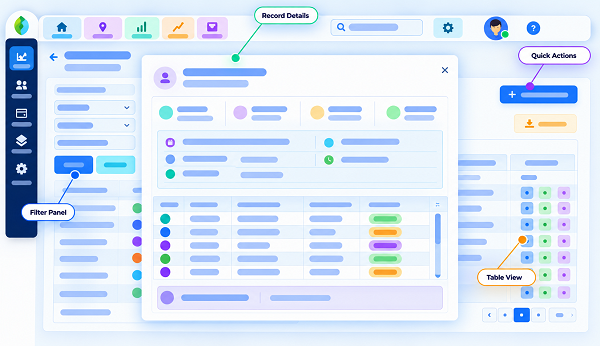
1. Maintain an Individual Leave Balance for Every Employee
The first step is to maintain an accurate leave balance for each employee throughout their employment.
HR teams should not wait until an employee submits a resignation letter to calculate unused leave. Instead, businesses should update leave records whenever employees earn, request, take, or carry forward annual leave.
Employee leave records should include:
- Employee name and identification number.
- Employment commencement date.
- Annual leave entitlement.
- Leave earned during each leave year.
- Annual leave already taken.
- Approved leave requests.
- Pending leave applications.
- Unused leave carried forward.
- Remaining annual leave balance.
- Employment termination date.
For example, an employee entitled to 10 annual leave days who has taken six days has a remaining balance of four days, subject to the employer's leave policy and applicable statutory requirements.
Maintaining individual leave records allows HR teams to identify outstanding leave entitlements before preparing the employee's final payroll.
2. Understand Thailand's Statutory Annual Leave Requirements
Thailand employers must follow the annual leave provisions under Section 30 of the Labour Protection Act.
Under this provision, employees who have completed one year of continuous service are generally entitled to at least six working days of annual leave per year.
Employers may provide more generous annual leave entitlements through employment contracts, company policies, or collective agreements.
HR teams should consider the following:
- Employees with less than one year of service may receive annual leave according to the employer's policy.
- Employees who complete one year of continuous service become entitled to at least six working days annually.
- Employers may provide more than the statutory minimum.
- Annual leave scheduling should follow applicable legal requirements and company arrangements.
- Unused annual leave may be carried forward when agreed between the employer and employee.
For example, if an employee has completed two years of service and receives 10 annual leave days per year under company policy, HR must track the entitlement and usage separately for each leave year.
This prevents the statutory minimum and additional company benefits from being confused during final settlement calculations.
3. Distinguish Accumulated Leave from Current-Year Leave
One of the most important checks when an employee resigns is distinguishing between accumulated annual leave from previous years and annual leave earned during the current year.
Thailand's Labour Protection Act provides different payment rules for these categories.
Under Section 67:
- When employment is terminated, employees are entitled to payment for accumulated unused annual holidays from previous years, subject to the applicable statutory conditions.
- When an employer terminates an employee for reasons other than those specified in Section 119, the employee is also entitled to payment for the proportionate annual holiday entitlement for the year of termination.
- Employees who voluntarily resign are generally not automatically entitled to payment for unused annual leave earned during the current year on a pro-rata basis, unless an applicable agreement or company policy provides for it.
HR teams should therefore maintain separate balances for:
- Accumulated unused annual leave from previous years.
- Current-year annual leave entitlement.
- Current-year annual leave already taken.
- Additional contractual or company-policy leave.
This distinction is essential to avoid paying too much or too little during employee offboarding.
4. Verify Leave Balances Against Attendance and Approval Records
Once an employee submits a resignation, HR should reconcile the leave management system with attendance records and approved leave applications.
This is important because leave balances can become inaccurate when employees take leave that has not yet been entered into the HR system or when approved leave requests remain pending.
HR teams should check:
- Approved annual leave applications.
- Leave actually taken by the employee.
- Cancelled or withdrawn leave requests.
- Leave taken but not yet deducted from the balance.
- Leave carried forward from previous years.
- Any manual leave balance adjustments.
- Leave approved during the notice period.
For example, an employee's HR system may show eight unused leave days, but attendance records may indicate that the employee has already taken two additional days.
HR should investigate and correct the discrepancy before calculating the final leave payment.
Important: Employers should not automatically recover the value of annual leave already approved and taken merely because the employee's calculated pro-rata entitlement is lower at the resignation date. Thai Supreme Court decisions have addressed this issue, and deductions require careful legal review.
5. Calculate Payment for Accumulated Unused Annual Leave
Thailand employers must pay eligible employees for accumulated unused annual leave when employment ends, including when an employee voluntarily resigns.
Section 67 of the Labour Protection Act provides for payment of accumulated annual holidays to which the employee is entitled under Section 30, whether the employment contract is terminated by the employee or the employer.
However, HR teams must verify that the unused leave was validly accumulated, including any advance agreement between the employer and employee to carry forward annual leave.
For example:
- Annual leave carried forward from the previous year: 5 days.
- Applicable daily wage: THB 1,200.
- Accumulated unused leave payment: 5 × THB 1,200.
ILLUSTRATIVE LEAVE PAYMENT
THB 6,000
5 accumulated leave days × THB 1,200 daily wage
The actual daily wage must be determined using the employee's applicable wage structure and statutory calculation rules.
Payroll teams should display this payment separately in the final settlement statement rather than combining it with ordinary salary.
6. Distinguish Current-Year Leave from Carried-Forward Leave
A particularly important compliance check is determining whether unused leave belongs to the current year or a previous leave year.
Under Section 67, the payment treatment differs:
| Leave category | Employee voluntarily resigns | Employer terminates employment |
|---|---|---|
| Valid accumulated unused leave from previous years | Payable | Payable |
| Unused current-year leave on a pro-rata basis | Not automatically payable under Section 67 | Payable when termination is for reasons other than Section 119 |
| Additional contractual or company-policy leave | According to applicable policy or agreement | According to applicable policy or agreement |
For example, consider an employee who resigns on 30 June.
- Previous-year accumulated leave: 4 days.
- Current-year annual leave entitlement: 10 days.
- Current-year leave taken: 2 days.
HR should calculate the payment for the four accumulated days, assuming they were validly carried forward.
The remaining current-year leave should be reviewed under the employment contract and company leave policy. It should not automatically be treated as payable under Section 67 merely because the employee has resigned.
This distinction helps employers avoid applying termination-related leave payment rules incorrectly to voluntary resignations.
7. Apply the Correct Daily Wage for Leave Encashment
After identifying payable unused annual leave, payroll teams must calculate the corresponding payment using the correct wage rate.
For employees receiving monthly wages, the daily wage is generally calculated by dividing monthly wages by 30.
For example:
- Monthly salary: THB 36,000.
- Daily wage: THB 1,200.
- Accumulated unused annual leave: 5 days.
Calculation:
The employer should include THB 6,000 as accumulated unused annual leave compensation in the employee's final settlement.
Payroll teams should verify the applicable wage components and calculation method, particularly where employees receive fixed allowances or have different wage arrangements.
8. Review Company Leave Policies and Employment Agreements
Thailand employers may offer annual leave benefits that exceed the statutory minimum.
For example, a company may provide:
- 10 days of annual leave annually.
- 15 days after completing five years of service.
- Additional leave based on seniority.
- Carry-forward of unused leave.
- Cash payment for certain unused current-year leave balances upon resignation.
HR teams should review the company's employment contracts, employee handbook, leave policy, and any applicable collective agreements before finalizing the leave balance.
The policy review should answer the following questions:
- How many annual leave days does the employee receive?
- Does the company allow unused leave to carry forward?
- Is there a maximum carry-forward balance?
- Does unused leave expire after a specified period?
- Does the company provide leave encashment upon resignation?
- Are there special arrangements for employees serving notice periods?
Importantly, company policies cannot reduce statutory employee entitlements. If an employer provides more favourable leave benefits, those contractual or policy commitments should also be considered.
9. Track Leave Taken During the Notice Period
Employees may request annual leave after submitting their resignation but before their final working day.
HR teams should ensure that such leave is properly approved and recorded.
For example, an employee may submit a resignation with a 30-day notice period and request three days of annual leave during that period.
The HR department should:
- Check the employee's available leave balance.
- Review the leave request.
- Obtain the necessary managerial approval.
- Record the approved leave dates.
- Update the employee's remaining balance.
- Reconcile the updated balance before final payroll processing.
Employers should also ensure that the leave arrangement complies with applicable legal requirements and employment agreements.
A clear approval process prevents discrepancies between the employee's final attendance records and the leave balance used for settlement.
10. Use HR and Payroll Software to Automate Leave Tracking
Manual leave tracking can become difficult when businesses have hundreds or thousands of employees with different annual leave entitlements.
Thailand employers can simplify this process by using integrated HR and payroll software.
Important software capabilities include:
| Software feature | How it helps HR teams |
|---|---|
| Automated leave accrual | Calculates annual leave entitlements |
| Leave balance tracking | Maintains current and accumulated balances |
| Carry-forward management | Tracks unused leave from previous years |
| Leave approval workflows | Records employee requests and approvals |
| Attendance integration | Reconciles actual leave taken |
| Employee resignation management | Updates leave balances during offboarding |
| Leave encashment calculation | Calculates eligible unused leave payments |
| Payroll integration | Transfers approved payments into final payroll |
| Audit trails | Tracks leave balance adjustments |
| Reporting dashboards | Identifies employees with outstanding leave |
For example, when an employee submits a resignation through an HR system, the software can generate a leave balance report showing annual leave earned, leave taken, accumulated leave, and the remaining balance.
HR teams can then review the report and confirm which amounts qualify for payment under Thai labour law and company policy.
11. Maintain Supporting Documents for Leave Settlement
Proper documentation helps employers demonstrate that unused leave has been calculated correctly.
HR teams should maintain:
- Employment agreements.
- Annual leave policies.
- Employee leave entitlement records.
- Annual leave accrual reports.
- Leave application and approval records.
- Leave carry-forward agreements.
- Attendance records.
- Leave balance adjustment history.
- Final leave encashment calculations.
- Final settlement statements.
- Payment confirmations.
Under Section 115 of the Labour Protection Act, employee records must generally be retained for at least two years after employment ends. Relevant wage and overtime payment documents must generally be retained for at least two years after payment. Records involved in a pending labour dispute or legal proceeding must be retained until the matter is finally resolved.
Maintaining these records in a centralized HR system makes it easier to respond to employee queries, internal audits, and labour inspections.
12. Prevent Common Mistakes When Tracking Unused Leave
Thailand employers should pay attention to common mistakes that can affect final leave settlement calculations.
Combining all leave balances: HR teams may incorrectly combine current-year leave with accumulated leave from previous years. These categories must be tracked separately because their statutory payment treatment differs.
Ignoring carry-forward agreements: Employers may overlook valid arrangements allowing employees to accumulate unused annual leave.
Using incorrect wage rates: Applying an outdated or incorrect daily wage can result in inaccurate leave encashment.
Failing to update leave records: Approved leave that has not been deducted from the system can create incorrect balances.
Automatically paying current-year leave upon resignation: Section 67 does not generally require pro-rata payment for unused current-year leave when an employee voluntarily resigns. However, company policies or contractual commitments may provide this benefit.
Deducting excess leave without legal review: Employers should not automatically recover the value of previously approved leave merely because the employee's pro-rata entitlement is lower at resignation.
Ignoring notice-period leave: HR teams may forget to update leave balances when employees take approved leave before their final working day.
Failing to maintain supporting documents: Inadequate leave records make it difficult to explain or defend final settlement calculations.
A standardized leave reconciliation process can help businesses avoid these problems.
Conclusion
Tracking unused leave when employees resign is an essential responsibility for Thailand HR and payroll teams. Employers must maintain accurate annual leave records, verify approved leave applications, distinguish accumulated leave from current-year entitlements, and calculate eligible leave payments correctly.
Under Thailand's Labour Protection Act, accumulated unused annual leave is payable when an employee voluntarily resigns. However, unused current-year leave is not automatically payable on resignation under Section 67, unless additional contractual or company-policy benefits apply.
By implementing structured leave management procedures and integrating HR systems with payroll software, businesses can simplify leave reconciliation, reduce calculation errors, and improve employee offboarding.
Ultimately, accurate unused leave tracking helps Thailand employers complete final salary settlements transparently while maintaining compliance with statutory and contractual employee entitlements.
An employee's final leave balance should reflect accruals, approved days and adjustments. InnBuilt leave management can help Thailand HR reconcile unused leave before evaluating any exit payment.