How Can Employers Track Employee Attendance Across Multiple UAE Locations?
How Can Employers Track Employee Attendance Across Multiple UAE Locations?
Businesses operating across multiple UAE locations often have employees working in offices, retail outlets, warehouses, construction sites, customer locations, and remote project sites. Managing attendance through separate registers or spreadsheets can make it difficult for HR teams to maintain accurate and consistent records.
A centralized attendance management system can help employers track employees across Dubai, Abu Dhabi, Sharjah, Ajman, Ras Al Khaimah, Fujairah, and other UAE locations while allowing HR teams to manage different branches and work schedules from one platform.
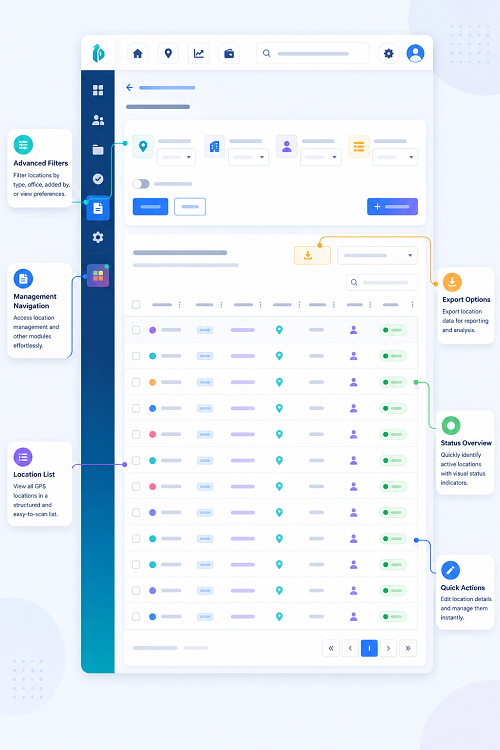
1. Create Location-Based Attendance Profiles
Each branch or worksite can be configured as a separate attendance location.
For example:
- Dubai Head Office
- Abu Dhabi Branch
- Sharjah Warehouse
- Ajman Retail Store
- Ras Al Khaimah Project Site
Employees can then be assigned to their approved location, department, shift, and reporting manager.
This gives HR teams a centralized view while preserving location-specific attendance records.
2. Use GPS-Based Mobile Attendance
Mobile attendance can be useful for employees who do not work from a fixed office.
Employees can use an authorized mobile application to record attendance from an approved location. Depending on company policy and system configuration, GPS information can help verify that the employee is at the designated worksite.
This can be particularly useful for:
- Sales representatives
- Delivery employees
- Field technicians
- Construction workers
- Service teams
- Project employees
3. Implement Geofencing
A geofence creates a virtual boundary around an approved workplace.
For example, an employer can create a geofence around a Dubai warehouse. Employees assigned to that location can be permitted to record attendance when they are within the designated area.
Different geofences can be created for different branches and worksites.
This can reduce the possibility of employees recording attendance from unauthorized locations.
4. Support Multiple Attendance Methods
Not every UAE location will have the same infrastructure. A centralized system can support different attendance methods depending on the site.
These may include:
- Biometric devices
- Face recognition
- RFID cards
- Mobile attendance
- GPS
- Geofencing
- Access-control integration
For example, a corporate office may use biometric attendance while a field service employee uses a mobile application.
5. Assign Employees to the Correct Location
HR should maintain an employee-location mapping within the workforce system.
A typical employee profile can include:
Employee → Department → Branch → Worksite → Shift → Manager
When an employee transfers from one location to another, HR can update the assignment from the effective date.
This prevents attendance from continuing to be recorded against the previous branch.
6. Manage Temporary Location Changes
Employees may occasionally work from another UAE location for:
- Training
- Business meetings
- Project support
- Temporary staff shortages
- Audits
- New branch launches
- Customer assignments
The system should allow authorized temporary assignments with start and end dates.
Once the assignment ends, the employee can automatically return to the normal work location.
7. Manage Different Shifts Across Locations
Different branches may operate different working schedules.
For example:
- Dubai office: 9:00 a.m.–6:00 p.m.
- Retail branch: 10:00 a.m.–10:00 p.m.
- Warehouse: 7:00 a.m.–4:00 p.m.
- Security team: Rotating shifts
A centralized attendance system can assign employees to location-specific shifts and calculate attendance against the correct schedule.
8. Track Remote and Field Employees
Some employees may not report to a fixed company location every day.
A mobile attendance system can help organizations record approved attendance for:
- Client visits
- Construction sites
- Customer locations
- Delivery routes
- Service calls
- Remote project locations
The organization should establish clear policies defining when mobile attendance and location verification are permitted.
9. Provide Centralized HR Dashboards
A centralized dashboard can give HR and managers a real-time or near-real-time overview of attendance across locations.
For example:
| Location | Scheduled | Present | Absent | Late |
|---|---|---|---|---|
| Dubai | 120 | 115 | 3 | 2 |
| Abu Dhabi | 80 | 77 | 2 | 1 |
| Sharjah | 60 | 58 | 1 | 1 |
Managers can drill down from the overall organization to individual branches, departments, and employees.
10. Automate Late and Absence Alerts
Automated notifications can help managers identify attendance problems quickly.
For example:
Shift starts at 8:00 a.m. → Employee has not clocked in → System identifies exception → Manager receives alert
This is particularly useful when HR teams are responsible for many branches.
11. Handle Attendance Corrections Digitally
Employees may occasionally forget to clock in or experience technical problems with an attendance device.
Instead of changing records manually, organizations can use an approval workflow:
Employee submits correction → Manager reviews → HR approves → Attendance record updated
The system can preserve the original record and maintain an audit trail of the change.
12. Integrate Attendance With Leave Management
Employees working across multiple locations should be able to apply for leave through the same system used for attendance.
Managers can review:
- Leave requests
- Leave balances
- Shift schedules
- Employee availability
- Attendance
This makes it easier to maintain sufficient staffing at each UAE location.
13. Connect Attendance With Payroll
Attendance data is often required for payroll calculations, particularly when employees receive overtime or have approved unpaid absences.
An integrated system can transfer:
Attendance → Working hours → Overtime → Leave adjustments → Payroll
This reduces manual data entry and helps payroll teams maintain consistent records across branches.
14. Monitor Overtime by Location
Different UAE branches may have different workloads, which can result in varying levels of overtime.
HR can generate location-based reports showing:
- Overtime hours
- Employees working overtime
- Overtime by department
- Overtime by branch
- Approved versus unapproved overtime
This helps managers identify locations that may require additional staffing.
15. Maintain Location Transfer History
Employee transfers should not overwrite historical attendance information.
For example:
- January–June: Dubai
- July–September: Abu Dhabi
- October onward: Sharjah
The system should preserve the employee's historical location and attendance records while applying the new location from the appropriate effective date.
16. Protect Employee Location Data
Location-based attendance involves employee information that should be handled carefully.
Organizations should establish appropriate controls covering:
- Employee notification
- Purpose of location collection
- Access permissions
- Data security
- Retention periods
- Authorized monitoring
- Data-sharing practices
UAE employers should consider applicable UAE data-protection and employment requirements when implementing GPS or geofencing solutions.
17. Use Offline Attendance Where Necessary
Some warehouses, construction sites, and remote project locations may experience unreliable connectivity.
Where supported, an attendance application can allow authorized attendance events to be recorded offline and synchronized once connectivity is restored.
This can reduce missing attendance records caused by temporary network problems.
18. Generate Location-Wise Attendance Reports
HR teams can create reports based on:
- Branch
- Emirate
- Department
- Employee
- Shift
- Date
- Attendance status
- Overtime
- Leave
These reports can help management identify recurring attendance patterns and staffing requirements.
Conclusion
Employers managing employees across multiple UAE locations need an attendance system that can handle different branches, shifts, worksite types, mobile employees, transfers, and payroll requirements.
A centralized workforce management platform can combine biometric attendance, mobile attendance, GPS, geofencing, shift scheduling, leave, overtime, approvals, and payroll integration. This allows HR teams to manage attendance consistently while still giving individual branches the flexibility to operate according to their own schedules and workforce requirements.
For UAE businesses with teams across emirates, InnBuilt Attendance Software can bring branch check-ins into one view, making missed punches, location-wise hours and manager approvals easier to review.