How Do UAE Employment Contracts Affect Attendance and Payroll Policies?
How Do UAE Employment Contracts Affect Attendance and Payroll Policies?
Employment contracts play an important role in how UAE companies manage employee attendance, working hours, leave entitlements, overtime, and salary payments. They establish key terms of the employment relationship and help HR and payroll teams understand how employees should be scheduled, how compensation is structured, and which workplace policies apply.
When attendance records do not match contractual terms, businesses may face payroll errors, employee disputes, and compliance risks. For example, an employee may be scheduled for the wrong shift, overtime may be calculated using an incorrect salary component, or leave deductions may be applied inconsistently.
By aligning employment contracts with attendance management and payroll software, UAE employers can create more accurate, transparent, and efficient workforce processes.
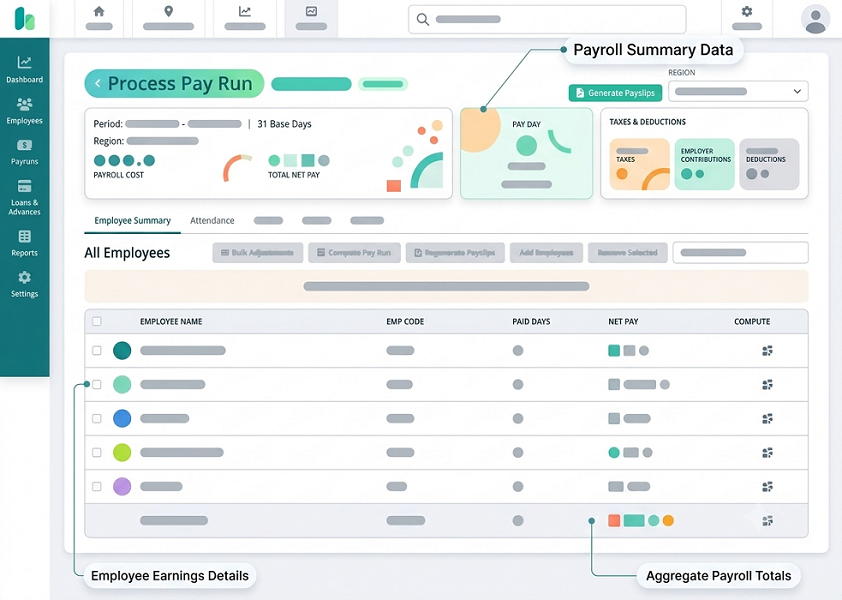
1. Employment Contracts Define Working Hours
An employment contract sets out important details of the employee's role and working arrangements. These details help HR teams configure schedules and help payroll teams determine whether recorded hours align with the employee's agreed terms.
Under UAE Federal Decree-Law No. 33 of 2021, normal working hours for employees covered by the standard private-sector framework are generally eight hours per day or 48 hours per week, subject to applicable exceptions and special arrangements.
Employment and workplace policies may specify details such as:
- Normal working hours
- Working days
- Weekly rest days
- Shift schedules
- Break arrangements
- Flexible or remote working conditions
- Overtime approval procedures
HR should ensure that the employee's schedule in the attendance system reflects the applicable contract and workplace arrangements.
For example, if an employee is assigned to a rotating shift, an attendance system should recognise the scheduled start and end times rather than applying a standard office schedule to every employee.
2. Contracts Help Configure Attendance Policies
Attendance policies should be consistent with the employee's contractual working arrangements and applicable legal requirements.
An organisation may use different attendance rules for office employees, retail staff, warehouse workers, construction teams, and field service employees. However, these differences should be managed through documented schedules and policies rather than informal assumptions.
Employment contracts and related workplace policies may address:
- Check-in and check-out requirements
- Attendance recording methods
- Shift assignments
- Late-arrival procedures
- Absence reporting
- Remote-work arrangements
- Field attendance verification
- Overtime approval
- Procedures for correcting attendance records
A digital attendance system can use these settings to identify missing check-ins, late arrivals, early departures, and discrepancies between scheduled and recorded hours.
Employers should also ensure that attendance rules are communicated clearly and applied consistently.
3. Employment Contracts Influence Salary Structures
Employment contracts generally specify the employee's agreed compensation and may distinguish between basic salary and allowances.
A salary package may include:
- Basic salary
- Housing allowance
- Transport allowance
- Communication allowance
- Other fixed allowances
- Variable compensation or incentives, where applicable
Payroll software should store these components separately rather than treating the entire package as a single amount.
This distinction is important because certain UAE statutory calculations use basic wage, while other payments may be governed by the wider wage definition, contractual terms, or specific legal provisions.
For example, the standard end-of-service gratuity calculation for eligible foreign employees generally uses the last basic wage rather than the employee's entire compensation package.
By maintaining an accurate contract-based salary structure, employers can reduce errors in overtime calculations, leave-related payments, final settlements, and other payroll components.
4. Contracts Affect Overtime Calculations
Employment contracts and company policies help establish normal working arrangements and the process for recording additional hours. However, contractual wording cannot override mandatory statutory entitlements.
For employees covered by the standard UAE private-sector overtime provisions, additional compensation may be due when qualifying overtime is worked.
Payroll teams should verify:
- The employee's normal working schedule
- Actual hours worked
- Applicable overtime category
- Basic wage used for the relevant calculation
- Required approvals and supporting records
- Any legal exception that applies to the employee
For example, an employee whose normal schedule ends at 5 p.m. may work additional hours to complete an urgent assignment. The employer should compare the recorded hours against the employee's schedule, determine whether the time qualifies as overtime, and apply the relevant legal calculation.
An attendance system integrated with payroll can transfer approved overtime entries into the payroll calculation, reducing the need for manual data entry.
5. Employment Contracts Guide Leave Management
Contracts, applicable legislation, and company policies work together to determine how different types of leave should be managed.
HR and payroll teams should distinguish between:
- Annual leave
- Sick leave
- Maternity and parental leave
- Bereavement leave
- Official public holidays
- Approved unpaid leave
- Other applicable statutory or contractual leave
These categories can have different eligibility requirements, payment rules, documentation requirements, and effects on attendance.
For example, approved annual leave should not be treated as unauthorised absence. Similarly, unpaid leave should be recorded separately so payroll can apply the appropriate salary treatment.
A leave management system linked to payroll helps ensure that approved leave requests update employee balances and provide the correct information for salary processing.
6. Contracts Help Determine Unpaid Leave and Absence Treatment
Not every absence should result in an automatic salary deduction.
HR should first determine whether the employee's absence was approved, whether it qualifies under an applicable leave entitlement, and how the relevant contractual and legal rules apply.
Common cases include:
- Approved unpaid leave
- Unauthorised absence
- Absence due to illness
- Leave extensions
- Absence following the end of approved leave
- Missing attendance records
Payroll software can help distinguish these categories by connecting leave approvals, attendance records, and salary calculations.
Before processing a deduction, employers should verify the supporting records and applicable rules. An internal attendance policy should not be used to impose deductions that are inconsistent with UAE law or the employment agreement.
7. Probation and Notice Terms Affect Payroll
Employment contracts also contain information relevant to probation, termination, and notice periods.
Under the general UAE private-sector framework, probation cannot exceed six months. Different notice requirements apply depending on whether the employer terminates employment during probation, the employee resigns to join another UAE employer, or the employee intends to leave the UAE.
After probation, the agreed notice period is generally between 30 and 90 days for covered private-sector employment contracts, subject to applicable law.
These provisions affect payroll because HR must establish the correct final working date and determine the salary and other entitlements due.
The final payroll review may include:
- Salary earned up to the relevant date
- Approved overtime
- Outstanding contractual payments
- Applicable leave settlement
- Notice-period compensation, where legally due
- End-of-service benefits, where applicable
- Lawful and documented deductions
Payroll teams should use the actual contract terms and applicable law rather than relying on a standard notice period for every employee.
8. Employment Contracts Influence Public Holiday and Rest-Day Scheduling
Employment contracts and workplace schedules help identify employees' normal working days and weekly rest days. These details are important when employees are required to work on public holidays or designated rest days.
Under the applicable UAE private-sector rules, qualifying public holiday work may require compensatory time off or additional payment, depending on the circumstances and legal provisions.
HR and payroll teams should confirm:
- Whether the date is an official public holiday
- Whether the employee was scheduled to work
- Whether the employee actually worked
- Whether compensatory time off was provided
- Which payment rules apply
- Whether the hours have already been included in another payroll calculation
A reliable attendance system can flag work recorded on holidays and rest days for review before payroll is finalised.
9. Remote and Field Work Arrangements Need Clear Rules
UAE companies increasingly employ staff who work remotely, visit customers, travel between sites, or operate across multiple branches.
Employment contracts and related policies should clarify the applicable working arrangements and how employees are expected to record attendance.
For remote and field employees, employers may need to define:
- Expected working hours or availability
- Attendance recording procedures
- Field visit documentation
- Remote-work approval
- Reporting requirements
- Procedures for missed check-ins
- How travel time is treated under applicable rules
- How attendance corrections are requested
For example, a field service technician may begin the day at a customer site rather than the company office. A mobile attendance system can record the check-in and associate it with the assigned job, subject to the employer's policies and applicable privacy requirements.
Location tracking should be proportionate to the business purpose, transparent to employees, and handled in accordance with applicable data-protection requirements.
10. How Payroll Software Connects Contracts, Attendance, and Salary
Managing contract terms, attendance, leave, and payroll in separate systems can create inconsistencies. A contract may specify one schedule while the attendance system applies another, or a salary revision may not reach payroll before processing.
Integrated HR and payroll software helps connect these records.
A typical workflow is:
Employment Contract → Employee Master Data → Attendance Schedule → Leave and Overtime Validation → Payroll Calculation → Payslip → Salary Payment
Useful features include:
- Employee contract and salary records
- Working-hour and shift configuration
- Attendance integration
- Leave approval workflows
- Overtime calculations
- Salary component management
- Contract and probation reminders
- Payroll exception reports
- Final settlement calculations
- Audit trails for changes
Automation can reduce manual work, but HR teams must configure the system using the applicable contract terms and current legal requirements.
11. Common Mistakes Employers Should Avoid
| Common mistake | Recommended control |
|---|---|
| Attendance schedules do not match contractual arrangements | Review schedules when contracts or work patterns change |
| Basic salary and allowances are combined incorrectly | Maintain separate salary components |
| Overtime is calculated from incorrect records | Validate attendance and applicable legal rules |
| Approved leave is marked as absence | Integrate leave approvals with attendance |
| Unpaid leave deductions are applied automatically | Review leave status and supporting documentation |
| Holiday work is missed in payroll | Flag attendance recorded on official holidays |
| Contract changes do not reach payroll | Use a controlled employee-data update workflow |
| Notice dates are calculated incorrectly | Track contractual notice requirements and legal rules |
| Salary adjustments lack approval records | Maintain an audit trail of authorised changes |
12. Best Practices for HR and Payroll Teams
To align employment contracts with attendance and payroll policies, UAE employers should follow these practices:
- Maintain accurate employee records: Store contract details, salary components, work schedules, and relevant employment dates in a central system.
- Review changes promptly: Update attendance and payroll settings whenever approved contractual terms change.
- Separate attendance from payroll decisions: Use attendance records as evidence, then verify the applicable policy and legal treatment before processing deductions or additional payments.
- Document approvals: Keep records of overtime, leave, schedule changes, salary revisions, and other payroll-affecting decisions.
- Reconcile monthly payroll: Compare approved attendance and leave records with overtime, salary adjustments, payslips, and payment records.
- Protect employee information: Limit access to contract and salary data to authorised personnel and follow applicable privacy and retention requirements.
- Review legal changes: Ensure that contract templates and payroll configurations reflect current UAE employment requirements.
Conclusion
Employment contracts provide an important foundation for attendance management and payroll processing in the UAE. They help define working arrangements, compensation structures, leave procedures, and notice requirements. When these details are not reflected accurately in HR systems, companies risk attendance discrepancies, incorrect salary calculations, and avoidable employee disputes.
By connecting contract records with attendance management, leave tracking, and payroll software, UAE employers can improve the accuracy of working-hour records, process salary components consistently, and maintain a reliable audit trail.
Contract details set the context for schedules and pay. InnBuilt Employee Management can help UAE teams connect each employee's agreed work arrangement with attendance rules and payroll records.