How Does Face Recognition Attendance Work for UAE Workplaces?
How Does Face Recognition Attendance Work for UAE Workplaces?
Face recognition attendance is a biometric time-tracking method that uses an employee's facial features to verify identity when they arrive at or leave the workplace. For UAE organizations, it can provide a convenient alternative to manual registers, attendance cards, or traditional punch-in systems.
When properly implemented, face recognition can help HR teams improve attendance accuracy, reduce proxy attendance, and connect working-hour data with payroll.
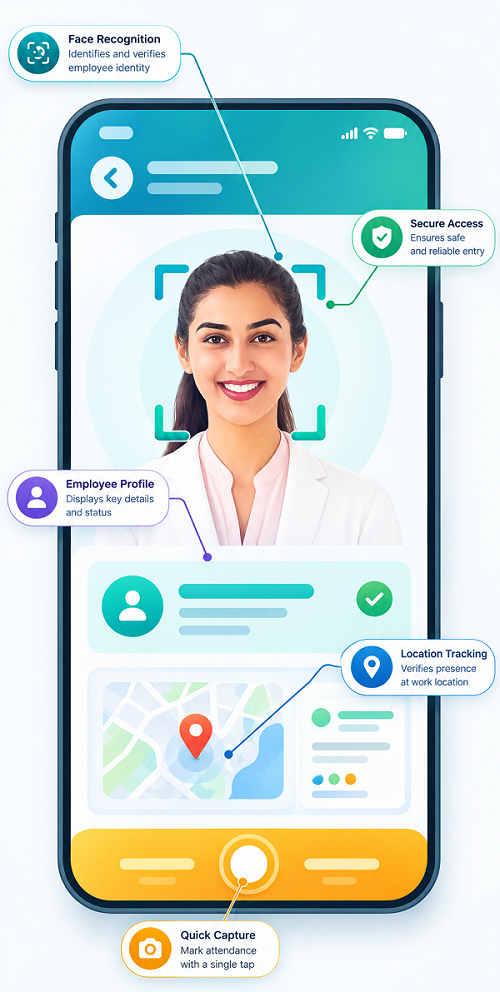
What Is Face Recognition Attendance?
A face recognition attendance system uses a camera and specialized software to identify an employee based on their facial characteristics.
Instead of using a physical card or PIN, an employee typically looks at a device or camera. The system compares the captured facial features with the employee's registered biometric profile and records the attendance event.
The basic process is:
Employee approaches device → Face is detected → Identity is verified → Time is recorded → Attendance database is updated
How Does the System Work?
1. Employee Registration
First, the employee's facial profile is registered in the attendance system. The organization should follow appropriate privacy, security, and consent procedures when collecting and processing biometric information.
The system creates a biometric representation that can be used for future verification.
2. Face Detection
When an employee arrives at the workplace, the camera detects a face within its field of view. Modern systems can distinguish a face from the surrounding environment and prepare the image for verification.
3. Identity Verification
The system compares the detected facial characteristics with the employee's registered profile.
If the system determines that there is a valid match, the employee's attendance event is recorded.
4. Attendance Recording
The system records information such as:
- Employee identity
- Date
- Clock-in time
- Clock-out time
- Work location or device
- Attendance status
The information can then be displayed in an HR or workforce management dashboard.
How Does Face Recognition Reduce Proxy Attendance?
One advantage of biometric attendance is that employees generally cannot simply give a colleague their attendance card or PIN.
With face verification, the system checks the person physically present at the attendance terminal. This can help organizations reduce common forms of proxy attendance.
However, employers should select systems with appropriate security and anti-spoofing capabilities rather than assuming every facial-recognition system provides the same level of protection.
How Can UAE HR Teams Use the Data?
Once attendance information has been recorded, HR can use it to manage employee working hours and payroll-related processes.
For example, the system can help calculate:
- Working hours
- Late arrivals
- Early departures
- Absences
- Overtime
- Shift attendance
- Attendance exceptions
- Leave-related attendance
When attendance and payroll systems are integrated, approved attendance information can flow directly into payroll processing.
Face Recognition for Multiple UAE Locations
Companies operating across Dubai, Abu Dhabi, Sharjah, and other locations may need centralized attendance management.
A cloud-based system can allow HR teams to manage employees across multiple:
- Offices
- Branches
- Construction sites
- Retail outlets
- Warehouses
- Project locations
HR can view attendance information centrally while managers can monitor employees assigned to their respective locations.
What About Outdoor and Field Employees?
Face recognition attendance can also be useful for organizations with employees working at different sites. Depending on the system, employees may use mobile devices, approved attendance terminals, or other supported methods.
For field employees, organizations should ensure that attendance procedures are practical and do not create unnecessary privacy or security risks.
Is Face Recognition Attendance Suitable for UAE Workplaces?
Face recognition can be useful for UAE employers, but implementation should be approached carefully. Organizations need to consider applicable UAE employment, privacy, data-protection, and workplace requirements when collecting and processing biometric information.
Employers should establish clear policies covering:
- Why biometric information is collected
- How it is used
- Who can access it
- How it is protected
- How long information is retained
- What happens when an employee cannot be recognized
- Alternative attendance methods
- Employee questions or complaints
Organizations should also review applicable UAE data-protection requirements and obtain appropriate legal or compliance advice before deployment.
What Happens if the System Cannot Recognize an Employee?
Face recognition should not be the only way employees can report attendance.
Recognition can fail because of:
- Poor lighting
- Camera positioning
- Changes in appearance
- Device problems
- Network connectivity
- Technical errors
HR should provide an exception process, such as manual attendance correction or an approved alternative authentication method.
Benefits for HR
Face recognition attendance can provide several operational benefits:
- Reduces manual attendance work
- Helps prevent proxy attendance
- Provides real-time attendance records
- Simplifies shift management
- Supports multiple locations
- Reduces manual data entry
- Improves payroll input accuracy
- Provides attendance reports
- Creates an auditable attendance trail
Conclusion
Face recognition attendance works by identifying employees through facial biometric verification and automatically recording their attendance events. For UAE workplaces, it can make attendance management more efficient, particularly for organizations with multiple shifts, branches, or large workforces.
However, biometric attendance should be implemented with strong data-security controls, clear employee policies, appropriate safeguards, and compliance with applicable UAE privacy and employment requirements. When integrated with HR and payroll software, face recognition can help create a streamlined process from employee verification to attendance tracking and payroll preparation.
InnBuilt Face Attendance Software can associate a verified check-in with the assigned employee and shift, offering UAE workplaces a practical alternative to shared cards or manual registers.