How Should Facial Attendance Data Be Handled for UAE Employees?
How Should Facial Attendance Data Be Handled for UAE Employees?
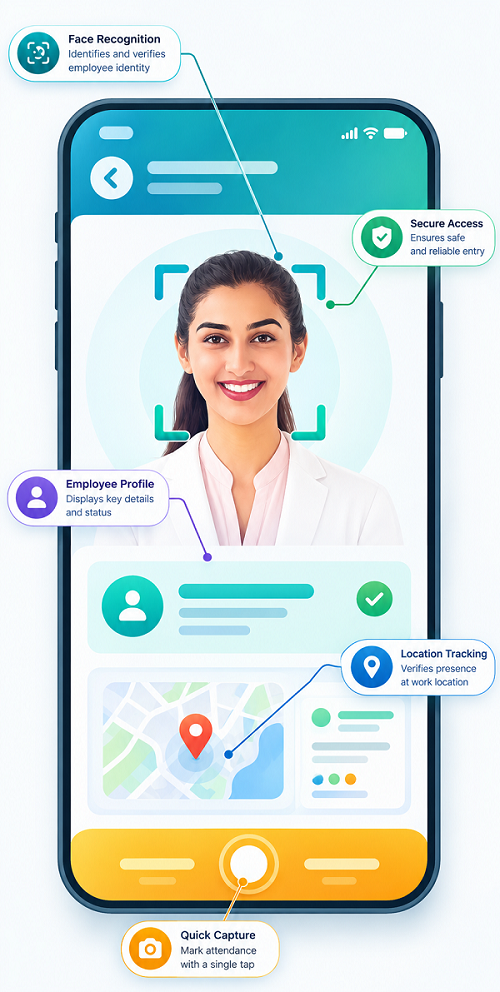
Facial attendance can help UAE employers automate employee time tracking, reduce proxy attendance, and improve payroll accuracy. However, facial recognition involves biometric information that can be used to identify an individual. Employers should therefore treat facial attendance data as sensitive employee information and establish appropriate privacy, security, access, and retention controls.
Before introducing facial attendance, HR teams should work with legal and IT teams to assess the UAE requirements applicable to their organization and the way the biometric system will operate.
1. Define Why Facial Data Is Being Collected
Employers should establish a clear and legitimate purpose for collecting facial attendance information.
For example, the purpose may be to:
- Verify employee identity
- Record clock-in and clock-out times
- Prevent buddy punching
- Manage working hours
- Support attendance reporting
- Provide accurate payroll inputs
The organization should avoid collecting or using facial information for unrelated purposes without assessing whether that use is permitted.
2. Inform Employees Clearly
Employees should receive clear information about how the facial attendance system works before it is introduced.
An employee-facing policy or notice can explain:
- What biometric information is collected
- Why it is collected
- How attendance is recorded
- Who can access the information
- Where the information is stored
- How long it is retained
- Whether a third-party provider processes it
- How employees can raise questions or concerns
Clear communication helps employees understand the purpose of the system and the organization's data-handling practices.
3. Collect Only What Is Necessary
HR should work with the technology provider to determine what information is actually required for attendance verification.
A system may use a biometric template or mathematical representation rather than retaining ordinary photographs for every attendance event. The exact architecture depends on the technology.
Employers should avoid collecting additional biometric or personal information that is not necessary for the stated attendance purpose.
4. Secure Biometric Information
Facial attendance information should be protected against unauthorized access, alteration, loss, and disclosure.
Employers should consider controls such as:
- Encryption
- Role-based access
- Strong authentication
- Access logs
- Secure data transmission
- Device security
- Regular security assessments
- Backup and recovery procedures
Access should be limited to personnel who genuinely need the information for their responsibilities.
5. Control HR and Manager Access
Not every manager needs access to employee biometric information.
For example, a branch manager may only need to view attendance status, while the HR or system administrator may have additional permissions.
A role-based model can separate:
Attendance information → HR access → Payroll access → System administration
This reduces unnecessary exposure of biometric information.
6. Understand Third-Party Vendor Responsibilities
Many UAE employers use cloud-based attendance platforms operated by external technology providers. Before selecting a provider, HR and IT teams should understand how the vendor handles biometric information.
Employers should review:
- Data processing responsibilities
- Data storage location
- Security measures
- Subprocessors
- Retention policies
- Data deletion procedures
- Incident notification
- Access controls
- Contract termination procedures
If a provider processes information outside the UAE, the organization should assess the applicable requirements for international data transfers.
7. Establish a Retention and Deletion Policy
Employers should determine how long facial attendance information needs to be retained.
The retention period should be linked to legitimate business, legal, regulatory, and recordkeeping requirements rather than keeping biometric information indefinitely.
When biometric information is no longer required, the organization should follow its approved deletion or anonymization procedure, subject to any applicable legal retention obligations.
8. Protect Data During Employee Offboarding
When an employee leaves the organization, HR should ensure that their access to the attendance system is removed.
The offboarding process should include:
- Deactivating the employee's account.
- Removing unnecessary system permissions.
- Reviewing retained attendance records.
- Handling biometric information according to the organization's retention policy.
- Ensuring third-party providers follow applicable deletion requirements.
This prevents former employees from retaining unnecessary access to organizational systems.
9. Have a Process for Recognition Failures
Facial recognition is not always perfect. Recognition can fail because of device problems, lighting, network issues, or other circumstances.
Employees should have a clear method to report a failed authentication.
For example:
Recognition fails → Employee reports issue → HR verifies attendance → Approved correction is recorded
This prevents employees from being unfairly marked absent because of a technical problem.
10. Maintain an Audit Trail
HR should maintain appropriate records of changes made to attendance information.
The system should ideally identify:
- Original attendance event
- Correction made
- Person making the correction
- Date and time of correction
- Reason for adjustment
An audit trail helps HR investigate disputes and identify unauthorized modifications.
11. Avoid Using Facial Attendance for Unrelated Monitoring
Facial attendance should have a clearly defined purpose. Employers should carefully distinguish between attendance verification and broader employee surveillance.
If an organization wants to introduce additional uses for facial-recognition technology, it should conduct a separate legal, privacy, and operational assessment rather than automatically extending the original attendance purpose.
12. Train HR and Employees
Employees responsible for administering the system should understand privacy and security procedures.
Training can cover:
- Appropriate access to biometric information
- Password and authentication security
- Attendance corrections
- Data-retention procedures
- Employee requests
- Security incidents
- Failed recognition
- Vendor-related issues
Employees should also know who to contact if they have concerns about their biometric attendance data.
13. Review UAE Compliance Requirements Regularly
UAE data-protection and employment requirements can affect how employee information is collected, processed, stored, and transferred. Organizations should periodically review their facial attendance practices and update policies when requirements or technology change.
Businesses operating across different jurisdictions or using international cloud providers may need additional compliance assessments.
Conclusion
Facial attendance data should be handled as important biometric employee information. UAE employers should establish a clear purpose for collecting it, inform employees, limit data collection, apply strong security controls, restrict access, carefully manage vendors, define retention periods, and provide an alternative process when recognition fails.
A well-designed facial attendance system should not only improve attendance and payroll accuracy but also incorporate privacy and data-security safeguards from the beginning. By combining appropriate technology with clear policies and responsible data management, UAE employers can use facial attendance while reducing unnecessary risks associated with biometric employee information.
Face data needs a considered handling process. InnBuilt Face Attendance Software can help UAE organisations define authorised access, enrollment practices and retention reviews alongside their wider data-protection responsibilities.