What Is the Difference Between GPS Tracking and Geo-Fenced Check-Ins in the UAE?
What Is the Difference Between GPS Tracking and Geo-Fenced Check-Ins in the UAE?
Managing field employees requires HR teams to know whether employees are working at their assigned locations without creating unnecessary administrative work. Two technologies often used for this purpose are GPS tracking and geo-fenced check-ins.
Although both use location technology, they serve different purposes. GPS tracking can monitor an employee's location over a period of time, while geo-fenced check-ins generally verify whether an employee is at an approved location when they record attendance.
Understanding the difference is important for UAE employers when selecting an attendance or workforce management solution.
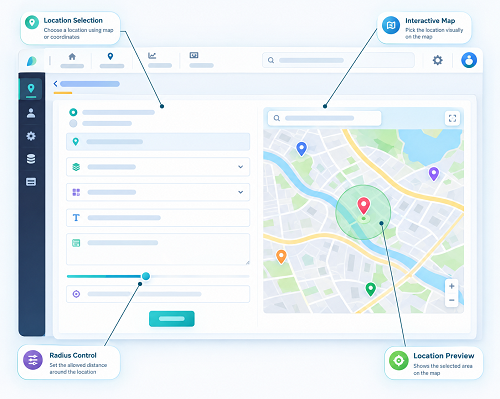
1. What Is GPS Tracking?
GPS tracking uses location services on a mobile device or tracking device to determine its geographical position.
Depending on the software configuration, GPS tracking can collect location information at specific intervals or continuously while the tracking function is active.
For example, a field service company may use GPS tracking to understand the movement of a service vehicle or field team during working hours.
GPS tracking can provide information such as:
- Current or recent location
- Travel route
- Movement between locations
- Time spent at certain locations
- Distance travelled
- Location history
The exact information collected depends on the application, device, settings, and business purpose.
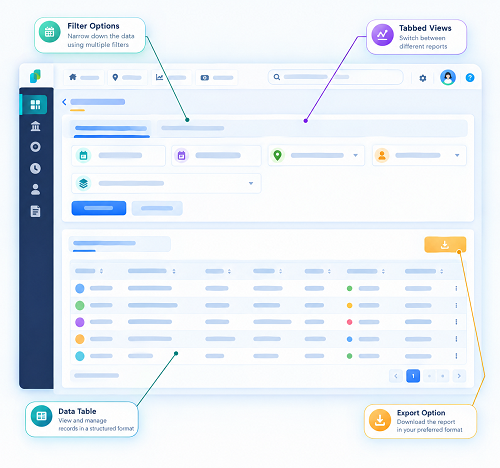
2. What Is a Geo-Fenced Check-In?
A geo-fenced check-in uses a virtual geographic boundary around an approved workplace.
For example, an employer can create a geo-fence around a construction project, branch, warehouse, or customer site.
When an employee attempts to check in, the attendance application can verify whether the employee's device is within the permitted geographic area.
A typical process is:
Employee arrives → Location is verified → Employee checks in → Attendance is recorded
The system generally focuses on validating the attendance event rather than continuously monitoring the employee's movements.
3. GPS Tracking vs. Geo-Fenced Check-Ins
The key difference is continuous or periodic location monitoring versus location verification at an attendance event.
| Feature | GPS Tracking | Geo-Fenced Check-In |
|---|---|---|
| Main purpose | Monitor location or movement | Verify attendance at an approved location |
| Location collection | May be continuous or periodic | Usually linked to check-in/check-out |
| Route visibility | Usually possible | Generally not the primary purpose |
| Attendance verification | May require additional functionality | Core function |
| Employee movement | Can provide movement history | Usually does not require continuous tracking |
| Privacy considerations | Higher when continuously used | More limited when used only for attendance events |
| Best suited for | Fleet, field operations, logistics | Attendance and workforce management |
The exact behavior depends on the software and configuration.
4. How Does GPS Tracking Work for UAE Field Employees?
A GPS-enabled application can periodically determine the location of an employee's mobile device.
For example, a field sales employee may visit several customer locations during the day.
Depending on the employer's system and policy, GPS tracking may provide information about:
- Where the employee started the day
- Locations visited during working hours
- Approximate travel route
- Time spent between assignments
- Arrival at customer locations
This can be useful for operational management, route planning, and field service coordination.
However, employers should carefully define when location tracking is active and why the information is required.
5. How Does Geo-Fenced Check-In Work?
Geo-fenced attendance is generally more focused.
Suppose a company has a service centre in Dubai with a defined attendance boundary.
When an employee arrives:
- The employee opens the attendance application.
- The application obtains location information from the device.
- The system checks whether the employee is inside the approved geo-fence.
- If the location meets the configured requirements, the employee can submit a check-in.
- The system records the attendance event.
The location may then be associated with the attendance record for audit and verification purposes.
The same process can be used for multiple branches or project locations.
6. Which Is Better for Attendance Management?
For straightforward attendance verification, geo-fenced check-ins are often more appropriate than continuous GPS tracking.
An organization may only need to answer:
“Was the employee at the approved workplace when they checked in?”
It may not need to know:
“Where was the employee every few minutes throughout the working day?”
Geo-fencing can therefore provide location verification without necessarily requiring continuous location monitoring.
This can make it easier to align the attendance process with the specific business requirement.
7. Which Is Better for Field Operations?
GPS tracking can be more useful when the business needs operational visibility.
For example, logistics and field-service organizations may need to coordinate:
- Delivery routes
- Service calls
- Vehicle movement
- Customer visits
- Technician schedules
- Travel between assignments
In these situations, understanding movement may be part of the legitimate operational requirement.
However, GPS tracking should not automatically be used simply because the technology is available.
Employers should determine what information is actually necessary for the intended purpose.
8. Privacy Is an Important Consideration in the UAE
Location information can be sensitive from an employee privacy perspective, particularly when collected continuously.
UAE employers should assess applicable data protection and privacy requirements before implementing location-based workforce systems.
A good implementation should clearly define:
- Why location information is collected
- When it is collected
- What information is stored
- Who can access it
- How long it is retained
- How it is protected
- What happens when an employee leaves the organization
Employers should also communicate the process clearly to employees.
A system designed only for attendance verification may require significantly less location information than one designed for continuous workforce tracking.
9. GPS Tracking Does Not Automatically Mean Attendance Verification
An important distinction is that GPS location and attendance are not the same thing.
For example, GPS data may show that an employee's device was near a customer location at 10:00 AM.
That does not necessarily prove that the employee completed a formal attendance event.
A dedicated attendance system can connect location verification with:
- Employee identity
- Check-in time
- Check-out time
- Shift
- Work schedule
- Attendance status
This creates a more structured attendance record.
10. Geo-Fencing Can Support Multiple UAE Worksites
Organizations operating across several locations can create separate geo-fences.
| Location | Geo-Fence |
|---|---|
| Dubai office | Office boundary |
| Abu Dhabi branch | Branch boundary |
| Sharjah warehouse | Warehouse boundary |
| Construction project | Project-site boundary |
| Customer service location | Approved service boundary |
Employees can then be assigned to appropriate locations based on their work schedules.
This can help HR teams manage distributed workforces without requiring employees to report to a central office.
11. What Happens When GPS Is Unavailable?
Both GPS tracking and geo-fenced attendance can be affected by technical conditions.
Problems may occur because of:
- Weak GPS signals
- Indoor locations
- Device settings
- Poor network connectivity
- Battery limitations
- Mobile operating system restrictions
- Tall buildings or other physical obstructions
Organizations should therefore establish an attendance exception process.
For example:
Location verification fails → Employee reports issue → Supervisor verifies attendance → HR approves correction
Some applications may also support offline attendance and synchronization when connectivity returns, but employers should confirm the specific capabilities of their chosen system.
12. How Can Both Technologies Work Together?
GPS tracking and geo-fenced attendance do not necessarily have to be competing technologies.
An organization could use them for different purposes.
For example:
Geo-fenced attendance: Used to verify that an employee arrived at an assigned site.
GPS tracking: Used by authorized field teams where route or operational monitoring is genuinely required.
This approach allows organizations to match the technology to the business need rather than applying continuous tracking to every employee.
13. Which Technology Should UAE Employers Choose?
The right choice depends on the organization's requirements.
Choose geo-fenced check-ins when you primarily need:
- Attendance verification
- Location-based check-in
- Multiple-site attendance
- Reduced manual timesheets
- Payroll-ready attendance records
- Simple field employee attendance management
Consider GPS tracking when you genuinely need:
- Route visibility
- Field-service coordination
- Delivery monitoring
- Fleet management
- Operational movement information
- Travel or assignment monitoring
For many HR departments, geo-fenced check-ins may be sufficient when the primary requirement is attendance rather than continuous employee monitoring.
14. Best Practices for UAE Employers
Before introducing either system, HR teams should:
- Define the business purpose – Determine exactly why location information is needed.
- Collect only what is necessary – Avoid excessive location collection where attendance verification is sufficient.
- Set clear operating hours – Define when location functionality applies.
- Inform employees – Explain the attendance and location process clearly.
- Secure the data – Restrict access to authorized personnel.
- Define retention rules – Do not retain location information indefinitely without a legitimate reason.
- Create an exception process – Provide alternatives for GPS or connectivity failures.
- Integrate attendance with payroll – Connect verified attendance with working hours, leave, overtime, and payroll where appropriate.
- Review vendor practices – Understand how the attendance provider stores, processes, secures, and accesses location information.
- Review UAE privacy obligations – Obtain appropriate legal or compliance advice where necessary.
Conclusion
GPS tracking and geo-fenced check-ins both use location technology, but they are designed for different purposes.
GPS tracking focuses on location and movement, while geo-fenced check-ins focus on verifying attendance at an approved location.
For UAE employers managing field employees, geo-fenced attendance can be a practical option when the primary objective is to confirm where an employee checked in without necessarily monitoring their movements throughout the day.
GPS tracking can be more suitable for businesses that have a genuine operational need to understand field movement, routes, or service activity.
The best approach is to select the least intrusive technology that meets the organization's legitimate business requirements, establish clear employee policies, protect location information, and integrate verified attendance with HR and payroll processes.
A geo-fenced check-in verifies attendance at a designated location; GPS tracking can show movement during authorised work. InnBuilt Employee Tracking App can support UAE teams selecting the appropriate level of visibility.