How Can UAE Hospitals Schedule Nurses Across Rotating Shifts?
How Can UAE Hospitals Schedule Nurses Across Rotating Shifts?
Hospitals in the UAE operate around the clock, making effective nurse scheduling essential for patient care, staff availability, and smooth hospital operations. Nurses may work morning, evening, night, weekend, and holiday shifts, while hospitals must also manage leave, overtime, emergencies, and changing patient volumes.
A structured rotating-shift scheduling system helps hospitals maintain adequate nursing coverage while distributing working hours fairly. Digital workforce management and attendance software can further simplify scheduling, shift tracking, attendance verification, and payroll processing.
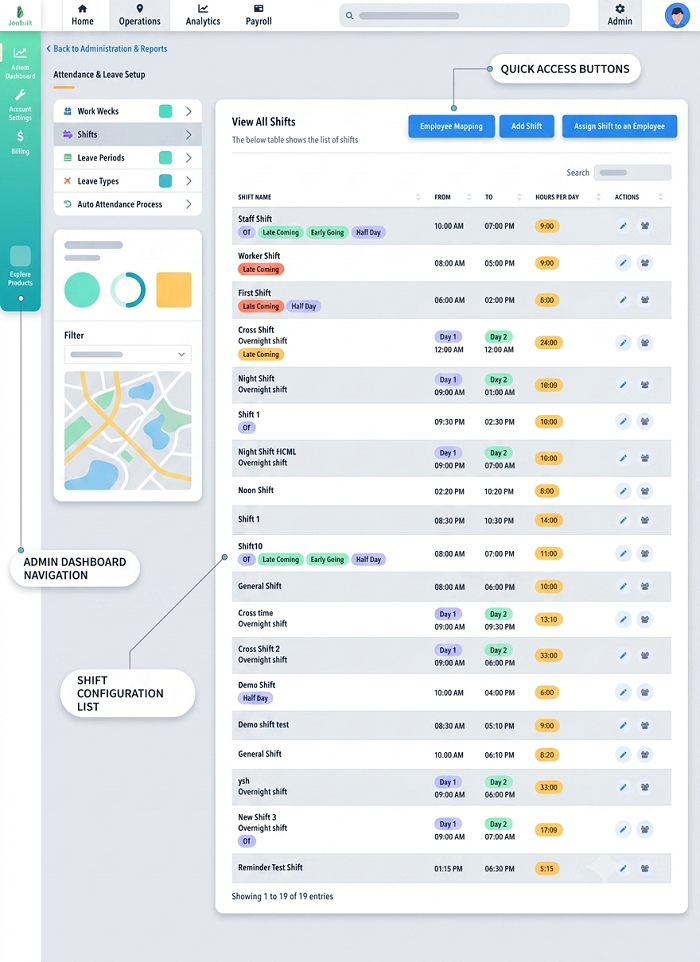
1. Identify Nursing Requirements by Department
The first step is to determine how many nurses are required for each department and shift.
Requirements can differ significantly between:
- Emergency departments
- Intensive care units
- General wards
- Operating theatres
- Maternity departments
- Paediatric units
- Outpatient clinics
- Specialized care units
Hospitals should consider patient volume, nurse qualifications, expected admissions, and minimum staffing requirements when creating schedules.
For example, an ICU may require more experienced nurses during every shift, while an outpatient department may need higher staffing during daytime hours.
2. Create a Structured Shift Pattern
Hospitals can establish standard rotating shift patterns rather than preparing every schedule manually.
A common structure could include:
| Shift | Example Timing |
|---|---|
| Morning | 7:00 AM – 3:00 PM |
| Evening | 3:00 PM – 11:00 PM |
| Night | 11:00 PM – 7:00 AM |
Actual working hours should be configured according to the hospital's operational requirements, employment arrangements, applicable rules, and approved policies.
A structured pattern makes it easier for nurses and managers to understand upcoming shifts and reduces scheduling confusion.
3. Rotate Nurses Fairly
Rotating shifts should be distributed fairly across the nursing team.
For example, a hospital could rotate nurses between morning, evening, and night shifts according to a predefined roster. Managers should monitor how frequently each nurse receives night or weekend assignments.
A scheduling system can help track:
- Number of night shifts
- Weekend shifts
- Holiday assignments
- Consecutive working days
- Rest periods
- Overtime
- Leave days
- Shift swaps
Fair distribution can improve transparency and reduce complaints about unequal scheduling.
4. Consider Nurse Skills and Qualifications
Availability alone should not determine shift assignments.
Hospitals should also consider each nurse's:
- Department
- Clinical specialization
- Experience
- Certifications
- Skill level
- Assigned responsibilities
- Approved work restrictions
For example, a specialized unit may require nurses with specific clinical experience. A scheduling system should therefore match nurses to shifts based on both availability and qualifications.
5. Avoid Unsafe or Unsustainable Shift Sequences
Rotating schedules should be designed carefully to reduce excessive fatigue.
Managers should review schedules for situations such as:
- Too many consecutive shifts
- Excessive night shifts
- Short intervals between shifts
- Frequent last-minute changes
- Excessive overtime
- Repeated weekend assignments
A digital scheduler can highlight potential scheduling conflicts before the roster is published.
Hospitals should also align scheduling practices with applicable UAE employment requirements, internal policies, contractual arrangements, and patient-safety considerations.
6. Manage Leave Before Finalizing the Roster
Nurse leave requests should be incorporated into the schedule before shifts are finalized.
A centralized system can show:
- Approved leave
- Pending leave
- Sick leave
- Annual leave
- Training days
- Public-holiday availability
- Unavailable dates
This prevents managers from assigning nurses to shifts when they are already unavailable.
It also makes it easier to identify staffing gaps early and arrange replacements.
7. Use Digital Shift Scheduling Software
Manual spreadsheets can become difficult to manage when a hospital has hundreds of nurses working across multiple departments.
A digital scheduling system can provide a centralized view of:
- Nurse availability
- Shift assignments
- Department coverage
- Leave
- Overtime
- Attendance
- Shift changes
- Open positions
- Replacement requirements
Managers can make changes without maintaining multiple versions of spreadsheets or paper rosters.
8. Allow Controlled Shift Swaps
Nurses may occasionally need to exchange shifts because of personal commitments, emergencies, or other approved reasons.
Instead of allowing informal swaps, hospitals can use a controlled shift-swap process.
A typical workflow can be:
Nurse Requests Swap → Eligible Replacement Identified → Supervisor Approval → Roster Updated → Attendance Updated
The system should ensure that the replacement nurse has the required skills and is not already scheduled for another conflicting shift.
This creates a clear record of who was originally assigned and who ultimately worked the shift.
9. Monitor Real-Time Attendance Against the Roster
Scheduling and attendance should work together.
For example:
Shift Roster → Nurse Check-In → Attendance Record → Working Hours → Overtime/Exception → Payroll
If a nurse is scheduled for a night shift but does not check in, the system can flag the absence for review.
Similarly, late arrivals, early departures, missed punches, and unexpected overtime can be highlighted for supervisors.
This helps hospitals distinguish between planned schedules and actual hours worked.
10. Handle Night Shifts Correctly
Night shifts require particular attention because they may cross calendar dates.
For example, a shift from 11:00 PM to 7:00 AM begins on one day and ends on the next.
The attendance system should correctly record:
- Shift start date and time
- Shift end date and time
- Actual check-in
- Actual check-out
- Late arrival
- Early departure
- Overtime
- Shift allowance, where applicable
Accurate overnight records are especially important when attendance data is connected to payroll.
11. Prepare for Emergency Staffing Requirements
Hospitals regularly encounter unexpected staffing requirements due to emergencies, sudden patient admissions, staff absence, or operational changes.
A workforce management system can help managers identify:
- Available nurses
- Nurses currently on duty
- Nurses approaching overtime limits
- Nurses with required skills
- Nurses available for approved additional shifts
- Department staffing gaps
This allows managers to respond faster without rebuilding the entire roster.
12. Track Overtime and Additional Shifts
Rotating schedules can sometimes result in additional working hours.
Hospitals should track overtime separately from normal scheduled hours.
Useful records include:
| Record | Purpose |
|---|---|
| Scheduled Hours | Planned working time |
| Actual Hours | Time actually worked |
| Overtime | Hours beyond approved schedule |
| Additional Shift | Extra assigned duty |
| Approved Overtime | Supervisor-authorized additional hours |
| Unapproved Overtime | Requires management review |
Keeping these records digitally makes monthly payroll reconciliation easier.
13. Give Nurses Visibility Into Their Schedules
Nurses should be able to view their schedules without repeatedly contacting HR or supervisors.
A mobile employee portal can allow nurses to see:
- Upcoming shifts
- Department assignments
- Shift timing
- Approved leave
- Shift changes
- Swap requests
- Attendance records
- Overtime information
Push notifications can also help employees receive important schedule updates.
14. Maintain an Audit Trail for Schedule Changes
Hospitals should maintain records of important roster changes.
For example, if a nurse was originally scheduled for a morning shift but was later moved to a night shift, the system should record:
- Original shift
- New shift
- Date of change
- Person who made the change
- Reason, where required
- Approval status
An audit trail improves transparency and helps resolve disputes about attendance, overtime, and payroll.
15. Use Scheduling Reports to Improve Workforce Planning
Hospitals can use historical scheduling data to identify staffing trends.
Useful reports include:
- Department-wise staffing
- Shift coverage
- Night-shift distribution
- Nurse utilization
- Overtime
- Absenteeism
- Shift-swap frequency
- Unfilled shifts
- Late attendance
- Leave patterns
- Staffing shortages
These reports can help HR and nursing managers make better workforce decisions.
Best Practices for UAE Hospitals
When implementing rotating nurse schedules, hospitals should consider the following best practices:
- Build schedules around patient-care requirements.
- Match nurses to shifts based on skills and qualifications.
- Distribute night and weekend shifts fairly.
- Check rest periods and consecutive shifts.
- Integrate leave management with scheduling.
- Allow controlled and approved shift swaps.
- Connect rosters with attendance records.
- Track overtime separately from scheduled hours.
- Maintain an audit trail for schedule changes.
- Give nurses mobile access to their schedules.
- Prepare backup staffing plans for emergencies.
- Review applicable UAE employment and healthcare requirements regularly.
How Attendance Software Supports Nurse Scheduling
A modern attendance and workforce management platform can connect scheduling with actual attendance.
For example:
Create Roster → Assign Nurse → Publish Shift → Mobile/Kiosk Check-In → Track Attendance → Identify Exceptions → Calculate Working Hours → Process Payroll
This reduces manual reconciliation and gives HR and nursing managers a clearer picture of workforce availability.
For hospitals operating multiple facilities, centralized scheduling can also provide department-wise and location-wise visibility while maintaining appropriate access controls for employee information.
Conclusion
Scheduling nurses across rotating shifts requires more than simply filling available time slots. UAE hospitals need to balance patient-care requirements, nurse skills, shift rotation, leave, attendance, overtime, emergency staffing, and employee availability.
A structured digital scheduling system can make this process easier by connecting shift planning, attendance, leave, overtime, and payroll in one workflow. With accurate schedules, controlled shift changes, real-time attendance visibility, and clear workforce reports, hospitals can improve staffing coordination while creating a more transparent and manageable scheduling process.
Nursing rosters have to balance coverage and availability. InnBuilt Shift Management can help UAE hospitals coordinate rotations, leave requests and handovers without relying on separate ward spreadsheets.