How Can UAE HR Teams Prepare Attendance and Payroll Records for an Audit?
How Can UAE HR Teams Prepare Attendance and Payroll Records for an Audit?
Attendance and payroll records are essential for demonstrating compliance with employment regulations in the United Arab Emirates (UAE). Employers need to show that employees' working hours, leave, overtime, salary calculations, deductions, and wage payments are supported by accurate records and appropriate approvals.
An audit may involve internal finance teams, external auditors, or a relevant regulatory authority. Regardless of its purpose, incomplete records or inconsistencies between attendance reports and payroll calculations can create questions about payroll accuracy and employment compliance.
For HR teams, preparation should be an ongoing process rather than a last-minute activity. A structured recordkeeping system, regular reconciliations, and integrated HR and payroll software can make audits easier and reduce administrative risks.
1. Understand the UAE's Employment Recordkeeping Requirements
UAE private-sector employers are generally governed by Federal Decree-Law No. 33 of 2021 on the Regulation of Employment Relationships, as amended, and its implementing regulations.
Article 13 requires employers to maintain worker files and records in accordance with the applicable rules. The worker's file must be retained for at least two years after the end of the employment relationship under this provision.
Employers should establish a documented retention policy that covers employee files, payroll records, attendance data, leave approvals, and supporting documents. Any additional retention requirements under applicable financial, tax, pension, data-protection, or sector-specific rules should also be considered.
Before an audit, HR should confirm:
- Which employees and reporting periods are included.
- Which legal entities and work locations are covered.
- Whether the review concerns attendance, payroll, or broader employment compliance.
- Which records the auditor has requested.
- Whether the requested documents are complete and accessible.
- Whether any records require additional approval or confidentiality controls.
2. Organise Employee and Employment Records
Every employee's payroll and attendance information should be traceable to a reliable personnel record.
HR teams should maintain the relevant employment documents, including:
- Employment contract and approved amendments.
- Employee identification and required employment documentation.
- Job title, department, reporting manager, and work location.
- Salary structure and approved compensation changes.
- Employment start date and, where applicable, termination date.
- Working schedule and applicable employment model.
- Leave entitlements and relevant policy acknowledgements.
- Required work-permit and pension registration information, where applicable.
The employee's contract should match the salary and working arrangements used in payroll. If an employee receives a salary revision, for example, the employer should retain the approval and effective date supporting the revised amount.
Before an audit, HR should check for missing contracts, outdated salary information, duplicate employee records, and inconsistencies between the personnel system and payroll software.
3. Prepare Accurate Attendance Records
Attendance records provide evidence of scheduled and actual working time. They are particularly important when payroll depends on working days, hours, overtime, shift patterns, or unpaid absence.
Depending on the business, attendance may be captured through biometric devices, access-control systems, mobile applications, digital timesheets, or approved manual records.
HR teams should verify that attendance reports include:
- Scheduled workdays and shifts.
- Clock-in and clock-out records.
- Actual hours worked.
- Breaks and rest periods, where relevant.
- Approved attendance corrections.
- Late arrivals and early departures.
- Absences and approved leave.
- Overtime hours and authorisations.
- Records for remote, field-based, and flexible employees.
Missing punches and manual adjustments should be supported by an explanation and appropriate approval. HR should not alter attendance records simply to make a report appear complete.
For example, if an employee forgets to clock out, the correction should identify the employee, date, revised time, reason for the change, and approving manager.
4. Reconcile Attendance with Payroll
One of the most important audit-preparation tasks is confirming that attendance information agrees with the salary calculation.
Payroll teams should reconcile scheduled hours, actual attendance, approved leave, overtime, and absence adjustments against the payroll register.
A practical reconciliation process includes:
- Export the attendance report for the payroll period.
- Compare scheduled and actual working hours.
- Verify leave and absence approvals.
- Confirm overtime and other variable-pay approvals.
- Review salary adjustments and deductions.
- Compare the validated inputs with the payroll register.
- Investigate differences and document corrections.
- Obtain final payroll approval before payment.
For example, suppose an employee's attendance record shows two approved overtime hours, but the payroll register contains no overtime payment. The team should investigate whether the hours were already compensated, incorrectly classified, or omitted from payroll.
Every discrepancy should have a documented resolution. A completed reconciliation report helps auditors understand how payroll inputs were checked and approved.
5. Verify Salary Calculations and Deductions
An audit may examine whether employees were paid according to their employment contracts and applicable legal requirements.
HR and payroll teams should be able to explain how gross salary, allowances, overtime, leave adjustments, unpaid absence, and other payroll components were calculated.
Review the following records:
- Monthly payroll registers.
- Salary structures and approved revisions.
- Overtime calculations and supporting approvals.
- Leave and unpaid-absence adjustments.
- Allowance and reimbursement records.
- Employee-authorised deductions, where relevant.
- Other deductions supported by an applicable legal or contractual basis.
- Final settlement calculations for employees who have left.
The team should distinguish between recurring salary components, variable earnings, expense reimbursements, and statutory or authorised deductions.
For example, if an employee's salary was reduced following an approved period of unpaid leave, payroll should retain the leave approval and the calculation supporting the adjustment.
Employers should not rely on unexplained manual entries or make deductions without verifying the applicable legal basis.
6. Check Wage Protection System (WPS) Records
For establishments subject to the UAE Wage Protection System, wage-payment records are an important part of payroll audit preparation.
The WPS facilitates electronic wage payments and enables the relevant authorities to monitor salary-payment compliance. Employers should confirm that the salary amounts approved in payroll agree with the amounts submitted and paid through the applicable process.
HR and finance teams should retain and reconcile:
- Approved payroll registers.
- Wage payment files and submission confirmations.
- Bank, exchange-house, or authorised payment-provider records.
- Payment confirmations and employee-level payment details.
- Records of rejected or returned payments.
- Evidence of corrected or reprocessed transactions.
- Explanations for differences between payroll and actual payments.
If an employee's salary differs between the payroll register and the payment record, the team should investigate the reason rather than assume that the difference is harmless.
Employers should also verify the current WPS deadlines and requirements applicable to their establishment. The official UAE Government guidance states that MoHRE-registered establishments must comply with the applicable WPS rules and salary-payment deadlines.
7. Review Leave, Overtime, and Public Holiday Records
Leave and additional working hours can create payroll discrepancies when the approval process is inconsistent.
Before an audit, HR should compare leave balances with approved requests, attendance records, and payroll adjustments. The review should cover annual leave, sick leave, unpaid leave, public holidays, and other applicable leave categories.
Overtime records should show when additional hours were worked, who approved them, and how they were treated in payroll.
For public holidays and weekly rest days, employers should verify that the applicable compensation or time-off arrangements were handled correctly.
A useful audit control is to compare:
- Leave requested against leave approved.
- Leave approved against leave taken.
- Overtime recorded against overtime approved.
- Approved overtime against payroll treatment.
- Public holiday work against the applicable compensation records.
These checks help identify missing approvals, incorrect leave balances, and potential underpayments before the audit begins.
8. Maintain an Audit-Ready Document Structure
Finding a document quickly is almost as important as maintaining the document itself.
HR teams should organise records using a consistent structure by employee, payroll period, legal entity, and document category. Access should be restricted to authorised personnel, especially for identity documents, bank details, salary information, and disciplinary records.
A standard structure might include:
| Folder or category | Records to maintain |
|---|---|
| Employee master file | Employment contract, employee details, amendments |
| Attendance | Daily logs, timesheets, corrections, shift schedules |
| Leave | Leave requests, approvals, balances, supporting records |
| Payroll | Payroll registers, salary calculations, deductions |
| Payments | WPS files, bank records, payment confirmations |
| Variable pay | Overtime, bonuses, commissions, approved allowances |
| Terminations | Final settlement, final attendance, relevant approvals |
| Audit and reconciliation | Review reports, exception logs, corrections, approvals |
Use consistent filenames and reporting periods. Maintain version history where possible, and avoid overwriting original records when corrections are required.
9. Use HR and Payroll Software to Improve Audit Readiness
Manual spreadsheets can be useful for small teams, but they may create problems when attendance, leave, salary calculations, and payments are maintained in separate files.
Integrated HR and payroll software can help create a more reliable audit trail.
Useful features include:
- Centralised employee records.
- Digital attendance and timesheet reports.
- Leave approval workflows.
- Configurable overtime and payroll rules.
- Automated payroll registers and variance reports.
- Approval tracking for salary changes and deductions.
- Payment reconciliation reports.
- Audit logs showing who changed a record and when.
- Secure document storage and role-based access.
- Reports that can be exported for authorised audit requests.
For example, a payroll system may identify an employee whose approved overtime hours differ from the hours included in payroll. HR can investigate the exception, record the correction, and retain the approval before finalising the audit file.
Automation can improve consistency, but it does not replace the need for accurate data, suitable controls, and periodic manual review.
10. Complete a Pre-Audit Checklist
Before an audit, HR and payroll teams should complete a final review.
- Confirm the audit scope and reporting period.
- Verify employee master data and employment contracts.
- Check attendance logs for missing or unexplained entries.
- Confirm that attendance corrections have supporting approvals.
- Reconcile leave balances and approved absences.
- Verify overtime and public holiday records.
- Review salary revisions and deductions.
- Reconcile payroll registers with payment and WPS records, where applicable.
- Investigate unresolved payroll differences.
- Confirm that required personnel records are retained.
- Check document access permissions and confidentiality controls.
- Prepare an index of records requested by the auditor.
- Assign an owner and deadline for every unresolved issue.
If the review identifies an error, document the issue, assess its impact, obtain the required approval, and correct it through a controlled process. Never alter historical records merely to make them match.
Frequently Asked Questions
1. How long must UAE employers retain employee records?
Under Article 13 of Federal Decree-Law No. 33 of 2021, worker files must be retained for at least two years after the end of the employment relationship. Employers should check whether other applicable requirements call for longer retention.
2. Which attendance records should HR prepare for an audit?
HR should prepare working schedules, clock-in and clock-out logs, timesheets, leave approvals, absence records, overtime approvals, and documented corrections relevant to the audit period.
3. What payroll records are important during an audit?
Important records include payroll registers, employment contracts, salary revisions, variable-pay calculations, deductions, payment confirmations, and WPS records where applicable.
4. Must payroll amounts match WPS payment records?
Employers subject to WPS should be able to reconcile approved payroll with submitted and completed wage payments. Any rejected, returned, delayed, or differing transaction should have a documented explanation and resolution.
5. Can HR software help prepare for payroll audits?
Yes. HR and payroll software can centralise records, generate reports, track approvals, identify discrepancies, and maintain audit logs. Employers must still review the data and confirm that calculations and system settings are correct.
6. What should employers do if they discover a payroll error before an audit?
They should investigate the cause, assess the effect on the employee and payroll records, obtain the necessary approval, correct the error through a controlled process, and retain evidence of the correction and any required payment.
Conclusion
Preparing attendance and payroll records for an audit requires accurate employee data, reliable attendance logs, documented approvals, correct salary calculations, and reconciled payment records. UAE HR teams should establish these controls as part of their regular monthly payroll process rather than waiting until an audit is announced.
By combining consistent recordkeeping, clear responsibilities, and integrated HR and payroll software, employers can respond to audit requests more efficiently, identify discrepancies earlier, and demonstrate stronger payroll compliance.
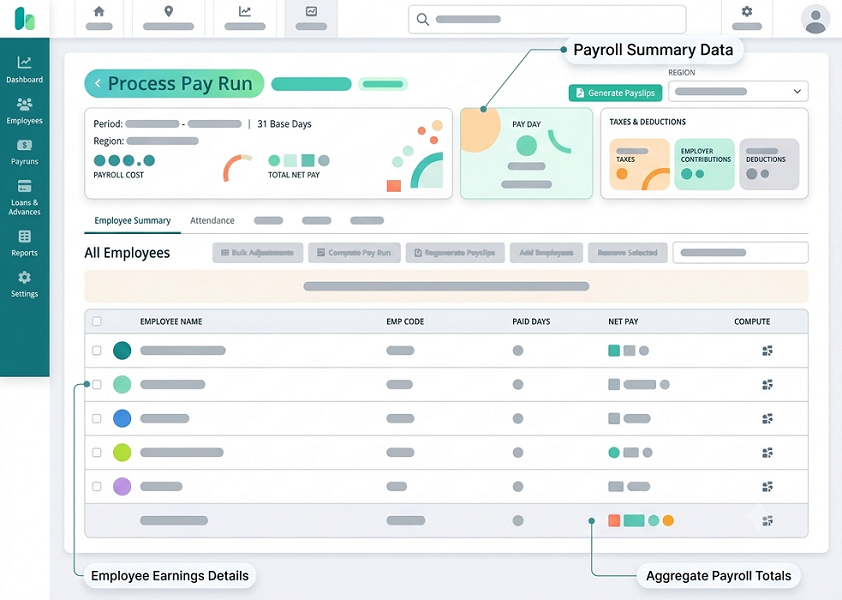
Audit readiness improves when the evidence is together. InnBuilt Attendance and Payroll Software can help UAE HR teams retrieve time records, corrections, pay calculations and approval trails.